As mentioned I'm a (physical) geographer by education. Now and then, I find myself in a #Dune (novels+movies) discussion group, and relise that I know much more about what's possible on alien worlds than most other fans. I can actually argue about such things as atmosphere, minerals and magnetic fields. Now, does that make me a fictional planetary scientist?
#planetaryscience
As mentioned I'm a (physical) geographer by education. Now and then, I find myself in a #Dune (novels+movies) discussion group, and relise that I know much more about what's possible on alien worlds than most other fans. I can actually argue about such things as atmosphere, minerals and magnetic fields. Now, does that make me a fictional planetary scientist?
#planetaryscience
Unknown type of activity/object
🎉 Planetary Research, our diamond open access journal for #PlanetaryScience, will open for submissions on January 1, 2026 (or earlier for beta testers)! 🎉
Unknown type of activity/object
🎉 Planetary Research, our diamond open access journal for #PlanetaryScience, will open for submissions on January 1, 2026 (or earlier for beta testers)! 🎉
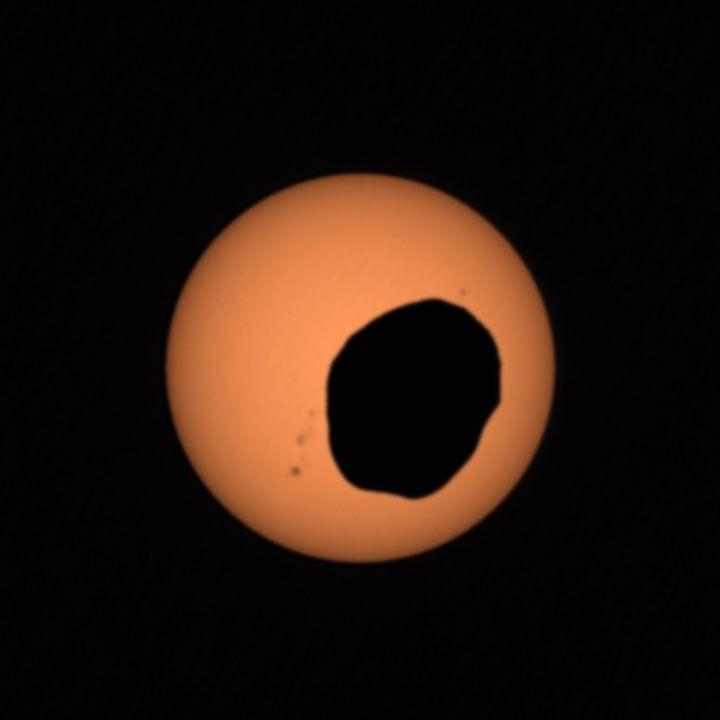
#PPOD: NASA’s Perseverance Mars rover used its Mastcam-Z camera system to shoot video of Phobos, one of Mars’ two moons, eclipsing the Sun. It’s the most zoomed-in, highest-frame-rate observation of a Phobos solar eclipse ever taken from the Martian surface. This image is a still taken from that video, which was shot in April 2022. Credit: NASA/JPL-Caltech/ASU/MSSS/SSI
This particular brown dwarf’s mass, however, is just at the threshold between being a Jupiter-like #planet and a brown dwarf. It has thus also been called a free-floating, or rogue, planet, not bound to a #star
#PlanetaryScience #Astronomy #sflorg
https://www.sflorg.com/2025/11/ps11072501.html
This particular brown dwarf’s mass, however, is just at the threshold between being a Jupiter-like #planet and a brown dwarf. It has thus also been called a free-floating, or rogue, planet, not bound to a #star
#PlanetaryScience #Astronomy #sflorg
https://www.sflorg.com/2025/11/ps11072501.html
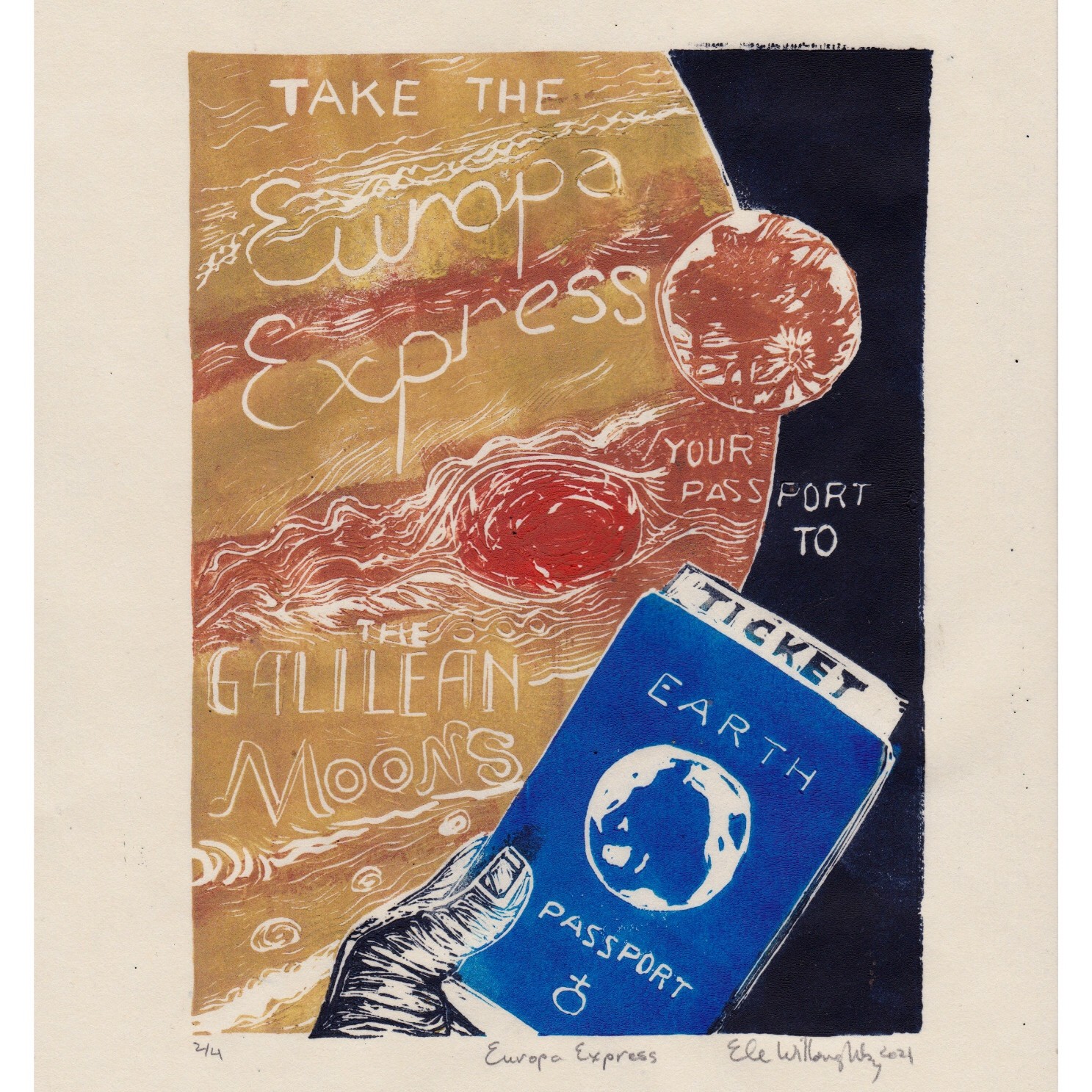
For #spacetober_challenge day 31 prompt future: “Take the Europa Express, your passport to the Galilean Moons!” 🧪🐡 My linocut is a space travel poster for a future where we all share the citizenship of Earth and can take rapid transport to Europa, one of Jupiter’s moons, known as the Galilean Moons (named after Galileo, who first observed them with a telescope). 🧵1/2
#linocut #printmaking #sciArt #spaceArt #Jupiter #Europa #planetaryScience #travelPoster #MastoArt
For #spacetober_challenge day 31 prompt future: “Take the Europa Express, your passport to the Galilean Moons!” 🧪🐡 My linocut is a space travel poster for a future where we all share the citizenship of Earth and can take rapid transport to Europa, one of Jupiter’s moons, known as the Galilean Moons (named after Galileo, who first observed them with a telescope). 🧵1/2
#linocut #printmaking #sciArt #spaceArt #Jupiter #Europa #planetaryScience #travelPoster #MastoArt
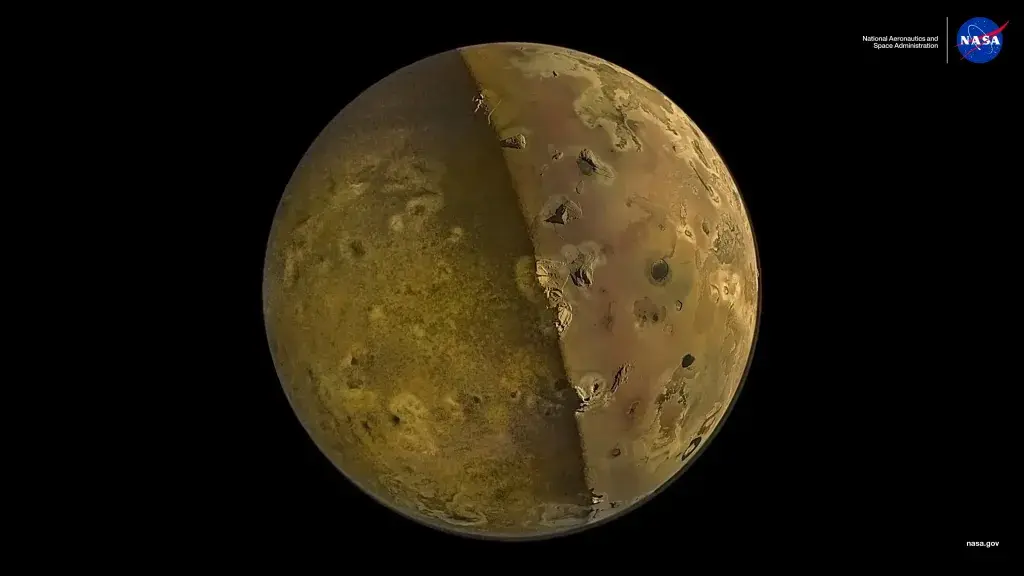
#PPOD: During its close flyby of Jupiter’s moon Io on December 30, 2023, NASA’s Juno spacecraft captured some of the most detailed imagery ever of Io’s volcanic surface. In this image, taken by the JunoCam instrument from about 1,500 kilometers above the moon, Io’s night side [left lobe] is illuminated by “Jupitershine,” which is sunlight reflected from the planet’s surface. Credit: NASA/JPL–Caltech/SwRI/MSSS; Image processing: Emma Wälimäki © CC BY
Planetary science fans on the Fedi, big news! 🥳
The Planetary Research Cooperative, a non-profit promoting planetary science, has created a PeerTube server and uploaded hundreds of science videos:
➡️ https://solarsystem.video/videos/browse
You can also follow the server's accounts:
@europlanet_media
@issi_media
@lightcurvefilms_socialmedia
@openplanetary_media
@planetary_research_media
(Accounts may look blank as they're new, follow them to help them federate!)
cc @space