Chip Butty
boosted


Low Quality Facts
boosted

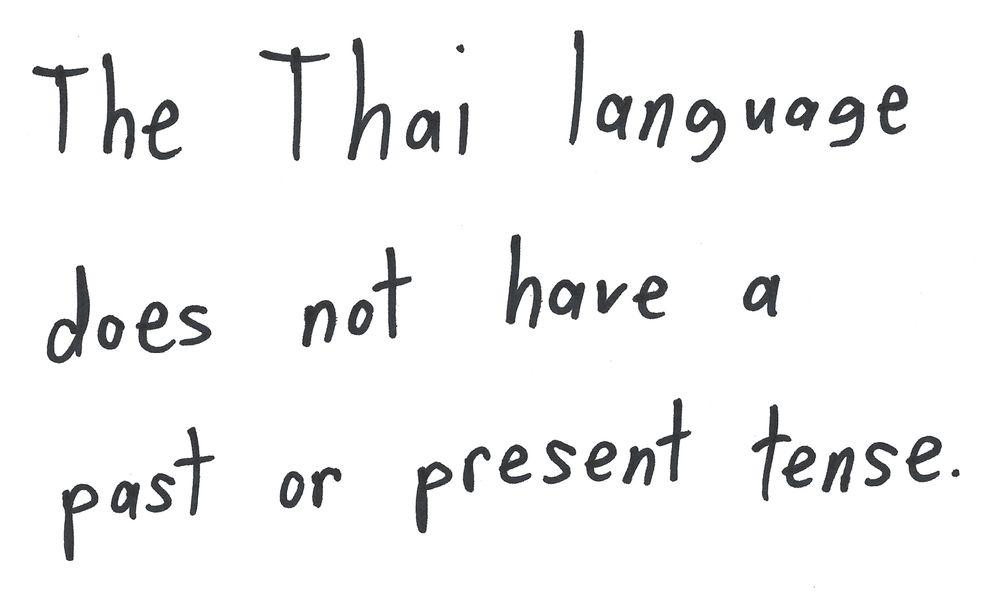
They live in the future.


Salut @sebsauvage ! J'ai un souci / une question : tu as toujours le Shaarli "canal historique", quelle est ta version de PHP ? Avec DokuWiki qui n'accepte plus PHP 7 depuis belle lurette, je suis coincé de partout. Et j'ai essayé, le Shaarli historiquene marche pas chez moi en PHP 8.2. C'est quoi le truc ?


@SammyFisherJr
Ah... j'ai dû adapter le lien à la ouaneuguène à php 8. Y'a assez peu de choses à changer, en fait.
Par contre j'ai pas documenté.
Je vais essayer de t'indiquer ce qu'il y a à changer si j'ai encore un diff quelquepart.



Jan :rust: :ferris:
boosted


Given that all password managers have issues, some more severe than others, I've started wondering what a system focused on cross-device sync and family/team sharing would look like if it were agnostic to what data it's storing, such that a password manager could be built as one application of many. Could such a foundation avoid needing any central servers, so nobody has to pay subscription fees that can get redirected to ethically dubious causes, while still being usable for people without a tech background? And how close is SyncThing to being that foundation?


@lisamelton @maddad @blogdiva My money's on Falkon in the Chromium-based space, since it's been around for a long long time relatively speaking and is developed under the aegis of KDE so doesn't have the same pressures or possible abandonment with a commercial or lone-developer project — including that there's no chance it gets distracted or muddled with the Netscape Communicator idea of stuffing a bunch of other applications within it, since the KDE project already has other standalone apps for anything one might be wrongly tempted to add!


@keithzg Unfortunately, Falkon is rather niche and not available on macOS.
And, again, it will suffer the same fate that other Chromium-based browsers are looking at with Google removing the API which supports uBlock Origin and other useful privacy- and security-based addons. Unless Falkon goes the same route that Vivaldi did and roll their own. Which also means support over time.
But, yes, it does seem very lightweight and simple. Which counts for something these days.
hypebot
boosted


Chip Butty
boosted

If you are still giving out your ID, or other PII, to anyone online...
STOP
Capitalists would fk over your entire life to hold onto a quarter of a penny.
https://cyberinsider.com/discord-confirms-70000-government-ids-exposed-in-third-party-breach/


Matt Blaze
boosted


@SteveBellovin @heidilifeldman The specific politics of NC are important here, but this is also important as a litmus test for whether the administration (via the USPS) is abiding by the court's orders here.
Angela Antunovic
boosted


Giant swallowtail visiting the Turk’s Cap #flowers in our backyard.
#photography #butterlies #flowers #nature #BloomScrolling #insects #InsectPhotography #MacroPhotography


What’s inside an etch a sketch? Now you know!
Angela Antunovic
boosted

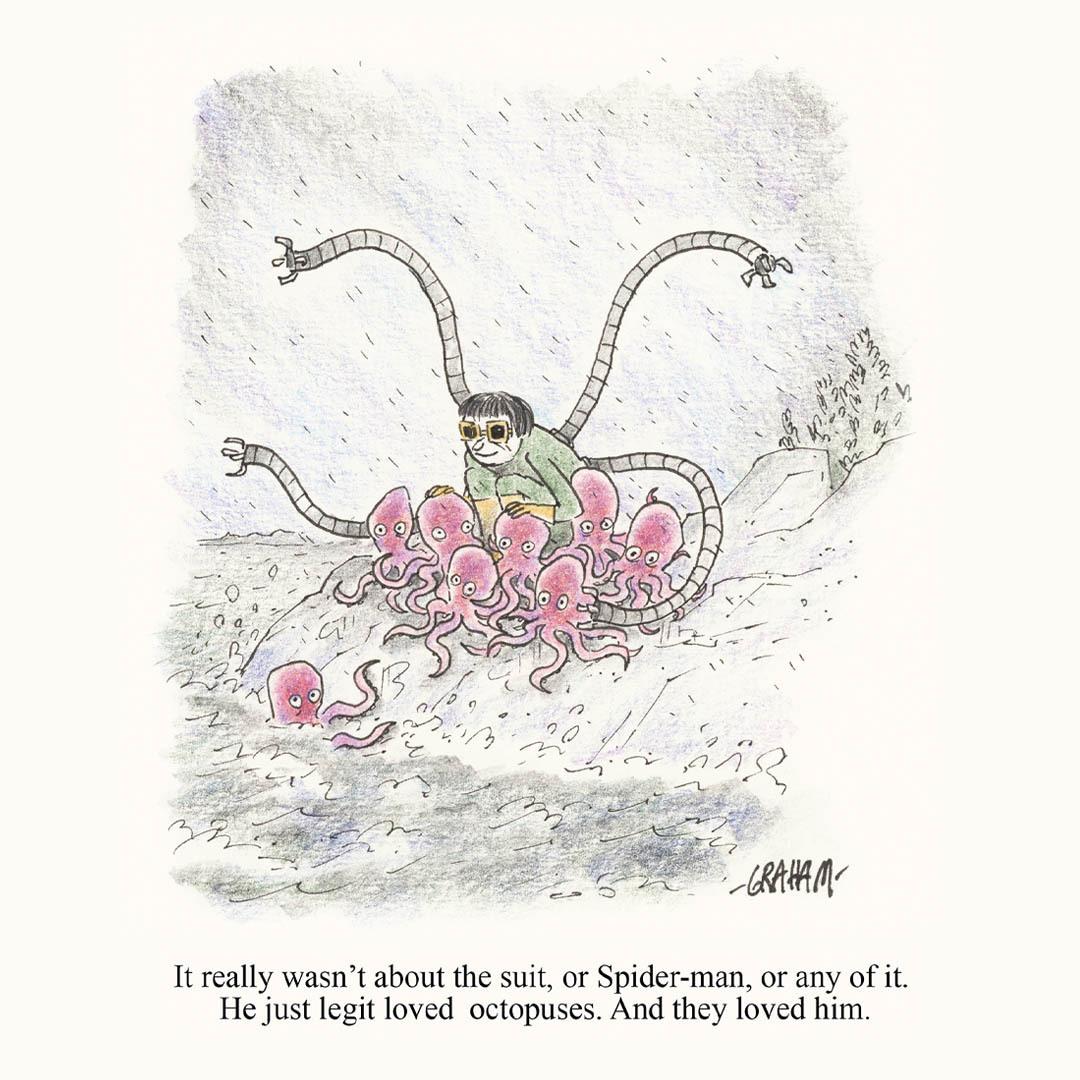
Follow your passion. #grickledoodle #spiderman #DocOck #octupus #cartoon #art #drawing #funny #humor
admin - mastodon.bida.im
boosted

Keep the internet free!
Original by https://www.instagram.com/miawerther/
#CallArtForAutistici #KeepItFree #AutisticiInventati #USvsAI #AICrackdown2026 #autistici #inventati


admin - mastodon.bida.im
boosted
Massima solidarietà a #autisticiinventati
Original by @tittidemi from instagram
#CallArtForAutistici #KeepItFree #AutisticiInventati #USvsAI #AICrackdown2026 #autistici #inventati

admin - mastodon.bida.im
boosted
Angela Antunovic
boosted


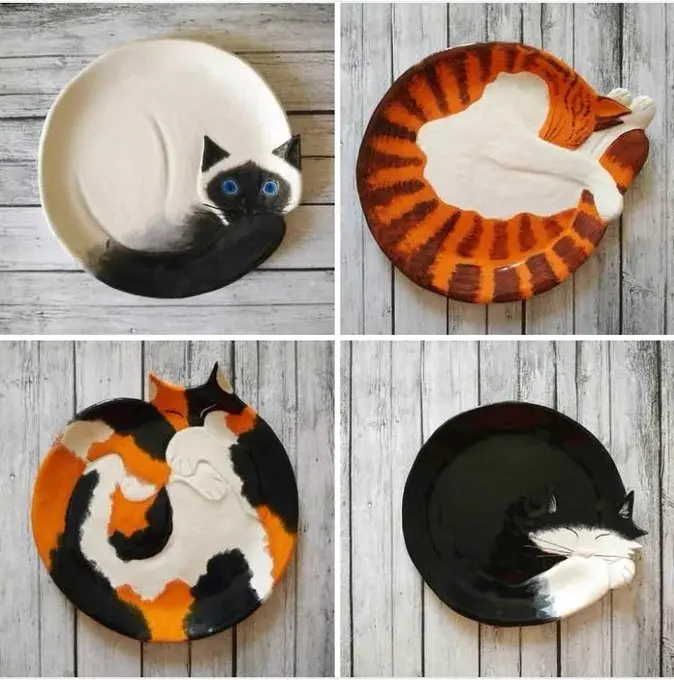
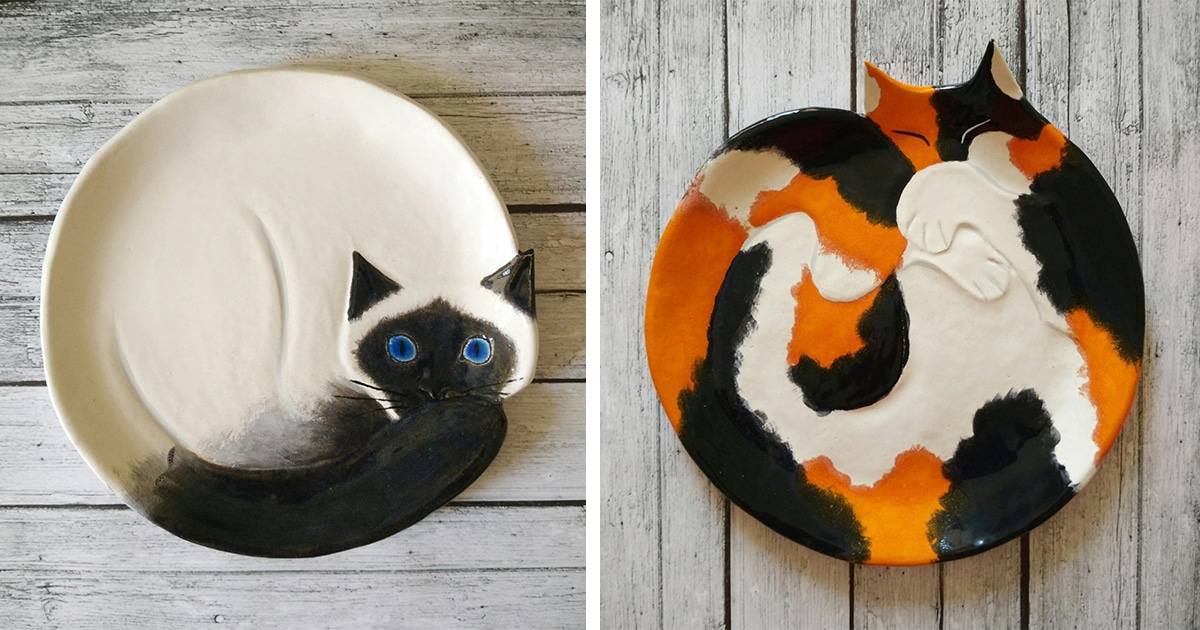
Tatiana, also known as Taniko Ga, ceramicist who creates decorative plates featuring curled-up cats


There's a couple support routines for scanning a lookuptable & combining with data on adjacent chars to determine how chars should be joined. With another lookuptable being used to determine how to handle Lam-Alef characters.
There's utils for branching over joining types. There's a util for branching over a char to return the mirror-image char.
Then there's the core routine which validates that it has text & decodes the UTF-8 before really getting into it!
2/3!
An initial iteration looks for Lam-Alef pairs to combine into a ligature. Once it has found a Lam char it looks for an arabic diacritic & iterates further to find one which joins with the Lam char, looks up the ligature via a helper function, & copies the modified char(s) to a newly-allocated array.
A 2nd iteration applies contextual forms by copying base-chars over, gathering any left-join chars followed by right-joins, & looks up the corresponding glyph.
3/4!!
Luc, prolétaire caniculé
boosted


#IA Beaucoup de collègues pensent que LA source des #stéréotypes des grands modèles de langues (ou IA génératives) à la #gpt c'est les données d'entrainement... Certes, elles jouent un rôle, mais il y a d'autres sources de biais stéréotypés. L'une d'elles est assez inattendue : l'évaluation.
En gros, on utilise de très gros jeux de données, souvent de type QCM, pour évaluer les modèles (voire les entraîner), qu'on appelle des #benchmarks. Mes étudiant·e·s sont allés regarder ces benchmarks de plus près et iels ont trouvé pas mal de pbs : des biais explicites (ça avait déjà été mentionné par d'autres), mais également des biais implicites et des erreurs factuelles. Si cela vous intéresse, nous avons écrit sur le sujet un papier en français pour la conférence TALN, que vous trouverez ici : https://inria.hal.science/hal-05618509/file/Benchmarks_trad_TALN-VF.pdf
