The default design is certainly a matter of taste 🤭, but after spending a few months with #Honk (as my access point to Lemmy and a fallback for when my Mastodon provider is down), #snac has been a total eye-opener for its ease of use and how well it plays with other Fediverse apps.
Thank you very much for your awesome work, @grunfink@comam.es 🙂
@Federation_Bot


@attilax
Un téléphone à 600€ pour commencer. Non merci.

@sebsauvage @attilax Si on attend 2-3 ans, on peut voir des Pixels neuf à 250 euros, non ?

The cost of running OpenBenches.org
https://shkspr.mobi/blog/2026/02/the-cost-of-running-openbenches-org/After my recent presentation at FOSDEM, someone asked a pretty reasonable question. What does it cost to run OpenBenches?
It is, thankfully, surprisingly cheap! In part, that's because it is a relatively simple tech stack - PHP, MySQL, a couple of API calls to external services. It was designed to be as low cost while also being useful. Here's the breakdown:
Hosting - £171 per year
Our biggest expense but, I think, our most reasonable. Krystal charges around £342 for a 2 year contract. That includes unlimited bandwidth and storage, as well as the domain name. We have nearly 400GB of photos and bot scraping means we can use over 900GB of bandwidth per month - so Krystal give us a rather good deal!

Use this affiliate link and code EDENT to get a small discount.
Stadia Maps - US$20 / month
Geocoding is surprisingly hard to do locally. We need to transform latitude and longitude into addresses, and then back again. Stadia Maps cost about the same as our hosting! What's rather annoying is that we only use about half the API calls in our plan. We need to find a cheaper solution.
Mapping - Free!
When we used Stadia for drawing maps, we regularly ran over our quota. So we switched to OpenFreeMap which produces gorgeous interactive maps.
The service has been rock solid and very responsive to bugs on GitHub.
Logo - US$5
I'm not a good designer, so we bought a logo from The Noun Project and then coloured it in. Bargain for a fiver!
Image CDN - Free!
Although we have unlimited bandwidth with Krystal, we're only located in one region - the UK. WeServ. It's also pointless serving full resolution images to small screens.
So WeServ offers free image resizing and global CDNs. Personally, I'm not a fan of CloudFlare (their CDN partner) so I'm looking to change provider.
OCR - Free!
People don't want to type in the inscription of the photo, so we use Google Cloud Vision.
We send less than 1,000 requests per month - so we're inside their free tier. If we get more popular, that'll get more expensive. But I don't know of a local-first OCR which is as good as Google's. Sadly, Tesseract is rubbish for extracting text from photos.
Authentication - Free!
We don't want to store anyone's passwords. The free tier of Auth0 allows us to do social login for up to 25,000 monthly users. Which is more than enough for us.
Sadly, Auth0 don't support the Fediverse, so I had to build my own "Log-in with Mastodon" service.
As much as we'd like to run social login locally, we simply don't want to be responsible for securing users' details & API keys.
Software - Free!
As per the OpenBenches colophon we use a lot of cool FOSS. Small JS libraries, big PHP frameworks, and everything in between.
Income
Thanks to GitHub Sponsors we make a whopping US$3 per month!
Similarly, our OpenCollective Sponsors brings in about £3 per month.
Merchandising! You can buy OpenBenches branded t-shirts, mugs, and hats. That nets us about £20 per year
Call it roughly £80 income. OK, it is better than nothing - but doesn't even cover a quarter of our costs. Sometimes people give us a higher donation privately, which is also very welcome. These people are listed on our README.
Total
On the assumption that our time is worthless (ha!) and that we only rarely go over our providers' API limits, and we get in some revenue, the cost of running OpenBenches is less than £300 per year.
That's not bad for a fun little hobby. People certainly spend more than that on Funkopops, vaping, and mechanical keyboards!
Nevertheless, I'm always slightly worried that we'll go viral and have an unexpectedly high bill from our API providers.
I would love to be able to hire a proper designer to make the site look a bit nicer. I also want to be able to buy a modern iPhone so that I can test it in the latest Safari.
If you have any suggestions for cutting costs, or non-scummy ways to help us raise funds, please drop a comment below.
#fosdem #foss #money #OpenBenches

"An AI agent that silently copies your API keys, runs as root, and never asks permission. Somehow, this is the most popular dev tool of 2026 so far."


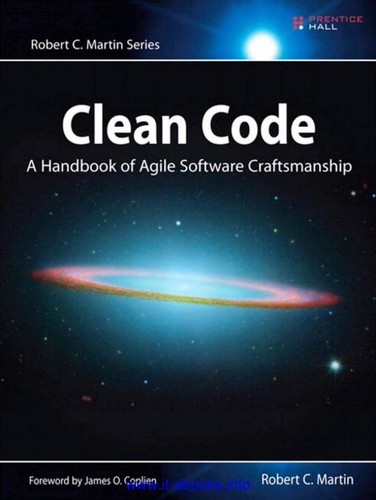
Clean Code
A Handbook of Agile Software Craftsmanship
Edition
431 pages
Published in 2008
by Prentice Hall
Even bad code can function. But if code isn't clean, it can bring a development organization to its knees. Every year, countless hours and significant resources are lost because of poorly written code. But it doesn't have to be that way. Noted software expert Robert C. Martin presents a revolutionary paradigm with Clean Code: A Handbook of Agile Software Craftsmanship . Martin has teamed up with his colleagues from Object Mentor to distill their best agile practice of cleaning code on the fly into a book that will instill within you the values of a software craftsman and make you a better programmer but only if you work at it. What kind of work will you be doing? You'll be reading code - lots of code. And you will be challenged to think about what's right about that code, and what's wrong with it. More importantly, you will be challenged to reassess your professional values and your commitment to your craft. Clean Code is divided into three parts. The first describes the principles, patterns, and practices of writing clean code. The second part consists of several case studies of increasing complexity. Each case study is an exercise in cleaning up code - of transforming a code base that has some problems into one that is sound and efficient. The third part is the payoff: a single chapter containing a list of heuristics and "smells" gathered while creating the case studies. The result is a knowledge base that describes the way we think when we write, read, and clean code. Readers will come away from this book understanding
‣ How to tell the difference between good and bad code ‣ How to write good code and how to transform bad code into good code ‣ How to create good names, good functions, good objects, and good classes ‣ How to format code for maximum readability ‣ How to implement complete error handling without obscuring code logic ‣ How to unit test and practice test-driven development
This book is a must for any developer, software engineer, project manager, team lead, or systems analyst with an interest in producing better code.


Der verdrängte Kapitalismus
Möglichkeiten und Grenzen antifaschistischer Wirtschaftspolitik. Ein Gesprächsband von Sabine Nuss
Paperback Edition
168 pages
Published in 2025
by Karl Dietz Verlag Berlin
Auf die zunehmende Bedrohung von rechts werden immer drängender Antworten gesucht. Eine davon lautet in jüngster Zeit: »Antifaschistische Wirtschaftspolitik«. Gezielte Umverteilung von oben nach unten und eine planvolle Investitionspolitik seitens des Staates soll die neoliberale Politik der letzten Jahrzehnte endlich ablösen. Vorrangiges Ziel: die Stärkung sozialer Sicherheit.
Auslöser dieser Forderung ist die Beobachtung, dass Menschen tendenziell eher rechts wählen, wenn aufgrund von wirtschaftlichen Krisen, Inflation und der Kürzung von Sozialausgaben Abstiegsängste und Unsicherheit zunehmen. In diesem Kontext stellen sich einige Fragen: Warum wählen die Menschen dann rechts und nicht links? Welche grundlegenden Fragen werden dabei gar nicht erst angesprochen? Welche Strukturen des Kapitalismus können Aufschluss darüber geben, welche Weltanschauungen im Alltagsbewusstsein anschlussfähiger sind?
Vor diesem Hintergrund diskutiert Sabine Nuss die Möglichkeiten, aber auch die Grenzen einer »antifaschistischen Wirtschaftspolitik« exemplarisch anhand von vier Maßnahmen – mit Andrej Holm (Mietendeckel), Stephan Kaufmann (Inflation), Antonella Muzzupappa (Investitionen) und Ingo Stützle (Vermögenssteuer).

Empire of AI
Dreams and Nightmares in Sam Altman’s OpenAI
Hardcover Edition
496 pages
Published in 2025
by Penguin Publishing Group
When AI expert and investigative journalist Karen Hao first began covering OpenAI in 2019, she thought they were the good guys. Founded as a nonprofit with safety enshrined as its core mission, the organization was meant, its leader Sam Altman told us, to act as a check against more purely mercantile, and potentially dangerous, forces. What could go wrong?
Over time, Hao began to wrestle ever more deeply with that question. Increasingly, she realized that the core truth of this massively disruptive sector is that its vision of success requires an almost unprecedented amount of resources: the “compute” power of high-end chips and the processing capacity to create massive large language models, the sheer volume of data that needs to be amassed at scale, the humans “cleaning up” that data for sweatshop wages throughout the Global South, and a truly alarming spike in the usage of energy and water underlying it all. The truth is that we have entered a new and ominous age of empire: only a small handful of globally scaled companies can even enter the field of play. At the head of the pack with its ChatGPT breakthrough, how would OpenAI resist such temptations?
Spoiler alert: it didn’t. Armed with Microsoft’s billions, OpenAI is setting a breakneck pace, chased by a small group of the most valuable companies in human history—toward what end, not even they can define. All this time, Hao has maintained her deep sourcing within the company and the industry, and so she was in intimate contact with the story that shocked the entire tech industry—Altman’s sudden firing and triumphant return. The behind-the-scenes story of what happened, told here in full for the first time, is revelatory of who the people controlling this technology really are. But this isn’t just the story of a single company, however fascinating it is. The g forces pressing down on the people of OpenAI are deforming the judgment of everyone else too—as such forces do. Naked power finds the ideology to cloak itself; no one thinks they’re the bad guy. But in the meantime, as Hao shows through intrepid reporting on the ground around the world, the enormous wheels of extraction grind on. By drawing on the viewpoints of Silicon Valley engineers, Kenyan data laborers, and Chilean water activists, Hao presents the fullest picture of AI and its impact we’ve seen to date, alongside a trenchant analysis of where things are headed. An astonishing eyewitness view from both up in the command capsule of the new economy and down where the real suffering happens, Empire of AI pierces the veil of the industry defining our era.

#introduction would not be needed as I am already known into Poliversity italian instance as @elettrona but I finally found a very accessible Fediverse client to interact with. I am a blind user, fediverse ambassador, WordPress content creator and tester. Accessibility expert, HIV awareness advocate, and whatever bullshit about me I do not have currently in mind; this is the instance (private instance) linked to my HIV advocacy related project. Installed the Enafore client on our self-hosting and now both me and @gifter will perform enough tests. Even chatting with each other through fediverse.
Clean Code
A Handbook of Agile Software Craftsmanship
Edition
431 pages
Published in 2008
by Prentice Hall
Even bad code can function. But if code isn't clean, it can bring a development organization to its knees. Every year, countless hours and significant resources are lost because of poorly written code. But it doesn't have to be that way. Noted software expert Robert C. Martin presents a revolutionary paradigm with Clean Code: A Handbook of Agile Software Craftsmanship . Martin has teamed up with his colleagues from Object Mentor to distill their best agile practice of cleaning code on the fly into a book that will instill within you the values of a software craftsman and make you a better programmer but only if you work at it. What kind of work will you be doing? You'll be reading code - lots of code. And you will be challenged to think about what's right about that code, and what's wrong with it. More importantly, you will be challenged to reassess your professional values and your commitment to your craft. Clean Code is divided into three parts. The first describes the principles, patterns, and practices of writing clean code. The second part consists of several case studies of increasing complexity. Each case study is an exercise in cleaning up code - of transforming a code base that has some problems into one that is sound and efficient. The third part is the payoff: a single chapter containing a list of heuristics and "smells" gathered while creating the case studies. The result is a knowledge base that describes the way we think when we write, read, and clean code. Readers will come away from this book understanding
‣ How to tell the difference between good and bad code ‣ How to write good code and how to transform bad code into good code ‣ How to create good names, good functions, good objects, and good classes ‣ How to format code for maximum readability ‣ How to implement complete error handling without obscuring code logic ‣ How to unit test and practice test-driven development
This book is a must for any developer, software engineer, project manager, team lead, or systems analyst with an interest in producing better code.

UTAH auto body shop owner: “You guys broke the fucking window to get in here! Where is your warrant??” Trump’s ICE goons: “Yes we did… We don’t need one.” 🤔 Rights are gone under this regime. (From Somali Snaps: www.instagram.com/reel/DUKpzuS...)

Dracula
Fiction, horror
Vampires, fiction
Dracula, count (fictitious character), fiction
British and irish fiction (fictional works by one author)
Romania, fiction
Edition
454 pages
Published in 2012
by Penguin Books, Limited

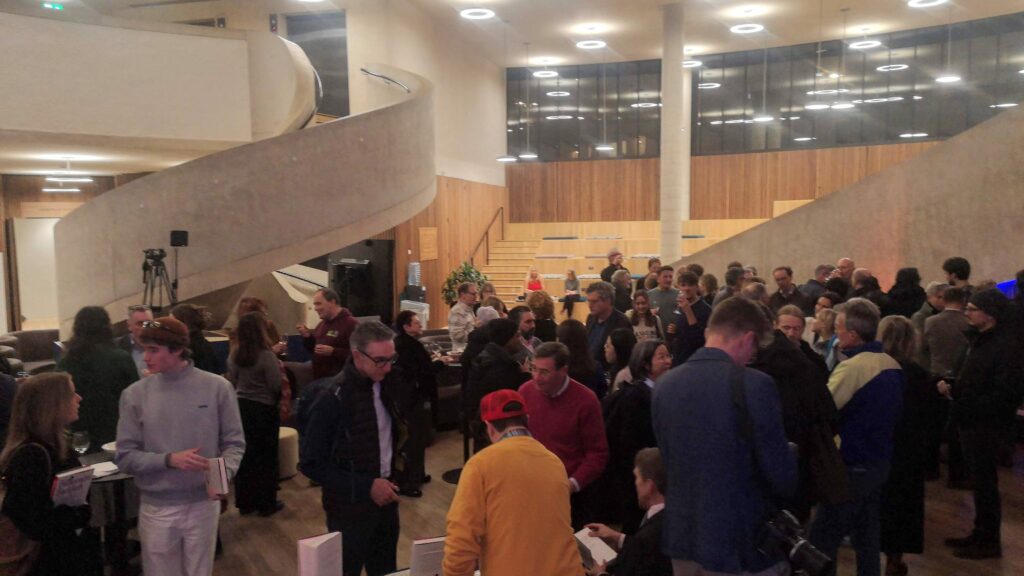
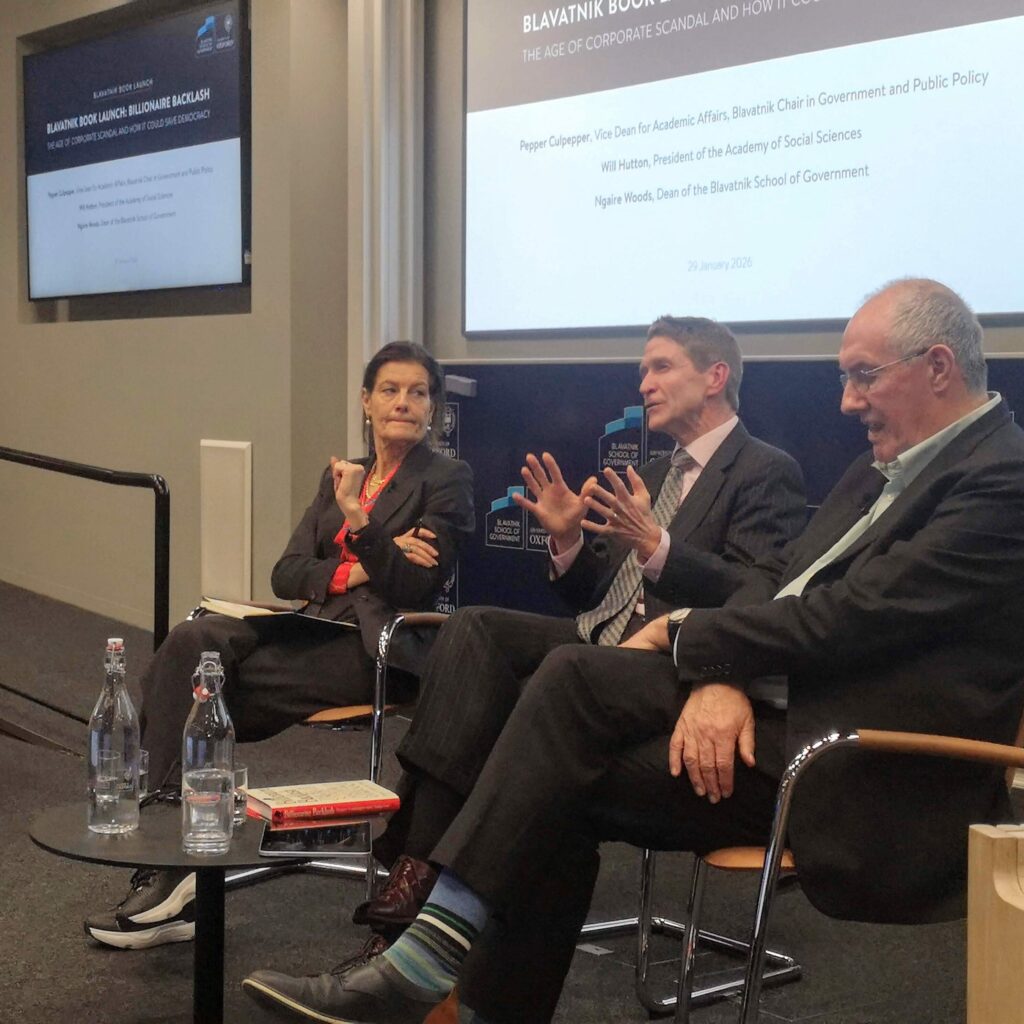
The Blavatnik worldview, book talk
A talk on a new book by Pepper Culpepper on how corporate scandals could be used to save liberal "democracy". This talk is the familiar fantasy of elitist institutions like the Blavatnik School, Oxford. Culpepper and co author Lee reframe disasters from Enron to Cambridge…
Federation Bot
2 media files


IFTAS Response to the European Commission’s Call for Evidence “Towards European open digital ecosystems”
IFTAS welcomes this initiative and strongly supports the Commission’s recognition of open-source software as a strategic component of digital sovereignty, security, and innovation.
The EU open-source sector benefits from a rich and diverse developer community, with strong…
Federation Bot

Why choosing the #fediverse over just another centralize platform matters #fyp

this is salad bar and i love her a lot



Upgrade installed!
Everyone running on Masto.host is now on Mastodon v4.5.5.
Any issues or questions, please let me know.
Thanks 🐘

@mastohost
What s the image upload limit for each post?

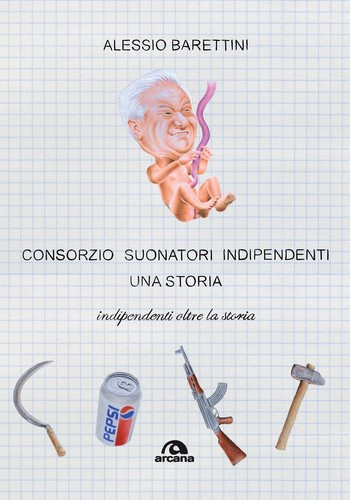
Consorzio Suonatori Indipendenti. Una storia
Indipendenti oltre la storia
Edition
120 pages
Published in 2025
by Arcana

Il libro dell'estate
Paperback Edition
164 pages
Published in 2013
by Iperborea
«Mi succede una cosa strana, disse Sofia. È che mi sento sempre così buona quando c'è tempesta.»
L'estate, l'ultima isola abitata prima del mare aperto nell'arcipelago finlandese, un paesaggio selvaggio e incontaminato, la casa lontana dalla civiltà, una nonna e una nipotina e, silenzioso nume tutelare, il padre. Una vita quotidiana che segue i ritmi svagati delle vacanze e quelli capricciosi del tempo: qualche visita occasionale, tempeste, avventure, divieti trasgrediti, furtive spedizioni a isole altrui, navigazioni notturne. Su uno sfondo che dell'idillio non ha il sentimentalismo, ma ne ha certamente il fascino, un libro dall'apparenza semplice che riesce a parlare senza enfasi, ma anche senza ingenuità, senza eufemismi ma con tocco ironico e leggero, della complessità del vivere, delle luci e delle ombre dell'animo umano, della crudele imparzialità della natura. «Senza un'infanzia felice non avrei mai incominciato a scrivere», dice Tove Jansson. Ed è proprio quella felicità che emana dai suoi scritti: l'espressione di quel raro equilibrio fra sicurezza e rischio, sfida e ritorno, ribellione e rifugio, paura del nuovo e desiderio di provare, timore e sete di conoscere, bisogno di solitudine e necessità di affetti. È la felicità di camminare su un filo teso, sapendo che vi è comunque una rete di protezione, del sentire con intensità, del prendere la vita sul serio, ma accettandola così com'è. Da qui l'affinità e l'intesa fra Sofia, la bambina che inizia ad affrontare la vita, e la nonna, che l'ha vissuta a fondo, l'ha amata con la saggezza di non pretendere di capirla e sa che fra poco dovrà lasciarla. Il loro dialogo, che spazia su ogni cosa che sta fra il crescere e il morire, è come una musica che resta a lungo nell'orecchio, come una sonatina.

Viral AI assistant Moltbot rapidly gains popularity but poses security risks
The open source "Jarvis" chats via WhatsApp but requires access to your files and accounts.
https://arstechnica.com/ai/2026/01/viral-ai-assistant-moltbot-rapidly-gains-popularity-but-poses-security-risks/?utm_brand=arstechnica&utm_social-type=owned&utm_source=mastodon&utm_medium=social


@arstechnica clawdbot has a sandbox mode. The security risk comes from not running local LLMs.
Netflix Animation Studios are now funding Blender development https://www.gamingonlinux.com/2026/01/netflix-animation-studios-are-now-funding-blender-development/