Discussion
Loading...

#Tag

Log in
  • About
  • Code of conduct
  • Privacy
  • Users
  • Instances
  • About Bonfire
Fabrizio Musacchio
Fabrizio Musacchio
@FabMusacchio@mastodon.social  ·  activity timestamp 2 weeks ago

🧠 New paper by Ishida et al who show how #neurons in the #Drosophila central complex implement vector inversion via #calcium spikes.

A single #NeuronalPopulation can flip the sign of its encoded vector by switching biophysical #spiking modes, enabling coordinate transformations through #PopulationDynamics rather than circuit switching.

Cool as it shows that computation is not imposed by the circuit, but emerges from the neuron’s own dynamics.

🌍https://doi.org/10.1016/j.cell.2025.11.040

#Neuroscience #CompNeuro

Diagram showing how single neuron activity influences population activity, with vectors, signals, and neural pathways. Graphical abstract of the paper.

Neuronal calcium spikes enable vector inversion in the Drosophila brain

  • Copy link
  • Flag this post
  • Block
Fabrizio Musacchio boosted
Nadiah Kristensen
Nadiah Kristensen
@nadiah@fediscience.org  ·  activity timestamp 2 months ago

I wrote a blog post about a lecture introducing stability in ODE models and their numerical solution. The lecture transcript and code for figures are included.

https://nadiah.org/2025/12/04/mxb261

#mathematicalEcology #ODEs #stability #mathematics #lectureNotes #populationDynamics

  • Copy link
  • Flag this post
  • Block
Nadiah Kristensen
Nadiah Kristensen
@nadiah@fediscience.org  ·  activity timestamp 2 months ago

I wrote a blog post about a lecture introducing stability in ODE models and their numerical solution. The lecture transcript and code for figures are included.

https://nadiah.org/2025/12/04/mxb261

#mathematicalEcology #ODEs #stability #mathematics #lectureNotes #populationDynamics

  • Copy link
  • Flag this post
  • Block
Fabrizio Musacchio
Fabrizio Musacchio
@pixeltracker@sigmoid.social  ·  activity timestamp 2 months ago

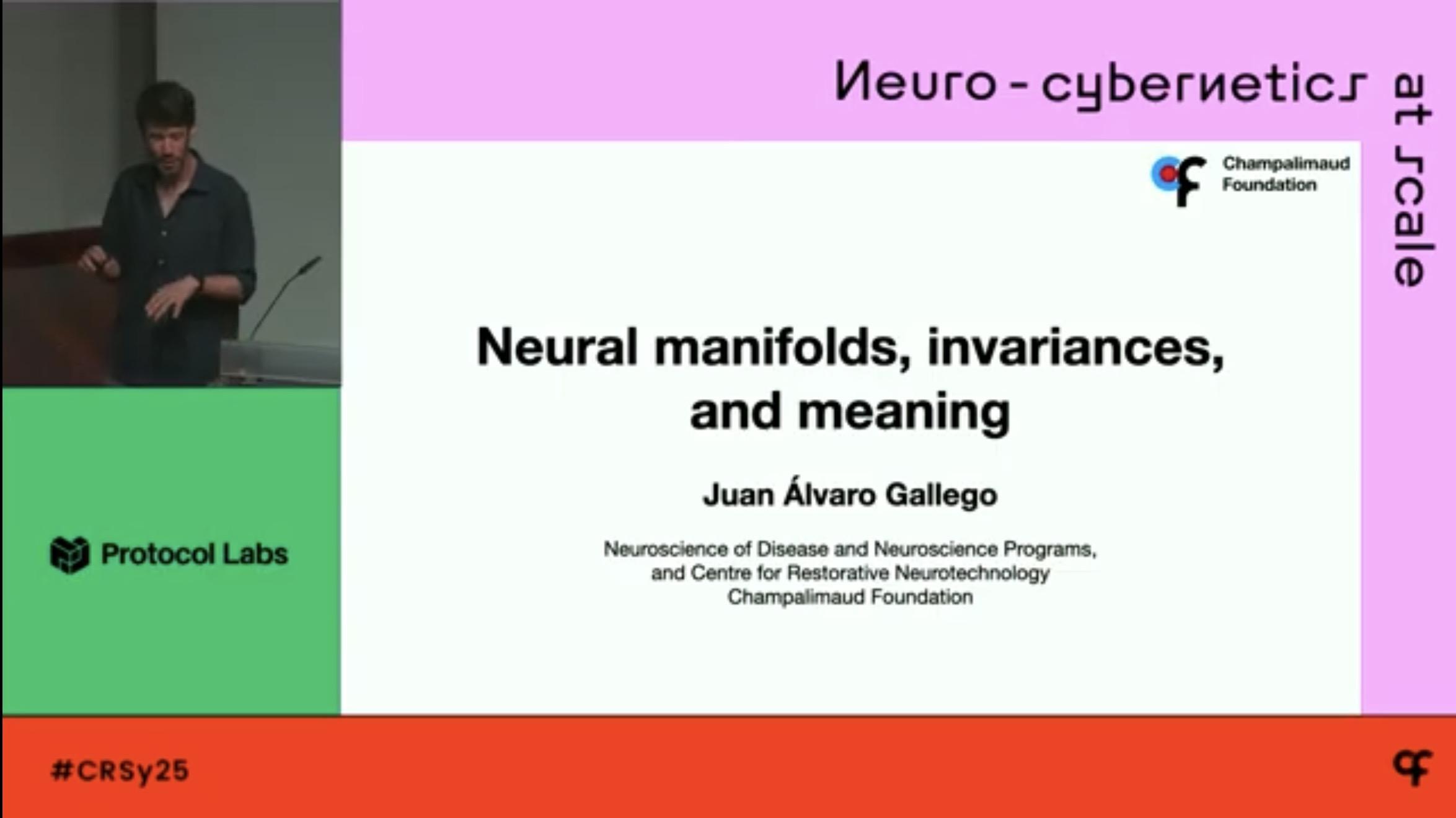
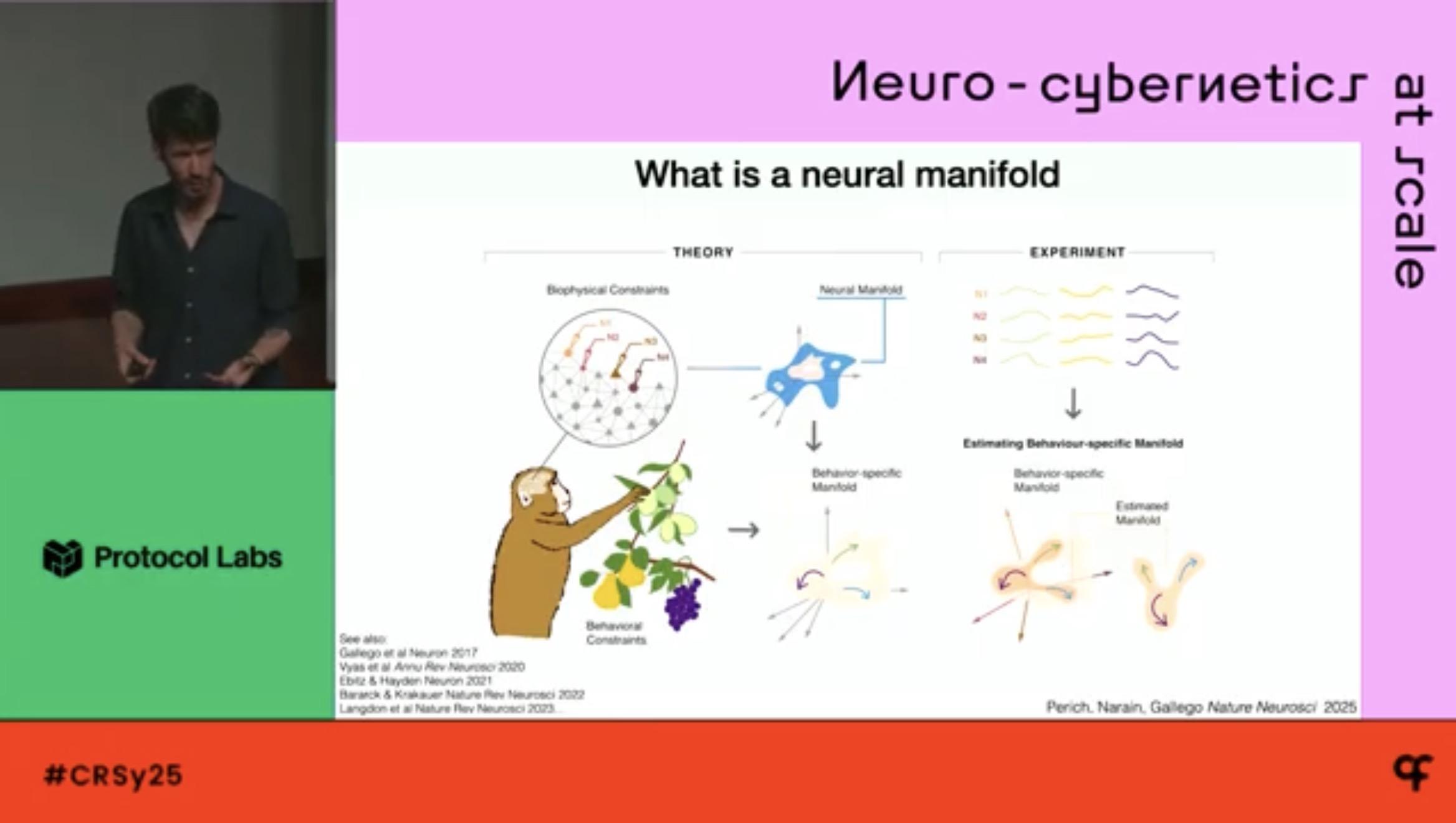
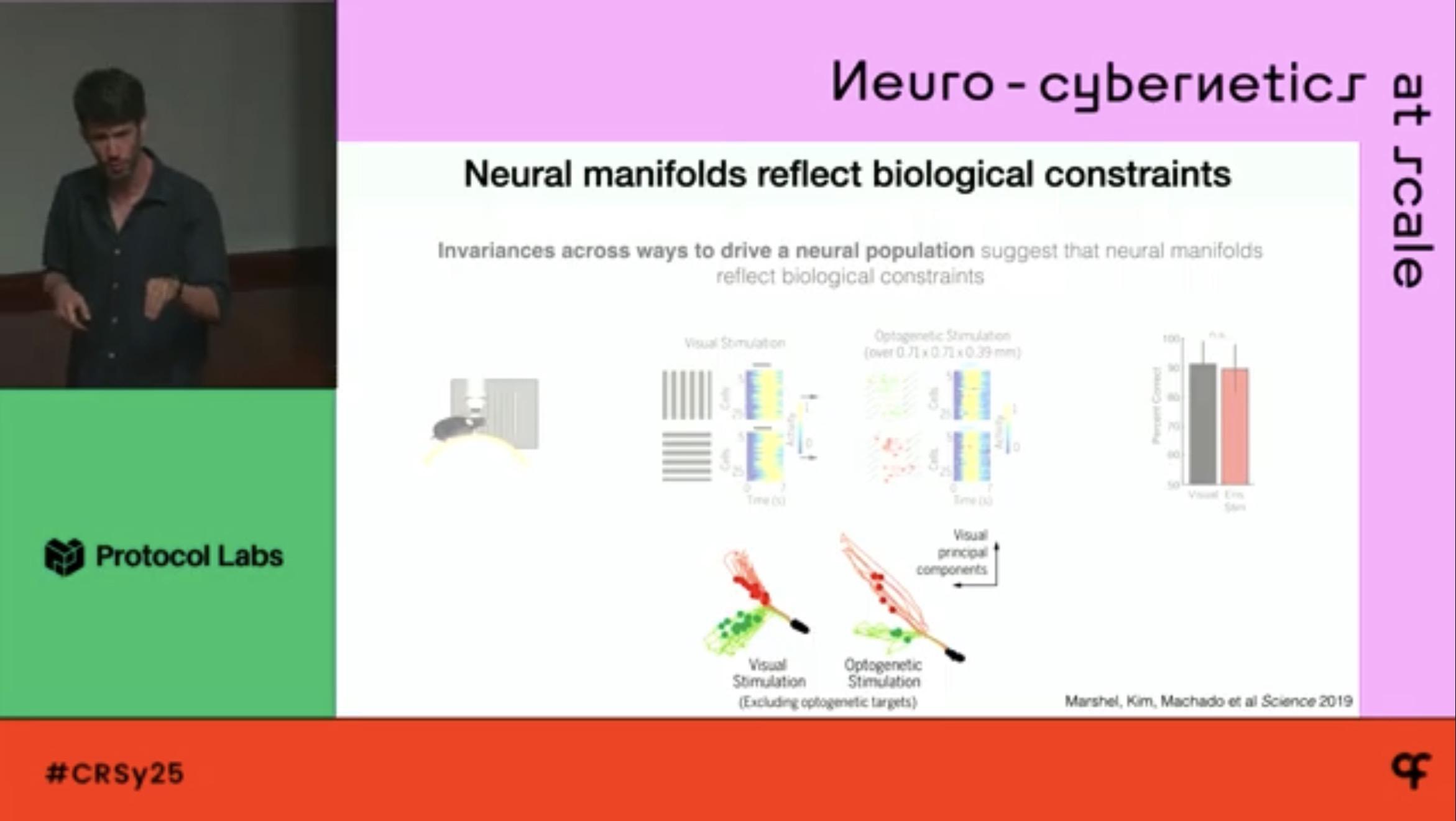
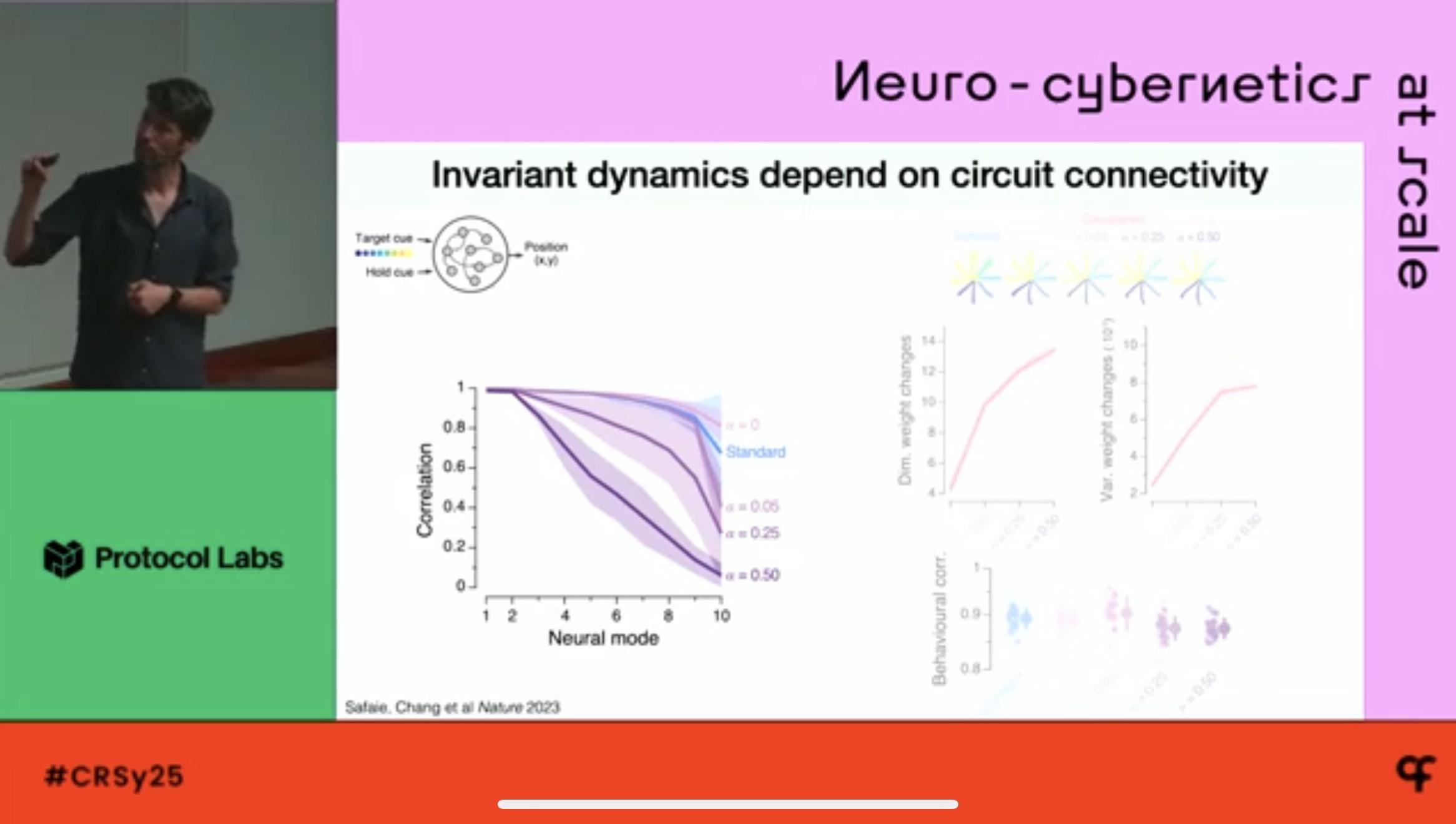
There's a great talk by Juan Gallego on how low-dimensional #NeuralManifolds arise from biological constraints, remain invariant across states and inputs, and support cross-animal alignment. Examples span #HeadDirection rings, #gridcell tori, #MotorCortex prep vs movement, striatal timing dynamics, and C. elegans #behavior loops. Cool talk as it shows how #manifold-level structure can generalize across tasks and organisms.

🌍 https://www.youtube.com/watch?v=oxQyKByqDSU

#CompNeuro #Neuroscience #PopulationDynamics

5 media
Screenshot
Screenshot
Screenshot
Screenshot
Screenshot
Screenshot
Screenshot
Screenshot
Screenshot
Screenshot
Screenshot
Screenshot
Juan Gallego
  • Copy link
  • Flag this post
  • Block
Fabrizio Musacchio
Fabrizio Musacchio
@pixeltracker@sigmoid.social  ·  activity timestamp 2 months ago

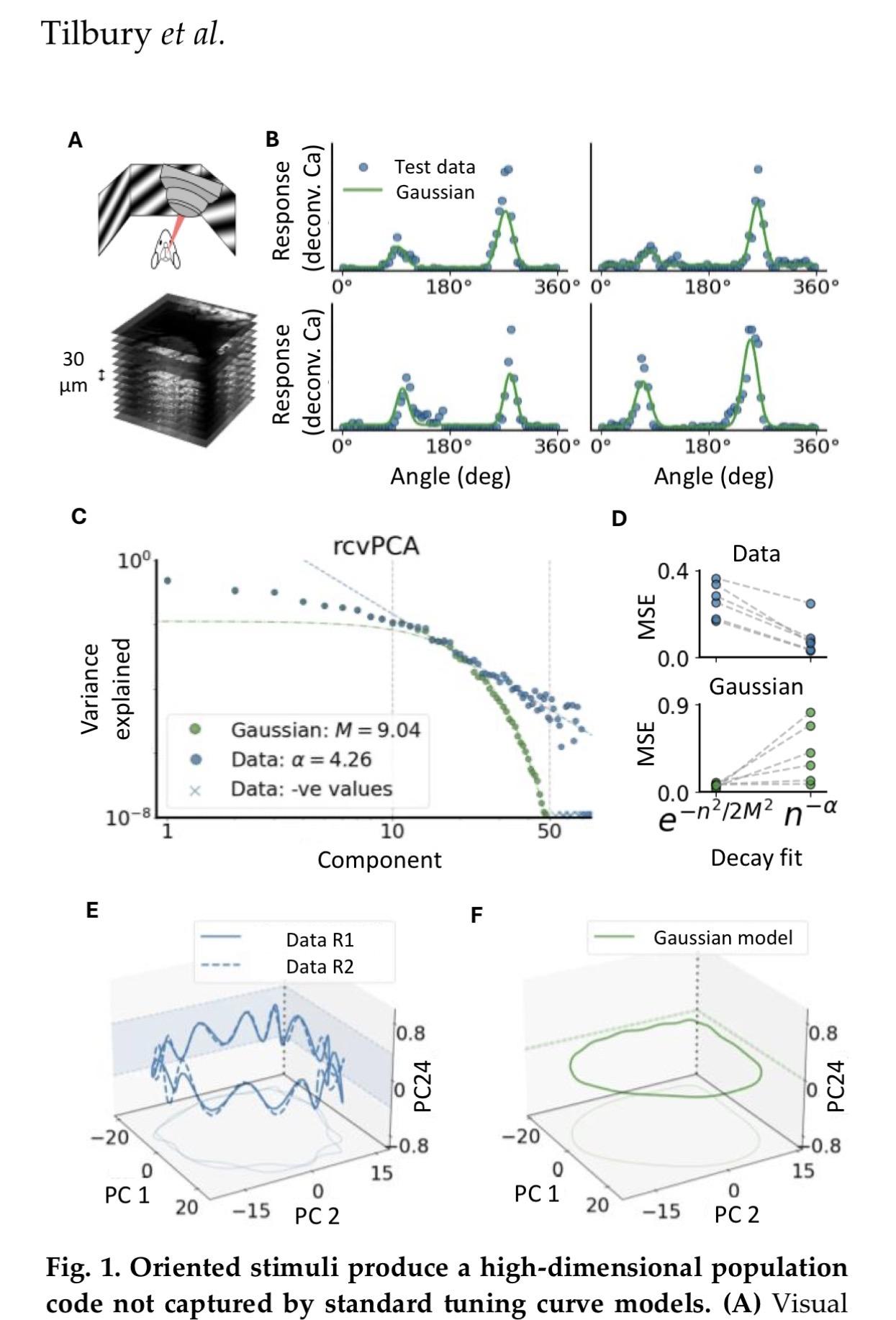
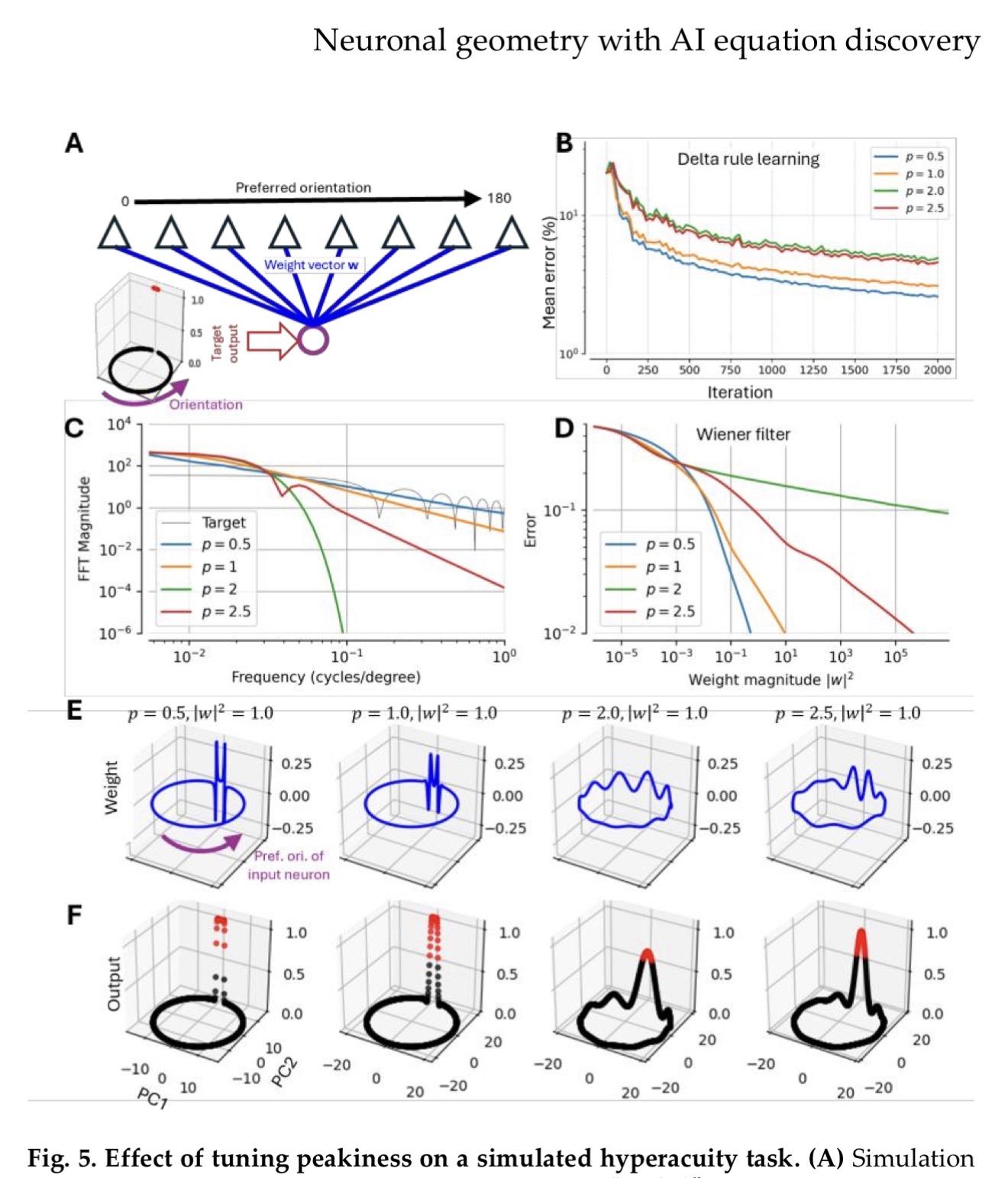
🧠 New preprint by Tilbury et al: Characterizing #NeuronalPopulation geometry with #AI equation discovery

The approach generates & evaluates 100s of candidate equations, finding "peaky" non-Gaussian tuning functions whose Fourier structure matches power-law dimensionality observed in real #V1 pops. Links shape of single- #neuron tuning to #PopulationLevel geometry using both data fits & analytical derivations.

🌍 https://doi.org/10.1101/2025.11.12.688086

#CompNeuro #Neuroscience #NeuralCoding #PopulationDynamics

2 media
Fig. 1. Oriented stimuli produce a high-dimensional population code not captured by standard tuning curve models.
Fig. 5. Effect of tuning peakiness on a simulated hyperacuity task.

Characterizing neuronal population geometry with AI equation discovery

  • Copy link
  • Flag this post
  • Block
Fabrizio Musacchio
Fabrizio Musacchio
@pixeltracker@sigmoid.social  ·  activity timestamp 2 months ago

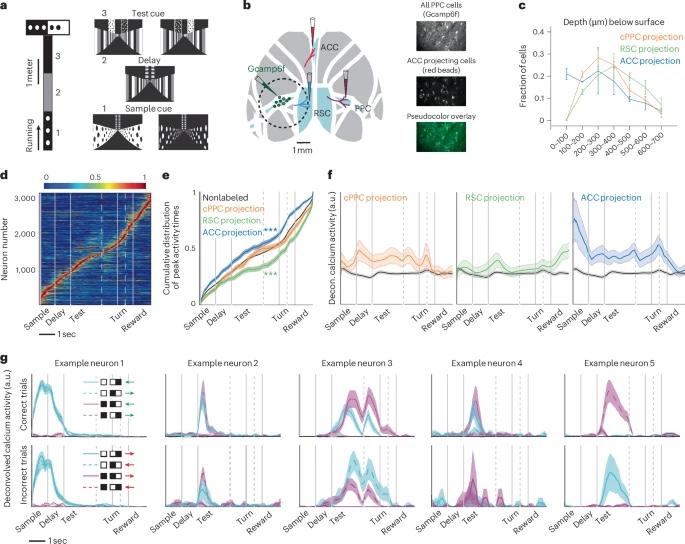
🧠 New paper by Safaai et al. (2025): parietal #cortex output populations show highly structured, task-dependent population geometry. Using multi-area recordings and circuit modeling, they show that #parietal populations display organized task-related patterns rather than uniform mixed coding, and that distinct output groups shape how decisions are routed to downstream targets:

🌍 https://doi.org/10.1038/s41593-025-02095-x

#Neuroscience #NeuralCoding #ParietalCortex #PopulationDynamics #DecisionMaking

Fig. 1: Differences in the activity of neurons projecting to distinct cortical targets.

Specialized structure of neural population codes in parietal cortex outputs

  • Copy link
  • Flag this post
  • Block
Fabrizio Musacchio
Fabrizio Musacchio
@pixeltracker@sigmoid.social  ·  activity timestamp 2 months ago

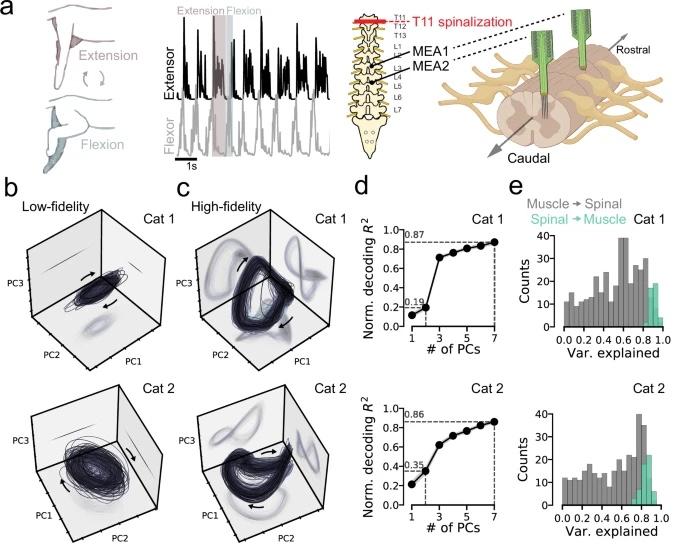
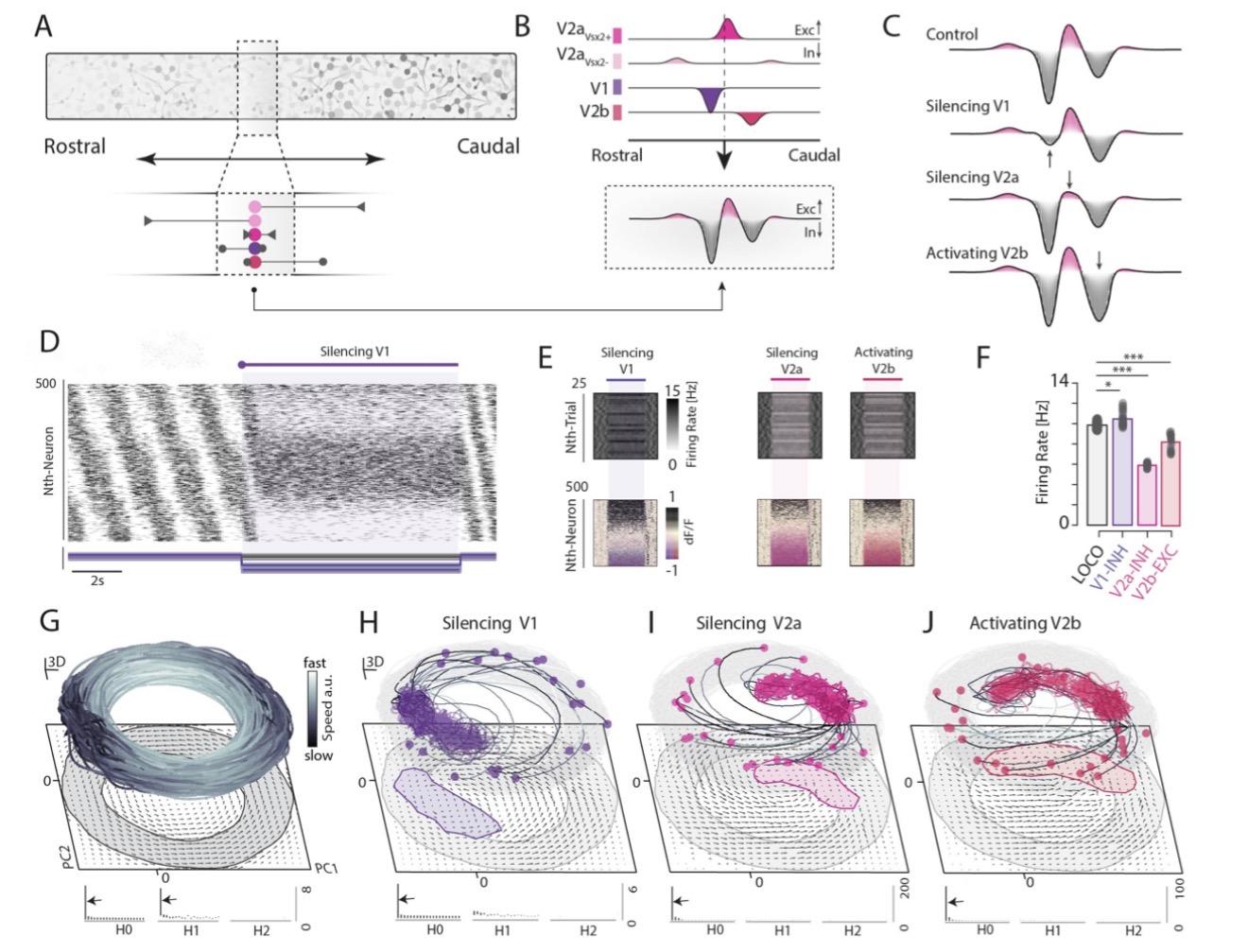
🧠 New paper by Wimalasena, Pandarinath, AuYong et al: #spinal #interneuron populations form a low-dimensional #manifold that robustly organizes step cycles.

Distinct regions of the manifold mark flexion–extension transitions, and a specific “hold region” tightly controls cycle duration. Deletions emerge as failures to enter the flexor region, giving a dynamical signature of disrupted CPG function.

🌍 https://doi.org/10.1038/s41467-025-64629-y

#Neuroscience #Locomotion #SpinalCord #PopulationDynamics #CompNeuro

Fig 1: High-fidelity characterization of spinal interneuron population activity reveals state space structure beyond planar rotations.

Spinal interneuron population dynamics underlying flexible pattern generation

  • Copy link
  • Flag this post
  • Block
Fabrizio Musacchio
Fabrizio Musacchio
@pixeltracker@sigmoid.social  ·  activity timestamp 2 months ago

🧠 New #preprint by Komi et al. (2025): Neural #manifolds that orchestrate walking and stopping. Using #Neuropixels recordings from the lumbar spinal cord of freely walking rats, they show that #locomotion arises from rotational #PopulationDynamics within a low-dimensional limit-cycle #manifold. When walking stops, the dynamics collapse into a postural manifold of stable fixed points, each encoding a distinct pose.

🌍 https://doi.org/10.1101/2025.11.08.687367

#CompNeuro #NeuralDynamics #Attractor #Neuroscience

Fig. 1. Model of spinal motor network and the walk-to-stop transitions: Bifurcation from limit cycle to a
fixed point attractor.
Fig. 1. Model of spinal motor network and the walk-to-stop transitions: Bifurcation from limit cycle to a fixed point attractor.

Neural manifolds that orchestrate walking and stopping

  • Copy link
  • Flag this post
  • Block
Fabrizio Musacchio
Fabrizio Musacchio
@pixeltracker@sigmoid.social  ·  activity timestamp 3 months ago

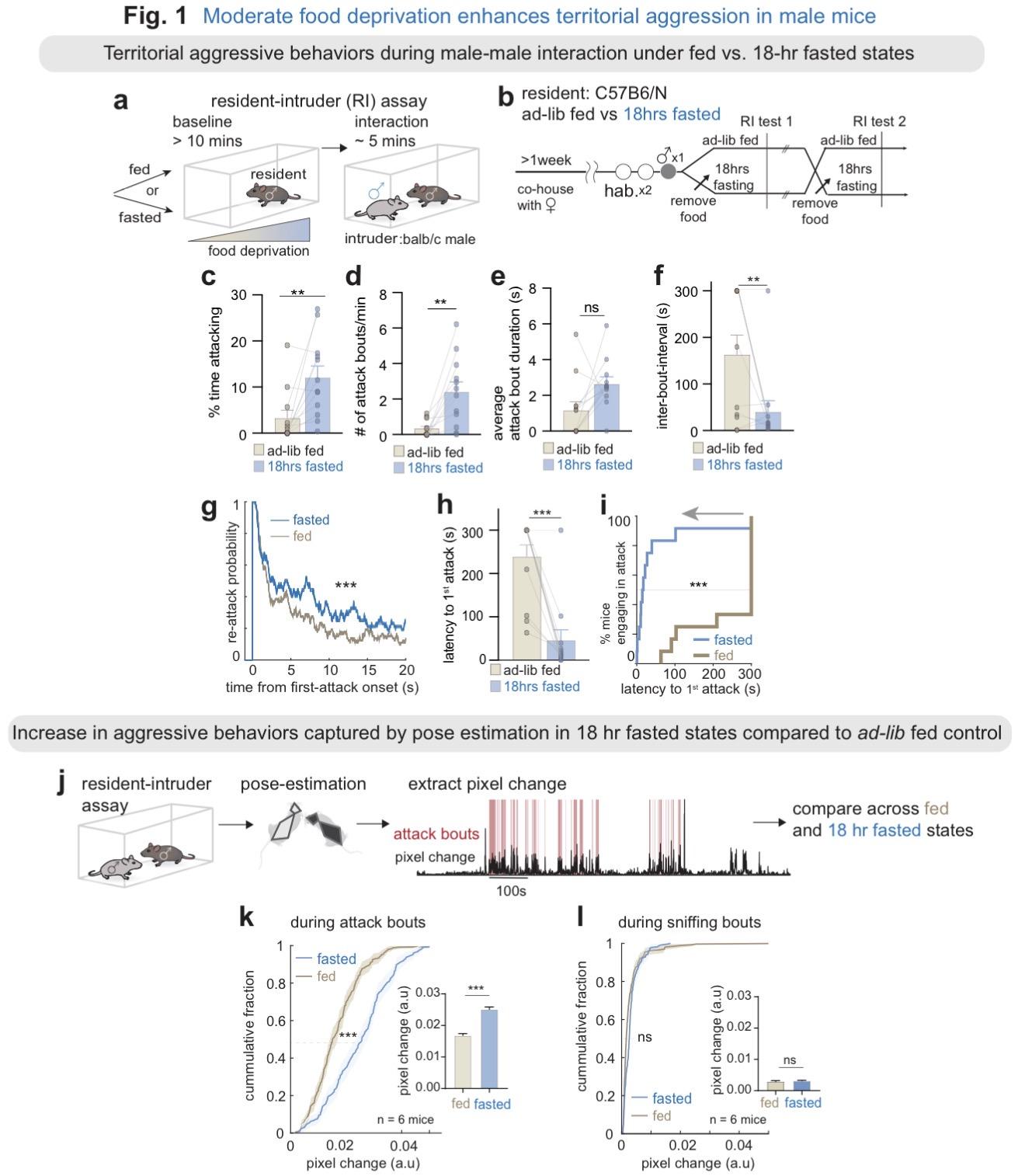
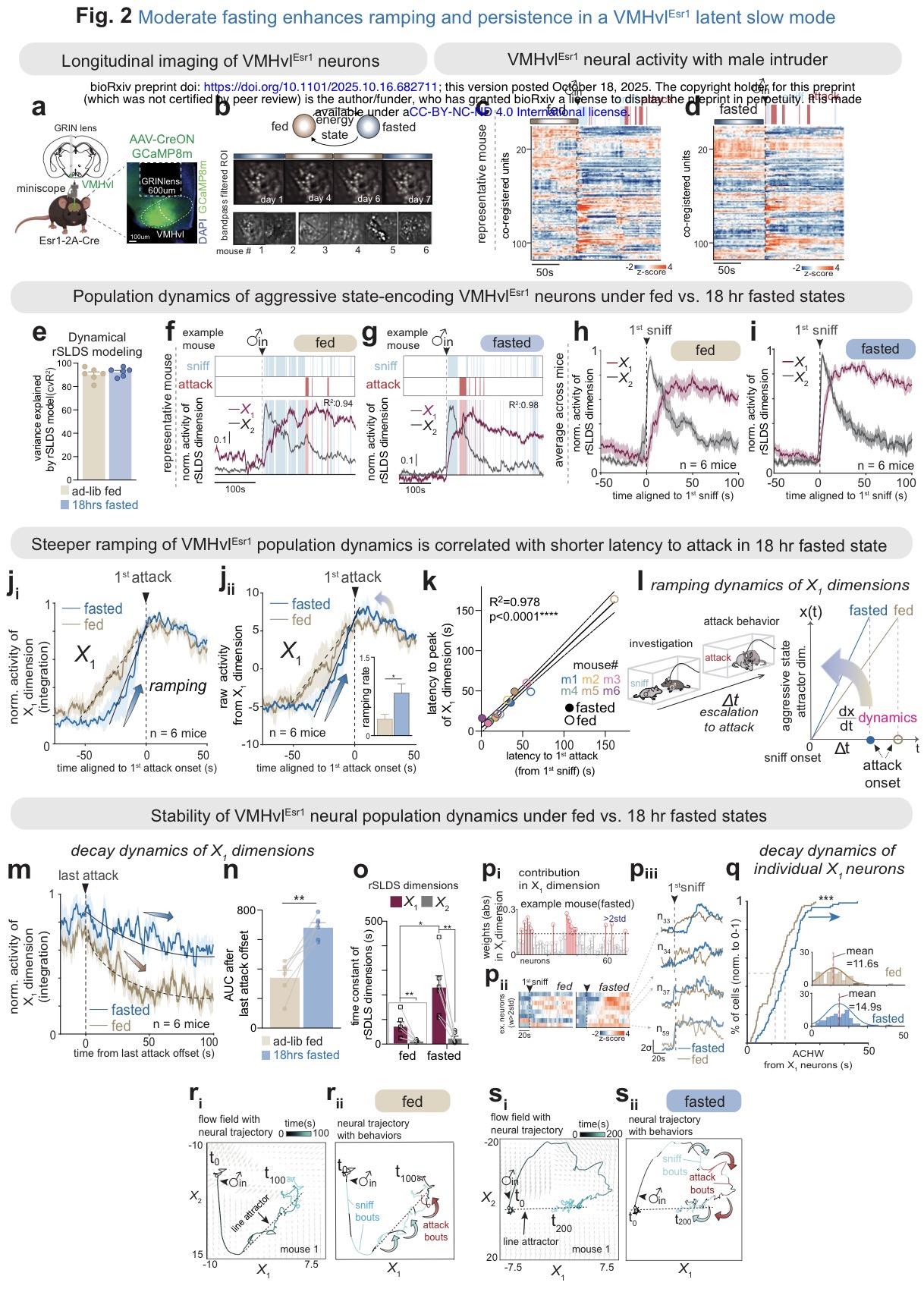
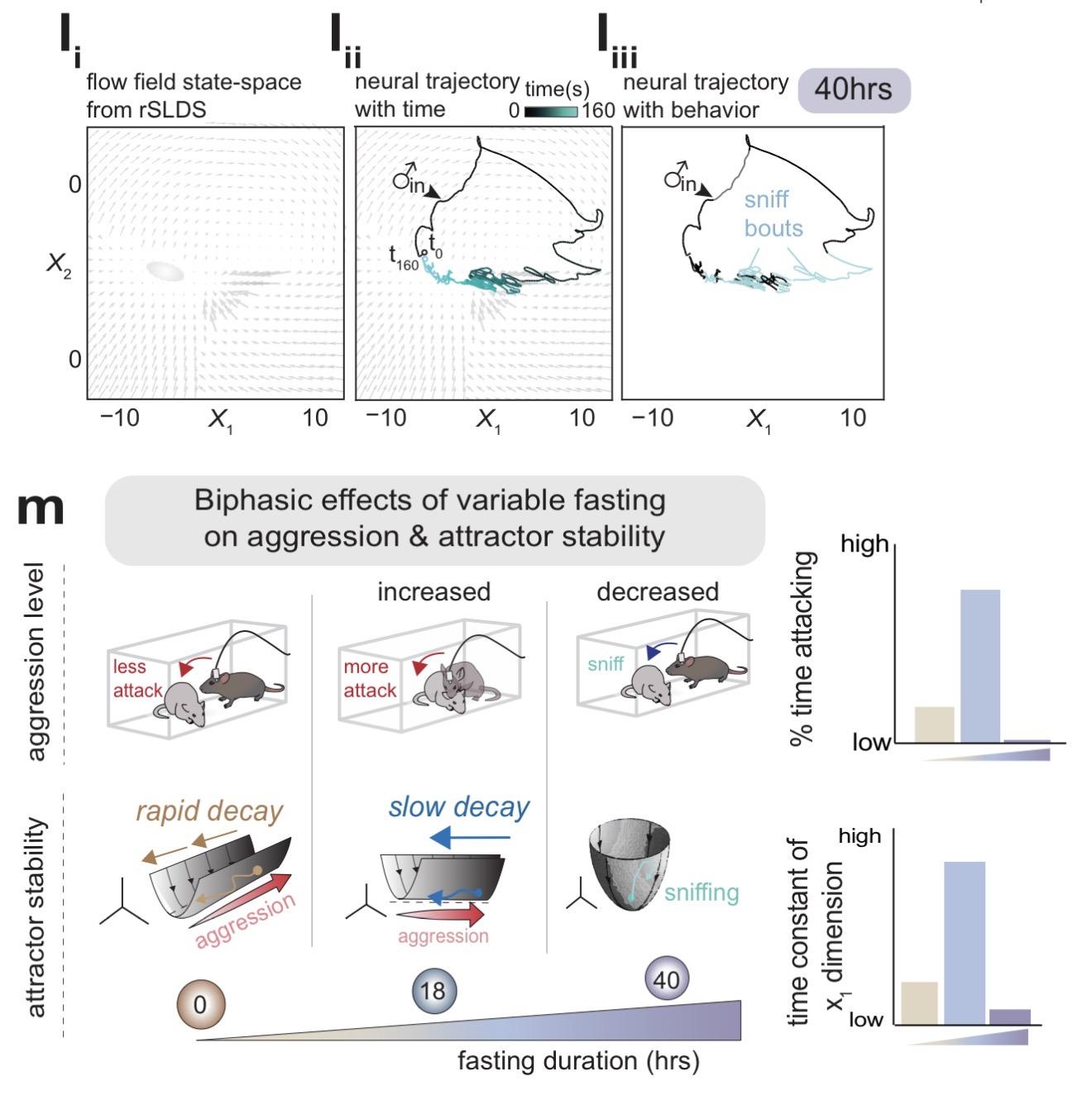
🧠 New preprint by Kim et al. (2025) from David Anderson’s lab: A line #attractor maintains aggressiveness during feeding in “hangry” mice 🍔🐁. Using in vivo #CalciumImaging and #rSLDS modeling, they show how moderate fasting stabilizes an aggression-related attractor in #VMHvl, while prolonged fasting collapses it, linking hunger, motivation, and aggression through #PopulationDynamics:

🌍 https://doi.org/10.1101/2025.10.16.682711

#Neuroscience #CompNeuro #Behavior #AttractorDynamics #Hypothalamus #2p #imaging

3 media
Fig. 1 | Moderate food deprivation enhances aggression in male mice.
Fig. 2 | Moderate fasting enhances ramping and persistence in a VMHvlEsr1 latent slow mode.
Fig. 3 | Prolonged fasting duration reveals biphasic effects on aggression and stability of VMHvlEsr1 attractor dynamics.

A line attractor maintains aggressiveness during feeding in “hangry” mice

  • Copy link
  • Flag this post
  • Block

bonfire.cafe

A space for Bonfire maintainers and contributors to communicate

bonfire.cafe: About · Code of conduct · Privacy · Users · Instances
Bonfire social · 1.0.1 no JS en
Automatic federation enabled
Log in
  • Explore
  • About
  • Members
  • Code of Conduct