
"Duccio, è vero che c'è una bellissima atmosferaaaaaaa?"
La Bosnia Erzegovina ha risposto ai funerali di Mladić in Serbia https://www.ilpost.it/2026/09/08/bosnia-erzegovina-ritiro-ambasciatore-serbia-contro-funerali-mladic/
Discussion
"Duccio, è vero che c'è una bellissima atmosferaaaaaaa?"
La Bosnia Erzegovina ha risposto ai funerali di Mladić in Serbia https://www.ilpost.it/2026/09/08/bosnia-erzegovina-ritiro-ambasciatore-serbia-contro-funerali-mladic/
@consumablejoy @rainbow_phoenix @Pufferfish I also use Finch and a whole bunch of disabled (inc ME/CFS) folks I know also use it.
You can't focus with friends in the same way you can with Forest but it does have a focus thing as has been said & a social angle too.
@alexisbushnell @rainbow_phoenix @Pufferfish I am looking for people to connect with on Finch so if you want to connect with me I can send you my friend code.
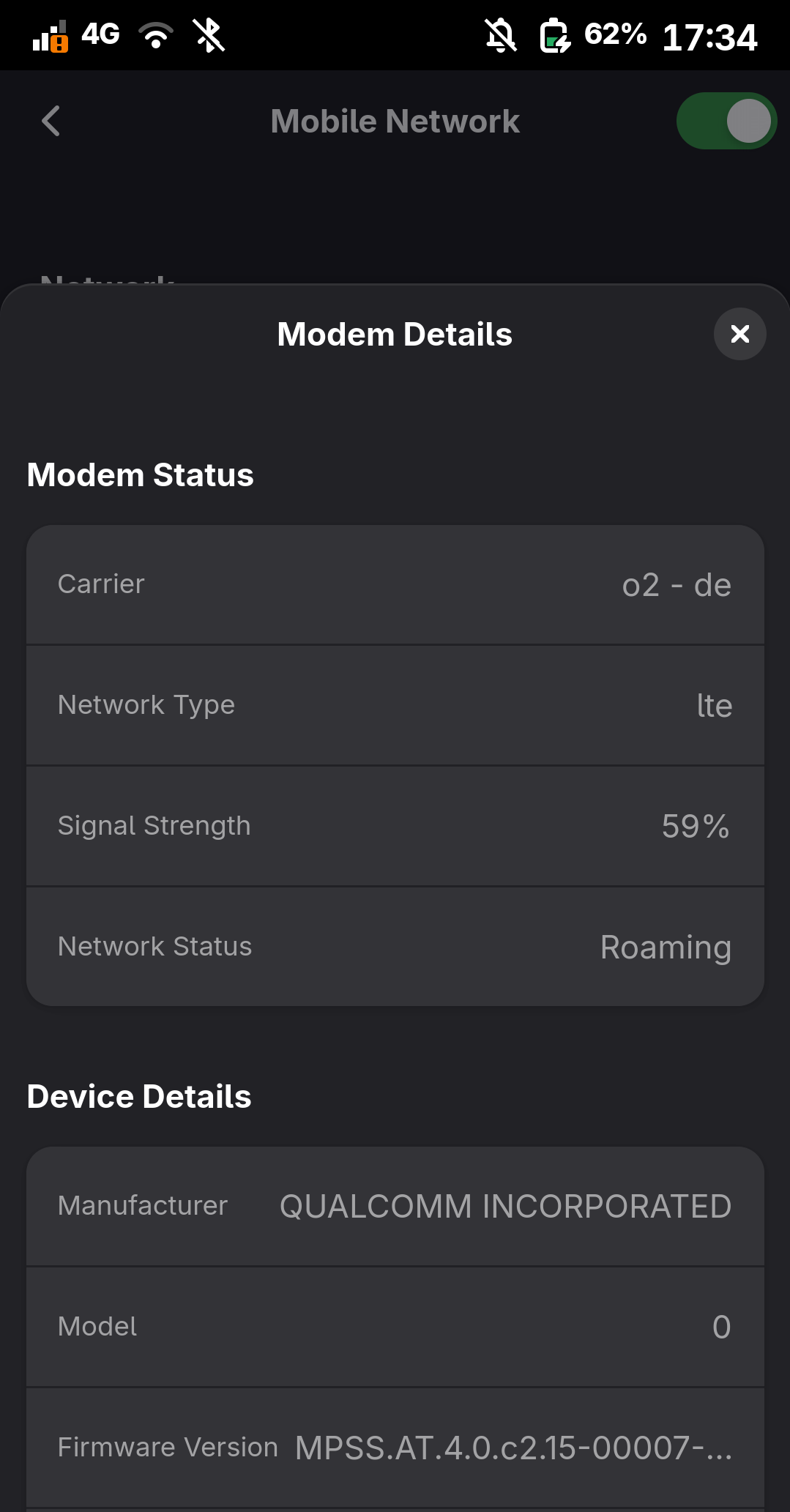
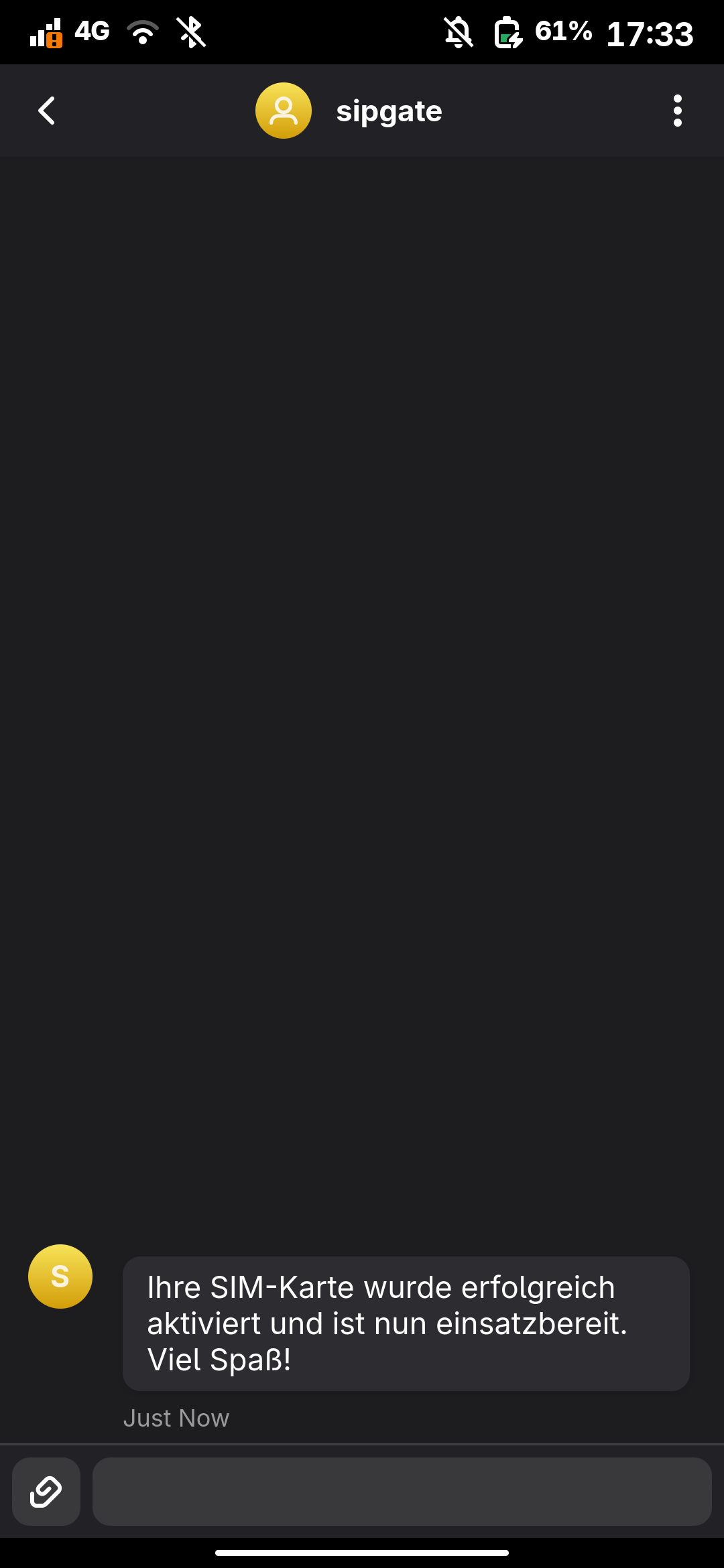
Hello I'm calling you from Linux 7.1.0-rc1-sdm845 and all I had to do was putting a SIM card into the sim slot.
#postmarketOS is just insane nowadays
shit we should have written this in Java, then we could have written once, run anywhere 😢
@cwebber [doubt dot gif]
HELPFUL TIPS FOR MEN:
Hey guys! Are you wondering how to get that girl's number that you've seen at the club or on the bus or at the gym? Well just remember, women don't owe you shit.
Are you concerned that some trans women have been playing a game with other women? Easy, just remember, women don't owe you shit.
Have you ever been worried that one day, you might have to live in a nation with a female president? That's right. Women didn't owe you shit.
Introducing:
✨Women Don't Owe You Shit✨
The fast, easy, and effective way to handle all those big emotions that happen inside your own body whenever women demand equal respect or rights in this society that we share. Remember, if you're upset because a woman somewhere owes you her time, attention, or emotional management skills, no she fucking does not.
✨Women Don't Owe You Shit ✨
Ask your doctor if it's right for you. She'll tell you yes.
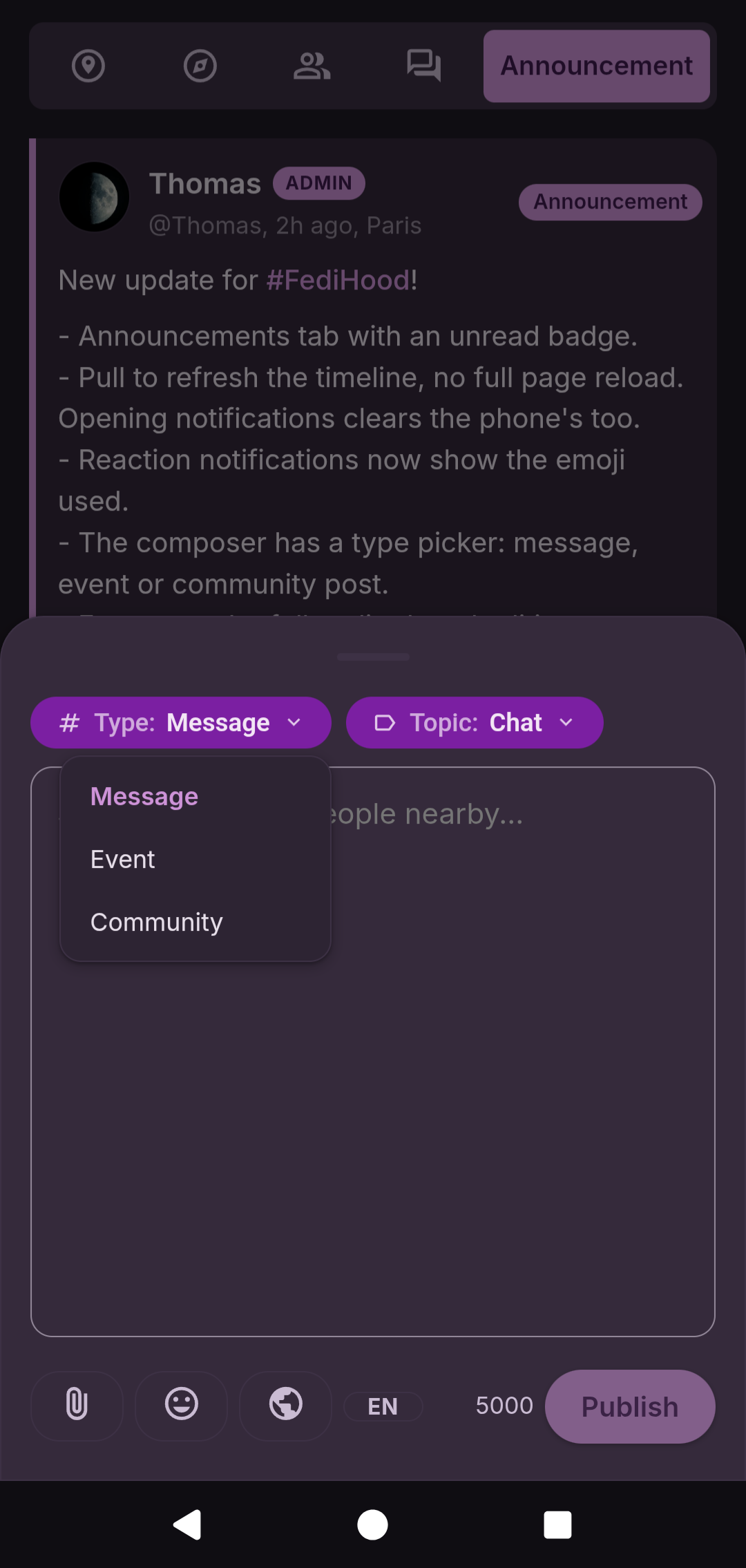
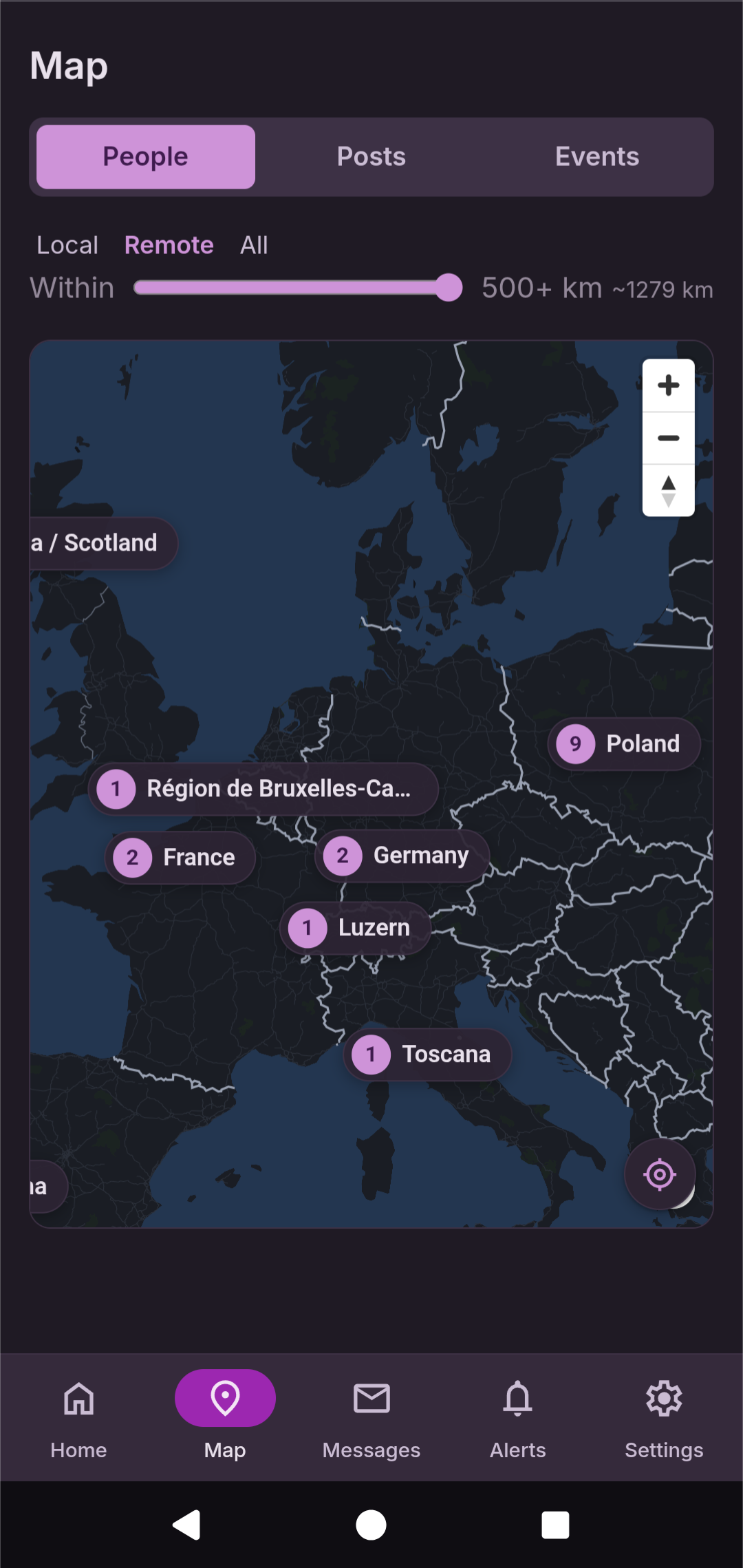
#FediHood now has a better composer. You can post three types: messages with topics, events and communities.
There is also a bot that can put anyone from the #Fediverse on the map (a remote filter is available). More about how to appear: https://fedihood.social/locator
Real photos of young girls were in nudify-app ads on Facebook, Instagram
Meta dragged its feet removing ads that nudify young girls' Instagram pics.
https://arstechnica.com/tech-policy/2026/09/real-photos-of-young-girls-were-in-nudify-app-ads-on-facebook-instagram/?utm_brand=arstechnica&utm_social-type=owned&utm_source=mastodon&utm_medium=social
@arstechnica So... Turn this around a little bit and... If Zuckerberg's crass misogynistic "Hot Or Not" clone is where Facebook started, maybe they haven't moved too far on from that?
At the heart of Meta is a global inventory of all the humans the Epstein class might want to rape and abuse. Instagram is deciding to try another channel to monetize the warehoused inventory.
@tcit 😅
Here's a problem that I've found with ActivityBot - my little ActivityPub server. Sometimes it receives messages which were originally sent months ago. Why does that happen and is it risky to accept and process them?
My tl;dr is that it probably isn't worth worrying about. But I'd love someone to tell me why I'm wrong.
Here's my thinking:
All ActivityPub messages should have a "published" timestamp in their body. Some will have an "updated" timestamp. That tells you, unsurprisingly, when the message is alleged to have been originally published or updated. That time might be very different to the time you receive the message.
There are, I think, three different reasons why a server might receive a message which has an out-of-date timestamp.
The first is that sometimes servers are just slow. Processing thousands of messages at the same time means that some of those messages take a while to send. ActivityPub is one big chain-mail so it can take several minutes for a message to be sent to all your followers.
Similarly, your server might be slow. If it doesn't acknowledge receipt of a message, the original server will try sending it again. Sometimes that can take a while.
Finally, some servers take a relaxed view of standards. They send an update to an old message but keep the original publication date. Ideally, they'd use an "updated" timestamp but quite often they don't.
For the purposes of checking the legitimacy of the message, you do not need to check when a message says it was published or updated. You might want to check it isn't an obviously bogus date like far in the future or impossibly far in the past - but that's up to you.
It is normal that your server receives messages which appear to have been published at a totally different time from now.
Probably not.
As described above, there are various reasons why a message may be delayed in transit - or may appear to come from the distant past.
What we can check is when the message was cryptographically signed by the sending server. This is independent of its published or updated timestamp.
HTTP requests to your server will have a date header which looks like Tue, 01 Sep 2026 15:54:21 GMT - this is in the slightly peculiar and Anglocentric RFC 5322 format.
New style RFC 9421 headers will also have a signature-input header which will contain something like created=1788278061. That uses the slightly obscure UNIX / POSIX time which counts seconds since the "Epoch" of 1st January 1970.
If you convert the UNIX time to something more modern, you should get an identical value to the date header.
But that isn't always the case. For example, the RFC 9421 standard gives this example:

 Date: Tue, 20 Apr 2021 02:07:55 GMT
"@signature-params": ("@method" "@authority" "@path" \
"content-digest" "content-length" "content-type")\
;created=1618884473;keyid="test-key-rsa-pss"
Converting 1618884473 to normal time gives Tue, 20 Apr 2021 02:07:53 - a two second difference.
If the date and created values differ significantly - that may indicate that the message is untrustworthy. Or that there was a delay between the signing and the sending.
The spec says:
The Date header field value represents the timestamp of the HTTP message. However, the creation time of the signature itself is encoded in the created signature parameter. These two values can be different, depending on how the signature and the HTTP message are created and serialized. Applications processing signatures for valid time windows should use the created signature parameter for such calculations. An application could also put limits on how much skew there is between the Date field and the created signature parameter, in order to limit the application of a generated signature to different HTTP messages.
7.2.4. Choosing Signature Parameters and Derived Components over HTTP Fields
But, of course, it doesn't tell you how much skew is problematic. It's up to you how much skew you're prepared to accept.
So that's the difference between the sent time and the signed time. The next time to check is your own. As we've discussed, sometimes servers are slow sending things out. Would you accept a request that was signed five minutes ago? Five days ago? Five months ago? What amount of difference is dangerous?
Here's what various services and sages have to say:
The request contains a Date header. Compare it with current date and time within a reasonable time window to prevent replay attacks.
What is "reasonable"? The source code suggests one hour.
Time in the Date header must differ from the recipient server’s clock by no more than 30 seconds
static #maxDateDiff = 5 * 60 * 1000 // 5 minutes
The standards don't give a concrete time window to use for this comparison. In practice, an hour plus a few minutes buffer in either direction may be a good value, to account for both clock skew and differences in time zone/daylight savings time configuration across systems.
Without naming names, it looks like a bunch of popular servers don't check whether there's a significant difference between the date the request was signed and the date it was received.
Various documents and implementations recommend anything between 30 seconds to "a bit more than 60 minutes". Or they just ignore any date difference.
What's the right answer? What happens if the signed date is significantly different from the current date?
Replay Attacks. Suppose someone is listening to the communications between the sending server and your server. They copy the message that is sent to you. Later they send it again!
At this point, you might be thinking "so what?" and… I'm inclined to agree with you!
What's the worst that could happen if you received the same message multiple times? Two things that I can think of.
Firstly, it might not be the same message. It is possible to send a new message but with old headers. An attacker could make someone post "I hate Taylor Swift" against their will and watch as legions of fans disembowel the victim.
Except, I don't think this is likely. The signature in the header contains a hash of the message being sent. If you are properly validating the signature, a changed message will have a different hash from the one in the original message. You don't need to check timestamps, you just need to check if the hashes match.
Secondly, idempotence. That's a fancy word for "pressing the button multiple times should only result in one action".
What happens if a user appears to send you multiple "like" messages for a single post? You only record one like.
What if they send multiple messages with the same content? Well, each will have a unique ID in the message - so you only post it once.
What if they send multiple anythings? I can't think of any ActivityPub action which would not be idempotent.
About the worst thing I can think of is this:
It's also possible the following could happen:
Perhaps the same can happen with like/unlike, block/unblock, boost/unboost.
But none of that is significantly prevented by checking the date.
Ultimately, it is up to your sever to check the unique ID of each message and refuse to action any repeated messages. You may not want to trust the unique ID which is sent with the message. If that's the case, you can calculate your own - perhaps using a hash of the contents, the signature, or some other process which will generate an ID based on the message.
Here's what you need to do to prevent replay attacks:
I don't see what checking the timestamp of the HTTP signature has to do with anything. Someone who has access to the original messages and their headers could send them milliseconds after the original delivery.
I think it is probably pragmatic to give messages 60ish minutes grace before dropping them. Delays happen, but anything more significant than an hour might indicate a attack. But, equally, might just mean that the Internet is having a slow day.
If you are correctly checking signatures and hashes, I don't think you need to worry about skew between signature date and delivery date.
Please tell me where I have erred! Stick a comment in the box or drop me an email. If I've made a massive or subtle mistake, I'd love to know what.
#ActivityBot #ActivityPub #http #security@blog@shkspr.mobi I know there are fedi trolls who send activities with timestamp set very far in the future just to mess around with other people.
I believe I also did this myself once with a blog post I set with a publish date 1 year in the future 
@casey
I try to ask them to use apropriate Content Warnings, necessary if I want to boost them.
@gazaverified
And that’s an absolutely fair requirement for boosting, and interacting in general. I recognize that oftentimes suggestions, requests and warnings can go ignored and how frustrating that can be. I also recognize that I’ve never come close to experiencing a genocide and losing loved ones before my eyes, year after year.
We’ll all just keep doing the best we can to respect each other and have patience with one another to the best of our abilities.
---werbung
Nutzt du schon Wero? Wir können uns damit sekundenschnell Geld von Konto zu Konto senden - Handynummer genügt. Und du kannst auch in immer mehr Online-Shops bezahlen. Besuche wero-wallet.eu/de und schau unter „Jetzt Wero aktivieren“ nach, ob deine Bank schon dabei ist.
werbung---
@ajuvo
Schon mal mit der ING App auf nem Android versucht Wero zu aktivieren?
Gutes Gelingen.
Wieso kann man nicht eine Wero App anbieten, die auf allen Plattformen funktioniert und man nicht zwingend auf die Banking App angewiesen ist?
Für mich leider nicht nutzbar, obwohl ich es gerne nutzen würde.
Do I need a 30 cm campagnard? No, that thing is ridiculously big when cooking for yourself.
Do I want a special Klingon edition? Fuck yes! It wil bring glory to my kitchen!!
https://www.lecreuset.nl/nl_NL/c/collections/le-creuset-x-star-trek
Love earth back?
Or asstodon?
How psychedelics changed my life https://www.keepgoingpod.com/p/my-new-book-shroomies-is-out-today
"A US appellate court has decided that the federal constitution does not guarantee a right to clean water."
Bitch, they literally tryina kill us... you know this, right?
#FediHood now has a better composer. You can post three types: messages with topics, events and communities.
There is also a bot that can put anyone from the #Fediverse on the map (a remote filter is available). More about how to appear: https://fedihood.social/locator
Sorry, the app encountered an unexpected error

Install bonfire.cafe
Get the full app experience