RE: https://c.im/@cdarwin/117424109217801849
Will Elmo have to host his own "followers" now?
Discussion
RE: https://c.im/@cdarwin/117424109217801849
Will Elmo have to host his own "followers" now?
RE: https://piaille.fr/@flus/117426659334219898
Trop fier du taf produit sur cette 3.0 🥰
L’une des fonctionnalités que j’aime le plus, c’est de pouvoir publier ses fils : non seulement on agrège ses sources, mais en plus on peut les partager très facilement. Ça permet de faire des blogrolls ou des planets très facilement.
Par exemple, j’ai créé un fil "Planet Flus" pour suivre ce qui se dit sur Flus : https://app.flus.fr/streams/1872893744053032509 (pour l’instant c’est pas très actif :P)
Et comme les fils publient un flux RSS, n’importe qui peut les suivre !
Und eine andere Frau, die nun das Minister_innenamt füllen kann, kann die SPD leider nicht ,finden‘.
So etwas dürfte in einer Partei auf der Höhe der Zeit auch nicht sein.
RE: https://bsky.app/profile/did:plc:xjw5wikjhxxf3hlpv7cvjbhp/post/3mxnvmcrkb22g
We have exciting new additions!
And.... I'm going to post about them in the morning...... Of course, if you head to https://www.nvaccess.org/ now, I'm sure you can find them!
(More details tomorrow!)
#NVDA #NVDAsr #ScreenReader #Accessibility #GetHelp #AccessibilityTesting #Training #Website #Update #New #News
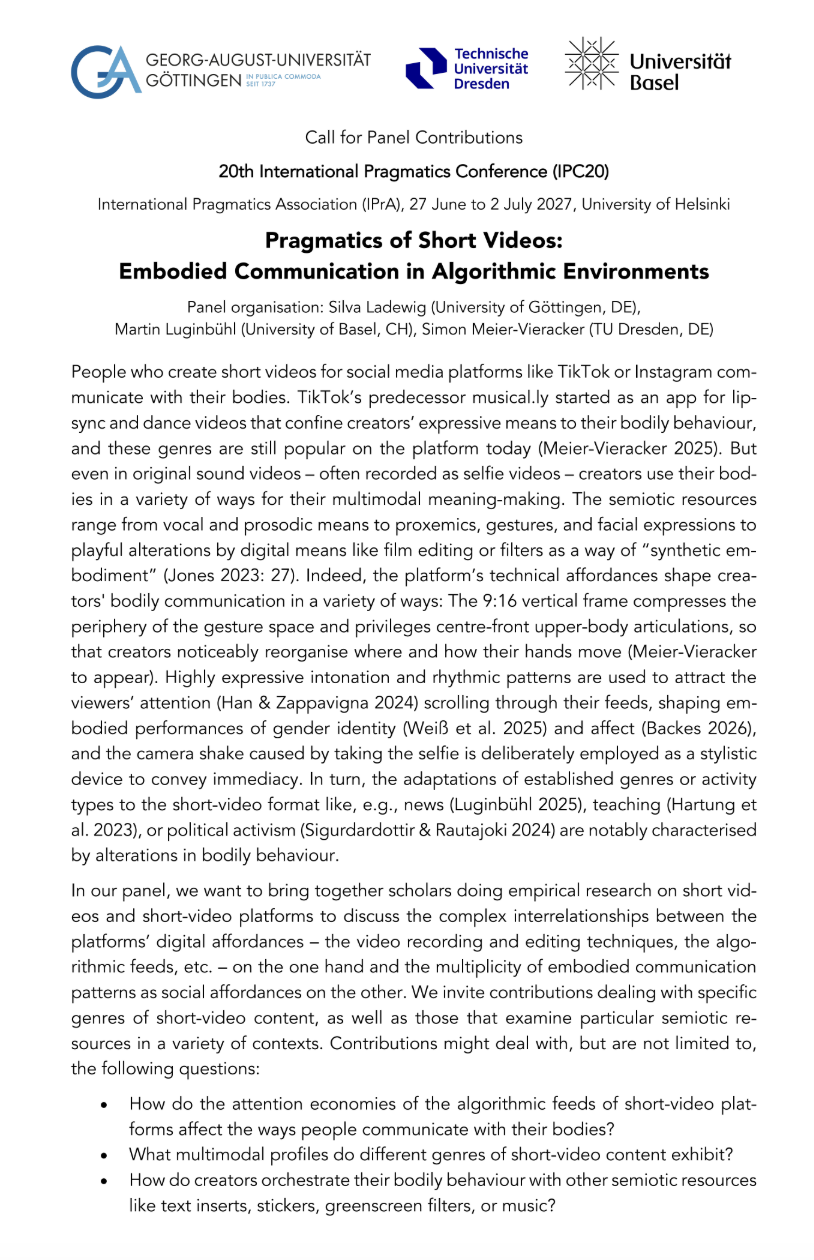
GENTLE REMINDER: Submit your abstract to our fantastic IPrA-Panel "Pragmatics of Short Videos: Embodied Communication in Algorithmic Environments" until Wednesday, 15 Oct.
Silva Ladewig, Martin Liginbühl and I are looking forward to your abstracts (< 500w) https://tinyurl.com/4raakb3b
Bärbel Bas tritt als Arbeitsministerin und SPD-Vorsitzende zurück
Dieser Schritt dürfte für die meisten überraschend kommen: Arbeitsministerin und SPD-Co-Chefin Bas hat angekündigt, ihre Ämter abzulegen. Sie begründete ihre Entscheidung mit persönlichen Gründen und öffentlichen Angriffen.
Während Markus Söder und die Union lange Zeit einen regelrechten Kulturkampf gegen die Wärmepumpe geführt haben , sind viele Menschen in Deutschland deutlich weiter. Im ersten Halbjahr 2026 wurden 40 % mehr Wärmepumpen verkauft als im Vorjahreszeitraum. Heute kann man mit der Wärmepumpe richtig Heizkosten sparen, wenn man dabei einige wichtige Dinge beachtet. Mehr dazu in meinem neuen YouTube-Video.
https://youtu.be/89KHBbqQWzc
#Wärmepumpe
Hyggelig drikke ☕ #openstreetmap Søndag eftermiddag - med 2 nye der dukkede op - til bla. intro til @streetcomplete og @everydoor - og en enkelt genganger til hygge
Også snak om maps og app's hvor #BigTech ikke sælger data om dig - og redigering i @CoMaps
Ingen @streetcomplete gåtur i området - på grund af 🌧️ 🌧️
Også noget snak om @streetcomplete til IOS i beta - se @weeklyOSM
Næste #osmmappercph 8. November kl. 13-17 på Cafe Bevars https://osmcal.org/event/5303/
@DukOp https://dukop.dk/10721/
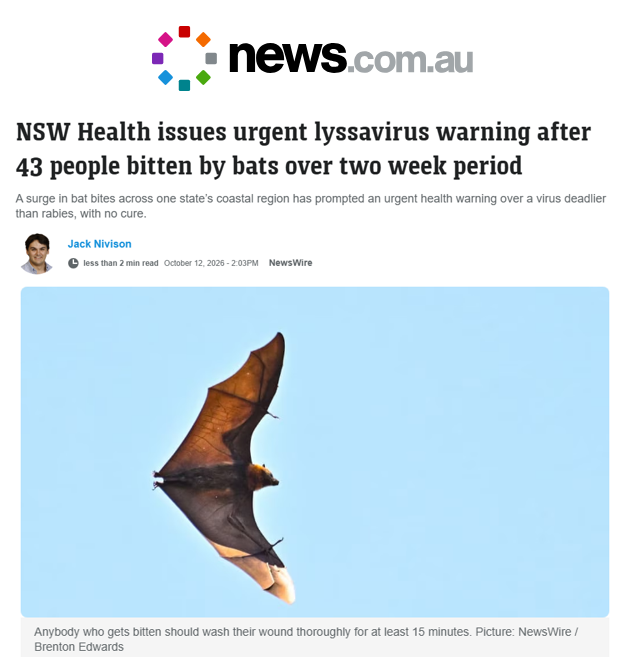
"NSW Health issues urgent lyssavirus warning after 43 people bitten by bats over two week period."
"Between September 28 and October 10, 43 people were assessed by NSW Health after they were scratched or bitten by bats, with most incidents taking place in coastal parts of the Hunter, Mid-North Coast, Northern NSW and The Central Coast."
RE: https://mastodon.social/@pojntfx/117425605598388134
passkeys: do not use them.
🎙️ Risky Bulletin: ShinyHunters suspects arrested in US and Jordan
RE: https://mas.to/@Jyoti/117424812152674491
As a literal inkjet printer engineer, I am forced to agree
If anyone would like a hangi or to donate a hangi to someone in need, while also raising money for the Green Party South Auckland campaign, here is where to go --
How robot dogs see the unseeable: Improving visual interpretability via peering for exploratory robots
Abstract
In vegetated environments, such as forests, exploratory robots play a vital role in navigating complex, cluttered environments where human access is limited and traditional equipment struggles. Visual occlusion from obstacles, such as foliage, can severely obstruct a robot’s sensors, impairing scene understanding. We show that “peering,” a characteristic side-to-side movement used by insects to overcome their visual limitations, can also allow robots to markedly improve visual reasoning under partial occlusion. This is accomplished by applying core signal processing principles, specifically optical synthetic aperture sensing, together with the vision reasoning capabilities of modern large multimodal models. Peering enables real-time, high-resolution, and wavelength-independent perception, which is crucial for vision-based scene understanding across a wide range of applications. The approach is low cost and immediately deployable on any camera-equipped robot. We investigated different peering motions and occlusion masking strategies, demonstrating that, unlike peering, state-of-the-art multiview three-dimensional vision techniques fail under these conditions because of their high susceptibility to occlusion. Our experiments were carried out on an industrial-grade quadrupedal robot. However, the ability to peer is not limited to such platforms but potentially also applicable to bipedal, hexapod, wheeled, or crawling platforms. Robots that can effectively see through partial occlusion will gain superior perception abilities, including enhanced scene understanding, situational awareness, camouflage breaking, and advanced navigation in complex environments.
DISCUSSION
Exploratory field robots have significantly expanded our ability to investigate environments that are too dangerous, remote, or inaccessible for humans. These robots enhance safety, reduce costs, and enable continuous data collection in challenging conditions. They are widely used in environmental monitoring, agriculture, mining, disaster response, space exploration, underwater research, and infrastructure inspection. By performing tasks like mapping terrain, assessing hazards, and gathering scientific data, field robots play a crucial role in advancing research, improving operational efficiency, and supporting safer decision-making across many applications. In vegetated environments, such as forests, exploratory robots play a vital role in navigating complex, cluttered environments where human access is limited and traditional equipment struggles. Equipped with advanced sensing, mapping, and mobility capabilities, these robots can move through undergrowth, around obstacles, and beneath forest canopies to gather information for biodiversity monitoring, wildfire risk assessment, conservation planning, tracking wildlife, surveillance, and studying forest health indicators such as soil conditions, canopy density, and the spread of plant diseases or parasites. Visual occlusion from obstacles like vegetation or debris at disaster sites can severely block a robot’s sensors, causing conventional systems like cameras and LiDAR to yield incomplete data.
This compromises accuracy and hampers scene understanding and navigation. We show that severe occlusion creates such significant data gaps that even advanced machine learning techniques like vision reasoning fail. However, we demonstrate that “peering,” a behavior insects use to overcome vision limitations, can also enable robots to significantly enhance their vision reasoning under partial occlusion.
The statistical analysis in (64) makes three key findings of synthetic aperture sensing for occlusion removal: First, its efficacy is highly dependent on the occlusion level. It performs optimally at approximately 50% occlusion. For occlusions significantly above this threshold, effective removal becomes more difficult. Conversely, for cases far below it, the application of synthetic aperture sensing is often unnecessary. Second, the size of the SA does not need to be very large (64). A minimal baseline is one that yields a disparity equal to the projected occluder size. Third, the visibility gain depends on the number of integrated samples. This number does not need to be extremely high, but must not be undersampled (64). In scenarios where occlusion masking successfully removes occluder pixels, a higher sample count increases the statistical probability of observing the background through gaps in the occluding foreground. Consequently, more samples are beneficial in such cases. However, with an adaptive SA approach (86,87) that takes more samples in sparse regions and fewer in dense ones, this number can be significantly reduced.
Our experiments were carried out on a quadrupedal robot. However, the ability to peer is not limited to such platforms, but is also applicable to bipedal, hexapod, wheeled, or crawling platforms. The peering motion can be achieved either by moving a camera payload, by moving the robot’s entire frame (e.g., during navigation), or both. While sensor fusion can further enhance performance, multi- spectral and omnidirectional vision offer solutions for a wide range of applications. Adaptive sampling in response to local occlusion conditions would lead to enhanced results. All of this must be investigated in the future. For practical systems, all computations must be performed onboard within the robot’s processing framework, rather than being separated into online recording and offline pre-processing as we did for experimental simplicity. Vision reasoning can be implemented either using smaller, locally deployed LMMs (such as Qwen) running directly on the robot, or via remote API calls from the robot to large-scale models, such as the latest versions of ChatGPT, Gemini, Claude, Kosmos, or LLaMA. Currently, computing SA integral images takes milliseconds on our hardware (e.g., 17ms to process 300 images at 1080^2px resolution). However, performing reasoning on these images using ChatGPT takes considerably longer, typically 10-20s per SA integral, depending on the server load. Local model deployment would significantly reduce this latency.
An alternative approach might be to apply vision reasoning directly to the raw input images, bypassing the integration step. This may seem practical when dealing with perspectives containing significant occlusion gaps. As illustrated in Fig. S2 of the Supplementary Materials, this approach can only detect background objects visible through sufficiently large gaps. While using multiple images may increase the number of identifiable objects, those that are heavily occluded in all views remain undetectable. Synthetic aperture integral imaging overcomes this limitation. Moreover, it enables the rapid computation of a focal stack (a series of images at varying synthetic focal distances). Applying vision reasoning to this focal stack allows object identification without prior knowledge of their distances or manual focal adjustment, as also demonstrated in Fig. S2 of the Supplementary Materials. Although processing image sequences increases vision reasoning times, small focal stacks (e.g., 10 layers) can be analyzed at moderate speeds of a few seconds (15-25s in our case, depending on server load).
Replacing peering with a static array of camera sensors (65) would severely undersample the SA signal. It would also result in large, complex payloads, require extremely high bandwidth to transmit multiple parallel video streams, and prevent adaptive sampling in response to local occlusion conditions. Active sensors like LiDAR and radar can also overcome occlusion but suffer from drawbacks such as low spatial resolution, a lack of multispectral data (e.g., color, temperature), and, for adequate resolutions, longer processing times for tasks like pulse compression and point-cloud registration. Peering enables real-time and high-resolution perception (which is essential for vision- based scene understanding) that is low-cost and immediately deployable on any camera-equipped robot.
The potential impact of this technology is significant. Robots that can effectively “see through” partial occlusion would possess superior perception capabilities including: scene understanding, situational awareness, and navigational capabilities in complex environments. This opens a wide range of applications. For instance, camouflage breaking is not only a subject of computer vision and image processing (88) but also a motion-parallax-based hunting strategy used by predators (89,90). This effect can also be achieved through peering, as demonstrated in simulation (see Fig. S3 in the Supplementary Materials).
We can learn peering strategies for robotics by studying evolved animal behaviour. This, however, creates a bidirectional exchange where robotics research and animal behaviour studies can stimulate and build upon one another. Whether peering serves functions beyond distance estimation and camouflage breaking in unoccluded environments – such as detecting camouflaged prey through occluding foliage – remains unexplored today.
(pdf here but I get not wanting to click it: arxiv.org/pdf/2511.16262v3)
Thanks @franzs for the very technical article on enchanting security on #Guix
https://gofranz.com/blog/stepping-up-guix-system-security/
It would be nice to review the defaults and provide hardening out of the box.
Democrats must “win by massive numbers”
during November’s federal midterm elections
because Donald Trump and his Republican allies are bound to try to
sow doubt about the integrity of the results,
Democratic Senate candidate Abdul El-Sayed of Michigan said on Sunday.
El-Sayed’s comments on NBC’s Meet the Press came with the Democrats favored to win control of the House of Representatives during the 3 November midterms
– and polls show that the party could also win Senate seats in states that traditionally elect Republicans and gain a majority there, too.
Meanwhile, Trump has long baselessly maintained that the 2020 presidential election which he lost as an incumbent to Joe Biden was stolen by fraudsters.
https://www.theguardian.com/us-news/2026/oct/11/abdul-el-sayed-democrats-must-win-by-massive-numbers?CMP=Share_iOSApp_Other
RE: https://mastodon.social/@harshil/117417466143710903
Use “fuck everything, we’re doing ten stars” you cowards.
snac is a simple, minimalistic ActivityPub instance written in portable C (https://codeberg.org/grunfink/snac2).
I've created an OpenBSD port for it (www/snac) -
https://github.com/ligurio/openbsd-wip/tree/master/www/snac
// CC: @grunfink
@marcocappato Asse Trump-Netanyahu-Putin, direi.
Gardening In Small Spaces
"Every tiny patch of wildlife-friendly garden is one more link in the chain. Your pot of marigolds on your window-sill could be just the right pitstop for a passing bee. Your front door rosemary bush could be exactly what those ladybirds were waiting for. Your bare concrete yard could be transformed with just a few planters and ponds."
https://mycoronationgarden.org/gardening-small-spaces
You need to log in to see that page.

Install bonfire.cafe
Get the full app experience