Discussion
Loading...

Post

Log in
  • About
  • Code of conduct
  • Privacy
  • Users
  • Instances
  • About Bonfire
Kaye Menner Photography
@KayeMenner@mastodon.social  ·  activity timestamp 3 months ago

Kaye Menner sold a Jigsaw Puzzle - 18" x 24" (500 Pieces) to a buyer from Dorking, Surrey (United Kingdom). Thanks to the buyer.
One of my best selling images...

Wide variety #Prints & lovely #Products at:

https://kaye-menner.pixels.com/featured/washing-machines-of-yesteryear-kaye-menner.html https://buff.ly/20pDglQ

#photography #homedecor #mastoart #fediverse #fediart #fedigiftshop #giftideas #wallartforsale #Art #artforsale #BuyIntoArt #AYearForArt #Artist #FineArtAmerica #PhotographyFeed #VisualArts #CreativeArts

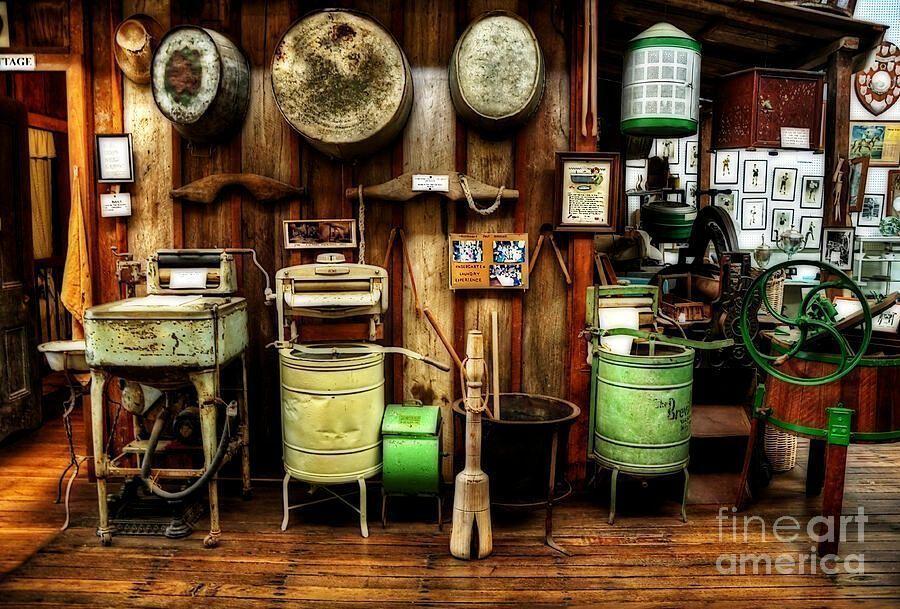
I captured this image in an old museum on mid north coast, NSW, Australia.

Clothes washer technology developed as a way to reduce the manual labor spent, providing an open basin or sealed container with paddles or fingers to automatically agitate the clothing. The earliest machines were hand-operated and constructed from wood, while later machines made of metal permitted a fire to burn below the washtub, keeping the water warm throughout the day's washing.

The earliest special-purpose washing device was the scrub board, invented in 1797.

By the mid-1850s, steam-driven commercial laundry machinery was on sale in the UK and US. Technological advances in machinery for commercial and institutional washers proceeded faster than domestic washer design for several decades, especially in the UK. In the US there was more emphasis on developing machines for washing at home, though machines for commercial laundry services were widely used in the late 19th and early 20th centuries. The rotary washing machine was patented by Hamilton Smith in 1858. As electricity was not commonly available until at least 1930, some early washing machines were operated by a low-speed single-cylinder hit and miss gasoline engine.

After the items were washed and rinsed, water had to be removed by twisting. To help reduce this labor, the wringer/mangle machine was developed.

I captured this image in an old museum on mid north coast, NSW, Australia. Clothes washer technology developed as a way to reduce the manual labor spent, providing an open basin or sealed container with paddles or fingers to automatically agitate the clothing. The earliest machines were hand-operated and constructed from wood, while later machines made of metal permitted a fire to burn below the washtub, keeping the water warm throughout the day's washing. The earliest special-purpose washing device was the scrub board, invented in 1797. By the mid-1850s, steam-driven commercial laundry machinery was on sale in the UK and US. Technological advances in machinery for commercial and institutional washers proceeded faster than domestic washer design for several decades, especially in the UK. In the US there was more emphasis on developing machines for washing at home, though machines for commercial laundry services were widely used in the late 19th and early 20th centuries. The rotary washing machine was patented by Hamilton Smith in 1858. As electricity was not commonly available until at least 1930, some early washing machines were operated by a low-speed single-cylinder hit and miss gasoline engine. After the items were washed and rinsed, water had to be removed by twisting. To help reduce this labor, the wringer/mangle machine was developed.
  • Copy link
  • Flag this post
  • Block

bonfire.cafe

A space for Bonfire maintainers and contributors to communicate

bonfire.cafe: About · Code of conduct · Privacy · Users · Instances
Bonfire social · 1.0.1-beta.35 no JS en
Automatic federation enabled
Log in
  • Explore
  • About
  • Members
  • Code of Conduct