
Let's do this.

@TechConnectify brilliant
Let's do this.
@TechConnectify brilliant
I'm doing an adult education course at the moment. AI is rampant, obviously, but I was really shocked to find that more than one person in the class has named their chatbot. When I responded in amazement at this revelation, they were shocked that I was shocked.
We can't actually build AGI with LLMs - it's like trying to get to the moon by stacking ladders.
We can, however, anthropomorphize them to a point where people think they're a valid voice in a conversation. "ChatGPT says..." - which is an incredibly charitable way to sum up a service that loosely paraphrases whatever webpage "I'm feeling lucky" would give you after filing off the serial numbers and reverse-engineering reasonable looking citations for it.
First post on public network created using minimitra:
All identifiers are ap URIs, so only FEP-ef61 implementers can load this post and interact with it.
1 like from forte
Prosegue la saga degli appunti e dei collegamenti casuali ed eventualmente sconnessi.
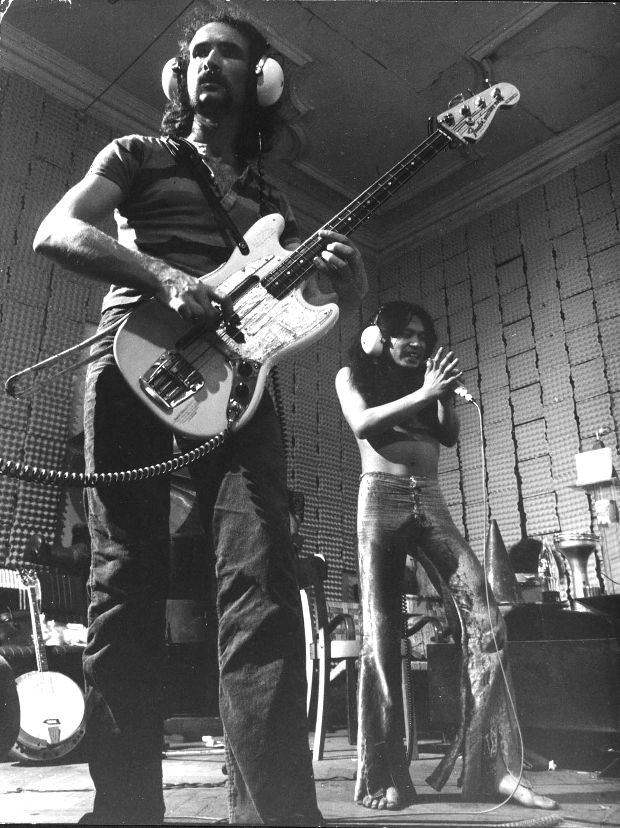
Inizio con una bella foto che ritrae Holger Czukay e Damo Suzuki dei Can agli Inner Space Studios a Weilerswist. I Can, una di quelle band che è in grado di innalzare di parecchio sopra il livello della media la musica di quelli che riesce a influenzare.
Dai Can a un’altra band che adoro, i Silver Apples, ovvero Simeon Coxe e Dan Taylor, tra i primi a credere che si potesse mischiare il rock con l’elettronica e tirarne fuori qualcosa di nuovo. Era il 1967-1968, addirittura. Consiglio molto, oltre all’ascolto dei primi due album degli Apples, questo articolino di Randall Roberts che racconta la storia della band e dell’idea che ci sta dietro: prendere dei vecchi oscillatori usati dall’esercito americano durante la Seconda guerra mondiale per disturbare le comunicazioni dei nazisti e farci della musica. Notevole.
Dalla musica sperimentale, eseguo un volo pindarico e atterro nella Tuscia viterbese (la terra che mi ospita), sul suo suolo ammaccato e sulle sue falde acquifere in sofferenza. Mi danno l’opportunità di farlo due articoli apparsi su «Dinamo Press» il mese scorso. Li firma Bengasi Battisti, ex sindaco di Corchiano, che molti di noi conoscono per le lotte in difesa dell’acqua pubblica e per quelle contro le coltivazioni estensive di noccioleti affamate di fitofarmaci che coprono la provincia. I temi affrontati dai due articoli sono le cave dismesse e abbandonate che attendono la bonifica, e l’uso degli erbicidi a base di glifosato. Riguardo a quest’ultimo punto è significativo, sottolinea Battisti, che lo studio scientifico che è stato usato per decenni per sostenere l’innocuità del glifosato sia stato recentemente ritirato perché si è scoperto che era stato manipolato dalla Monsanto, azienda produttrice del famoso erbicida Roundup. Vedi il caso alle volte?
Nei movimenti, qualcosa si muove. Il mese scorso è nata l’Alleanza Antiautoritaria, con l’obiettivo di costruire un fronte comune per arginare l’avanzata degli autoritarismi, per combattere fanatici e simpatizzanti degli uomini forti ovunque si annidino, anche a sinistra, per costruire solidarietà internazionalista con chiunque si trovi a subire il bastone dell’autorità. Io non so cosa richiedano i tempi infami che stiamo vivendo, non amo né i profeti né il profetizzare, ma se l’internazionalismo sta messo malino, e mi pare difficile controbattere a quest’affermazione, allora il dargli una spinta è un obiettivo che condivido profondamente, AA è come l’aria fresca in una notte estiva e diventa un collegamento stabile di questo blog.
Ancora dai movimenti: il Gruppo Anarchico Germinal-Trieste ha buttato giù un’analisi collettiva della questione palestinese intitolata «Calpestiamo tutte le bandiere dal fiume fino al mare». Avrei voluto scriverla io una roba così, ne sentivo la mancanza e dunque ve la rifilo.
Torno alla musica e mi avvio piano piano a chiudere la porta.
Nella puntata precedente ho lanciato l’hashtag #LaMusicaDel2016 per ricordare gli album bellissimi usciti dieci anni fa; accanto a me c’era The Peace and Truce of Future of The Left dei Future of The Left. Saltando di disco in disco, è ora giunto il turno di Here Be Monsters dei Motorpsycho. È un album morbido per lo standard dei Motorpsycho, ma contiene delle melodie fantastiche, dei gran viaggioni psichedelici e una bellissima cover di Spin, Spin, Spin. Ha anche una gran bella copertina, non vi pare? E qui mi sovviene una domanda: il 2016 fu l’anno delle copertine minimali bianche coi disegni neri? Adoro questi collegamenti del caso che probabilmente non significano niente.
Infine, visto che parliamo di copertine, segnalo questo articolo che a sua volta segnala uno studio interessantissimo della storica dell’arte Carissa Kowalski Dougherty intitolato The Coloring of Jazz: Race and Record Cover Design in American Jazz, 1950 to 1970 («Il colore del jazz: razza e design delle copertine dei dischi nel jazz americano, dal 1950 al 1970»). Io vorrei leggere solo cose così. Lo consiglio molto.
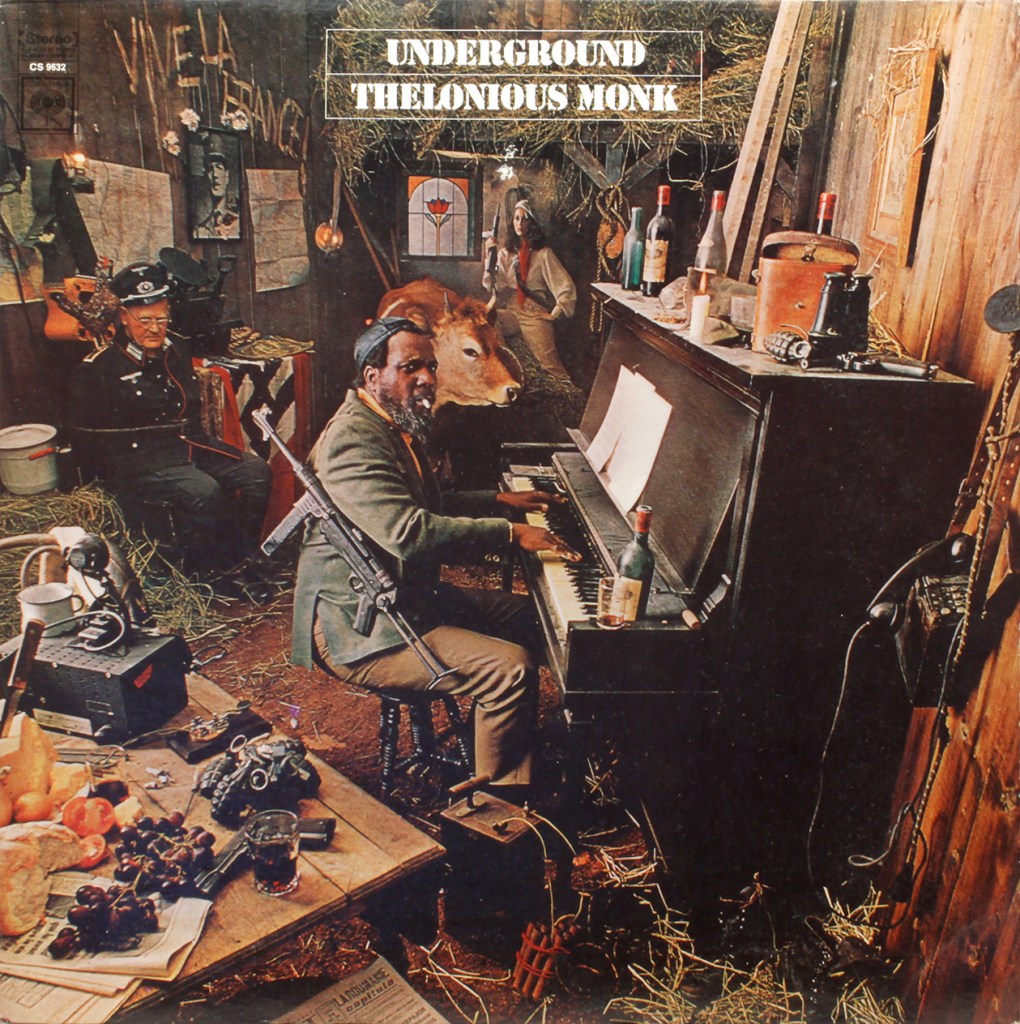
Delle copertine analizzate ne prendo in prestito una. Rappresenta Underground, il disco del 1968 di Thelonious Monk, ed è l’immagine della sobrietà 😄 Il design è di John Berg e Dick Mantel e la foto è di Horn e Griner.
Fine.
#acqua #albumCovers #AlleanzaAntiautoritaria #BengasiBattisti #Can #copertineBelle #DamoSuzuki #estrattivismo #glifosato #GruppoAnarchicoGerminalTrieste #HereBeMonsters #HolgerCzukay #internazionalismo #Israele #jazz #LaMusicaDel2016 #Motorpsycho #nocciole #Palestina #SilverApples #TheloniousMonk #Tuscia #Underground
#Venezuela De nombreux avocats restent détenus, dont Eduardo Torres mais aussi beaucoup d'autres. #CCBE réagit https://www.ccbe.eu/fileadmin/speciality_distribution/public/documents/HUMAN_RIGHTS_LETTERS/Venezuela_-_Venezuela/2026/EN_HRL_20260129_Venezuela_Continued-detention-of-lawyer-Eduardo-Torres-and-other-lawyers-in-Venezuela.pdf
Composting the myths: power, hidden religions, and why the #openweb matters
Please don't ignore me. I want to rebuild my business after it was completely destroyed. I need $15,000. Every donation makes a difference in equipping my dental clinic.
https://chuffed.org/project/162499-help-abdel-and-eman-protect-their-little-children
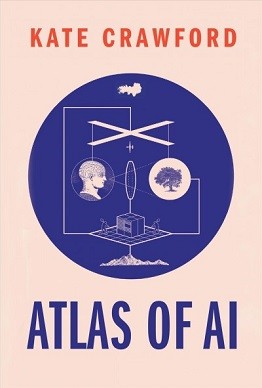
Atlas of AI
The hidden costs of artificial intelligence, from natural resources and labor to privacy and freedom What happens when artificial intelligence saturates political life and depletes the planet? How is AI shaping our understanding of ourselves and our societies? In this book Kate Crawford reveals how this planetary network is fueling a shift toward undemocratic governance and increased inequality. Drawing on more than a decade of research, award-winning science, and technology, Crawford reveals how AI is a technology of extraction: from the energy and minerals needed to build and sustain its infrastructure, to the exploited workers behind "automated" services, to the data AI collects from us. Rather than taking a narrow focus on code and algorithms, Crawford offers us a political and a material perspective on what it takes to make artificial intelligence and where it goes wrong. While technical systems present a veneer of objectivity, they are always systems of power. This is an urgent account of what is at stake as technology companies use artificial intelligence to reshape the world.
Apparently this injection increases your “flaccid girth” by one or two centimetres, has no effect on erect length, lasts 18 months and costs £3,000.
This could also be achieved by slamming your cock in a car bonnet.
The default design is certainly a matter of taste 🤭, but after spending a few months with #Honk (as my access point to Lemmy and a fallback for when my Mastodon provider is down), #snac has been a total eye-opener for its ease of use and how well it plays with other Fediverse apps.
Thank you very much for your awesome work, @grunfink@comam.es 🙂
@sebsauvage @attilax Si on attend 2-3 ans, on peut voir des Pixels neuf à 250 euros, non ?
After my recent presentation at FOSDEM, someone asked a pretty reasonable question. What does it cost to run OpenBenches?
It is, thankfully, surprisingly cheap! In part, that's because it is a relatively simple tech stack - PHP, MySQL, a couple of API calls to external services. It was designed to be as low cost while also being useful. Here's the breakdown:
Our biggest expense but, I think, our most reasonable. Krystal charges around £342 for a 2 year contract. That includes unlimited bandwidth and storage, as well as the domain name. We have nearly 400GB of photos and bot scraping means we can use over 900GB of bandwidth per month - so Krystal give us a rather good deal!

Use this affiliate link and code EDENT to get a small discount.
Geocoding is surprisingly hard to do locally. We need to transform latitude and longitude into addresses, and then back again. Stadia Maps cost about the same as our hosting! What's rather annoying is that we only use about half the API calls in our plan. We need to find a cheaper solution.
When we used Stadia for drawing maps, we regularly ran over our quota. So we switched to OpenFreeMap which produces gorgeous interactive maps.
The service has been rock solid and very responsive to bugs on GitHub.
I'm not a good designer, so we bought a logo from The Noun Project and then coloured it in. Bargain for a fiver!
Although we have unlimited bandwidth with Krystal, we're only located in one region - the UK. WeServ. It's also pointless serving full resolution images to small screens.
So WeServ offers free image resizing and global CDNs. Personally, I'm not a fan of CloudFlare (their CDN partner) so I'm looking to change provider.
People don't want to type in the inscription of the photo, so we use Google Cloud Vision.
We send less than 1,000 requests per month - so we're inside their free tier. If we get more popular, that'll get more expensive. But I don't know of a local-first OCR which is as good as Google's. Sadly, Tesseract is rubbish for extracting text from photos.
We don't want to store anyone's passwords. The free tier of Auth0 allows us to do social login for up to 25,000 monthly users. Which is more than enough for us.
Sadly, Auth0 don't support the Fediverse, so I had to build my own "Log-in with Mastodon" service.
As much as we'd like to run social login locally, we simply don't want to be responsible for securing users' details & API keys.
As per the OpenBenches colophon we use a lot of cool FOSS. Small JS libraries, big PHP frameworks, and everything in between.
Thanks to GitHub Sponsors we make a whopping US$3 per month!
Similarly, our OpenCollective Sponsors brings in about £3 per month.
Merchandising! You can buy OpenBenches branded t-shirts, mugs, and hats. That nets us about £20 per year
Call it roughly £80 income. OK, it is better than nothing - but doesn't even cover a quarter of our costs. Sometimes people give us a higher donation privately, which is also very welcome. These people are listed on our README.
On the assumption that our time is worthless (ha!) and that we only rarely go over our providers' API limits, and we get in some revenue, the cost of running OpenBenches is less than £300 per year.
That's not bad for a fun little hobby. People certainly spend more than that on Funkopops, vaping, and mechanical keyboards!
Nevertheless, I'm always slightly worried that we'll go viral and have an unexpectedly high bill from our API providers.
I would love to be able to hire a proper designer to make the site look a bit nicer. I also want to be able to buy a modern iPhone so that I can test it in the latest Safari.
If you have any suggestions for cutting costs, or non-scummy ways to help us raise funds, please drop a comment below.
#fosdem #foss #money #OpenBenches"An AI agent that silently copies your API keys, runs as root, and never asks permission. Somehow, this is the most popular dev tool of 2026 so far."
Clean Code
Even bad code can function. But if code isn't clean, it can bring a development organization to its knees. Every year, countless hours and significant resources are lost because of poorly written code. But it doesn't have to be that way. Noted software expert Robert C. Martin presents a revolutionary paradigm with Clean Code: A Handbook of Agile Software Craftsmanship . Martin has teamed up with his colleagues from Object Mentor to distill their best agile practice of cleaning code on the fly into a book that will instill within you the values of a software craftsman and make you a better programmer but only if you work at it. What kind of work will you be doing? You'll be reading code - lots of code. And you will be challenged to think about what's right about that code, and what's wrong with it. More importantly, you will be challenged to reassess your professional values and your commitment to your craft. Clean Code is divided into three parts. The first describes the principles, patterns, and practices of writing clean code. The second part consists of several case studies of increasing complexity. Each case study is an exercise in cleaning up code - of transforming a code base that has some problems into one that is sound and efficient. The third part is the payoff: a single chapter containing a list of heuristics and "smells" gathered while creating the case studies. The result is a knowledge base that describes the way we think when we write, read, and clean code. Readers will come away from this book understanding
‣ How to tell the difference between good and bad code ‣ How to write good code and how to transform bad code into good code ‣ How to create good names, good functions, good objects, and good classes ‣ How to format code for maximum readability ‣ How to implement complete error handling without obscuring code logic ‣ How to unit test and practice test-driven development
This book is a must for any developer, software engineer, project manager, team lead, or systems analyst with an interest in producing better code.

Der verdrängte Kapitalismus
Auf die zunehmende Bedrohung von rechts werden immer drängender Antworten gesucht. Eine davon lautet in jüngster Zeit: »Antifaschistische Wirtschaftspolitik«. Gezielte Umverteilung von oben nach unten und eine planvolle Investitionspolitik seitens des Staates soll die neoliberale Politik der letzten Jahrzehnte endlich ablösen. Vorrangiges Ziel: die Stärkung sozialer Sicherheit.
Auslöser dieser Forderung ist die Beobachtung, dass Menschen tendenziell eher rechts wählen, wenn aufgrund von wirtschaftlichen Krisen, Inflation und der Kürzung von Sozialausgaben Abstiegsängste und Unsicherheit zunehmen. In diesem Kontext stellen sich einige Fragen: Warum wählen die Menschen dann rechts und nicht links? Welche grundlegenden Fragen werden dabei gar nicht erst angesprochen? Welche Strukturen des Kapitalismus können Aufschluss darüber geben, welche Weltanschauungen im Alltagsbewusstsein anschlussfähiger sind?
Vor diesem Hintergrund diskutiert Sabine Nuss die Möglichkeiten, aber auch die Grenzen einer »antifaschistischen Wirtschaftspolitik« exemplarisch anhand von vier Maßnahmen – mit Andrej Holm (Mietendeckel), Stephan Kaufmann (Inflation), Antonella Muzzupappa (Investitionen) und Ingo Stützle (Vermögenssteuer).

Empire of AI
When AI expert and investigative journalist Karen Hao first began covering OpenAI in 2019, she thought they were the good guys. Founded as a nonprofit with safety enshrined as its core mission, the organization was meant, its leader Sam Altman told us, to act as a check against more purely mercantile, and potentially dangerous, forces. What could go wrong?
Over time, Hao began to wrestle ever more deeply with that question. Increasingly, she realized that the core truth of this massively disruptive sector is that its vision of success requires an almost unprecedented amount of resources: the “compute” power of high-end chips and the processing capacity to create massive large language models, the sheer volume of data that needs to be amassed at scale, the humans “cleaning up” that data for sweatshop wages throughout the Global South, and a truly alarming spike in the usage of energy and water underlying it all. The truth is that we have entered a new and ominous age of empire: only a small handful of globally scaled companies can even enter the field of play. At the head of the pack with its ChatGPT breakthrough, how would OpenAI resist such temptations?
Spoiler alert: it didn’t. Armed with Microsoft’s billions, OpenAI is setting a breakneck pace, chased by a small group of the most valuable companies in human history—toward what end, not even they can define. All this time, Hao has maintained her deep sourcing within the company and the industry, and so she was in intimate contact with the story that shocked the entire tech industry—Altman’s sudden firing and triumphant return. The behind-the-scenes story of what happened, told here in full for the first time, is revelatory of who the people controlling this technology really are. But this isn’t just the story of a single company, however fascinating it is. The g forces pressing down on the people of OpenAI are deforming the judgment of everyone else too—as such forces do. Naked power finds the ideology to cloak itself; no one thinks they’re the bad guy. But in the meantime, as Hao shows through intrepid reporting on the ground around the world, the enormous wheels of extraction grind on. By drawing on the viewpoints of Silicon Valley engineers, Kenyan data laborers, and Chilean water activists, Hao presents the fullest picture of AI and its impact we’ve seen to date, alongside a trenchant analysis of where things are headed. An astonishing eyewitness view from both up in the command capsule of the new economy and down where the real suffering happens, Empire of AI pierces the veil of the industry defining our era.
#introduction would not be needed as I am already known into Poliversity italian instance as @elettrona but I finally found a very accessible Fediverse client to interact with. I am a blind user, fediverse ambassador, WordPress content creator and tester. Accessibility expert, HIV awareness advocate, and whatever bullshit about me I do not have currently in mind; this is the instance (private instance) linked to my HIV advocacy related project. Installed the Enafore client on our self-hosting and now both me and @gifter will perform enough tests. Even chatting with each other through fediverse.