Abstract photograph created using a single photo of fall sumac leaves and sumac branches. The sumac leaves extend along either side of a slender branch. Fall sumac leaves range from red to orange to yellow and in various combinations of those three colors. The photo is created by copying the original and then flipping the copy horizontally. The original and the copy are joined at the flip point and then both are copied, flipped vertically, and the resulting copies are then joined at the flip point. The result is four-quadrant image with each quadrant a mirror of the quadrants opposing it. The appearance is similar to what one would see in a four-mirror kaleidoscope. In addition to the realistic objects in each photo, the process creates multiple abstract objects especially at or near where one photo attaches to another.
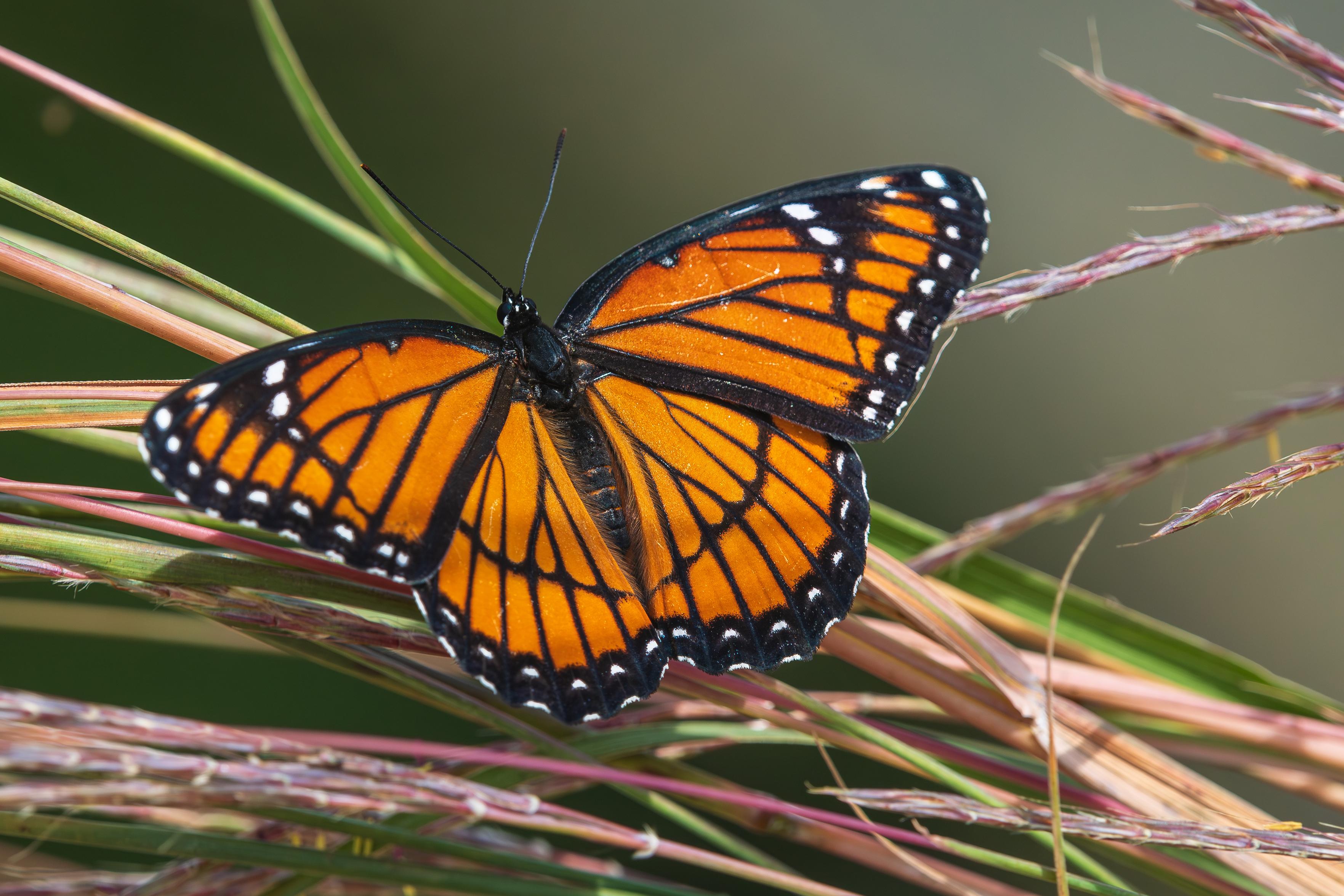
Closeup photograph of a viceroy butterfly standing on long brown grasses with a few long green grasses and vague greens and browns in the background. The grasses angle slightly from the lower right frame to the left frame and the butterfly takes up most of the center left frame. The view is from above and the butterfly's wings are spread wide to the left and right leaving the upper body and the back of the wings visible. Viceroy butterflies have orange wings with black and white patterned edges and black veining, black bodies and heads covered with white markings and fine black hairs, large dark compound eyes, two long black segmented antennae that end in orange dots, and six black segmented legs. They can be distinguished from monarch butterflies by the straight black stripe that extends across the lower wing. Monarchs are typically larger and they lack a straight line across the lower wing.
podfeet boosted
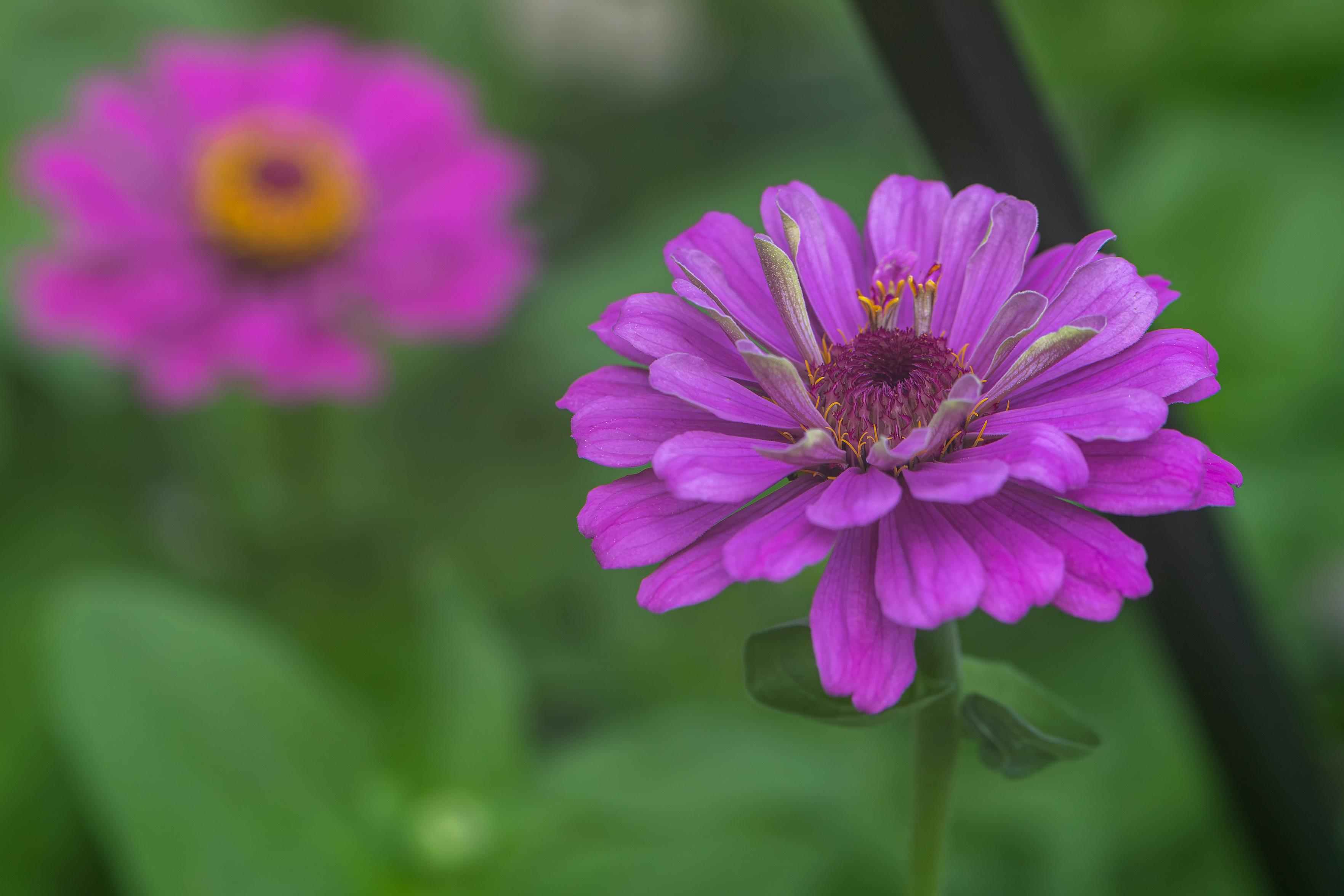
Photograph of a pair of zinnia flowers on a cloudy day surrounded by green foliage. One flower is in the right foreground and is in sharp focus. It has pale pink-lavender petals that radiate from a central disk filled with red and a few yellow florets. The other flower is in the left background and is out of focus. It has bright magenta petals that radiate from a central disk filled with red and yellow florets. Zinnias have large blooms that open from the outside and top long, stiff stems with large leaves.
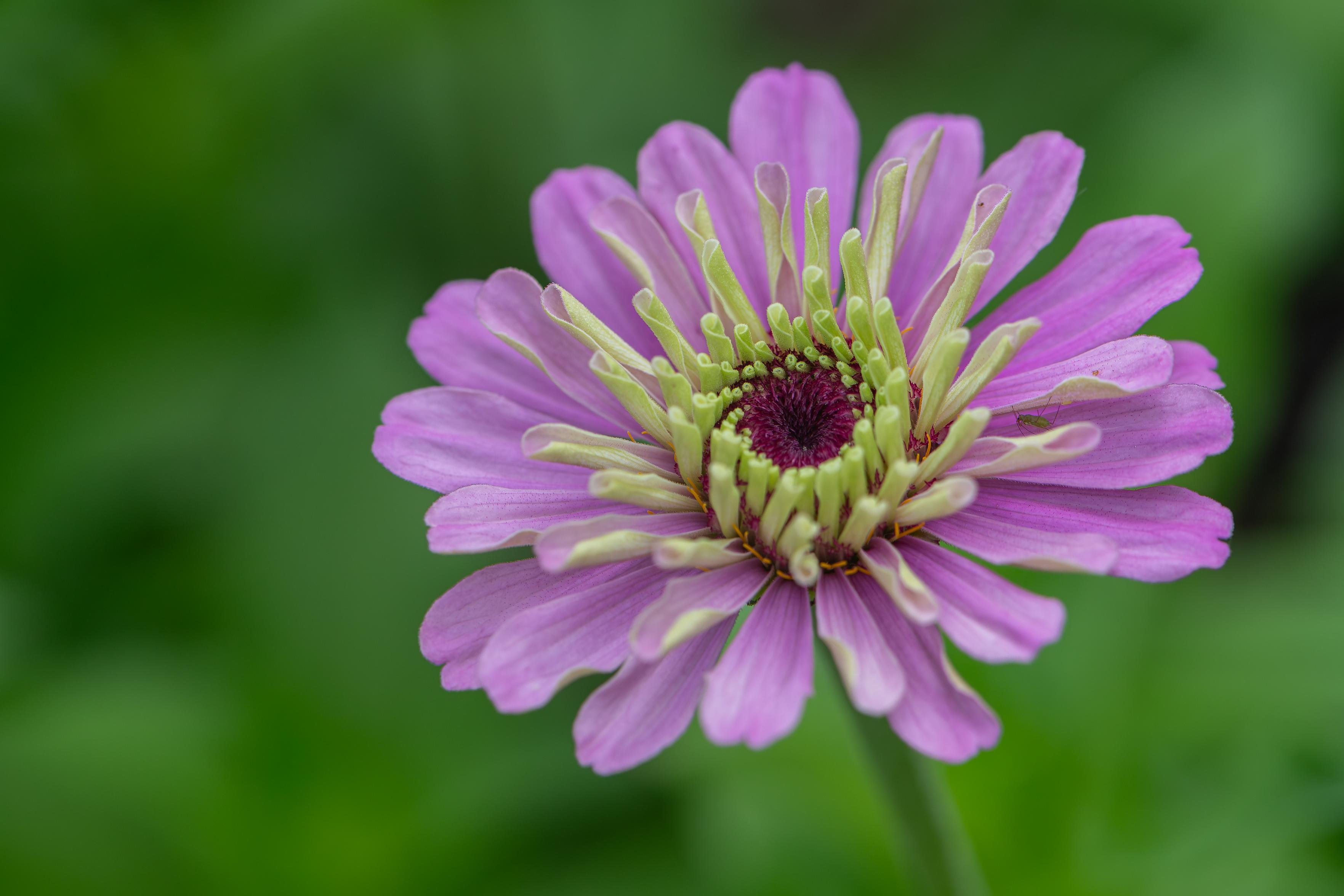
Closeup photograph of a zinnia flowers on a cloudy day with out of focus green foliage in the background. Zinnias have large blooms that top long, stiff stems with large leaves. This flower is not completely opened and the undersides of the inner petals are still visible. The flower opens from the outside and is made up of overlapping layers of pink-lavender petals with pale green undersides that radiate from a center filled with red florets.
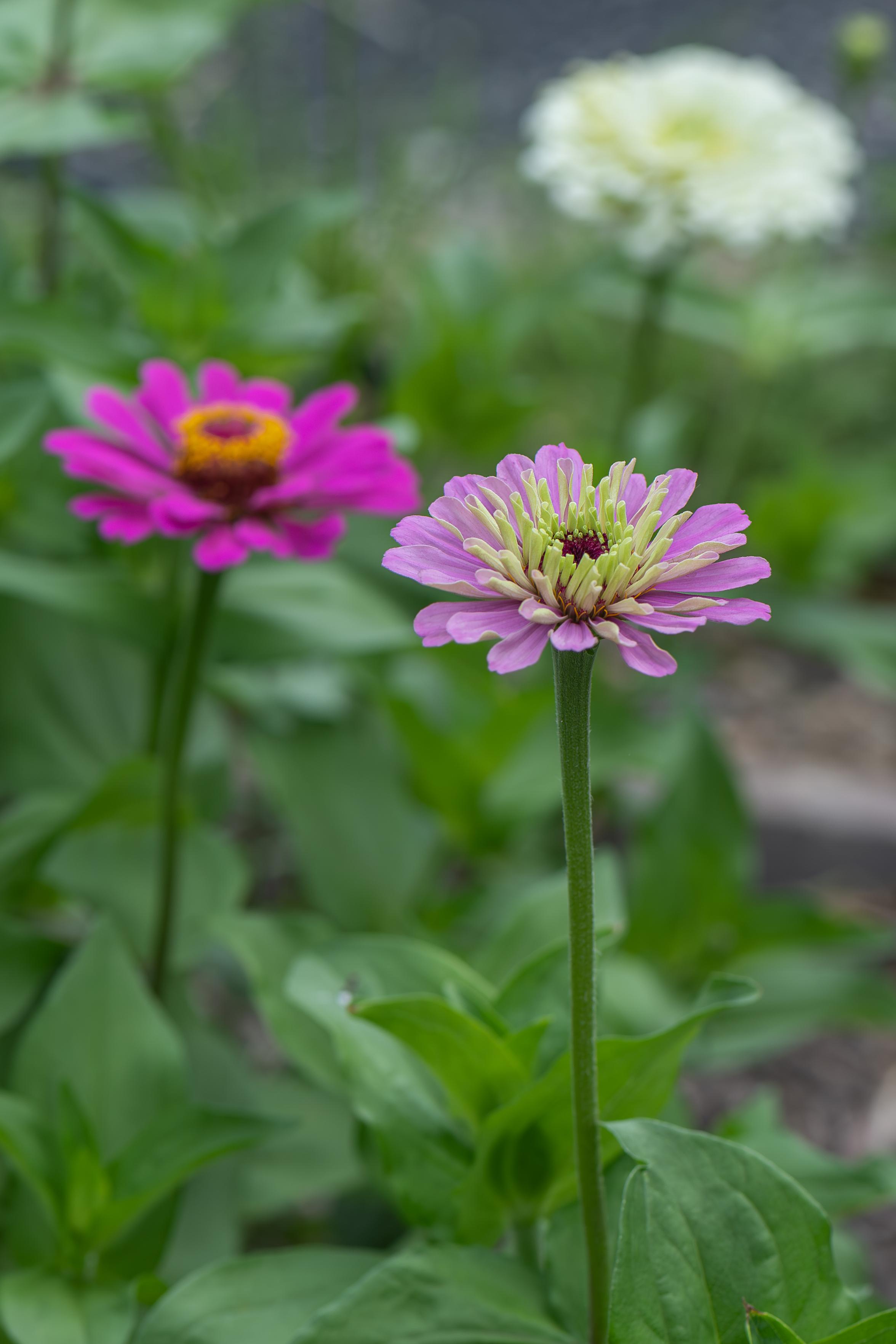
Vertical photograph of a trio of zinnia flowers on a cloudy day surrounded by green foliage. There is one zinnia in the right foreground, the second is behind and to the left, and the final is in the right background. The flower in the foreground is in sharp focus. It is not fully opened yet and has pale pink-lavender petals with light green undersides that radiate from from a central disk filled with red florets. The flower on the left is out of focus and has bright magenta petals that radiate from from a central disk filled with red and yellow florets. The flower in the background is out of focus and has cream-white petals with a green tint.  Zinnias have large blooms that opens from the outside and top long, stiff stems with large leaves.
Vertical photograph of a trio of zinnia flowers on a cloudy day surrounded by green foliage. There is one zinnia in the right foreground, the second is behind and to the left, and the final is in the right background. The flower in the foreground is in sharp focus. It is not fully opened yet and has pale pink-lavender petals with light green undersides that radiate from from a central disk filled with red florets. The flower on the left is out of focus and has bright magenta petals that radiate from from a central disk filled with red and yellow florets. The flower in the background is out of focus and has cream-white petals with a green tint. Zinnias have large blooms that opens from the outside and top long, stiff stems with large leaves.
Photograph of a pair of zinnia flowers on a cloudy day surrounded by green foliage. One flower is in the right foreground and is in sharp focus. It has pale pink-lavender petals that radiate from a central disk filled with red and a few yellow florets. The other flower is in the left background and is out of focus. It has bright magenta petals that radiate from a central disk filled with red and yellow florets. Zinnias have large blooms that open from the outside and top long, stiff stems with large leaves.
Closeup photograph of a zinnia flowers on a cloudy day with out of focus green foliage in the background. Zinnias have large blooms that top long, stiff stems with large leaves. This flower is not completely opened and the undersides of the inner petals are still visible. The flower opens from the outside and is made up of overlapping layers of pink-lavender petals with pale green undersides that radiate from a center filled with red florets.
Vertical photograph of a trio of zinnia flowers on a cloudy day surrounded by green foliage. There is one zinnia in the right foreground, the second is behind and to the left, and the final is in the right background. The flower in the foreground is in sharp focus. It is not fully opened yet and has pale pink-lavender petals with light green undersides that radiate from from a central disk filled with red florets. The flower on the left is out of focus and has bright magenta petals that radiate from from a central disk filled with red and yellow florets. The flower in the background is out of focus and has cream-white petals with a green tint.  Zinnias have large blooms that opens from the outside and top long, stiff stems with large leaves.
Vertical photograph of a trio of zinnia flowers on a cloudy day surrounded by green foliage. There is one zinnia in the right foreground, the second is behind and to the left, and the final is in the right background. The flower in the foreground is in sharp focus. It is not fully opened yet and has pale pink-lavender petals with light green undersides that radiate from from a central disk filled with red florets. The flower on the left is out of focus and has bright magenta petals that radiate from from a central disk filled with red and yellow florets. The flower in the background is out of focus and has cream-white petals with a green tint. Zinnias have large blooms that opens from the outside and top long, stiff stems with large leaves.
der.hans boosted