RE: https://ohai.social/@tpflug/117451235491988106
My friends at Tweag are hiring:
Discussion
RE: https://ohai.social/@tpflug/117451235491988106
My friends at Tweag are hiring:
Some design and strategy techniques to protect PII and respect people's desire to opt out of AI. https://thoughtbot.com/blog/respecting-your-users-dread-of-the-clankers
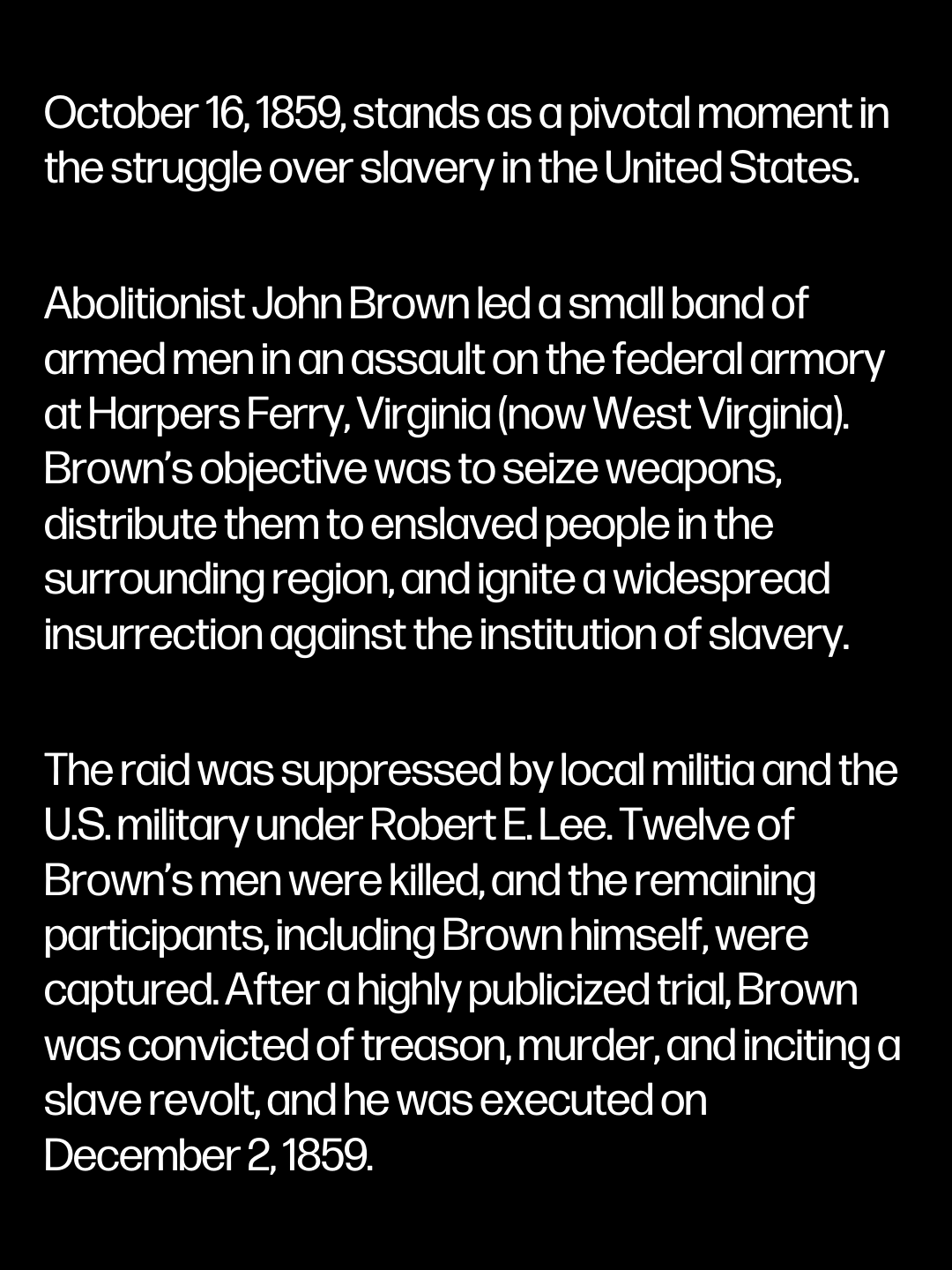
Today marks the anniversary of John Brown's raid on Harpers Ferry.
Get a Copy of Fire on the Mountain here: https://pmpress.org/product/fire-on-the-mountain
We've just realized that someone was digging us so much, that they've sent us a coffee.
@brothersoul isn't good for asking for support. But we really could use it.
So whatever you could loan to keep the music flowing, goes directly into LABR. We want to do some new things in the new year coming. So some support for as low as a pound a month would help.
Thanks to the two who have donated so far. Nic and @FediThing We can't thank ya'll enough.
#labr collective
I'd completely missed this but apparently Meta are changing their T&Cs for business users of their platforms to force all companies to allow Meta to scrape and index their content. If you disagree, you have to stop using Meta platforms.
https://www.niemanlab.org/2026/10/metas-new-commercial-terms-will-allow-the-scraping-of-news-sites-legal-experts-say/
Scraping starts October 30th apparently.
Yuk.
Anyone know which bot they'll use? Feels likely to be `meta-externalagent` from docs: https://developers.facebook.com/documentation/sharing/webmasters/web-crawlers/
Libraries are uniquely positioned to address social isolation for many reasons, including being open and fee-free to members of their communities and through their wide range of partnerships with community-led groups and other organizations.
https://action.everylibrary.org/how_library_partnerships_help_reduce_senior_social_isolation
#library #libraries #read #reading #book #books #librarianship #lit
RE: https://infosec.exchange/@0xabad1dea/112279265373393160
Thinking about this again as the train stops at Schiphol and an exhausted stewardess collapses into the seat across from me while three young boys swing their suitcases around dangerously taking selfies of their first trip to another country
"'Is this a real journal?' is now a question every reader, reviewer, funder and university has to ask. And the tools for answering it have not kept up.
"The advice since [Beall's list ended] has been consistent: don’t filter out the bad, filter in the good. Use allow lists.
"So that’s what we’ve done. Every source in OpenAlex now has a listed_in field... If you want to keep predatory journals out of a query, you filter in journals that somebody you trust has vetted."
https://blog.openalex.org/trusted-journal-lists-come-to-openalex/
#Brazil abolishes six-day workweek in win for #Lula Signature policy of leftwing president approved by Congress ahead of run-off vote
https://www.ft.com/content/7f14509d-5807-4fff-b4a2-74f5429aaec2?syn-25a6b1a6=1
Nothing new, but I'm disappointed.
Many years ago, Linux represented the alternative. The question was: "Why don't you just use Windows? It's easier." And the answer was, almost always: "To be free."
The "bazaar" spirit of Linux and its distributions made us feel free. Personally, I've always thought that the "cathedral" approach of the BSDs produces more reliable and maintainable results. But that feeling of freedom was fantastic.
There wasn't a company deciding everything. There was a kernel developed by people following what they believed was right. Or what the community, in one way or another, was asking for.
Torvalds has always been quite outspoken (remember the middle finger to Nvidia?). But the general spirit was, again, freedom. Anyone, sitting in their bedroom, could contribute in some way. Even me.
Today, after the embrace of AI, I read statements about wanting only "serious" contributors, "serious" contributions, because the world depends on this code and reliability must come first.
I understand the problem. Maintaining the Linux kernel is a huge responsibility. And low-quality contributions, especially those blindly generated with AI, are a real problem.
But what I hear, between the lines, is something like: "Hey, kid in your bedroom. If you don't have the right tools, the money to afford them, or the experience we expect, maybe your contribution isn't even worth considering."
Am I exaggerating? Maybe. But this is what I got from the tone and content of the latest public statements.
And it makes me sad.
Because it feels like a transformation towards what we wanted to escape, back then.
So please don't ask me why the BSD community, imperfect as it is, feels like home to me.
When I see young people, with limited resources, being able to contribute and attend conferences (thanks to the support of the Foundations), and I see the enthusiasm in their eyes, I feel at home.
Because I still remember what it meant to be that kid in a bedroom.
And I really hope we never close the door in their face.
@stefano I am also starting to be worried.
I am wondering what impression the current situation is leaving on young hackers starting out today, compared to the early 2000s. Back at university, many of my peers were interested in Linux and free software / open source because it was a promising alternative to the corporate software the previous generation was using. Further back in time, all I ever saw on anyone's parents' computers as a child was DOS and later WIndows (ignoring the odd Amiga or Commodore). However, 2 of my friends at school were using early versions Linux, likely the suse versions still based on slackware. When my dad passed down an old laptop to me I somehow ended up running a long forgotten linux distro that ran from a single floppy, eventually somehow managing to move this distribution to the internal disk drive and manually extracting slackware packages for additional software and documentation , then reading documentation, and finding out about the existence and mindset behind free software in some of the GNU info pages. What I took away from it is that there were people out there working to make computers work how they wanted, in ways that are supposed to benefit society. This realization felt empowering, If I hadn't seen this back then I probably wouldn't have fallen into the computing rabbit hole as deep as I have.
Today, all this is decades old tech and not much of what the free software community stood for back then has had any effect on people who aren't deeply into computers. It feels like we have fallen into the undesirable future we didn't want. The entire OS is abstracted away, and people now create software without even knowing what a filesystem is or why you would need one. When I rented a bicycle in Berlin this summer, during chit chat the shop owner proudly showed me software he had built with LLMs which automated scanning a QR code by pressing a single key on the keyboard in order to transfer the sale into his accounting system via some app on his phone. He stated he wasn't a developer before this and has zero understanding of the systems involved. He felt super empowered by this achievement, yet I wouldn't be.
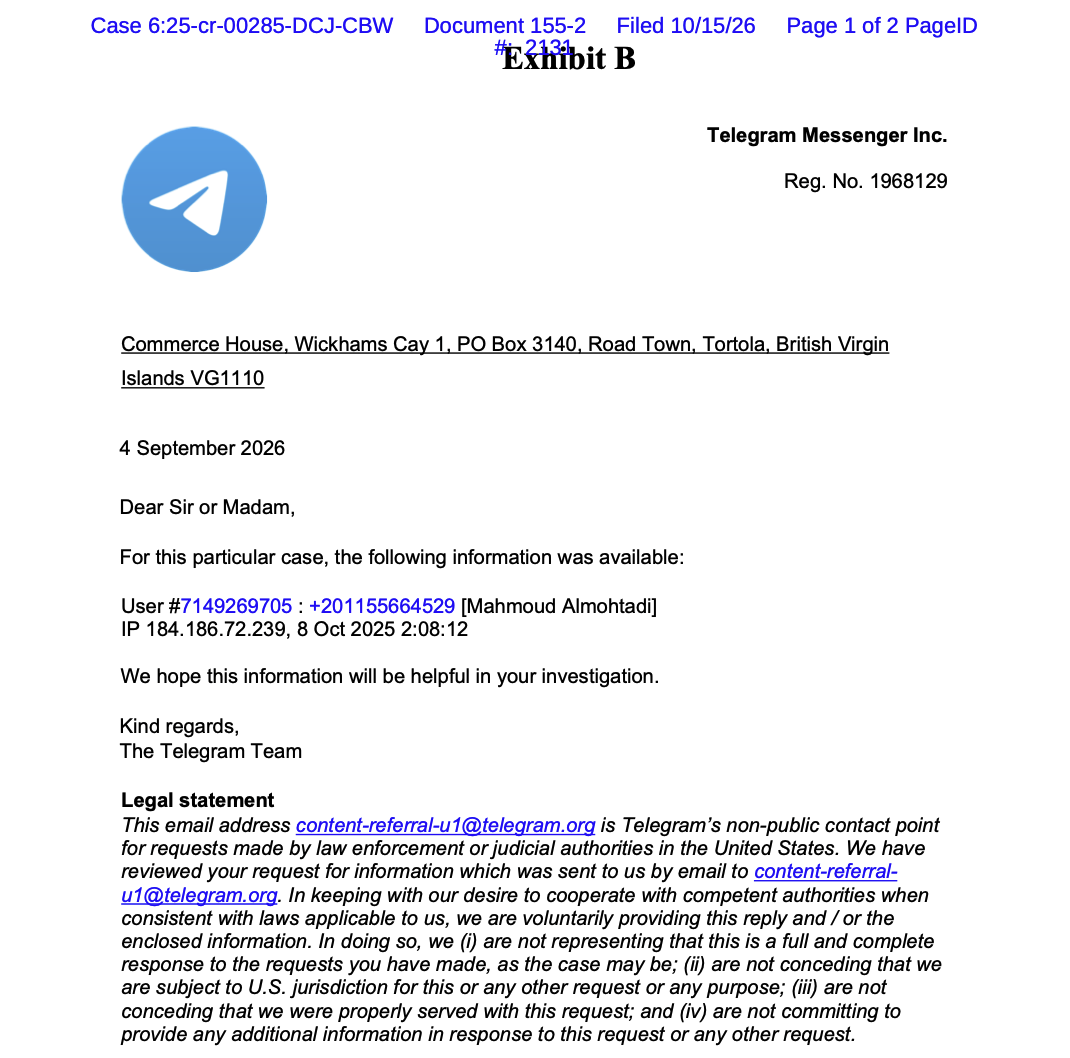
Here's how exactly Telegram provides user data to U.S. authorities. A letter recently filed in court shows how Telegram transfers that data, such as IP address and phone number.
More: https://www.404media.co/heres-what-telegram-giving-data-to-the-u-s-government-looks-like/
RT: @MothinAli People who look like me face lies and abuse everyday.
Today was a victory for common sense and decency in public life.
The People's Bookshelf in the National Library of Latvia showcases 8,000 books from around the world, each with a message from the donor about why that book is special to them. https://tautasgramatuplaukts.lv/en/ via @metafilter
Er zijn dus nog gewoon mobiele telefoons te koop die minder je aandacht en geld opzuigen: https://www.smartphonevrijopgroeien.nl/veelgestelde-vragen/alternatieven/
I played (not) solitaire for more hands than I would care to admit. “A multiplayer game where the multiplayer was about companionship, empathy, and comfort, instead of competition or even interaction.” https://notsolitaire.com
Brazil’s Lula wins electoral court challenge against Meta for alleged pro-Bolsonaro algorithm bias
https://www.nbcnews.com/world/south-america/brazil-lula-wins-electoral-court-challenge-meta-alleged-bolsonaro-bias-rcna603835
UPDATE: After bipartisan blowback, Trump is reversing course on this medieval bloodthirsty cruelty Hegseth was so excited about.
www.wsmv.com/2026/10/15/t...
🌈 Ci sono. Due parole, un gesto che conta.
Ascolto, incontri, comunità e diritti: sostieni Arcigay Varese da 5 € al mese. Scegli l’importo e interrompi quando vuoi.
💛 Ci sono anch’io: https://zurl.co/Bb5dB
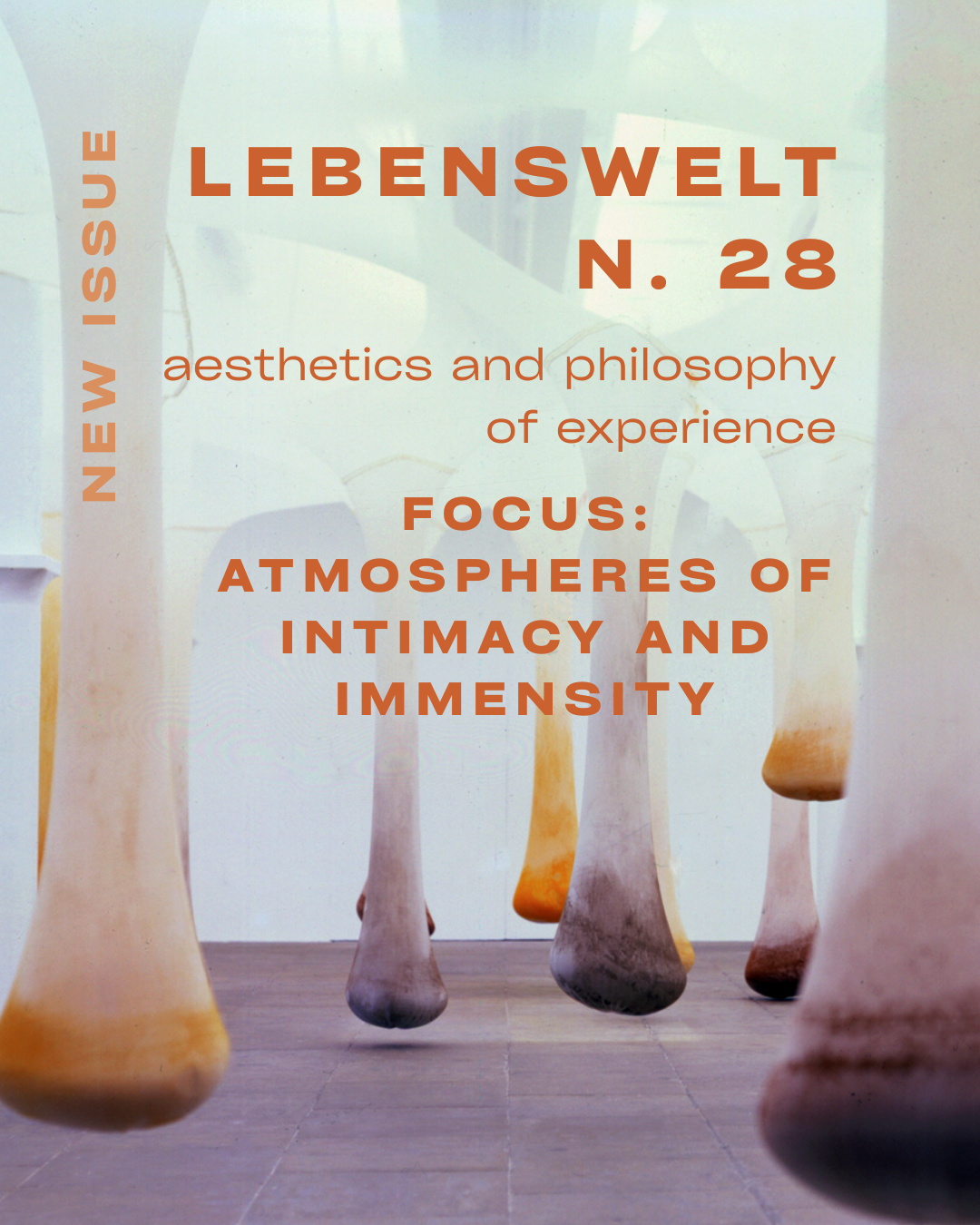
#NewIssue
Come abitiamo gli spazi che ci circondano?
Questo fascicolo di #Lebenswelt esplora il concetto di #atmosfera come qualcosa che sentiamo con il corpo, percepiamo attraverso i sensi e costruiamo nel rapporto tra persone, luoghi, oggetti e media.
🎨 #Architettura, #design, #arte, #cinema e realtà virtuale diventano così laboratori per comprendere come le atmosfere siano create, trasformate e vissute nella quotidianità.
Qui in #OpenAccess
⬇️ https://riviste.unimi.it/index.php/Lebenswelt/it/issue/view/2890?mtm_campaign=mastodon
"Drawing on organizing experiences of Black Rose/Rosa Negra members across the United States, this pamphlet explores how workers, neighbors, and communities are building collective resistance to ICE and defending their immigrant coworkers, classmates, and loved ones. By connecting struggles across workplaces, schools, and neighborhoods, the transversal organizing approach we prioritize builds solidarity across different sectors of society to confront the interconnected structures of domination that shape our lives.
Through organizers’ experiences, we share lessons on sustaining organizing, confronting repression, and connecting immigrant defense to broader struggles to build popular power."

Install bonfire.cafe
Get the full app experience