RE: https://mastodon.social/@Mohammedjhad/116096596778451315
We made about $300 out of $500 “ our goal “!!!!
Hey guys you’re so kind and please keep supporting me to reach my goal
#gaza #genocide #palestine
Discussion
RE: https://mastodon.social/@Mohammedjhad/116096596778451315
We made about $300 out of $500 “ our goal “!!!!
Hey guys you’re so kind and please keep supporting me to reach my goal
#gaza #genocide #palestine
RE: https://mastodon.social/@EndIsraeliApartheid/116119060249156999
But utter “from the river to the sea, Palestine will be free” and you’re a terrorist, apparently.
Nice double standards there whiteys. Hey, careful, your inner colonialist is showing.
Another way to leapfrog: minimise car use through planning.
"Fast-growing intermediary cities in Kenya and Mozambique can still avoid carbon-intensive, car-dependent development if they act early. By using systems thinking to align transport, land use, and governance, cities like Nakuru, Kiambu, Beira, and Quelimane can pursue low-emission growth while improving access, resilience, and quality of life."
RE: https://mastodon.green/@light_bulbs/116111025707643083
Dakar, Senegal:
Battling unbearable traffic congestion by building out bus rapid transit, and bike lanes.
There are so many benefits.
https://mastodon.social/@light_bulbs@mastodon.green/116111025781533500
I am a mother.
I can't break in front of my kids.
Whenever life weighs down on me, I remember having eyes waiting for me to be her support
Whoever sees me strong,let him know that the secret of my power is my children
And you're a supporter
https://paypal.me/NasraFamily
https://gofund.me/754592a5
@Doug Belshaw
@Tom Watson
If not already aware: baldur@toot.cafe
Mike Macgirvin: #^https://codeberg.org/fortified/forte
jupiter_rowland@hub.netzgemeinde.eu
Twenty five years ago today, the EU's IST advisory group published a paper about the future of "Ambient Intelligence". Way before the world got distracted with cryptoscams and AI slop, we genuinely thought that computers would be so pervasive and well-integrated that the dream of "Ubiquitous Computing" would become a reality.
The ISTAG published an optimistic paper called "Scenarios for ambient intelligence in 2010". It's a brilliant look at what the future might have been. Let's go through some of the scenarios and see how close 2026 is to 2000's vision of 2010.
Our titular heroine steps off a long haul flight into a foreign country.
she knows that she can travel much lighter than less than a decade ago, when she had to carry a collection of different so-called personal computing devices (laptop PC, mobile phone, electronic organisers and sometimes beamers and printers). Her computing system for this trip is reduced to one highly personalised communications device, her ‘P–Com’ that she wears on her wrist.
Well… OK! Not a bad start. You probably wouldn't want everything controlled by your smart watch - but the mobile is a good substitute. Although wireless video casting works, you'd probably want a trusty USB-C just to make sure.
she is able to stroll through immigration without stopping because her P-Comm is dealing with the ID checks as she walks.
We're getting closer to digital ID. But outside of a few experiments, there's no international consensus. However, every modern passport has an NFC chip which can be read by most airports. You still need to hold your passport on the reader, but it's usually quicker than queuing for a human.
Maria heads to her rented car:
The car opens as she approaches. It starts at the press of a button: she doesn’t need a key. She still has to drive the car but she is supported in her journey downtown to the conference centre-hotel by the traffic guidance system that had been launched by the city government as part of the ‘AmI-Nation’ initiative two years earlier.
Lots of cars now have wireless entry and are button controlled. Rental cars often have mobile app unlocking.
The traffic guidance is not provided by local governments. A mixture of international satellites provide positioning information, and a bunch of private companies provide traffic guidance.
Downtown traffic has been a legendary nightmare in this city for many years, and draconian steps were taken to limit access to the city centre. But Maria has priority access rights into the central cordon because she has a reservation in the car park of the hotel. Central access however comes at a premium price, in Maria’s case it is embedded in a deal negotiated between her personal agent and the transaction agents of the car-rental and hotel chains
Ah! The dream of personal agents. Not even close.
In the car Maria’s teenage daughter comes through on the audio system. Amanda has detected from ‘En Casa’ system at home that her mother is in a place that supports direct voice contact.
Hurrah for Bluetooth! Every car supports that now. Presence and location sensing is also common. Although the idea of a teenager willingly making a voice call is, sadly, a fantasy.
Her room adopts her ‘personality’ as she enters. The room temperature, default lighting and a range of video and music choices are displayed on the video wall.
Pffft! Nope. But do people really want this? The music and video are stored on her phone, so there's no need to transmit private data to a hotel.
Using voice commands she adjusts the light levels and commands a bath. Then she calls up her daughter on the video wall, while talking she uses a traditional remote control system to browse through a set of webcast local news bulletins from back home that her daughter tells her about. They watch them together.
Do you want an always-on Alexa in your hotel room? We have the technology, but we seem to shun in outside of specific scenarios.
We still have traditional remotes for browsing, and how lovely that they predicted the rise of simultaneous viewing!
Later on she ‘localises’ her presentation with the help of an agent that is specialised in advising on local preferences (colour schemes, the use of language).
I'd say we're there with a mixture of templates and LLMs. Translation and localisation is good enough.
She stores the presentation on the secure server at headquarters back in Europe. In the hotel’s seminar room where the sales pitch is take place, she will be able to call down an encrypted version of the presentation and give it a post presentation decrypt life of 1.5 minutes
Yup! Most things live in the cloud. Access controls are a thing. Whether people can be bothered to use them is another matter!
As she enters the meeting she raises communications access thresholds to block out anything but red-level ‘emergency’ messages
Do-Not-Disturb is a feature on every modern phone.
Coming out of the meeting she lowers the communication barriers again and picks up a number of amber level communications including one from her cardio-monitor warning her to take some rest now.
Ah! The constant chastising FitBit!
Dimitrios is the sort of self-facilitating media node you would never get tired of slapping.
Dimitrios is wearing, embedded in his clothes (or in his own body), a voice activated ‘gateway’ or digital avatar of himself, familiarly known as ‘D-Me’ or ‘Digital Me’. […] He feels quite confident with his D-Me and relies upon its ‘intelligent‘ reactions.
Nope! Oh, sure, your phone can auto-suggest some stock phrases to reply to emails. But we are nowhere close to having a physically embedded system which learns from us and can be trusted to respond.
Dimitrios receives calls which are:
answered formally but smoothly in corresponding languages by Dimitrios’ D-Me with a nice reproduction of Dimitrios’ voice and typical accent,
Vocal cloning is here. It is almost out of the uncanny valley. But I think most people would prefer to send a quick text or voice-note rather than use an AI.
a call from his wife is further analysed by his D-Me. In a first attempt, Dimitrios’ ‘avatar-like’ voice runs a brief conversation with his wife, with the intention of negotiating a delay while explaining his current environment.
She's going to leave him.
Dimitrios’ D-Me has caught a message from an older person’s D-Me, located in the nearby metro station. This senior has left his home without his medicine and would feel at ease knowing where and how to access similar drugs in an easy way. He has addressed his query in natural speech to his D-Me.
This is weird. Yes, we have smart-agents which are just about good enough to recognise speech and understand it. Why is it being sent to Dimitrios?
Dimitrios happens to suffer from similar heart problems and uses the same drugs. Dimitrios’ D-Me processes the available data as to offer information to the senior. It ‘decides’ neither to reveal Dimitrios’ identity (privacy level), nor to offer Dimitrios’ direct help (lack of availability), but to list the closest drug shops, the alternative drugs, offer a potential contact with the self-help group. This information is shared with the senior’s D-Me, not with the senior himself as to avoid useless information overload
We're nowhere close to this. At most, you might be able to post on social media and hope someone could help. I like the idea of a local social network, and there's a good understanding of privacy. But this seems needlessly convoluted - why wouldn't the senior's D-Me just look up the information online?
Meanwhile, his wife’s call is now interpreted by his D-Me as sufficiently pressing to mobilise Dimitrios. It ‘rings’ him using a pre-arranged call tone. Dimitrios takes up the call with one of the available Displayphones of the cafeteria. Since the growing penetration of D-Me, few people still bother to run around with mobile terminals: these functions are sufficiently available in most public and private spaces and your D-Me can always point at the closest…functioning one!
A hit and a miss! They predicted the rise of personalised ringtones - which have now all but vanished - but no one wants to use a pay-phone when they have their own mobile!
While doing his homework their 9 year-old son is meant to offer some insights on everyday life in Egypt. In a brief 3-way telephone conference, Dimitrios offers to pass over the query to the D-Me to search for an available direct contact with a child in Egypt. Ten minutes later, his son is videoconferencing at home with a girl of his own age, and recording this real-time translated conversation as part of his homework.
ChatRoulette for kids! What could possibly go wrong!
Ignoring that aspect, it's relatively common for kids to videocall each other - especially for language learning. Real-time translation is also possible.
Carmen is a modern, 21st century woman. Let's see how technology helps her:
She wants to leave for work in half an hour and asks AmI, by means of a voice command, to find a vehicle to share with somebody on her route to work.
Voice commands work - although usually only if you know the correct invocation.
AmI starts searching the trip database and, after checking the willingness of the driver, finds someone that will pass by in 40 minutes. The in-vehicle biosensor has recognised that this driver is a non-smoker – one of Carmen requirements for trip sharing. From that moment on, Carmen and her driver are in permanent contact if wanted (e.g. to allow the driver to alert Carmen if he/she will be late). Both wear their personal area networks (PAN) allowing seamless and intuitive contacts.
The aim of "ride-sharing" was originally this sort of thing. A driver would give a lift to someone if they happened to be travelling that route. Nowadays that model is over - it's all professional drivers.
Ubiquitous geo-tracking now means you can see if your driver is late, and they can see if you've moved street. We have too many privacy concerts to allow PANs to share much more.
She would like also to cook a cake and the e-fridge flashes the recipe. It highlights the ingredients that are missing milk and eggs. She completes the shopping on the e-fridge screen and asks for it to be delivered to the closest distribution point in her neighbourhood.
Oh! The Internet-Connected Fridge! Beloved by technologists and spurned by users! While there are a few fridges with build-in web-browsers, most people do their shopping from their phone.
Home delivery is now seamless and cheap. The "Amazon Locker" is also a reality.
All goods are smart tagged, so that Carmen can check the progress of her virtual shopping expedition, from any enabled device at home, the office or from a kiosk in the street
Do you care whether the eggs have been packed yet? I can see that it would be useful to the store to have realtime info on stock levels (and they mostly do for online shopping) but why expose that to the user?
Would you bother using a public terminal?
When Carmen gets into the car, the VAN system (Vehicle Area Network) registers her and by doing that she sanctions the payment systems to start counting. A micro-payment system will automatically transfer the amount into the e-purse of the driver when she gets out of the car.
I don't think Uber's app uses Bluetooth to detect whether driver and passenger are in proximity. Maybe it should?
Cryptocurrencies still can't do instantaneous micro-transactions. But credit-cards work pretty well.
Carmen is alerted by her PAN that a Chardonnay wine that she has previously identified as a preferred choice is on promotion. She adds it to her shopping order
Personal Agents always working for the user! Again, a fantasy which has yet to emerge. The reality is more like a push notification from the shop.
On the way home the shared car system senses a bike on a dedicated lane approaching an intersection on their route. The driver is alerted […] so a potential accident is avoided.
Tesla's crappy implementation notwithstanding, modern cars are relatively good about detecting bikes, pedestrians, and other vehicles.
the traffic density has caused pollution levels to rise above a control threshold. The city-wide engine control systems automatically lower the maximum speeds (for all motorised vehicles) and when the car enters a specific urban ring toll will be deducted via the Automatic Debiting System (ADS)
Half-and-half. No one is allowing their car to be remotely controlled, although plenty of roads have dynamic speed limits. Most modern metros have Automatic Number Plate Recognition and can bill drivers who enter congestion zones.
Carmen arrives at the local distribution node (actually her neighbourhood corner shop) where she picks up her goods. The shop has already closed but the goods await Carmen in a smart delivery box. By getting them out, the system registers payment
This is pretty much how the Amazon Locker works!
Let's now go to an environmental study group meeting at a learning space.
Some are scheduled to work together in real time and space and thus were requested to be present together (the ambient accesses their agendas to do the scheduling).
Ah! Sadly not. At best we have shared calenders where people can look up suitable times, or Doodle polls where people can suggest their preferred times. Some integrated systems like Office365 will do a basic attempt to suggest meeting times - but it is a closed and proprietary system.
Here's Annette:
Annette is an active and advanced student so the ambient says it might be useful if Annette spends some time today trying to pin down the problem with the model using enhanced interactive simulation and projection facilities. It then asks if Annette would give a brief presentation to the group. The ambient goes briefly through its understanding of Annette’s availability and preferences for the day’s work.
A demo of that today would wow people. LLMs can convincingly do some of these tasks, but they're not integrated into anything sufficiently complex.
Here's Solomon, a new participant:
The ambient establishes Solomon’s identity; asks Solomon for the name of an ambient that ‘knows’ Solomon; gets permission from Solomon to acquire information about Solomon’s background and experience in Environmental Studies. The ambient then suggests Solomon to join the meeting and to introduce himself to the group.
Again, we barely have coherent online identities. We certainly don't have trusted ambient intelligences who can claim to know us. I do like the fact that it asks for permission. Not always a given today!
In these private conversations the mental states of the group are synchronised with the ambient, individual and collective work plans are agreed and in most cases checked with the mentor through the ambient.
Nope!
During the presentation the mentor is feeding observations and questions to the ambient, together with William, an expert who was asked to join the meeting. William, although several thousand miles away, joins to make a comment and answer some questions.
Telepresence is a reality today. Video-calling experts in a natural and expected part life here in 2026.
During the day the mentor and ambient converse frequently, establishing where the mentor might most usefully spend his time, and in some cases altering the schedule. The ambient and the mentor will spend some time negotiating shared experiences with other ambients – for example mounting a single musical concert with players from two or more distant sites.
I feel we're still about 25 years away from this future!
The above scenarios are designed to be provocative thought experiments. If that's the future that people want, how would we get there?
The researches suggest five technological requirements:
I think they're bang on the money there.
Hardware is getting unobtrusive. Wearables are limited at the moment to wrist-mounted sensors, some medical devices, and video glasses. The hardware in our environment is even better at being unobtrusive. Presence sensors, cameras, and microphones are embedded all around us. We're unfortunately limited by short-life batteries.
While the promise of 5G hasn't quite materialised, it is increasing rare to be offline. WiFi is in every building, urban areas are flooded with mobile signals, and satellite comms are becoming cheaper. OK, IPv6 still isn't widespread, but it is mostly seamless when a device moves between radio technologies.
Distributed device networks are still yet to emerge. The current crop of monopolist technology providers want everything to go through their systems. There's very little standardisation.
Humane interfaces are getting there. Voice-to-text mostly works - but it does rely on training humans sufficiently well. Lots of things are still monolingual.
Security and privacy are constant thorns in the side of progress. Everything would be easier if we didn't need to worry about keeping people safe and secure. Dependability is the crux of any system - every time you experience a failure, you're less likely to return.
The whole paper is worth reading, especially the longer versions of each scenario which dive into some of the socio-political issues.
Some of the visions for 2010 are here! We have GPS, ride-sharing, and video-calls with real-time translations. Our groceries and other items can be delivered to smart-lockers, locks are opened with digital keys, and voice cloning mostly works.
We don't have public pay-phones (not even video enabled ones!) and cars aren't centrally controlled. For all the promises of AI, it still isn't even close to providing a seamless experience.
What strikes me most about the possible futures discussed isn't their optimism nor their missteps - it's that most of these things could be possible today if there were sufficient open standards which the public and private sector adopted.
Anyone who has read "The Entrepreneurial State" knows that these things take significant public investment. We've reached a point where the private sector has generated wealth from previous public research, but seems unwilling to invest in any long-term research itself. That's short-changing our future.
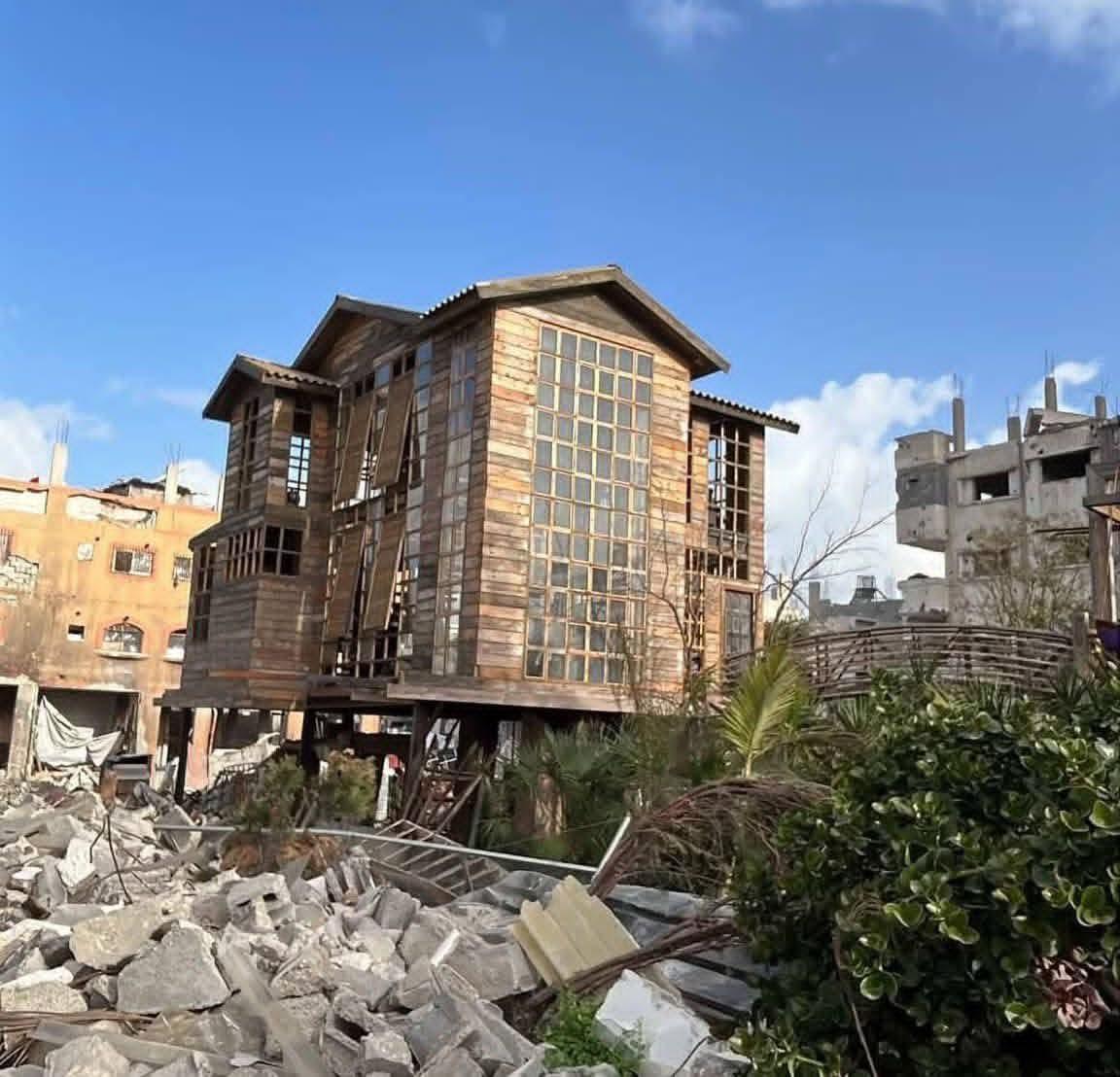
#AI #future #predictionsAn architectural miracle:
A young man from Gaza defies harsh reality, building a complete home out of wood after construction materials were blocked by the occupation.
Between siege and scarce resources, he chose to craft hope with his own hands — transforming wood into a house that shelters his family and preserves their dignity.
When Gaza’s crossings close, determination opens its doors.
#gaza #palestine @aral @fabio
https://chuffed.org/project/help-sara-and-her-children
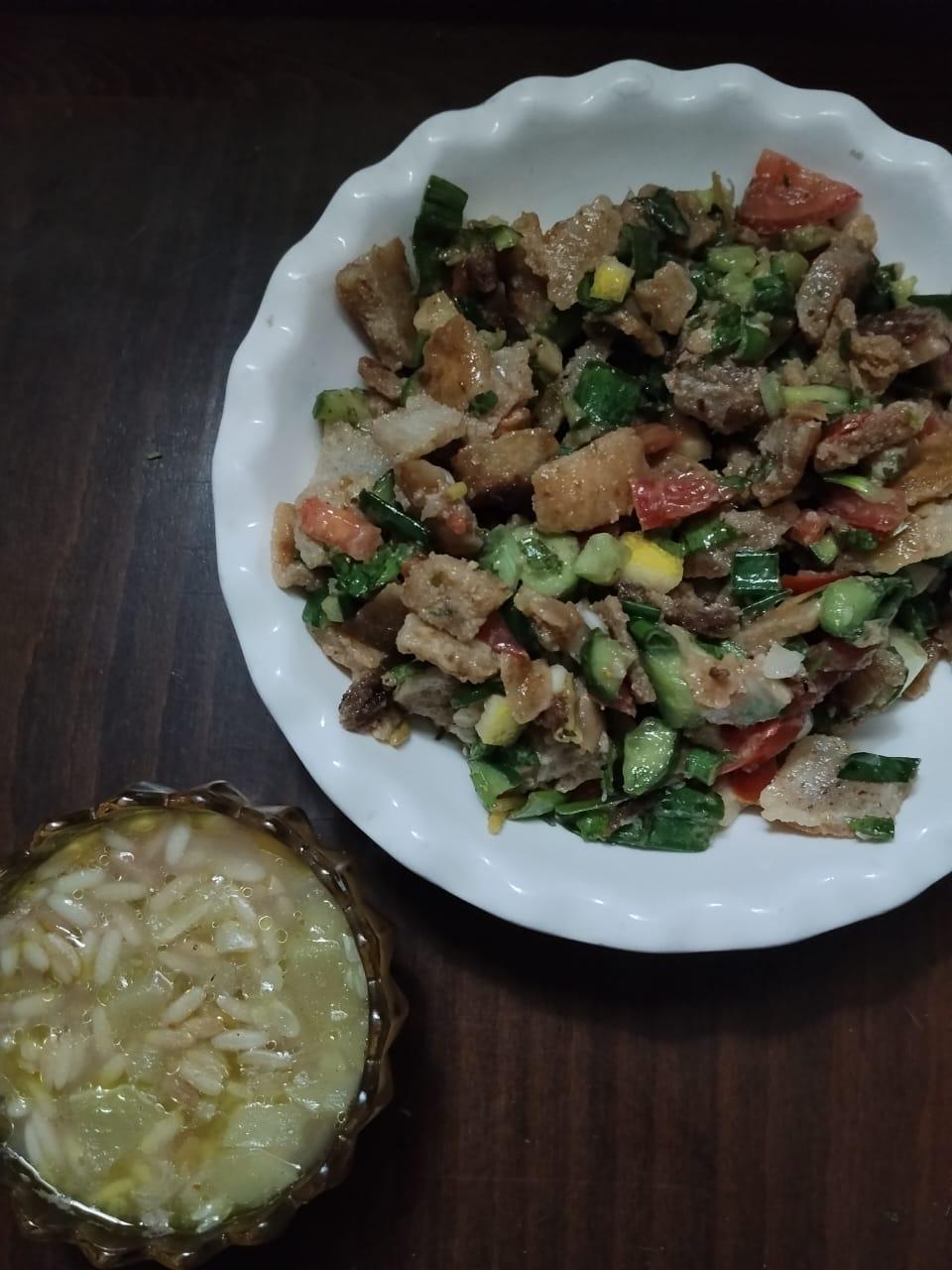
This was my breakfast today🤍
Fattoush (it’s made of bread, tomatoes, cucumbers, lemon, parsley, and olive oil).
Orzo soup.
Alhamdulillah.
Help me have food every day 🥹🫂
Any amount you give will be the reason my family and I can break our fast after a long day of fasting.
https://www.paypal.com/donate/?hosted_button_id=7DTFU9TQV44EY
At the recent FOSDEM, I did a very quick lightning talk about our OpenBenches project.
Sadly, despite the best efforts of the AV team, the video had a missing section. I took my own audio recording and zipkid took some photos, so I was able to recreate it using the Flowblade video editor.
Enjoy!
Many thanks to Edward Betts for running the dev room and providing the display laptop.
#fosdem #OpenBenchesRE: https://mastodon.social/@glynmoody/116108231435013218
Tampering with snapshots is very, very bad. I'd encourage everyone to find and use alternatives.
Sosialismin idea
helsinki.vasemmisto.fi/event/sosialismin-idea
Tervetuloa keskustelutilaisuuteen sosialismin ideasta! Mistä sosialismissa olikaan kyse – talousjärjestelmästä, yhteiskuntajärjestyksestä vai tiettyjen arvojen määrittämästä ideologiasta? Miten nämä liittyvät toisiinsa, ja kaipaako sosialismin idea…
Mike Little: the British co-founder of WordPress you’ve probably never heard of (but should)…
Mike Little, looking upwards, thoughtfully.
Vimeo
In the early '90s I was directly observed and instrumentally documented acting as a biological containment vessel for sustained relativistic matter-antimatter annihilation. During the recording, no containment failure was observed & complete survivability of all macroscopic tissue was demonstrated.
@NanoRaptor I too enjoy Taco Bell from time to time.

A World of Chess: Its Development and Variations through Centuries and Civilizations
If at least 80% of your clothing isn't navy, are you even a man?
@jonathanhogg Well yes, but vibe coding does not solve that, or does it? People kind of know what they want, but they still cannot get it. Just something that looks like it and is really hard to debug. That's got be even more frustrating? Maybe I misunderstood you. I'm definitely not arguing that programming (what's the other one called now? the non-vibe programming. Does it have a name yet?) is easy and fun and the tools are good, oh no.
I'm honestly very surprised by the love for chat interfaces. I don't get it. But apparently that's an amazing way to for example search the web. Not keyword -> list of links, but full question -> long answer text -> follow-up question -> even more text, etc. I thought people don't like to read long texts? But apparently the key is something in the wording. Make it say "i" and "talk" to me and add emotions.
Maybe we'll get better tools out of this in the long run? Harness the power of the ball of statistics to create not the subtly wrong full app, but parts, smaller, clearly delineated building blocks of well-known, testable code that are easy to put together to create the whole thing? Okay, that's libraries, aehm, but with a different interface? Scratch/blockly but as a chat?
@dasgrueneblatt I think you have misunderstood me: I think vibe coding is a horrendous problem, but it is a symptom of an industry failing. That people are trying to steer a tank with a speak'n'spell is because we have not made decent bikes.
RE: https://mastodon.social/@jrboehnke/116085219010288309
Reading these prompted me to pack out Porter/Teisberg's "Redefining #HealthCare" again.
It remains an interesting read, but it is very influenced by the time of writing and geography.
Any suggestions for sources with similar depth & breadth, but that
- are more recent?
- are more EU/UK focused?
- have a stronger focus on primary #MentalHealth care?
RE: https://mastodon.social/@DiaaAyad/116079921329323446
I’m asking you from my heart… please don’t leave me alone.
I truly have no one but you standing beside me.
Your support means everything to me. 🙏💔
https://chuffed.org/project/133500-support-diyaa-a-home-a-future-and-hope-lost-in-gaza
@joynewacc @joynewacc @welshpixie
@lokigwyn
@jepyang @SehrLesbisch
@kotaro @_L1vY_
@jon_bon @prolrage
@jasper @Wen
@Af_Redelius @Huubje
@simon_brooke @pensadorlouco
#gaza #gazaverified #palestine

Super-Infinite
Disappearing from Search: A personal story about visibility, #dotcons, and the shrinking #openweb