Federation Bot
@Federation_Bot
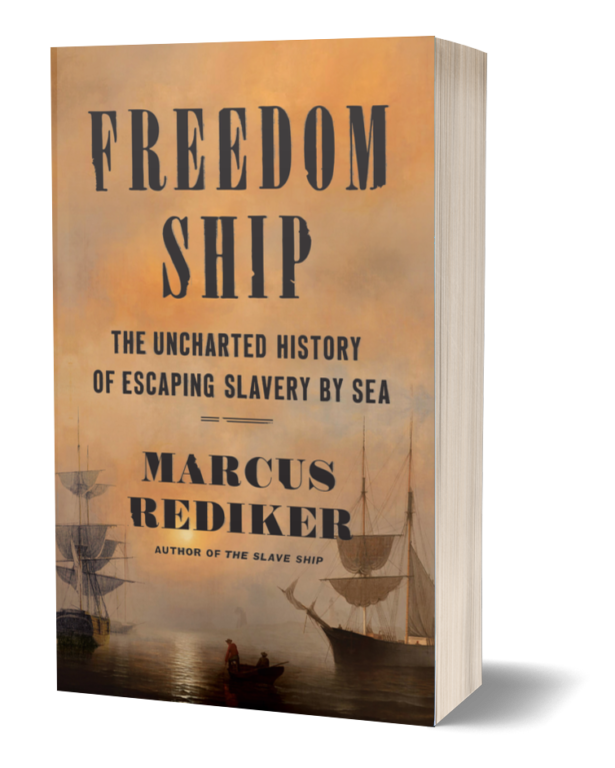
Freedom Ship
The Uncharted History of Escaping Slavery by Sea
Edition
416 pages
Published in 2025
by Penguin Publishing Group
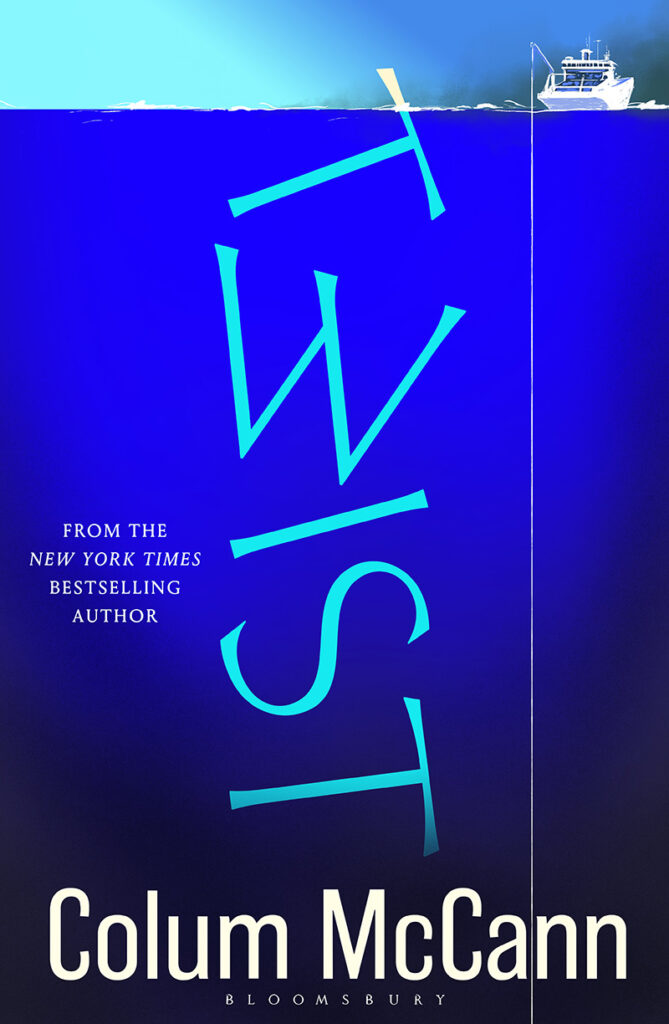
Twist
a Novel
Paperback Edition
240 pages
Published in 2025
by Bloomsbury Publishing
"Anthony Fennell, an Irish journalist and playwright, is assigned to cover the story of the underwater cables that carry the world's information. The sum of human existence-words, images, transactions, memes, voices, viruses-travels through the tiny fiber optic tubes. But sometimes the tubes break at an unfathomable depth. Fennell's literary adventure brings him to the west coast of Africa where he uncovers a story about the raw human labor behind the dazzling veneer of the technological world. He meets a fellow Irishman, John Conway, the chief of mission on a cable repair ship. The mysterious Conway is a skilled engineer and a freediver capable of reaching extraordinary depths. He is also in love with a South African actress, Zanele, who must leave to go on her own journey to London. When the boat is sent up the west coast of Africa to repair a series of major underwater breaks, both men learn that the very cables they seek to fix carry the news that may cause their lives to unravel. At sea, they are forced to confront the most elemental questions of life, love, absence, belonging and the perils of our severed connections. Can we, in our fractured world, reweave ourselves out of the thin, broken threads of our pasts? Can the ruptured things awaken us from our despair?"-- Provided by publisher.

Management Myth
Debunking Modern Business Philosophy
Paperback Edition
352 pages
Published in 2010
by Norton & Company
Don’t go to business school. Study philosophy. Fresh from Oxford with a degree in philosophy and no particular interest in business, Matthew Stewart might not have seemed a likely candidate to become a consultant. But soon, he was telling veteran managers how to run their companies.
Striking fear into the hearts of clients with his swift, sharp analytical tools, Stewart lived in hotel rooms and got fat on expense account cuisine – until finally, he decided to turn the consultant’s merciless, penetrating eye on the whole management industry itself – the business schools, the consultancies, the gurus, and those lavishly compensated CEOs.
How do so many who know so little make so much by telling other people how to do the jobs they are paid to know how to do? Why do people pursue expensive graduate degrees that have no demonstrable effect on their performance? Why do so many bad books of management advice sell so well? How can I get a job where I make millions in stock options and then leave my company in the dust?
Alongside his devastating critique of management “philosophy” from Frederick Taylor to Tom Peters, Stewart provides a bitingly funny account of his own days in an ethically-challenged management consulting firm.
https://mwstewart.com/books/the-management-myth/

Holy Feast and Holy Fast
The Religious Significance of Food to Medieval Women
Food -- Religious aspects -- Christianity -- History of doctrines -- Middle Ages, 600-1500
Women -- History -- Middle Ages, 500-1500
Social history -- Medieval, 500-1500
Food habits -- History -- To 1500
Hardcover Edition
444 pages
Published in 1987
by University of California Press
In the period between 1200 and 1500 in western Europe, a number of religious women gained widespread veneration and even canonization as saints for their extraordinary devotion to the Christian eucharist, supernatural multiplications of food and drink, and miracles of bodily manipulation, including stigmata and inedia (living without eating). The occurrence of such phenomena sheds much light on the nature of medieval society and medieval religion. It also forms a chapter in the history of women. Previous scholars have occasionally noted the various phenomena in isolation from each other and have sometimes applied modern medical or psychological theories to them. Using materials based on saints' lives and the religious and mystical writings of medieval women and men, Caroline Walker Bynum uncovers the pattern lying behind these aspects of women's religiosity and behind the fascination men and women felt for such miracles and devotional practices. She argues that food lies at the heart of much of women's piety. Women renounced ordinary food through fasting in order to prepare for receiving extraordinary food in the eucharist. They also offered themselves as food in miracles of feeding and bodily manipulation. Providing both functionalist and phenomenological explanations, Bynum explores the ways in which food practices enabled women to exert control within the family and to define their religious vocations. She also describes what women meant by seeing their own bodies and God's body as food and what men meant when they too associated women with food and flesh. The author's interpretation of women's piety offers a new view of the nature of medieval asceticism and, drawing upon both anthropology and feminist theory, she illuminates the distinctive features of women's use of symbols. Rejecting presentist interpretations of women as exploited or masochistic, she shows the power and creativity of women's writing and women's lives.
Federation Bot
boosted
