

Upgrade installed!
Everyone running on Masto.host is now on Mastodon v4.5.5.
Any issues or questions, please let me know.
Thanks 🐘

@mastohost
What s the image upload limit for each post?
Discussion
Upgrade installed!
Everyone running on Masto.host is now on Mastodon v4.5.5.
Any issues or questions, please let me know.
Thanks 🐘
@mastohost
What s the image upload limit for each post?

Consorzio Suonatori Indipendenti. Una storia

Il libro dell'estate
«Mi succede una cosa strana, disse Sofia. È che mi sento sempre così buona quando c'è tempesta.»
L'estate, l'ultima isola abitata prima del mare aperto nell'arcipelago finlandese, un paesaggio selvaggio e incontaminato, la casa lontana dalla civiltà, una nonna e una nipotina e, silenzioso nume tutelare, il padre. Una vita quotidiana che segue i ritmi svagati delle vacanze e quelli capricciosi del tempo: qualche visita occasionale, tempeste, avventure, divieti trasgrediti, furtive spedizioni a isole altrui, navigazioni notturne. Su uno sfondo che dell'idillio non ha il sentimentalismo, ma ne ha certamente il fascino, un libro dall'apparenza semplice che riesce a parlare senza enfasi, ma anche senza ingenuità, senza eufemismi ma con tocco ironico e leggero, della complessità del vivere, delle luci e delle ombre dell'animo umano, della crudele imparzialità della natura. «Senza un'infanzia felice non avrei mai incominciato a scrivere», dice Tove Jansson. Ed è proprio quella felicità che emana dai suoi scritti: l'espressione di quel raro equilibrio fra sicurezza e rischio, sfida e ritorno, ribellione e rifugio, paura del nuovo e desiderio di provare, timore e sete di conoscere, bisogno di solitudine e necessità di affetti. È la felicità di camminare su un filo teso, sapendo che vi è comunque una rete di protezione, del sentire con intensità, del prendere la vita sul serio, ma accettandola così com'è. Da qui l'affinità e l'intesa fra Sofia, la bambina che inizia ad affrontare la vita, e la nonna, che l'ha vissuta a fondo, l'ha amata con la saggezza di non pretendere di capirla e sa che fra poco dovrà lasciarla. Il loro dialogo, che spazia su ogni cosa che sta fra il crescere e il morire, è come una musica che resta a lungo nell'orecchio, come una sonatina.
Viral AI assistant Moltbot rapidly gains popularity but poses security risks
The open source "Jarvis" chats via WhatsApp but requires access to your files and accounts.
https://arstechnica.com/ai/2026/01/viral-ai-assistant-moltbot-rapidly-gains-popularity-but-poses-security-risks/?utm_brand=arstechnica&utm_social-type=owned&utm_source=mastodon&utm_medium=social
@arstechnica clawdbot has a sandbox mode. The security risk comes from not running local LLMs.
Netflix Animation Studios are now funding Blender development https://www.gamingonlinux.com/2026/01/netflix-animation-studios-are-now-funding-blender-development/
running a small experiment here, but Atuin is now correctly reading the prompt/command/command output
colour coded in debug mode
let's see what we can do when we're no longer limited by shell support
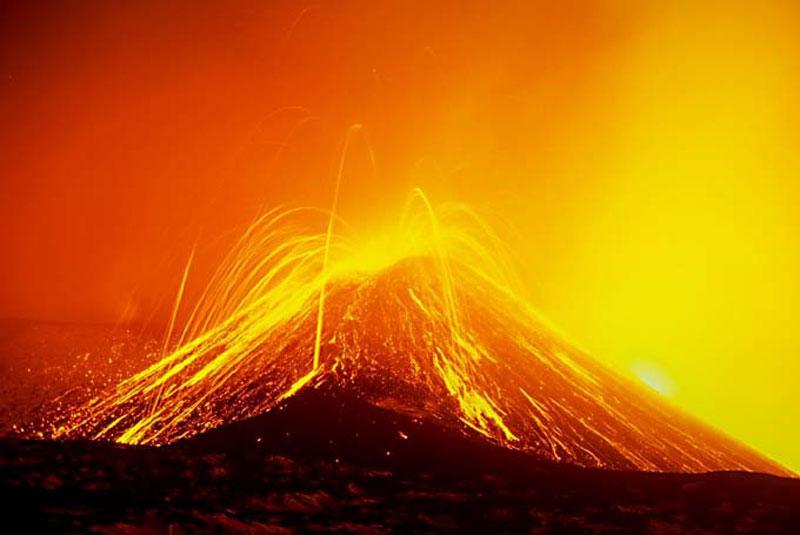
Sometimes I think people forget that we're effectively living on a giant ball of molten rock with a thin crust zooming through an eternal vacuum.
*Everything* all around us is so hostile to our existence, and the fact that we aren't dancing for joy and high-fiving each other constantly in awe of how lucky we are to simply "be" always amazes me.
A little respect for the awesomeness and unlikeliness of being would go a long way no?
Image from:
https://universeodon.com/@world_beauty/115945007048628432
EU 🤝 India
We’ve just concluded negotiations on our biggest ever free trade agreement, with India.
What does this mean?
🔸 The world’s biggest free trade zone, covering 2 billion people
🔸 Unmatched access for EU companies to India’s fast-growing economy
🔸 Tariff cuts on 96.6% of EU goods, saving EU businesses €4 billion every year
🔸 Stronger ties between the world’s two largest democracies
A win for people, growth, and global partnership.
The fascists are calling and want their Twitter back.
Have boosted two posts in the last so many minutes, topic of each being a lone protester on a street corner with a sign.
My respect for these lone souls is mountains greater than those who show up for distributed flashmob block parties.
Want to hold a placard up in hope that some passing driver or passenger will take your message to heart? Maybe themselves take some small action as a result?
Don't wait until some national organization gives you a time and place to assemble. Certainly don't wait until there's a parade permit that will ensure far less vehicular traffic to see you, in (doubly) vain hope that mass media might deign to take notice of an attempt at spectacle.
The revolution will not be planned in advance. You want to make a statement. Make one. Stand up, not to be head-counted, but to stand out, as someone who isn't just doing what everyone else is doing.
Who knows, you might inspire others to stake out their own street corners. Let those be the connections you build.
Most boosted Fediverse posts of 2025:
1. @maxleibman: https://beige.party/@maxleibman/114441790730464541 (3815 boosts)
2. @stux: https://mstdn.social/@stux/113974665364673502 (3720 boosts)
3. @pixelfed: https://mastodon.social/@pixelfed/113849098386232034 (3153 boosts)
4. @signalapp: https://mastodon.world/@signalapp/115311121329278998 (3128 boosts)
5. @Daojoan: https://mastodon.social/@Daojoan/114587431688413845 (3045 boosts)
Terms & Conditions apply, see thread.
lifehack: use IPv6 addresses as passwords: they have letters, numbers, special characters, can contain caps, and are long enough.
If you accidentally paste it somewhere noone will suspect a thing.
Bonushack: you can put a label in DNS as a password reminder!

Enshittification
Enshittification: it’s not just you―the internet sucks now. Here’s why, and here’s how we can disenshittify.
We’re living through the Enshittocene, the Great Enshittening, a time in which the services that matter to us, that we rely on, are turning into giant piles of shit. It’s frustrating. Demoralizing. Even terrifying.
Enshittification identifies the problem and proposes a solution.
When Cory Doctorow coined the term enshittification, he was not just finding a funner way to say “things are getting worse.” He was making a specific diagnosis about the state of the digital world and how it is affecting all of our lives (and not for the better).
The once-glorious internet was colonized by platforms that made all-but-magical promises to their users―and, at least initially, seemed to deliver on them. But once users were locked in, the platforms turned on them to make their business customers happy. Then the platforms turned to abusing their business customers to claw back all the value for themselves. In the end, the platforms die.
Doctorow’s argument clearly resonated. Once named, it became obvious that enshittification is everywhere, so much so that the American Dialect Society named it its 2023 Word of the Year, and was cited as an inspiration for the 2025 season of Black Mirror.
Here, now, in Enshittification the book, Doctorow moves the conversation beyond the overwhelming sense of our inevitably enshittified fate. He shows us the specific decisions that led us here, who made them, and―most important―how they can be undone.
軽量ActivityPub Serverのsnac 2.89リリース
no replies needed thanks
‼️ Twin Cities residents‼️
Citywide vigil, on every block
7:00pm tonight
There is no central gathering location, to prevent further ICE / DHS targeting. Vigil location is wherever you are.
Please contact your nearby neighbors now and spread the word. We want the whole city showing up. This has to end.
Wider die öffentlich-rechtliche Trägheitsvermutung
Spegnere l’AI in Google Chrome: riprendersi il controllo del browser
ISIS Escapes as a Result of Syrian Army Assault
The recent assault by Syrian army forces on the DAANES has led to a widespread breakdown in ISIS detention facilities. RIC identified at least six sites in which detainees were released by Syrian forces or armed forces operating in close coordination with Damascus. Of these, four were confirmed to house ISIS members, whereas the nature of the other two prisons remains unverified. The four sites housed an estimated 33,500 ISIS members altogether. It is as yet unclear how many of these managed to escape, and where they have gone to. Yet already, Iraq’s Popular Mobilization Forces (PMF) has reported capturing Mahmoud Hassan al-Jubouri, whom they describe as “a prominent ISIS leader”, while he was attempting to cross in to Iraq from Syria.
Despite repeated accusations that the SDF was releasing its own detainees, video evidence repeatedly showed men with strong suspected ties to the Damascus government liberating prisoners. In at least two cases – the 17th Division prison in Raqqa and al-Hol camp – the presence of Syrian army soldiers is clearly visible. Notably, an ISIS patch is visible on at least one soldier participating in the operation against the DAANES, as seen on an Al-Jazeera broadcast. According to the SDF, on January 19, a group of their soldiers was beheaded and filmed “in the style of the ISIS terrorist organization” by Syrian army soldiers.
Around 2 PM on January 18, 2026, videos on Twitter showed men allegedly liberated from al-Ma’amel Prison in Deir ez-Zor. An accompanying description by BasNews, a Kurdish-language news channel based in Erbil, said “dozens” of ISIS prisoners had been released at this site after the SDF withdrew. In the video, the men can be heard identifying themselves as belonging to tribes and the Free Syrian Army.
That same afternoon, a pro-ISIS account shared the message on Facebook: “Make sure, brothers, that all the sisters have been released from the Tameer prison in Raqqa. Praise be to God, Lord of the Worlds,” as per Erbil-based journalist Wladimir van Wilgenburg. Shortly thereafter, videos of women detainees escaping said prison emerged online. According to one commentator, some 3,000 ISIS-linked women were released by STG, though we could not independently verify that claim. A video from inside the prison shows two men aiding in the escape.
Aqtan prison, northeast of Raqqa city, houses some 2,000 male ISIS prisoners as per Rudaw. A handful of SDF soldiers have defended the prison against repeated Syrian army attacks, seen in videos shared on Twitter, since January 17. In a video released by the soldiers themselves, they say ISIS prisoners breached several gates in parallel with the Syrian army attack. It is unclear whether they coordinated their actions with government troops. In the afternoon of January 19, SDF press spox Ferhad Shami said his forces had asked the Coalition to transfer the prisoners to a safe location, though “the Coalition has so far taken no practical steps in this regard.” According to the spokesman, at least 9 SDF soldiers were killed, and 20 were injured in repeated attacks on Aqtan. Moreover, the Syrian army cut off water supplies to the prison. In the afternoon of January 20, the SDF says the Syrian army once again attempted to breach the prison gates. Pictures shared by SANA show military police surrounding the prison complex at that time. A video shared by SyriaNow shows Syrian government forces releasing prisoners from the SDF’s 17th Division prison in Raqqa. The released men can be seen running away after declaring their name and their cities of birth.
In the early morning hours of January 19, Shaddadi prison, south of Hassakeh, came under attack by government forces. According to Ferhad Shami, the SDF repelled several attacks, causing the death of “dozens” of SDF soldiers. The Coalition, despite being present at a base only 2km away, did not intervene. By 5 PM that day, the SDF spokesman stated that the prison had “fallen outside the control of our forces.” Later that day, the SDF shared two videos showing what the SDF said was government forces opening the cells of Shaddadi prison. Ferhad Shami told Rudaw that 1,500 ISIS militants housed in Shaddadi had been freed. Shortly after 7 PM, the government then announced a total curfew on the town of Sheddadi in order to capture prisoners, whom they accused the SDF of freeing. It claimed to have captured 81 out of only 120 escapees.
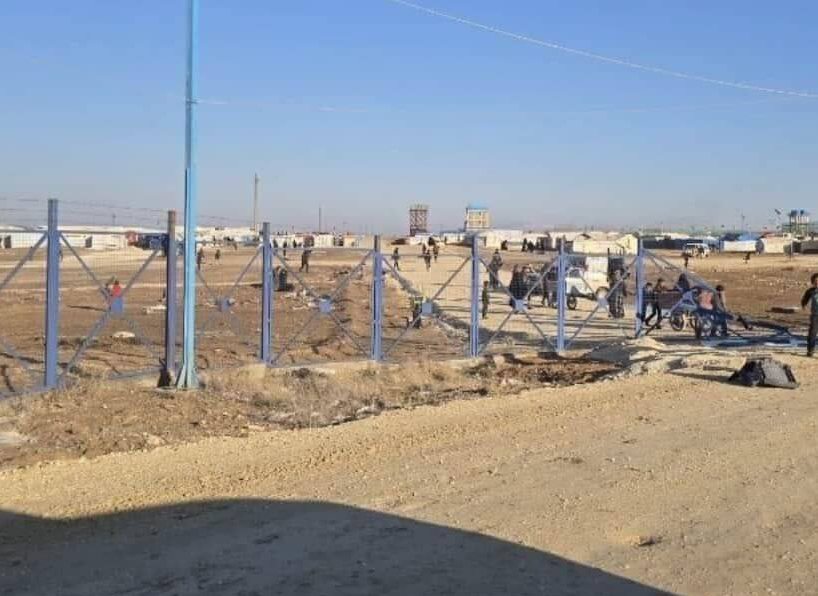
Al-Hol camp is by far the largest detention camp in northeast Syria. In September 2025, it still held 27,000 people, as per North Press, down from nearly 80,000 in the aftermath of the SDF’s defeat of the caliphate. Around 7,000 of these are neither Syrian nor Iraqi, but from third-country nationals who chose to join the terror group. Several videos and pictures shared online show detainees breaching the camp perimeter. One video, in particular, shows what appears to be hundreds of detainees exiting the camp. Another video, posted around 5 PM, shows Syrian army vehicles approaching the perimeter of the camp to cheers from within the fence. Ferhad Shami shared these and other videos in a post later that evening. Pro-ISIS accounts called on residents of the nearby town of al-Hol to reach out to escaping ISIS detainees. Confusion reigned over control of the camp. Shortly after 2 PM, according to Wladimir van Wilgenburg, government forces attacked the camp, with violent clashes occurring shortly thereafter. According to SDF Commander Mazlum Abdi, camp guards faced “attacks by military columns, armoured vehicles, and tanks, which forced them to withdraw.” According to Abdi, the attacks had occurred since the evening of January 19. At 4 PM, Ferhad Shami announced the SDF was leaving the camp “due to the international indifference.” Shortly after, government forces were reportedly in control of the camp. Syria’s Interior Ministry accused the SDF of having set ISIS members free almost immediately. Pictures shared by SANA showed Syrian army soldiers in control of the camp before sundown. SDF forces announced their redeployment to the vicinity of al-Hol an hour later in order to reinforce defensive lines around population centers and prevent potential attacks linked to ISIS cells operating inside and outside the camp. At 5 PM, al-Monitor quoted a US military official saying that reports that SDF has abandoned the al-Hol ISIS detainee camp are “not accurate.”
Many ISIS detention facilities continue to be in the hands of the SDF. If they were to fall into government hands, many thousands more ISIS members could be released. Al-Sina’a Prison in Hassakeh houses some 4,000 ISIS fighters. In 2022, an ISIS prison escape attempt at this site, coordinated between prisoners and outside ISIS cells, killed at least 121 people during a week-long bout of urban battles. According to the SDF, the prison already came under attack on January 20, though soldiers repelled the attempted breach. Other sites include the Black Prison in Derik/al-Malikiya, which held around 2,000 male ISIS fighters in 2022; Alaya Prison in Qamishlo, holding some 1,500 convicted men with ties to ISIS; and Roj camp, near Derik/al-Malikiya, which is home mostly to some 2,100 ISIS-linked women and their children, though given that they have been held at the site for the better half a decade, at least 50 young men aged 18-20 also live there.
The Battle of Heseke 2022: Timeline and Analysis

Can you imagine a girl my age going through all this?🚨💔
My health condition is difficult and the pain is getting worse with each passing day💔
I only need 1500$ to be able to have surgery and save my health💔😭
Please, don't leave me alone in this cruel and painful situation😭😩

Install bonfire.cafe
Get the full app experience