Discussion
Loading...

#Tag

Log in
  • About
  • Code of conduct
  • Privacy
  • Users
  • Instances
  • About Bonfire
Ika Makimaki boosted
Bob LeFridge  :tinoflag:
Bob LeFridge :tinoflag:
@BobLefridge@mastodon.nz  ·  activity timestamp 3 days ago

What do you get when you combine a shallow water table with super-intensified dairy farming? Poisoned drinking water.

Southland farmers are poisoning themselves, their children, their neighbours, their communities. And the regulator doesn't want to know.

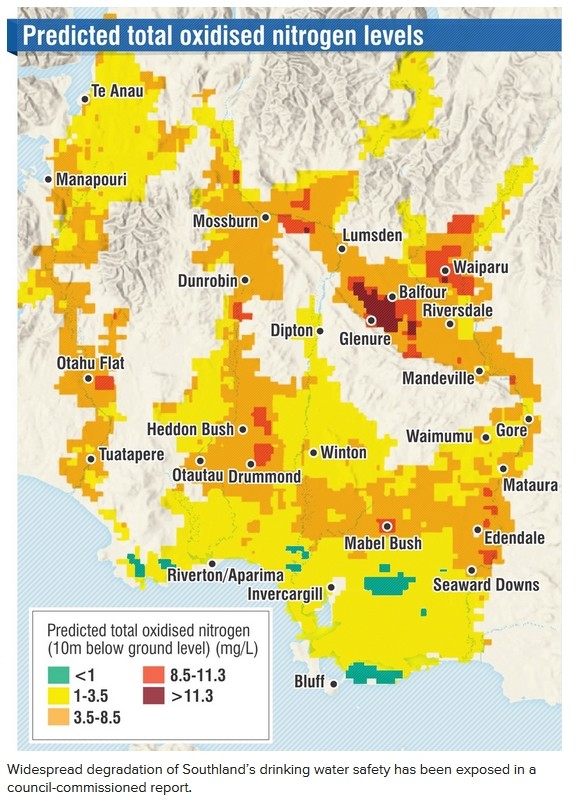
A report commissioned by Environment Southland shows "widespread degradation of Southland’s drinking water" with dangerous levels of nitrates through almost all of the area's waterways.

However ES didn't release the report which was hidden amongst other documents. After the ODT started asking questions, ES put out a media release saying "the problem could take decades to fix" but oddly, they didn't mention dairy farming once.

Funny that.

https://www.odt.co.nz/southland/nitrate-%E2%80%98news-not-good%E2%80%99-southland
#NZ #Dairy #Nitrogen

A map of Southland showing dangerous nitrogen levels across most of the province. This graphic would double nicely as a heat map of dairy intensity.
Otago Daily Times Online News

Nitrate ‘news not good’ for Southland

Widespread degradation of Southland’s drinking water safety has been exposed in a council-commissioned report. The Environment Southland report...
  • Copy link
  • Flag this post
  • Block
Bob LeFridge  :tinoflag:
Bob LeFridge :tinoflag:
@BobLefridge@mastodon.nz  ·  activity timestamp 3 days ago

What do you get when you combine a shallow water table with super-intensified dairy farming? Poisoned drinking water.

Southland farmers are poisoning themselves, their children, their neighbours, their communities. And the regulator doesn't want to know.

A report commissioned by Environment Southland shows "widespread degradation of Southland’s drinking water" with dangerous levels of nitrates through almost all of the area's waterways.

However ES didn't release the report which was hidden amongst other documents. After the ODT started asking questions, ES put out a media release saying "the problem could take decades to fix" but oddly, they didn't mention dairy farming once.

Funny that.

https://www.odt.co.nz/southland/nitrate-%E2%80%98news-not-good%E2%80%99-southland
#NZ #Dairy #Nitrogen

A map of Southland showing dangerous nitrogen levels across most of the province. This graphic would double nicely as a heat map of dairy intensity.
Otago Daily Times Online News

Nitrate ‘news not good’ for Southland

Widespread degradation of Southland’s drinking water safety has been exposed in a council-commissioned report. The Environment Southland report...
  • Copy link
  • Flag this post
  • Block
Tanguy Fardet boosted
Mikko Tuomi
Mikko Tuomi
@mustapipa@scicomm.xyz  ·  activity timestamp 2 weeks ago

For #life to develop on a #planet, certain chemical elements are needed in sufficient quantities.

#Phosphorus is vital for the formation of DNA and RNA, which store and transmit genetic information, and for the energy balance of cells.

#Nitrogen is an essential component of proteins, which are needed for the formation, structure, and function of cells.

Without these two elements, no life can develop out of lifeless matter but there are also more profound consequences.

During the formation of a #planet's core, there needs to be exactly the right amount of oxygen present so that phosphorus and nitrogen can remain on the surface of the planet.

This was exactly the case with Earth around 4.6 billion years ago—a stroke of chemical good fortune in the #universe.

When #planets form, they initially develop out of molten rock.

A sorting process occurs during this time: heavy metals such as iron sink down and form the core, while lighter metals form the mantle and the crust.

If there is too little #oxygen present during the formation of the core, phosphorus will fuse with heavy metals such as iron and move to the core.

This element is then no longer available for the development of life.

On the other hand, too much oxygen present during core formation leads to phosphorus remaining in the mantle and #nitrogen being more likely to escape into the #atmosphere, ultimately being lost.

#astronomy #astrobiology
https://phys.org/news/2026-02-small-planets-suitable-life.html

Paper by Walton et al. (2026):
https://www.nature.com/articles/s41550-026-02775-z

  • Copy link
  • Flag this post
  • Block
Mikko Tuomi
Mikko Tuomi
@mustapipa@scicomm.xyz  ·  activity timestamp 2 weeks ago

For #life to develop on a #planet, certain chemical elements are needed in sufficient quantities.

#Phosphorus is vital for the formation of DNA and RNA, which store and transmit genetic information, and for the energy balance of cells.

#Nitrogen is an essential component of proteins, which are needed for the formation, structure, and function of cells.

Without these two elements, no life can develop out of lifeless matter but there are also more profound consequences.

During the formation of a #planet's core, there needs to be exactly the right amount of oxygen present so that phosphorus and nitrogen can remain on the surface of the planet.

This was exactly the case with Earth around 4.6 billion years ago—a stroke of chemical good fortune in the #universe.

When #planets form, they initially develop out of molten rock.

A sorting process occurs during this time: heavy metals such as iron sink down and form the core, while lighter metals form the mantle and the crust.

If there is too little #oxygen present during the formation of the core, phosphorus will fuse with heavy metals such as iron and move to the core.

This element is then no longer available for the development of life.

On the other hand, too much oxygen present during core formation leads to phosphorus remaining in the mantle and #nitrogen being more likely to escape into the #atmosphere, ultimately being lost.

#astronomy #astrobiology
https://phys.org/news/2026-02-small-planets-suitable-life.html

Paper by Walton et al. (2026):
https://www.nature.com/articles/s41550-026-02775-z

  • Copy link
  • Flag this post
  • Block
Tanguy Fardet boosted
Mainz University
Mainz University
@mainzuniversity@wisskomm.social  ·  activity timestamp 4 months ago

Extract fertilizer from air and water: Pulsed electrolysis opens a path toward sustainable production of nitrogen compounds such as ammonia and urea 👉 https://press.uni-mainz.de/extract-fertilizer-from-air-and-water/

#SustainableChemistry #electrolysis #SusInnoScience #nitrogen #fertilizer #agriculture #ClimateChange

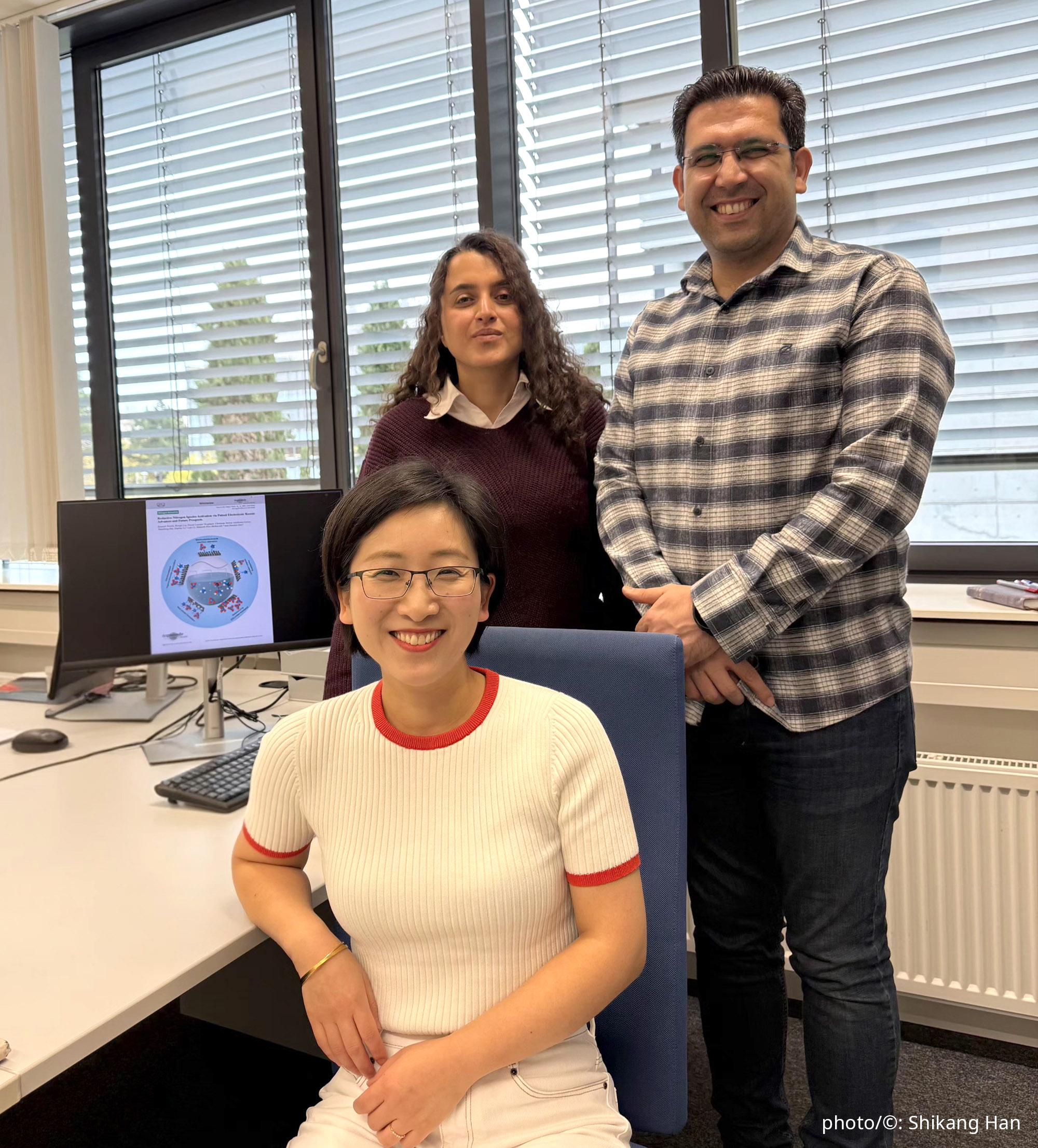
Dr. Dandan Gao (front) from the Department of Chemistry at Mainz University with the lead authors of the current review article, Dr. Bahareh Feizi Mohazzab (left) und Kiarash Torabi (right) (photo/©: Shikang Han)
  • Copy link
  • Flag this post
  • Block
Mainz University
Mainz University
@mainzuniversity@wisskomm.social  ·  activity timestamp 4 months ago

Extract fertilizer from air and water: Pulsed electrolysis opens a path toward sustainable production of nitrogen compounds such as ammonia and urea 👉 https://press.uni-mainz.de/extract-fertilizer-from-air-and-water/

#SustainableChemistry #electrolysis #SusInnoScience #nitrogen #fertilizer #agriculture #ClimateChange

Dr. Dandan Gao (front) from the Department of Chemistry at Mainz University with the lead authors of the current review article, Dr. Bahareh Feizi Mohazzab (left) und Kiarash Torabi (right) (photo/©: Shikang Han)
  • Copy link
  • Flag this post
  • Block

bonfire.cafe

A space for Bonfire maintainers and contributors to communicate

bonfire.cafe: About · Code of conduct · Privacy · Users · Instances
Bonfire social · 1.0.2-alpha.34 no JS en
Automatic federation enabled
Log in
Instance logo
  • Explore
  • About
  • Members
  • Code of Conduct