Discussion
Loading...

#Tag

Log in
  • About
  • Code of conduct
  • Privacy
  • Users
  • Instances
  • About Bonfire
Michael Graaf boosted
abolitionmedia
abolitionmedia
@abolitionmedia@abolitionmedia.noblogs.org  ·  activity timestamp last week

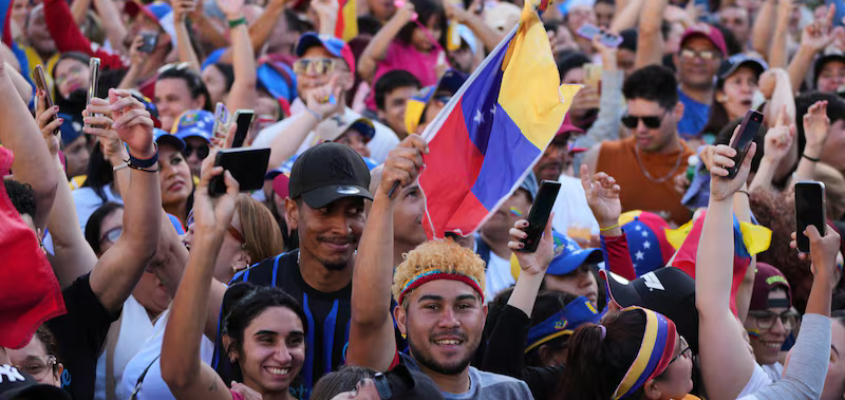
Venezuela, Even More Than Palestine, Is the Linchpin of a Consistent Radical Left in The Era of Global Neofascism Led by the U.S.

Palestine is the moral heart of global anti-colonial politics. It exposes the brutality of settler colonialism in its most naked form: land theft, ethnic cleansing, military occupation, and white supremacist domination. For many on the left, solidarity with Palestine has become a defining ethical commitment. But while Palestine functions as a moral litmus test for individuals and organizations across the political terrain from left to right, Venezuela is a structural and political one.

Recent events in Venezuela have dramatically escalated the stakes of anti-imperialist politics in a way that cannot be ignored. On January 3, 2026, the United States launched a large-scale military operation with the objective of kidnapping Venezuelan President Nicolás Maduro and his wife and transporting them back to the United States to face federal charges. This marks a decisive escalation in the forms of subversion and interventionist tactics that have characterized U.S. interventions in recent decades.

It also became a game-changer for radical politics inside the empire. The turn toward overt military force and the forcible removal of a sitting head of state signals a return to the raw practice of colonial domination — a form of power not seen so explicitly since the 2004 removal of Haitian President Jean-Bertrand Aristide by the George W. Bush administration.

The Empire has dropped the mask.

The question now is whether the left will continue to speak in the language of “liberal critique” and “class collaboration,” or whether it will finally confront bipartisan-supported imperial power in its most direct and unapologetic form.

Venezuela is the issue where anti-imperialism stops being a slogan and becomes a confrontation with one’s own state. It is therefore also the issue where U.S.-based radicals should unapologetically affirm Venezuela’s right to self-determination and openly oppose the U.S. imperial project in Venezuela. If they are not prepared to do this, it demonstrates unequivocally that their radicalism was never serious — that it was always symbolic and selective, which made it ultimately safe for the empire.

The Venezuela situation also reveals another now-normalized feature of “left” politics: the divergence between a left that is formally anti-imperialist and a liberal/left that remains fundamentally U.S.-centric and social imperialist. When this current turns to international events — especially cases of U.S. intervention — its position is shaped less by opposition to imperialism than by its assessment of the internal character of the targeted state. The legitimacy of intervention is thus implicitly judged according to whether the society under attack conforms to what amounts to Western “liberal” expectations and not the conditions and imperatives of revolutionary social transformation.

In practice, the actually existing efforts at socialist-oriented economic, social, and political development are almost always deemed inadequate, flawed, or authoritarian. This judgment then becomes the pretext for withholding solidarity. The predictable result is that these “left” forces find themselves aligned with U.S. imperialism in both analysis and effect, even as they insist that their position is informed by a “left” critique.

This is not a minor theoretical error but a political failure. It subordinates the principle of self-determination to ideological gatekeeping, and it replaces solidarity with conditional approval. In doing so, it converts anti-imperialism into a posture rather than a commitment — a language that can coexist comfortably with empire so long as empire speaks in the idiom of liberal democratic reformism and white saviorism!

Examples of this approach have emerged since the kidnapping of Maduro and his wife where sections of the collaborative left adopt the language and assumptions of U.S. policy makers about Venezuela — condemning Nicolás Maduro’s personality, legitimacy, or policies — but then attempt to separate those “left” condemnations from the brutal consequences of imperial intervention.

The first example is the familiar move: “I oppose U.S. intervention, but Maduro is an authoritarian who brought this on himself.” This framing accepts Washington’s narrative that Venezuela’s crisis is primarily the product of internal leadership failure rather than external economic warfare, sanctions, and destabilization. By centering Maduro’s alleged illegitimacy, this position reproduces the moral logic that makes intervention appear reasonable, even if the speaker claims to oppose the intervention itself. This position turns anti-imperialism into a procedural objection rather than a principled one — objecting to methods while accepting the white supremacist, colonialist premise that the U.S. has the authority to judge and discipline other societies.

The second example is the appeal to “human rights” as a neutral justification: “The U.S. shouldn’t intervene militarily, but something must be done about human rights abuses in Venezuela.” This treats human rights discourse as politically innocent, ignoring its long history as an imperial instrument used selectively against disobedient states and never against compliant ones. This framing erases the massive human rights violations produced by sanctions, economic strangulation, and political isolation — forms of violence that are invisible precisely because they are bureaucratic.

In both cases, the liberal/left position preserves U.S. moral authority while disavowing U.S. violence. This is not a contradiction but a function: it allows empire to operate with legitimacy. By accepting imperial categories and merely disputing their execution, the liberal/left becomes not an opponent of empire but one of its most useful managers.

The kidnapping of President Maduro is not simply another foreign-policy episode but a textbook case of imperial domination. In the present international context of imperial lawlessness — characterized by a form of global fascism led by the United States — it signals that these methods will be used again to attack and assert control over other sovereign nations.

Venezuela thus remains the linchpin for an authentic radical left precisely because it tests whether anti-imperialism is a principle or merely a fashionable posture. This moment demands that those committed to justice confront not only the moral obscenity of settler colonialism in Palestine but also the raw mechanisms of material power deployed abroad and domestically by their own state. Opposing empire only when it is directed at states that meet the Western left’s criteria for deserving solidarity will always fail, because such “perfect” states do not exist in reality. This logic explains how the U.S. “left” can normalize anti-anti-imperialism while continuing to present itself as radical.

“Actually existing,” concrete national projects of social transformation will always be imperfect. If the standard for solidarity is grounded in fantasies of Bernsteinian peaceful “democratic” transitions in a neocolonial context or even more idealist visions in core imperialist societies like the U.S., in which state power is seized on Friday and society becomes stateless and self-managed by local peoples’ assemblies by Monday, then no real struggle will ever qualify. These expectations function less as political standards than as mechanisms for disqualification.

The birth of new societies and their development within a disintegrating global capitalist order — and in the face of an international bourgeoisie committed to violent state terrorism and subversion to maintain Western white supremacist imperial power — constitute the objective conditions that shape the politics of those societies and should inform anti-imperialist politics in the metropoles.

Only by naming and opposing the full spectrum of imperial violence — from financial warfare to overt military conquest — can a radical left aspire to be consistent and consequential in the objective conditions we find ourselves in.

Venezuela’s struggle today lays bare the essential question: Do we oppose oppression only as distant abstractions, or do we confront empire at its most aggressive and normalized expressions?

Opposing empire in Venezuela is critical because the Venezuelan experiment at national survival with the lessons it has learned was beginning to expose the fact that even with “maximum pressure,” the possibility of an alternative political and economic trajectory outside neoliberal capitalism and U.S. hemispheric dominance was possible.

Venezuela’s ability to sell its oil, even at a diminished level after years of sanctions that resulted in its inability to reinvest in critical infrastructure, represented a critical win for its people and for all states that possessed critical resources. Its successful attempts to trade oil outside the dollar system — including in Chinese currency or digital alternatives — are significant not mainly because they threaten U.S. energy security, but because they undermine U.S. financial and geopolitical control. The real concern is the precedent: that a major resource-holding state can defy U.S. authority, weaken dollar-based systems, and still survive. The issue is thus about maintaining hegemony, not just securing fuel.

Palestine reveals the moral horror of settler-colonial domination, while Venezuela reveals the operational logic of contemporary empire abroad and in its’ domestic politics. If radical politics cannot confront that logic at its source — in the policies of the U.S. state itself — then it risks becoming a politics of outrage without consequence. Venezuela is the linchpin not because it is more important than Palestine, but because it tests whether the left is willing to oppose empire where it is most normalized, most respectable, and for some, most difficult to name.

For many U.S. radicals, this will be very difficult because the price might be too high. Unequivocal support for Venezuelan self-determination means defending a state targeted by your own ruling class, being accused of supporting “authoritarianism,” a charge that functions as an ideological weapon to discipline dissent that will result in losing access to mainstream legitimacy.

This is precisely why Venezuela is the site where left politics becomes dangerous, subversive and its practitioners materially punished — which is exactly why it is the real test of radicalism.

The charge of repression coming from a state in the grip of neofascist consolidation and a liberal/left represented by “progressives” such as Bernie Sanders and Zohran Mamdani – who will not only condemn the Bolivarian process but the revolutionary people and process of Cuba – illustrates perfectly the rightist convergence of the fascist state and the social democratic managerial “left.”

Venezuela’s Bolivarian project cannot be explained by the simplistic focus on supposed internal dysfunction and authoritarianism but by its geopolitical disobedience — the refusal to submit to the U.S. assertion of the Monroe Doctrine and the global neoliberal order. For the imperialist white supremacist policymakers, that refusal had to be punished through economic suffocation and political destabilization.

Yet, Venezuela’s ability to survive, to demonstrate that it could exist outside of the structures dominated by international capitalist financial institutions, ironically posed an existential threat to U.S. hegemony not only because it was uniquely dangerous, but because it could be contagious.

Ajamu Baraka is an editor and contributing columnist for the Black Agenda Report. He is the Director of the North-South Project for People(s)-Centered Human Rights and serves on the Executive Committee of the U.S. Peace Council and leadership body of the U.S.-based United National Anti-War Coalition (UNAC).

source: Black Agenda Report

https://abolitionmedia.noblogs.org/?p=26775 #colonialism #imperialism #northAmerica #venezuela
Sorry, no caption provided by author
Black Agenda Report

Venezuela, Even More Than Palestine, Is the Linchpin of a Consistent Radical Left in The Era of Global Neofascism Led by the U.S. | Black Agenda Report

Solidarity with Palestine tests morality, but solidarity with Venezuela tests politics. The recent U.S. intervention demands a radical left moving from moral outrage to a material confrontation with its own state.
  • Copy link
  • Flag this post
  • Block
abolitionmedia
abolitionmedia
@abolitionmedia@abolitionmedia.noblogs.org  ·  activity timestamp last week

Venezuela, Even More Than Palestine, Is the Linchpin of a Consistent Radical Left in The Era of Global Neofascism Led by the U.S.

Palestine is the moral heart of global anti-colonial politics. It exposes the brutality of settler colonialism in its most naked form: land theft, ethnic cleansing, military occupation, and white supremacist domination. For many on the left, solidarity with Palestine has become a defining ethical commitment. But while Palestine functions as a moral litmus test for individuals and organizations across the political terrain from left to right, Venezuela is a structural and political one.

Recent events in Venezuela have dramatically escalated the stakes of anti-imperialist politics in a way that cannot be ignored. On January 3, 2026, the United States launched a large-scale military operation with the objective of kidnapping Venezuelan President Nicolás Maduro and his wife and transporting them back to the United States to face federal charges. This marks a decisive escalation in the forms of subversion and interventionist tactics that have characterized U.S. interventions in recent decades.

It also became a game-changer for radical politics inside the empire. The turn toward overt military force and the forcible removal of a sitting head of state signals a return to the raw practice of colonial domination — a form of power not seen so explicitly since the 2004 removal of Haitian President Jean-Bertrand Aristide by the George W. Bush administration.

The Empire has dropped the mask.

The question now is whether the left will continue to speak in the language of “liberal critique” and “class collaboration,” or whether it will finally confront bipartisan-supported imperial power in its most direct and unapologetic form.

Venezuela is the issue where anti-imperialism stops being a slogan and becomes a confrontation with one’s own state. It is therefore also the issue where U.S.-based radicals should unapologetically affirm Venezuela’s right to self-determination and openly oppose the U.S. imperial project in Venezuela. If they are not prepared to do this, it demonstrates unequivocally that their radicalism was never serious — that it was always symbolic and selective, which made it ultimately safe for the empire.

The Venezuela situation also reveals another now-normalized feature of “left” politics: the divergence between a left that is formally anti-imperialist and a liberal/left that remains fundamentally U.S.-centric and social imperialist. When this current turns to international events — especially cases of U.S. intervention — its position is shaped less by opposition to imperialism than by its assessment of the internal character of the targeted state. The legitimacy of intervention is thus implicitly judged according to whether the society under attack conforms to what amounts to Western “liberal” expectations and not the conditions and imperatives of revolutionary social transformation.

In practice, the actually existing efforts at socialist-oriented economic, social, and political development are almost always deemed inadequate, flawed, or authoritarian. This judgment then becomes the pretext for withholding solidarity. The predictable result is that these “left” forces find themselves aligned with U.S. imperialism in both analysis and effect, even as they insist that their position is informed by a “left” critique.

This is not a minor theoretical error but a political failure. It subordinates the principle of self-determination to ideological gatekeeping, and it replaces solidarity with conditional approval. In doing so, it converts anti-imperialism into a posture rather than a commitment — a language that can coexist comfortably with empire so long as empire speaks in the idiom of liberal democratic reformism and white saviorism!

Examples of this approach have emerged since the kidnapping of Maduro and his wife where sections of the collaborative left adopt the language and assumptions of U.S. policy makers about Venezuela — condemning Nicolás Maduro’s personality, legitimacy, or policies — but then attempt to separate those “left” condemnations from the brutal consequences of imperial intervention.

The first example is the familiar move: “I oppose U.S. intervention, but Maduro is an authoritarian who brought this on himself.” This framing accepts Washington’s narrative that Venezuela’s crisis is primarily the product of internal leadership failure rather than external economic warfare, sanctions, and destabilization. By centering Maduro’s alleged illegitimacy, this position reproduces the moral logic that makes intervention appear reasonable, even if the speaker claims to oppose the intervention itself. This position turns anti-imperialism into a procedural objection rather than a principled one — objecting to methods while accepting the white supremacist, colonialist premise that the U.S. has the authority to judge and discipline other societies.

The second example is the appeal to “human rights” as a neutral justification: “The U.S. shouldn’t intervene militarily, but something must be done about human rights abuses in Venezuela.” This treats human rights discourse as politically innocent, ignoring its long history as an imperial instrument used selectively against disobedient states and never against compliant ones. This framing erases the massive human rights violations produced by sanctions, economic strangulation, and political isolation — forms of violence that are invisible precisely because they are bureaucratic.

In both cases, the liberal/left position preserves U.S. moral authority while disavowing U.S. violence. This is not a contradiction but a function: it allows empire to operate with legitimacy. By accepting imperial categories and merely disputing their execution, the liberal/left becomes not an opponent of empire but one of its most useful managers.

The kidnapping of President Maduro is not simply another foreign-policy episode but a textbook case of imperial domination. In the present international context of imperial lawlessness — characterized by a form of global fascism led by the United States — it signals that these methods will be used again to attack and assert control over other sovereign nations.

Venezuela thus remains the linchpin for an authentic radical left precisely because it tests whether anti-imperialism is a principle or merely a fashionable posture. This moment demands that those committed to justice confront not only the moral obscenity of settler colonialism in Palestine but also the raw mechanisms of material power deployed abroad and domestically by their own state. Opposing empire only when it is directed at states that meet the Western left’s criteria for deserving solidarity will always fail, because such “perfect” states do not exist in reality. This logic explains how the U.S. “left” can normalize anti-anti-imperialism while continuing to present itself as radical.

“Actually existing,” concrete national projects of social transformation will always be imperfect. If the standard for solidarity is grounded in fantasies of Bernsteinian peaceful “democratic” transitions in a neocolonial context or even more idealist visions in core imperialist societies like the U.S., in which state power is seized on Friday and society becomes stateless and self-managed by local peoples’ assemblies by Monday, then no real struggle will ever qualify. These expectations function less as political standards than as mechanisms for disqualification.

The birth of new societies and their development within a disintegrating global capitalist order — and in the face of an international bourgeoisie committed to violent state terrorism and subversion to maintain Western white supremacist imperial power — constitute the objective conditions that shape the politics of those societies and should inform anti-imperialist politics in the metropoles.

Only by naming and opposing the full spectrum of imperial violence — from financial warfare to overt military conquest — can a radical left aspire to be consistent and consequential in the objective conditions we find ourselves in.

Venezuela’s struggle today lays bare the essential question: Do we oppose oppression only as distant abstractions, or do we confront empire at its most aggressive and normalized expressions?

Opposing empire in Venezuela is critical because the Venezuelan experiment at national survival with the lessons it has learned was beginning to expose the fact that even with “maximum pressure,” the possibility of an alternative political and economic trajectory outside neoliberal capitalism and U.S. hemispheric dominance was possible.

Venezuela’s ability to sell its oil, even at a diminished level after years of sanctions that resulted in its inability to reinvest in critical infrastructure, represented a critical win for its people and for all states that possessed critical resources. Its successful attempts to trade oil outside the dollar system — including in Chinese currency or digital alternatives — are significant not mainly because they threaten U.S. energy security, but because they undermine U.S. financial and geopolitical control. The real concern is the precedent: that a major resource-holding state can defy U.S. authority, weaken dollar-based systems, and still survive. The issue is thus about maintaining hegemony, not just securing fuel.

Palestine reveals the moral horror of settler-colonial domination, while Venezuela reveals the operational logic of contemporary empire abroad and in its’ domestic politics. If radical politics cannot confront that logic at its source — in the policies of the U.S. state itself — then it risks becoming a politics of outrage without consequence. Venezuela is the linchpin not because it is more important than Palestine, but because it tests whether the left is willing to oppose empire where it is most normalized, most respectable, and for some, most difficult to name.

For many U.S. radicals, this will be very difficult because the price might be too high. Unequivocal support for Venezuelan self-determination means defending a state targeted by your own ruling class, being accused of supporting “authoritarianism,” a charge that functions as an ideological weapon to discipline dissent that will result in losing access to mainstream legitimacy.

This is precisely why Venezuela is the site where left politics becomes dangerous, subversive and its practitioners materially punished — which is exactly why it is the real test of radicalism.

The charge of repression coming from a state in the grip of neofascist consolidation and a liberal/left represented by “progressives” such as Bernie Sanders and Zohran Mamdani – who will not only condemn the Bolivarian process but the revolutionary people and process of Cuba – illustrates perfectly the rightist convergence of the fascist state and the social democratic managerial “left.”

Venezuela’s Bolivarian project cannot be explained by the simplistic focus on supposed internal dysfunction and authoritarianism but by its geopolitical disobedience — the refusal to submit to the U.S. assertion of the Monroe Doctrine and the global neoliberal order. For the imperialist white supremacist policymakers, that refusal had to be punished through economic suffocation and political destabilization.

Yet, Venezuela’s ability to survive, to demonstrate that it could exist outside of the structures dominated by international capitalist financial institutions, ironically posed an existential threat to U.S. hegemony not only because it was uniquely dangerous, but because it could be contagious.

Ajamu Baraka is an editor and contributing columnist for the Black Agenda Report. He is the Director of the North-South Project for People(s)-Centered Human Rights and serves on the Executive Committee of the U.S. Peace Council and leadership body of the U.S.-based United National Anti-War Coalition (UNAC).

source: Black Agenda Report

https://abolitionmedia.noblogs.org/?p=26775 #colonialism #imperialism #northAmerica #venezuela
Sorry, no caption provided by author
Black Agenda Report

Venezuela, Even More Than Palestine, Is the Linchpin of a Consistent Radical Left in The Era of Global Neofascism Led by the U.S. | Black Agenda Report

Solidarity with Palestine tests morality, but solidarity with Venezuela tests politics. The recent U.S. intervention demands a radical left moving from moral outrage to a material confrontation with its own state.
  • Copy link
  • Flag this post
  • Block
Alex Akselrod boosted
abolitionmedia
abolitionmedia
@abolitionmedia@abolitionmedia.noblogs.org  ·  activity timestamp last month

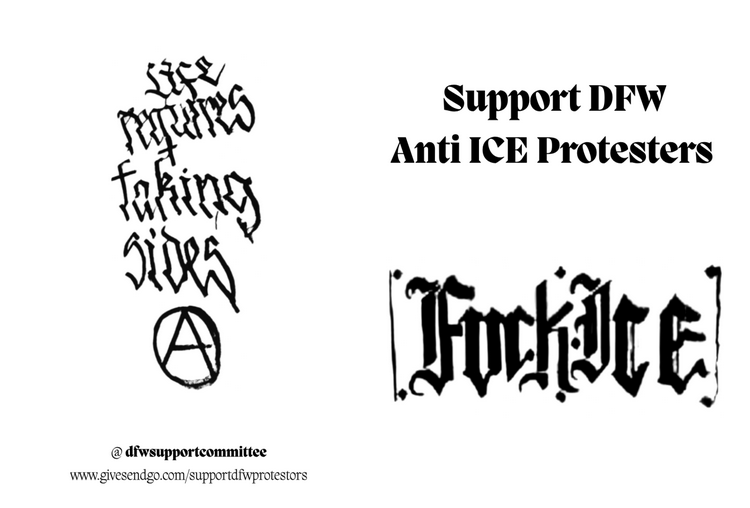
Nine Defendants in Prairieland ICE Detention Center Protest Case Plead Not Guilty in Federal Arraignments This Week

DALLAS-FORT WORTH, TX — Nine defendants in the Prairieland ICE Detention Center protest case pleaded ‘not guilty’ today to federal charges, including riot, discharging a firearm, attempted murder, providing material support to terrorists, and conspiracy to conceal documents. A federal superseding indictment was filed in the Prairieland case on November 13 by Acting US Attorney Nancy Larson, just four days before Trump appointed former federal prosecutor Ryan Raybould as US Attorney on November 17.

Savanna Batten, Zachary Evetts, Autumn Hill, Meagan Morris, Maricela Rueda, Daniel “Des” Rolando Sanchez Estrada, Benjamin Song, Elizabeth Soto, and Ines Soto pleaded ‘not guilty’ at their federal arraignments on December 3. All nine defendants are fighting their charges by taking their cases to trial. Federal jury trials are scheduled to begin January 5, 2026, in the US District Court for the Northern District of Texas in Fort Worth.

“The superseding indictment makes unproven claims, mischaracterizes facts, and takes quotes out of context,” said Stephanie Shiver, wife of defendant Meagan Morris. “Claims of adherence to a political ideology like anti-fascism, whether true or not, are not grounds to charge someone with terrorism and do not belong in an indictment,” continued Shiver. “By associating the Prairieland case with Antifa, the government is using terrorism charges to spread fear and intimidation, and to carry out sweeping political repression.”

Prejudicial statements related to these cases have been made repeatedly by officials at the highest levels of government, undermining the defendants’ ability to get a fair trial. The Trump administration has publicly claimed that the Prairieland case is the first legal case against Antifa, while Trump declared Antifa a domestic terrorist organization. On September 25, the White House released the National Security Presidential Memorandum-7 (NSPM-7), which ordered all federal law enforcement agencies to prioritize combating Antifa as a domestic terrorism threat. FBI director Kash Patel has called the Prairieland defendants “Antifa-aligned anarchist violent extremists,” sharing Fox News coverage of the case on X.

Yet, supporters are refuting the claims of terrorism and planned violence. “As the Prairieland case progresses, it looks more and more like a protest case involving people expressing solidarity with detained immigrants,” said Amber Lowrey, sister of defendant Savanna Batten. “The federal government is trying to reframe protest activity as terrorism, and we’re seeing this attempted across the country, from Chicago to Portland, and now here in Dallas-Fort Worth.”

The recent arraignments and not guilty pleas come as the District Court of Johnson County is set to hear a motion to quash the State indictment against Dario Sanchez on January 8. Fifteen people were indicted on State charges in the Prairieland case and nine people were indicted on federal charges, forcing many defendants to concurrently fight their State and federal charges. Seven defendants pleaded guilty to federal charges last month and are awaiting sentencing in March.

Exorbitant bonds of up to $15 million are being used in the State cases to imprison people who do not represent a flight risk or a danger to the community. Supporters believe that pretrial detention is being used by the government to hinder the defense and to maintain the dominant narrative in the media.

The Prairieland case stems from a noise demonstration in solidarity with detainees at the Prairieland ICE Detention Center in Alvarado, Texas, on July 4, 2025. Toward the end of the demonstration, an officer with the Alvarado Police Department arrived and allegedly quickly became involved in an exchange of gunfire with someone else on the scene. The officer sustained minor injuries and was released from the hospital shortly afterwards. Ten people were arrested at the scene or shortly after, and a manhunt ensued in the subsequent days for another defendant. Eight more defendants were arrested in the days and weeks following the protest.

# # #

For more information on the Prairieland cases and the DFW Support Committee:
dfwdefendants.wordpress.com

https://abolitionmedia.noblogs.org/?p=24835

#anarchism #northAmerica #prairielandDefenseCommittee #repression #texas #us

Sorry, no caption provided by author
  • Copy link
  • Flag this post
  • Block
abolitionmedia
abolitionmedia
@abolitionmedia@abolitionmedia.noblogs.org  ·  activity timestamp last month

Nine Defendants in Prairieland ICE Detention Center Protest Case Plead Not Guilty in Federal Arraignments This Week

DALLAS-FORT WORTH, TX — Nine defendants in the Prairieland ICE Detention Center protest case pleaded ‘not guilty’ today to federal charges, including riot, discharging a firearm, attempted murder, providing material support to terrorists, and conspiracy to conceal documents. A federal superseding indictment was filed in the Prairieland case on November 13 by Acting US Attorney Nancy Larson, just four days before Trump appointed former federal prosecutor Ryan Raybould as US Attorney on November 17.

Savanna Batten, Zachary Evetts, Autumn Hill, Meagan Morris, Maricela Rueda, Daniel “Des” Rolando Sanchez Estrada, Benjamin Song, Elizabeth Soto, and Ines Soto pleaded ‘not guilty’ at their federal arraignments on December 3. All nine defendants are fighting their charges by taking their cases to trial. Federal jury trials are scheduled to begin January 5, 2026, in the US District Court for the Northern District of Texas in Fort Worth.

“The superseding indictment makes unproven claims, mischaracterizes facts, and takes quotes out of context,” said Stephanie Shiver, wife of defendant Meagan Morris. “Claims of adherence to a political ideology like anti-fascism, whether true or not, are not grounds to charge someone with terrorism and do not belong in an indictment,” continued Shiver. “By associating the Prairieland case with Antifa, the government is using terrorism charges to spread fear and intimidation, and to carry out sweeping political repression.”

Prejudicial statements related to these cases have been made repeatedly by officials at the highest levels of government, undermining the defendants’ ability to get a fair trial. The Trump administration has publicly claimed that the Prairieland case is the first legal case against Antifa, while Trump declared Antifa a domestic terrorist organization. On September 25, the White House released the National Security Presidential Memorandum-7 (NSPM-7), which ordered all federal law enforcement agencies to prioritize combating Antifa as a domestic terrorism threat. FBI director Kash Patel has called the Prairieland defendants “Antifa-aligned anarchist violent extremists,” sharing Fox News coverage of the case on X.

Yet, supporters are refuting the claims of terrorism and planned violence. “As the Prairieland case progresses, it looks more and more like a protest case involving people expressing solidarity with detained immigrants,” said Amber Lowrey, sister of defendant Savanna Batten. “The federal government is trying to reframe protest activity as terrorism, and we’re seeing this attempted across the country, from Chicago to Portland, and now here in Dallas-Fort Worth.”

The recent arraignments and not guilty pleas come as the District Court of Johnson County is set to hear a motion to quash the State indictment against Dario Sanchez on January 8. Fifteen people were indicted on State charges in the Prairieland case and nine people were indicted on federal charges, forcing many defendants to concurrently fight their State and federal charges. Seven defendants pleaded guilty to federal charges last month and are awaiting sentencing in March.

Exorbitant bonds of up to $15 million are being used in the State cases to imprison people who do not represent a flight risk or a danger to the community. Supporters believe that pretrial detention is being used by the government to hinder the defense and to maintain the dominant narrative in the media.

The Prairieland case stems from a noise demonstration in solidarity with detainees at the Prairieland ICE Detention Center in Alvarado, Texas, on July 4, 2025. Toward the end of the demonstration, an officer with the Alvarado Police Department arrived and allegedly quickly became involved in an exchange of gunfire with someone else on the scene. The officer sustained minor injuries and was released from the hospital shortly afterwards. Ten people were arrested at the scene or shortly after, and a manhunt ensued in the subsequent days for another defendant. Eight more defendants were arrested in the days and weeks following the protest.

# # #

For more information on the Prairieland cases and the DFW Support Committee:
dfwdefendants.wordpress.com

https://abolitionmedia.noblogs.org/?p=24835

#anarchism #northAmerica #prairielandDefenseCommittee #repression #texas #us

Sorry, no caption provided by author
  • Copy link
  • Flag this post
  • Block
tools for commensality 🧿 boosted
abolitionmedia
abolitionmedia
@abolitionmedia@abolitionmedia.noblogs.org  ·  activity timestamp 3 months ago

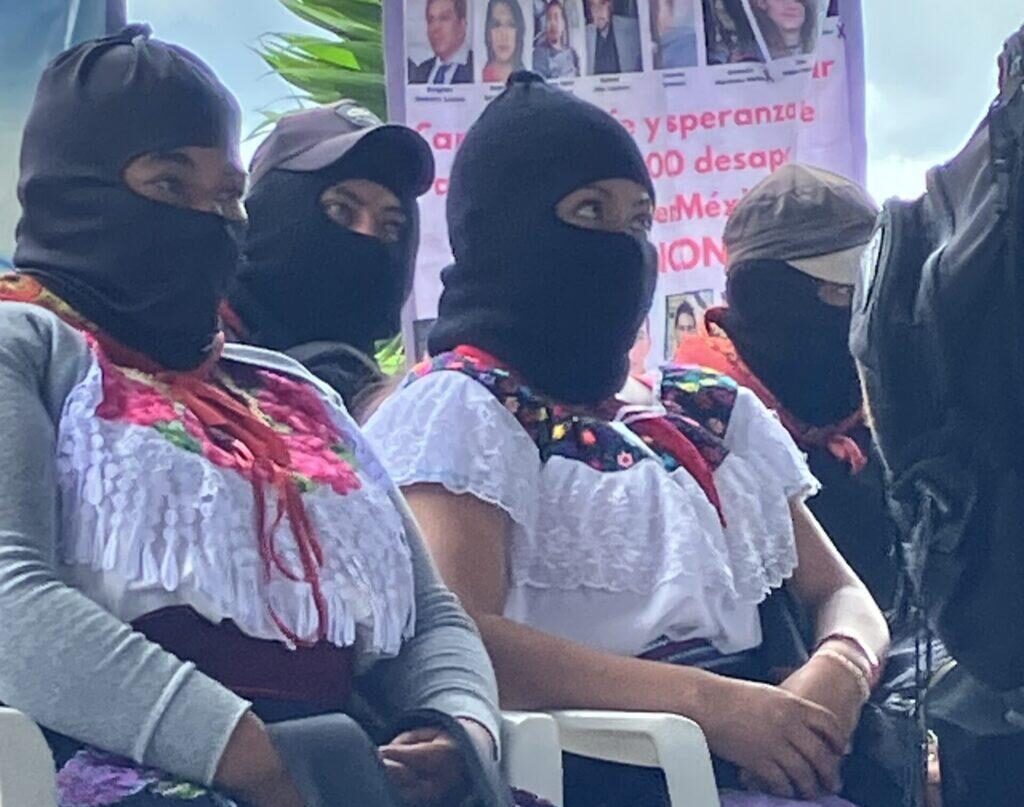
To Those Who Are Not Indifferent to War — Zapatistas

An open letter from organizations, collectives, networks, and public figures from Mexico and other countries demand an “end to all forms of direct and indirect harassment against the community of Belén and all Zapatista localities.”
#ZapatistasUnderAttack

To those who are not indifferent to war:

In the midst of the war against humanity that commodifies everything, the exercise of the Zapatista common is as hopeful as it is uncomfortable. There is nothing more dangerous to the owners of capitalist and colonial power than the commons that the Zapatistas are building in their territory.

Dispossession, exploitation, contempt, and repression are the daily food of the violent hydra. Against this, day by day, pathways of autonomy are being built in the dignified and rebellious Zapatista communities, which not only continue to exist despite the imposition from above of a curtain that has sought to erase them from the Mexican landscape, but are growing, strengthening, reorganizing, and continuing (as always) to inspire.

The denunciation published by the Assembly of Zapatista Autonomous Government Collectives (https://wp.me/p9YUg-6Fj) on September 28 regarding the systematic harassment carried out through inter-institutional operations (Federal Army, Ocosingo Municipal Police,Chiapas State Attorney General’s Office) against the Zapatista village of Belén in Caracol 8 “Dolores Hidalgo” over land intended for communal work between Zapatistas and non-Zapatista is an example of the urgency with which municipal, state, and federal governments seek to stifle the growth of the idea that land can belong to those who work it in common. In addition to the fact that these lands have already been paid for, as the Gobiernos en Común (Governments in Common) point out in their denunciation: “… it is clear that this is a plan by the three levels of bad governments because it has already been paid for and why is the land now being handed over again? What the fourth transformation is seeking here is conflict, confrontation, and war.”

They prefer to generate confrontations between communities and maintain the power that comes with managing that violence, rather than allowing a process of deep and concrete autonomy to grow, in which Zapatista and non-Zapatista communities find ways to coexist and build their present and future without ceding their decision-making power to caciques, rulers, or businessmen.

It seems that President Claudia Sheinbaum prefers that the land belong to caciques and murderers and that the “good and wise” people continue to be satisfied with the crumbs of welfare.

In August of this year, at the meeting “Resistance and Rebellion: Some Parts of the Whole,” the EZLN showed, without pretense or rhetoric, a process of profound self-criticism and the radical reorganization that this implied in its ways of organizing, governing, and building its process of autonomy. It was also a space where those of us who dream of a world after the storm came together, in person or from a distance, to feel the beat of our dignified and rebellious hearts beating stronger with the inspiration and example of the Zapatistas.

It was a moment when hope found sustenance. Today, the state government of Eduardo Ramírez Aguilar in Chiapas and the federal government of Claudia Sheinbaum are fueling violence and cruelty in what appears to be a strategy to provoke the EZLN in order to justify a massacre and an attempt to intensify the war, even though they are trying to hide it.

We, the undersigned, urge and demand an end to all forms of harassment, direct and indirect, against the community of Belén and all Zapatista communities.

The presence of the Armed Forces, state and municipal police, and the prosecutor’s office is clear evidence of who is responsible. It only remains to say that any damage caused in this context will only increase and intensify the repudiation of a government that presents itself as different but replicates the same cruelty and contempt. The Zapatista struggle goes beyond fads, borders, official narratives, and rhetoric. We are watching, from inside and outside Mexico, and we want to say to our Zapatista compañerxs:

We are here!

Signed:

Organizations in México:

Espacio de Coordinación Nacional Alto a la Guerra Contra los Pueblos Zapatistas

Asamblea Nacional por el Agua y la Vida

Centro de Derechos Humanos Fray Bartolomé de Las Casas

Nodo de Derechos Humanos (NODHO)

Raíces en resistencia

Colectivo de apoyo al CNI-CIG, EZLN, Llegó la Hora de los Pueblos

Cátedra Jorge Alonso

Red de feminismos descoloniales

Red de Resistencias y Rebeldias AJMAQ

Pueblos Unidos de la Región Cholulteca y de los Volcanes

El Tekpatl periódico crítico y de combate

El periódico la Flor In Xóchitl in Cuícatl

Grupo Tlali Nantli

Concejo Autónomo Santiago Mexquititlán, Amealco Querétaro

Mazatecas por la Libertad

Espacio de Lucha contra el olvido y la represión

Antsetik Ts’unun.

Movimiento de mujeres en defensa de la Madre Tierra y nuestros territorios

Red Universitaria Anticapitalista

Comunidad Indígena Nahua Milpa Alta CNI

Consejo de Bienes Comunales Indígena Nahua Tlacotenco

Guardia Comunal Tlacotenco

Guardia Comunal Tona

Escuela Comunal Casa del Arte Tlaixco

ILANCUEITL danza de las Tlacualeras

Centro de Derechos Humanos de la Montaña Tlachinollan

Colectivo “Voz de los Desaparecidos en Puebla”

Fanzinoteka Guerra Idealista

Colectivo de Resistencia Estudiantil 10 de junio (CRE)

Tlapaltik b’e cooperativa

Geo-grafías Comunitarias

Resistencias Enlazando Dignidad-Movimiento y Corazón Zapatista (RedmycZ)

Mujeres y la Sexta – Abya Yala

Brigada Callejera

UPADI

COT

Casa obrera de Tlaxcala

HIJ#S DEL MAIZ PINTO

Mexicanos Unidos

Organización popular Francisco Villa de izquierda independiente

Vendaval Cooperativa panadera y algo más

Comunidad de Tlanezi Calli en Resistencia

Comunidad de XOCHITLANEZI del Común

RAIS (Red de Apoyo Iztapalapa Sexta)

Asociación de Exploración Científica Cultural y Recreativa “Brújula Roja”

Concejo Indígena y Popular de Guerrero Emiliano Zapata (CIPOG-EZ)

Zapateando, medios libres

Red de Resistencia y Rebeldía Tlalpan

Grupo de Trabajo No Estamos Todxs

Red Morelense de apoyo al CIN y CIG

Colectiva mi Alegre Rebeldía

Resonancias Radio

MAIZ

Colectivo de Profes en la Sexta

Colectivo de Trabajo los Cafetos

Colectivo Cuaderno Común

Colectivo de Abogadxs la Otra Justicia

Colectivo Gavilanas

Colectivo la Grieta Panadera

Colectivo caminando al horizonte en común

Colectivo Criptopozol DDHH

Mujeres transformando Mundos

Colectiva Miradas críticas del territorio desde el feminismo

Centro de Investigación en Comunicación Comunitaria A.C.

Colectivx Zapatista La Oveja Roja

Resistrenzas-Puebla

PueblaxPalestina

Red de Resistencia y Rebeldía del Puerto de Veracruz,en apoyo al C.I.G. C.N.I.

La Juventud Comunista de México

Partido de los Comunistas

EzcuelitaGDL

Brigada Dr. Ignacio Martín-Baró

Materia Oscura

Colectivo Casa Click

Colectiva Mujeres Tejiendo Resistencia

El Frente Feminista de Jalisco

Glorieta de las mujeres que luchan

Mujeres y Disidencias de la Sexta en la Otra Europa y Abya Yala

Tejiendo Luchas desde México

Universidad de la Tierra en Puebla (UnitierraPuebla)

El Taller, Centro de Sensibilización y Educación Humana A.C

Cybersivxs Hacklab SCLC

Anar.Coop Tecnologías de la Liberación

Mexicali Resiste

Colectivo Mujeres Tierra

Colectivo Noche de los Mayas

Tianguis Alternativo de Puebla

DASAC (Desarrollo y Aptendizaje Solidario, A.C)

Empalabrando, colectivo de la palabra viva, San Juan del Rio Qro.

Comité de acompañamiento, Escolásticas Pedro Escobedo Querétaro.

Comida no bombas, Querétaro

Colectivo Conciencia y Libertad

La Red de Resistencia y Disidencia Sexual y de Género

Cooperativa Tecuani Kakaw

Nodo Solidario (México)

Comida No Bombas Qro

No-escuela Caracol

Caracteres no existentes

Pindorama

Red REIR

Festivales solidarios

Laboratorio Popular de Medios Libres y Noticias de abajo

Asamblea General Permanente de San Gregorio Atlapulco

Sexta por la Libre Yucatán

Mínima Galería Íntima (Narraturgias de la memoria)

CIE El Teatrito Yucatán

Casa de Sanación: Na´ Ch´ul Chan

Tejiendo Organización Revolucionaria

International Organizations:

Batec Zapatista Barcelona

Asamblea Libertaria Autoorganizada Paliacate Zapatista, Grecia

Colectivo Armadillo Suomi/Finlandia

Assemblea de Solidaritat amb Mèxic del País Valencià

El Grupo de Chiapas, LAG Noruega

Centro de Documentación sobre Zapatismo – CEDOZ

Y Retiemble, Madrid

Lumaltik Herriak, País Vasco

Pallasos en Rebeldía

Feministas Red Alforja

Cal cases, catalunya

La Red de Rebelión Alemania

Confederación General del Trabajo

Unión Sindical Solidaires de Francia

Museo de Formas Imposibles – MIF, Finlandia

Anticapitalistas

CSPCL, París, Francia

Seminario de Marxismo y Feminismo en América Latina

Abya Yala rompe el cerco

Chiapas Support Committee – Oakland, CA

Red Sexta Grietas del Norte, Estados Unidos

Gruppe BASTA Munster, Alemania

Red Ya Basta, Alemania

Colectivo gata-gata. Alemania

Cafè Rebeldía-Infoespai, Barcelona-Catalunya

Colectivo Ramona de Chipre

Escuelas para Chiapas / Schools for Chiapas

Comités Locales de Emergencia y Reconstrucción

Acord Social Valencià

Koordinadore de Kolectivos del Parke Alcosa

Solidariedade às comunidades zapatistas – Rio de Janeiro

Vocesenlucha – Comunicación Popular

Colectivo Zapatita de Lugano, Suiza

SOA il Molino, Lugano, Suiza

20zln -Italia

Individuals from México and the World:

Carlos Taibo

Ocar Olivera

Raúl Zibechi

Marcos Roitman

Michael Lowy, Paris

Sergio Rodríguez Lascano

Beatriz Aurora

Abel Barrera

Luis Hernández Navarro

Francisco Barrios “El Mastuerzo” – hacedor de canciones

Michael Hardt

Yvon LeBot

Alicia Castellanos Guerrero

Gilberto López y Rivas

María Eugenia Sánchez

Valentina Leduc, documentalista, CDMX

Raúl Romero

Argelia Guerrero Rentería

Francisco De Parres Gómez

Diana Itzu Gutiérrez Luna

Profesor Enrique Ávila Carrillo

Manuel Gari – economista

Pepe Mejía, periodista y escritor. Madrid

Jaime Pastor, profesor de Ciencia Política jubilado. Madrid

Marta Brancas Escartin. Feminista (Euskalerria)

Marià de Delàs. Periodista. Catalunya

Javier Baeza, cura católico de Madrid

Raúl García Sánchez

Vanessa Pérez Gordillo

Tino Brugos, Confederación Intersindical del Estado español.

Raúl Camargo. Anticapitalistas. Madrid

Antonio Crespo Massieu, poeta. Madrid

Rubén González Díaz, escritor y periodista. Madrid

Evaristo Villar, teólogo y escritor. Madrid

Laura Camargo Fernández. Sociolingüista y profesora de la Universitat de les Illes Balears

Javier Sáenz Munilla, periodista. Madrid

Angel Madina Viteri, Vitoria- Gasteiz

Maite Monge Hormaetxea

Beatrice Barraca

Agustin Gorbea Aguirre

José Ignacio Marín Ruiz

Agustín María Plaza Fernández

Andoni Ruiz Ircio

Endika Ruiz de Loizaga Fernández

Aitor Etxabarri Saiz

Javier Barbero Bermejo

Jose Luis Salazar Roldan de Aranguiz

Iñaki Aguirre Elorza

De Miguel López José Luis

Mónica Meltis Véjar

Zenón Trujillo Jiménez

José Luis Hernández Dopozo

María José González San Vicente

Carlos Maza García de Iturrospe

Pedro José Sánchez Álvarez de Arcaya

Lander Yoldi Arregui

Jorge Riechmann, profesor de filosofía en la UAM. Madrid

Juan José Tamayo Acosta. Teólogo. Madrid

Roberto Montoya, Periodista y escritor. Madrid

Michelle Zhang, EEUU

Martín Díez Zurutuza

Volga de Pina

Sandra Patargo

Eva María Serna Arán

Eva Arán Vidal

J. Jesús Serna Moreno

Pilar Salazar Barrales

José Pablo Segura Román

María Flores

Jorge Ángel Sosa Márquez

Daliri Oropeza Alvarez, periodista de investigación

Gabriela Tinoco Gonzalez

Marta Alicia Pérez Sánchez

Bonifacia Hernández Flores

Blanca Lilia Narváez Ribera

Tania Mitzi Gallada Hernández

Siria Garibay Marrón

Francisco Humberto Peregrina

Alberto Salcido Fontes

María del Carmen Briceño Fuentes

Elena katzestein Ferrer

Ma. Cristina Peralta.

Rosa Paulina Reséndiz Flores

Gabriela Di Lauro Bentivogli

Esperanza González Valentín

Marcela Ibarra Mateos

Emilio Zilli De Gasperin

Andrea Ixchiu

Brenda Edith Ramírez Raya

Pedro Pablo Reyes Cameras

María Cristina gonzález

Itzel Alvarado Pizaña

Paola Ricaurte

Alondra Anadary Barba Ramírez

Martha Olimpia Martínez Alvarez

Daniel Ernesto Soto Mendoza

María Del Pilar Trejo Castro

Roger Maldonado integrante de la Comisión para la Defensa de los Derechos Humanos A.C.

María del Pilar Muñoz Lozano

Silvia Coca Córdova

Silvia Córdova Aguilar

Felipe de Jesús Coca Roura

Gabriela de Iraís Arellano Muñosz

Claudia Magallanes Blanco

Alexa Carolina Rivera Taboada

Jessica Ivette Sánchez Piene

Yesenia Reyes Contreras

Mónica López Cuétara

María Fernanda Suárez Olvera

Fania Sánchez de la Vega

Cristina Cabada Rodríguez

Nemir Adán Viveros Cantera

María Teresa Ascencio Cedillo

Ana Laura Suárez Lima

Víctor Abraham Briones Payán

Belegui Enriquez

Ana Karen Morales Flores

Jessica Ramos Escamilla

Valentina Alcalde Gómez

Sarah Reynolds

Mariana Jiménez López

Paulino Alvarado

Lucía Linsalata

Jessica Utrera Capetillo

María Fernanda Mora Robles

Georgi Andino

Karina Diaz. Fotografa de DDHH. Trabajadora de Subte.

Arely Carrera Brena

Nayeli Shuravi Serratos Carmona

Eduardo García Vásquez

Luvina Camargo Campoy, UNAM

María Elena Aguayo Hernández

Maria Isabel Pérez Enríquez

Natalí Hernández Arias

Luvina Camargo Campoy, UNAM

María Elena Aguayo Hernández

Maria Isabel Pérez Enríquez

Valentina Leduc, documentalista, CDMX

Silvia Reséndiz Flores

Polo Castellanos

León Fierro Reséndiz

Sashenka Fierro Reséndiz

Carlos González Marrufo

Tania González Marrufo

Sergio González Huerta

Carlos González Orduña

Sonia Marrufo González

Susana Ríos Ramírez

Rosalba Zambrano

Charlotte Sáenz, California Institute of Integral Studies. Oakland, California

Caitlin Manning – Oakland, CA

Santiago Quevedo Upegui

Sebastián Samuel Ubaldo Serratos

Adriana Ruiz Gadea

Ana Valentina López de Cea

Ammi Stephani García Rodríguez

Cristian Leyva

María Elena Guzmán Percástegui

Nery Chaves García

Edgar Espinosa Morales

Libertad Huerta Rodríguez

Francesco Massimetti

Mayvelin Flores Villagómez

Ines Gallegos Ortiz

Claudio García Ehrenfeld

Ana Sabina Castro Sam

Alejandro Mira Tapia

Edo Schmidt, Sociologo, Alemania

Charlotte Sáenz, California Institute of Integral Studies, San Francisco, CA

Anahí Cozzi, Jubilada – Bordadora de Bordando Luchas de Ayer y de Hoy, Buenos Aires – Argentina

Fernando Martínez Pérez de Mendiola

Miria Gambardella – Universidad Autónoma de Barcelona

Vanessa Guadalupe Vázquez Ortiz

Bruno Gefroy Aguilar

Citlali Barrera, Denver, CO

Andrea Cegna -Periodista freelance

Raj Elnecio Artivista

María Teresa Jardí Alonso Abogada/Periodista

Ericka Sánchez

source: School for Chiapas

https://abolitionmedia.noblogs.org/?p=21845

#chiapas #ezln #mexico #northAmerica #zapatista #ZapatistasUnderAttack

Sorry, no caption provided by author
  • Copy link
  • Flag this post
  • Block
abolitionmedia
abolitionmedia
@abolitionmedia@abolitionmedia.noblogs.org  ·  activity timestamp 3 months ago

To Those Who Are Not Indifferent to War — Zapatistas

An open letter from organizations, collectives, networks, and public figures from Mexico and other countries demand an “end to all forms of direct and indirect harassment against the community of Belén and all Zapatista localities.”
#ZapatistasUnderAttack

To those who are not indifferent to war:

In the midst of the war against humanity that commodifies everything, the exercise of the Zapatista common is as hopeful as it is uncomfortable. There is nothing more dangerous to the owners of capitalist and colonial power than the commons that the Zapatistas are building in their territory.

Dispossession, exploitation, contempt, and repression are the daily food of the violent hydra. Against this, day by day, pathways of autonomy are being built in the dignified and rebellious Zapatista communities, which not only continue to exist despite the imposition from above of a curtain that has sought to erase them from the Mexican landscape, but are growing, strengthening, reorganizing, and continuing (as always) to inspire.

The denunciation published by the Assembly of Zapatista Autonomous Government Collectives (https://wp.me/p9YUg-6Fj) on September 28 regarding the systematic harassment carried out through inter-institutional operations (Federal Army, Ocosingo Municipal Police,Chiapas State Attorney General’s Office) against the Zapatista village of Belén in Caracol 8 “Dolores Hidalgo” over land intended for communal work between Zapatistas and non-Zapatista is an example of the urgency with which municipal, state, and federal governments seek to stifle the growth of the idea that land can belong to those who work it in common. In addition to the fact that these lands have already been paid for, as the Gobiernos en Común (Governments in Common) point out in their denunciation: “… it is clear that this is a plan by the three levels of bad governments because it has already been paid for and why is the land now being handed over again? What the fourth transformation is seeking here is conflict, confrontation, and war.”

They prefer to generate confrontations between communities and maintain the power that comes with managing that violence, rather than allowing a process of deep and concrete autonomy to grow, in which Zapatista and non-Zapatista communities find ways to coexist and build their present and future without ceding their decision-making power to caciques, rulers, or businessmen.

It seems that President Claudia Sheinbaum prefers that the land belong to caciques and murderers and that the “good and wise” people continue to be satisfied with the crumbs of welfare.

In August of this year, at the meeting “Resistance and Rebellion: Some Parts of the Whole,” the EZLN showed, without pretense or rhetoric, a process of profound self-criticism and the radical reorganization that this implied in its ways of organizing, governing, and building its process of autonomy. It was also a space where those of us who dream of a world after the storm came together, in person or from a distance, to feel the beat of our dignified and rebellious hearts beating stronger with the inspiration and example of the Zapatistas.

It was a moment when hope found sustenance. Today, the state government of Eduardo Ramírez Aguilar in Chiapas and the federal government of Claudia Sheinbaum are fueling violence and cruelty in what appears to be a strategy to provoke the EZLN in order to justify a massacre and an attempt to intensify the war, even though they are trying to hide it.

We, the undersigned, urge and demand an end to all forms of harassment, direct and indirect, against the community of Belén and all Zapatista communities.

The presence of the Armed Forces, state and municipal police, and the prosecutor’s office is clear evidence of who is responsible. It only remains to say that any damage caused in this context will only increase and intensify the repudiation of a government that presents itself as different but replicates the same cruelty and contempt. The Zapatista struggle goes beyond fads, borders, official narratives, and rhetoric. We are watching, from inside and outside Mexico, and we want to say to our Zapatista compañerxs:

We are here!

Signed:

Organizations in México:

Espacio de Coordinación Nacional Alto a la Guerra Contra los Pueblos Zapatistas

Asamblea Nacional por el Agua y la Vida

Centro de Derechos Humanos Fray Bartolomé de Las Casas

Nodo de Derechos Humanos (NODHO)

Raíces en resistencia

Colectivo de apoyo al CNI-CIG, EZLN, Llegó la Hora de los Pueblos

Cátedra Jorge Alonso

Red de feminismos descoloniales

Red de Resistencias y Rebeldias AJMAQ

Pueblos Unidos de la Región Cholulteca y de los Volcanes

El Tekpatl periódico crítico y de combate

El periódico la Flor In Xóchitl in Cuícatl

Grupo Tlali Nantli

Concejo Autónomo Santiago Mexquititlán, Amealco Querétaro

Mazatecas por la Libertad

Espacio de Lucha contra el olvido y la represión

Antsetik Ts’unun.

Movimiento de mujeres en defensa de la Madre Tierra y nuestros territorios

Red Universitaria Anticapitalista

Comunidad Indígena Nahua Milpa Alta CNI

Consejo de Bienes Comunales Indígena Nahua Tlacotenco

Guardia Comunal Tlacotenco

Guardia Comunal Tona

Escuela Comunal Casa del Arte Tlaixco

ILANCUEITL danza de las Tlacualeras

Centro de Derechos Humanos de la Montaña Tlachinollan

Colectivo “Voz de los Desaparecidos en Puebla”

Fanzinoteka Guerra Idealista

Colectivo de Resistencia Estudiantil 10 de junio (CRE)

Tlapaltik b’e cooperativa

Geo-grafías Comunitarias

Resistencias Enlazando Dignidad-Movimiento y Corazón Zapatista (RedmycZ)

Mujeres y la Sexta – Abya Yala

Brigada Callejera

UPADI

COT

Casa obrera de Tlaxcala

HIJ#S DEL MAIZ PINTO

Mexicanos Unidos

Organización popular Francisco Villa de izquierda independiente

Vendaval Cooperativa panadera y algo más

Comunidad de Tlanezi Calli en Resistencia

Comunidad de XOCHITLANEZI del Común

RAIS (Red de Apoyo Iztapalapa Sexta)

Asociación de Exploración Científica Cultural y Recreativa “Brújula Roja”

Concejo Indígena y Popular de Guerrero Emiliano Zapata (CIPOG-EZ)

Zapateando, medios libres

Red de Resistencia y Rebeldía Tlalpan

Grupo de Trabajo No Estamos Todxs

Red Morelense de apoyo al CIN y CIG

Colectiva mi Alegre Rebeldía

Resonancias Radio

MAIZ

Colectivo de Profes en la Sexta

Colectivo de Trabajo los Cafetos

Colectivo Cuaderno Común

Colectivo de Abogadxs la Otra Justicia

Colectivo Gavilanas

Colectivo la Grieta Panadera

Colectivo caminando al horizonte en común

Colectivo Criptopozol DDHH

Mujeres transformando Mundos

Colectiva Miradas críticas del territorio desde el feminismo

Centro de Investigación en Comunicación Comunitaria A.C.

Colectivx Zapatista La Oveja Roja

Resistrenzas-Puebla

PueblaxPalestina

Red de Resistencia y Rebeldía del Puerto de Veracruz,en apoyo al C.I.G. C.N.I.

La Juventud Comunista de México

Partido de los Comunistas

EzcuelitaGDL

Brigada Dr. Ignacio Martín-Baró

Materia Oscura

Colectivo Casa Click

Colectiva Mujeres Tejiendo Resistencia

El Frente Feminista de Jalisco

Glorieta de las mujeres que luchan

Mujeres y Disidencias de la Sexta en la Otra Europa y Abya Yala

Tejiendo Luchas desde México

Universidad de la Tierra en Puebla (UnitierraPuebla)

El Taller, Centro de Sensibilización y Educación Humana A.C

Cybersivxs Hacklab SCLC

Anar.Coop Tecnologías de la Liberación

Mexicali Resiste

Colectivo Mujeres Tierra

Colectivo Noche de los Mayas

Tianguis Alternativo de Puebla

DASAC (Desarrollo y Aptendizaje Solidario, A.C)

Empalabrando, colectivo de la palabra viva, San Juan del Rio Qro.

Comité de acompañamiento, Escolásticas Pedro Escobedo Querétaro.

Comida no bombas, Querétaro

Colectivo Conciencia y Libertad

La Red de Resistencia y Disidencia Sexual y de Género

Cooperativa Tecuani Kakaw

Nodo Solidario (México)

Comida No Bombas Qro

No-escuela Caracol

Caracteres no existentes

Pindorama

Red REIR

Festivales solidarios

Laboratorio Popular de Medios Libres y Noticias de abajo

Asamblea General Permanente de San Gregorio Atlapulco

Sexta por la Libre Yucatán

Mínima Galería Íntima (Narraturgias de la memoria)

CIE El Teatrito Yucatán

Casa de Sanación: Na´ Ch´ul Chan

Tejiendo Organización Revolucionaria

International Organizations:

Batec Zapatista Barcelona

Asamblea Libertaria Autoorganizada Paliacate Zapatista, Grecia

Colectivo Armadillo Suomi/Finlandia

Assemblea de Solidaritat amb Mèxic del País Valencià

El Grupo de Chiapas, LAG Noruega

Centro de Documentación sobre Zapatismo – CEDOZ

Y Retiemble, Madrid

Lumaltik Herriak, País Vasco

Pallasos en Rebeldía

Feministas Red Alforja

Cal cases, catalunya

La Red de Rebelión Alemania

Confederación General del Trabajo

Unión Sindical Solidaires de Francia

Museo de Formas Imposibles – MIF, Finlandia

Anticapitalistas

CSPCL, París, Francia

Seminario de Marxismo y Feminismo en América Latina

Abya Yala rompe el cerco

Chiapas Support Committee – Oakland, CA

Red Sexta Grietas del Norte, Estados Unidos

Gruppe BASTA Munster, Alemania

Red Ya Basta, Alemania

Colectivo gata-gata. Alemania

Cafè Rebeldía-Infoespai, Barcelona-Catalunya

Colectivo Ramona de Chipre

Escuelas para Chiapas / Schools for Chiapas

Comités Locales de Emergencia y Reconstrucción

Acord Social Valencià

Koordinadore de Kolectivos del Parke Alcosa

Solidariedade às comunidades zapatistas – Rio de Janeiro

Vocesenlucha – Comunicación Popular

Colectivo Zapatita de Lugano, Suiza

SOA il Molino, Lugano, Suiza

20zln -Italia

Individuals from México and the World:

Carlos Taibo

Ocar Olivera

Raúl Zibechi

Marcos Roitman

Michael Lowy, Paris

Sergio Rodríguez Lascano

Beatriz Aurora

Abel Barrera

Luis Hernández Navarro

Francisco Barrios “El Mastuerzo” – hacedor de canciones

Michael Hardt

Yvon LeBot

Alicia Castellanos Guerrero

Gilberto López y Rivas

María Eugenia Sánchez

Valentina Leduc, documentalista, CDMX

Raúl Romero

Argelia Guerrero Rentería

Francisco De Parres Gómez

Diana Itzu Gutiérrez Luna

Profesor Enrique Ávila Carrillo

Manuel Gari – economista

Pepe Mejía, periodista y escritor. Madrid

Jaime Pastor, profesor de Ciencia Política jubilado. Madrid

Marta Brancas Escartin. Feminista (Euskalerria)

Marià de Delàs. Periodista. Catalunya

Javier Baeza, cura católico de Madrid

Raúl García Sánchez

Vanessa Pérez Gordillo

Tino Brugos, Confederación Intersindical del Estado español.

Raúl Camargo. Anticapitalistas. Madrid

Antonio Crespo Massieu, poeta. Madrid

Rubén González Díaz, escritor y periodista. Madrid

Evaristo Villar, teólogo y escritor. Madrid

Laura Camargo Fernández. Sociolingüista y profesora de la Universitat de les Illes Balears

Javier Sáenz Munilla, periodista. Madrid

Angel Madina Viteri, Vitoria- Gasteiz

Maite Monge Hormaetxea

Beatrice Barraca

Agustin Gorbea Aguirre

José Ignacio Marín Ruiz

Agustín María Plaza Fernández

Andoni Ruiz Ircio

Endika Ruiz de Loizaga Fernández

Aitor Etxabarri Saiz

Javier Barbero Bermejo

Jose Luis Salazar Roldan de Aranguiz

Iñaki Aguirre Elorza

De Miguel López José Luis

Mónica Meltis Véjar

Zenón Trujillo Jiménez

José Luis Hernández Dopozo

María José González San Vicente

Carlos Maza García de Iturrospe

Pedro José Sánchez Álvarez de Arcaya

Lander Yoldi Arregui

Jorge Riechmann, profesor de filosofía en la UAM. Madrid

Juan José Tamayo Acosta. Teólogo. Madrid

Roberto Montoya, Periodista y escritor. Madrid

Michelle Zhang, EEUU

Martín Díez Zurutuza

Volga de Pina

Sandra Patargo

Eva María Serna Arán

Eva Arán Vidal

J. Jesús Serna Moreno

Pilar Salazar Barrales

José Pablo Segura Román

María Flores

Jorge Ángel Sosa Márquez

Daliri Oropeza Alvarez, periodista de investigación

Gabriela Tinoco Gonzalez

Marta Alicia Pérez Sánchez

Bonifacia Hernández Flores

Blanca Lilia Narváez Ribera

Tania Mitzi Gallada Hernández

Siria Garibay Marrón

Francisco Humberto Peregrina

Alberto Salcido Fontes

María del Carmen Briceño Fuentes

Elena katzestein Ferrer

Ma. Cristina Peralta.

Rosa Paulina Reséndiz Flores

Gabriela Di Lauro Bentivogli

Esperanza González Valentín

Marcela Ibarra Mateos

Emilio Zilli De Gasperin

Andrea Ixchiu

Brenda Edith Ramírez Raya

Pedro Pablo Reyes Cameras

María Cristina gonzález

Itzel Alvarado Pizaña

Paola Ricaurte

Alondra Anadary Barba Ramírez

Martha Olimpia Martínez Alvarez

Daniel Ernesto Soto Mendoza

María Del Pilar Trejo Castro

Roger Maldonado integrante de la Comisión para la Defensa de los Derechos Humanos A.C.

María del Pilar Muñoz Lozano

Silvia Coca Córdova

Silvia Córdova Aguilar

Felipe de Jesús Coca Roura

Gabriela de Iraís Arellano Muñosz

Claudia Magallanes Blanco

Alexa Carolina Rivera Taboada

Jessica Ivette Sánchez Piene

Yesenia Reyes Contreras

Mónica López Cuétara

María Fernanda Suárez Olvera

Fania Sánchez de la Vega

Cristina Cabada Rodríguez

Nemir Adán Viveros Cantera

María Teresa Ascencio Cedillo

Ana Laura Suárez Lima

Víctor Abraham Briones Payán

Belegui Enriquez

Ana Karen Morales Flores

Jessica Ramos Escamilla

Valentina Alcalde Gómez

Sarah Reynolds

Mariana Jiménez López

Paulino Alvarado

Lucía Linsalata

Jessica Utrera Capetillo

María Fernanda Mora Robles

Georgi Andino

Karina Diaz. Fotografa de DDHH. Trabajadora de Subte.

Arely Carrera Brena

Nayeli Shuravi Serratos Carmona

Eduardo García Vásquez

Luvina Camargo Campoy, UNAM

María Elena Aguayo Hernández

Maria Isabel Pérez Enríquez

Natalí Hernández Arias

Luvina Camargo Campoy, UNAM

María Elena Aguayo Hernández

Maria Isabel Pérez Enríquez

Valentina Leduc, documentalista, CDMX

Silvia Reséndiz Flores

Polo Castellanos

León Fierro Reséndiz

Sashenka Fierro Reséndiz

Carlos González Marrufo

Tania González Marrufo

Sergio González Huerta

Carlos González Orduña

Sonia Marrufo González

Susana Ríos Ramírez

Rosalba Zambrano

Charlotte Sáenz, California Institute of Integral Studies. Oakland, California

Caitlin Manning – Oakland, CA

Santiago Quevedo Upegui

Sebastián Samuel Ubaldo Serratos

Adriana Ruiz Gadea

Ana Valentina López de Cea

Ammi Stephani García Rodríguez

Cristian Leyva

María Elena Guzmán Percástegui

Nery Chaves García

Edgar Espinosa Morales

Libertad Huerta Rodríguez

Francesco Massimetti

Mayvelin Flores Villagómez

Ines Gallegos Ortiz

Claudio García Ehrenfeld

Ana Sabina Castro Sam

Alejandro Mira Tapia

Edo Schmidt, Sociologo, Alemania

Charlotte Sáenz, California Institute of Integral Studies, San Francisco, CA

Anahí Cozzi, Jubilada – Bordadora de Bordando Luchas de Ayer y de Hoy, Buenos Aires – Argentina

Fernando Martínez Pérez de Mendiola

Miria Gambardella – Universidad Autónoma de Barcelona

Vanessa Guadalupe Vázquez Ortiz

Bruno Gefroy Aguilar

Citlali Barrera, Denver, CO

Andrea Cegna -Periodista freelance

Raj Elnecio Artivista

María Teresa Jardí Alonso Abogada/Periodista

Ericka Sánchez

source: School for Chiapas

https://abolitionmedia.noblogs.org/?p=21845

#chiapas #ezln #mexico #northAmerica #zapatista #ZapatistasUnderAttack

Sorry, no caption provided by author
  • Copy link
  • Flag this post
  • Block
Evan Prodromou boosted
abolitionmedia
abolitionmedia
@abolitionmedia@abolitionmedia.noblogs.org  ·  activity timestamp 4 months ago

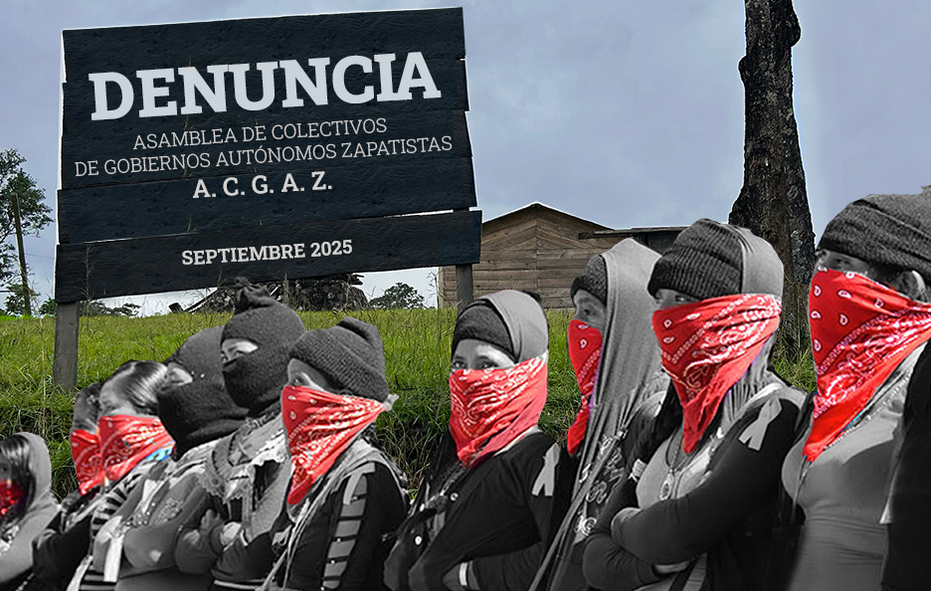
C.G.A.Z. Denunciation — Zapatista

Assembly of Zapatista Autonomous Government Collectives (A.C.G.A.Z)
Common Governments

Chiapas, Mexico September 24th, 2025.

To the people of Mexico and the world
To the compañeros of the National Indigenous Congress
To national and international civil society
To the National and International Sixth
To human rights organizations
To alternative media
To the national and international press

Denunciation:

We strongly condemn the attack, harassment, and manipulation carried out by the three levels of bad government against the Zapatista support bases on the issue of recovered land.

We note the following events:

First: On April 22nd, May 12th, July 12th, and August 29th, 30 people from the municipality of Huixtán, headed by Emilio Bolom Álvarez, Miguel Bolom Palé, Miguel Vázquez Sántiz, and David Seferino Gómez, arrived, protected by the Federal Army and the municipal police of Ocosingo, at the town of Belén in the farming region of Dolores Hidalgo, Caracol 8, where our Zapatista support bases are living, in charge of collective work in the region and of work from a common milpa with our non-zapatista brothers and sisters. This land was recovered in 1994.

We tried to negotiate with them, but they clearly told us that the government had already given them the land and that they had the legal documents.

At this time, they threatened and harassed our compañeros, telling them to leave the land by any means. They tried to manipulate us by saying that if they came to an agreement with our compañeros, they would respect them. They destroyed our signs and measured the land.

Faced with these threats and by agreement of the assembly of Zapatista Autonomous Government Collectives (A.C.G.A.Z.), we agreed that we must withdraw because we must plan to defend ourselves.

Second: On September 18th, 20th, and 22nd, 15 people positioned themselves on the property. On September 20th, two Federal Army trucks, three Ocosingo municipal police trucks, and four State Attorney General trucks arrived again. They destroyed and burned the homes of the Zapatista support base authorities, stole corn, and those who stayed back continued to steal. We tried to negotiate again, but they never understood because the bad government had already formally given the land to them.

Third: We don’t lie to the people of Mexico and the world that those lands were already paid for by the bad government since 1996, when Manuel Camacho Solís was alive. it’s clear here that this is a plan of the three levels of bad governments because it has already been paid for, and why is it now handing over the land that has already been paid for? What the Fourth Transformation is seeking here is collision, confrontation, and war.

Our attempt to seek dialogue was in vain. We have often said that we don’t want war, what we want is common life, but they are forcing us to defend ourselves.

It is clear that the Fourth Transformation is on the side of national and transnational landlords and businessmen. That is the true Fourth. Nothing is for for the poor people of Mexico.

This is what is happening, as if here in Mexico there is zero impunity, as if in Mexico the bad government is not in collusion with organized crime, as if here the bad system does not know the war of organized crime, as if here in Mexico there are not several sparks that can light a fire.

Photos and videos are in the hands of human rights organizations that prove that what we are now denouncing is true.

Compañeros of Mexico and the world:

Take care of yourselves. Maybe we’ll still see each other, or maybe we won’t. Maybe the last time we saw each other was at this last meeting. We’ll be attentive and in touch, and we’ll keep you informed. Hopefully, at that meeting at the Seedbed, you’ll have understood everything we’ve said, that is, the search for a common life.

Brothers and sisters of the people of Mexico and the world, this is what there is, the plan of neoliberalism in Mexico against us. As we well said at the meeting at the Seedbed: today it’s Palestine, tomorrow it will be us.

Yours,

Common Governments

Original article at Enlace Zapatista, September 28th, 2025.
Translated by Schools for Chiapas.

https://abolitionmedia.noblogs.org/?p=21623

#chiapas #ezln #mexico #northAmerica #zapatista

Sorry, no caption provided by author
Enlace Zapatista

DENUNCIA ASAMBLEA DE COLECTIVOS DE GOBIERNOS AUTÓNOMOS ZAPATISTAS A.C.G.A.Z.

  Deutsch Übersetzung (Alemán) Traduzione Italiano (Italiano)
  • Copy link
  • Flag this post
  • Block
Ika Makimaki boosted
abolitionmedia
abolitionmedia
@abolitionmedia@abolitionmedia.noblogs.org  ·  activity timestamp 4 months ago

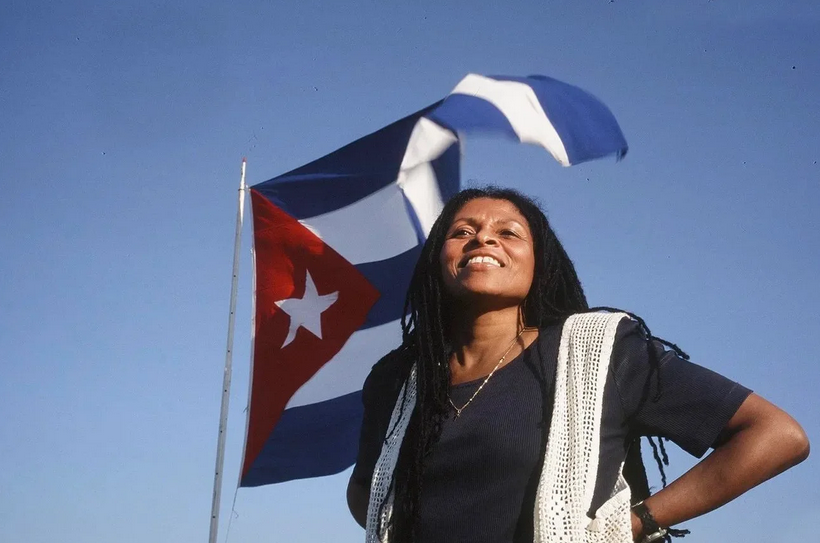
Assata Shakur and the Duty to Free Our Comrades

Assata Shakur was a radical Black feminist, revolutionary, and freedom fighter. Her life was a testament to true liberatory practice, love, and community. She taught us about the interconnectedness of our struggles as oppressed people and the necessity for resistance in the face of state and imperial violence, by any means necessary and no matter the cost to our own comforts. She also taught us that liberation cannot be negotiated; it must be seized. She stands as a hero for those of us fighting for the liberation of the global working class, and we honor the sacrifices she made to advance that cause.

After years of being targeted and hunted by police for opposing the racist, capitalist, and imperialist U.S. as a member of the Black Panther Party and later the Black Liberation Army, and after being stalked and surveilled by U.S. state agencies, including the FBI, Assata was arrested and falsely accused of murdering a New Jersey State Trooper in 1973. Despite Assata’s innocence, and the many experts who testified that her injuries during the altercation would have made it impossible for her to commit the murder, she was convicted by an all-white jury in 1977. While in state custody, the conditions under which Assata was held were nothing short of barbaric and inhumane, including solitary confinement in a men’s prison, 24-hour surveillance, and denial of intellectual nourishment and adequate medical attention, including when she became pregnant while awaiting trial in 1973.

Assata’s story is one that many living in Lënapehòkink (The Bronx) and across the U.S. empire at large may recognize or relate to. Her insistence on life and her years of fighting for the liberation of Black people living under state violence serve as a reminder to us all to remain “reluctant warriors” in the face of U.S. state terrorism. It was Assata’s militant comrades in the Black Liberation Army who liberated her from incarceration by the state; they did not abandon her after she was apprehended. They understood, as Palestinians do, that there was no future for their movement without that freedom. Let us remember the comrades who broke her out, some of whom served decades in prison and some of whom remain incarcerated. Salute to Sekou Odinga, Silas Muhammad, Mtayari Shabaka Sundiata, Winston Patterson, Silvia Baraldini, Marilyn Buck, Mutulu Shakur and other BLA comrades.

It is the militants and revolutionaries who are most repressed and incarcerated. We must learn from Assata and her comrades and apply those lessons to today. We have several comrades who are currently incarcerated and must also be liberated. Free Casey Goonan, Jakhi McCray, Tarek Bazrouk, Leqaa Kordia, Mumia Abu-Jamal, Kamau Sadiki, Rev. Joy Powell, Elias Rodriguez — FREE THEM ALL!

After successfully liberating herself from prison with the help of fellow BLA members in 1979, Assata was eventually granted political asylum in Cuba by Fidel Castro, and she lived out the remainder of her years as a free Black woman on liberated land, remaining vocal and devoted to Black liberation. Thank you to our Cuban comrades who protected and embraced Assata for the 41 years she called Cuba home.

We thank Assata for her relentless sacrifice, education, and fierce love and commitment to Black people and all those oppressed around the world. May her life be a continued reminder to the struggle that although we must survive, we also deserve to live. May her memory propel us forward until we are all free. May her teachings help light the path as the struggle continues.

“Nobody in the world, nobody in history, has ever gotten their freedom by appealing to the moral sense of the people who were oppressing them.”

Rest in Power, Comrade Assata.

source: Bronx Anti-War

https://abolitionmedia.noblogs.org/?p=21635

#assataShakur #blackLiberation #blackLiberationArmy #blackPantherParty #cuba #northAmerica

Sorry, no caption provided by author
Bronx Anti-War

Assata Shakur and the Duty to Free Our Comrades — Bronx Anti-War

It was Assata’s militant comrades in the Black Liberation Army who liberated her from incarceration by the state; they did not abandon her after she was apprehended. We must learn from Assata and her comrades and apply those lessons to today. We have several comrades who are currently incarcerated a
  • Copy link
  • Flag this post
  • Block
abolitionmedia
abolitionmedia
@abolitionmedia@abolitionmedia.noblogs.org  ·  activity timestamp 4 months ago

Assata Shakur and the Duty to Free Our Comrades

Assata Shakur was a radical Black feminist, revolutionary, and freedom fighter. Her life was a testament to true liberatory practice, love, and community. She taught us about the interconnectedness of our struggles as oppressed people and the necessity for resistance in the face of state and imperial violence, by any means necessary and no matter the cost to our own comforts. She also taught us that liberation cannot be negotiated; it must be seized. She stands as a hero for those of us fighting for the liberation of the global working class, and we honor the sacrifices she made to advance that cause.

After years of being targeted and hunted by police for opposing the racist, capitalist, and imperialist U.S. as a member of the Black Panther Party and later the Black Liberation Army, and after being stalked and surveilled by U.S. state agencies, including the FBI, Assata was arrested and falsely accused of murdering a New Jersey State Trooper in 1973. Despite Assata’s innocence, and the many experts who testified that her injuries during the altercation would have made it impossible for her to commit the murder, she was convicted by an all-white jury in 1977. While in state custody, the conditions under which Assata was held were nothing short of barbaric and inhumane, including solitary confinement in a men’s prison, 24-hour surveillance, and denial of intellectual nourishment and adequate medical attention, including when she became pregnant while awaiting trial in 1973.

Assata’s story is one that many living in Lënapehòkink (The Bronx) and across the U.S. empire at large may recognize or relate to. Her insistence on life and her years of fighting for the liberation of Black people living under state violence serve as a reminder to us all to remain “reluctant warriors” in the face of U.S. state terrorism. It was Assata’s militant comrades in the Black Liberation Army who liberated her from incarceration by the state; they did not abandon her after she was apprehended. They understood, as Palestinians do, that there was no future for their movement without that freedom. Let us remember the comrades who broke her out, some of whom served decades in prison and some of whom remain incarcerated. Salute to Sekou Odinga, Silas Muhammad, Mtayari Shabaka Sundiata, Winston Patterson, Silvia Baraldini, Marilyn Buck, Mutulu Shakur and other BLA comrades.

It is the militants and revolutionaries who are most repressed and incarcerated. We must learn from Assata and her comrades and apply those lessons to today. We have several comrades who are currently incarcerated and must also be liberated. Free Casey Goonan, Jakhi McCray, Tarek Bazrouk, Leqaa Kordia, Mumia Abu-Jamal, Kamau Sadiki, Rev. Joy Powell, Elias Rodriguez — FREE THEM ALL!

After successfully liberating herself from prison with the help of fellow BLA members in 1979, Assata was eventually granted political asylum in Cuba by Fidel Castro, and she lived out the remainder of her years as a free Black woman on liberated land, remaining vocal and devoted to Black liberation. Thank you to our Cuban comrades who protected and embraced Assata for the 41 years she called Cuba home.

We thank Assata for her relentless sacrifice, education, and fierce love and commitment to Black people and all those oppressed around the world. May her life be a continued reminder to the struggle that although we must survive, we also deserve to live. May her memory propel us forward until we are all free. May her teachings help light the path as the struggle continues.

“Nobody in the world, nobody in history, has ever gotten their freedom by appealing to the moral sense of the people who were oppressing them.”

Rest in Power, Comrade Assata.

source: Bronx Anti-War

https://abolitionmedia.noblogs.org/?p=21635

#assataShakur #blackLiberation #blackLiberationArmy #blackPantherParty #cuba #northAmerica

Sorry, no caption provided by author
Bronx Anti-War

Assata Shakur and the Duty to Free Our Comrades — Bronx Anti-War

It was Assata’s militant comrades in the Black Liberation Army who liberated her from incarceration by the state; they did not abandon her after she was apprehended. We must learn from Assata and her comrades and apply those lessons to today. We have several comrades who are currently incarcerated a
  • Copy link
  • Flag this post
  • Block
abolitionmedia
abolitionmedia
@abolitionmedia@abolitionmedia.noblogs.org  ·  activity timestamp 4 months ago

C.G.A.Z. Denunciation — Zapatista

Assembly of Zapatista Autonomous Government Collectives (A.C.G.A.Z)
Common Governments

Chiapas, Mexico September 24th, 2025.

To the people of Mexico and the world
To the compañeros of the National Indigenous Congress
To national and international civil society
To the National and International Sixth
To human rights organizations
To alternative media
To the national and international press

Denunciation:

We strongly condemn the attack, harassment, and manipulation carried out by the three levels of bad government against the Zapatista support bases on the issue of recovered land.

We note the following events:

First: On April 22nd, May 12th, July 12th, and August 29th, 30 people from the municipality of Huixtán, headed by Emilio Bolom Álvarez, Miguel Bolom Palé, Miguel Vázquez Sántiz, and David Seferino Gómez, arrived, protected by the Federal Army and the municipal police of Ocosingo, at the town of Belén in the farming region of Dolores Hidalgo, Caracol 8, where our Zapatista support bases are living, in charge of collective work in the region and of work from a common milpa with our non-zapatista brothers and sisters. This land was recovered in 1994.

We tried to negotiate with them, but they clearly told us that the government had already given them the land and that they had the legal documents.

At this time, they threatened and harassed our compañeros, telling them to leave the land by any means. They tried to manipulate us by saying that if they came to an agreement with our compañeros, they would respect them. They destroyed our signs and measured the land.

Faced with these threats and by agreement of the assembly of Zapatista Autonomous Government Collectives (A.C.G.A.Z.), we agreed that we must withdraw because we must plan to defend ourselves.

Second: On September 18th, 20th, and 22nd, 15 people positioned themselves on the property. On September 20th, two Federal Army trucks, three Ocosingo municipal police trucks, and four State Attorney General trucks arrived again. They destroyed and burned the homes of the Zapatista support base authorities, stole corn, and those who stayed back continued to steal. We tried to negotiate again, but they never understood because the bad government had already formally given the land to them.

Third: We don’t lie to the people of Mexico and the world that those lands were already paid for by the bad government since 1996, when Manuel Camacho Solís was alive. it’s clear here that this is a plan of the three levels of bad governments because it has already been paid for, and why is it now handing over the land that has already been paid for? What the Fourth Transformation is seeking here is collision, confrontation, and war.

Our attempt to seek dialogue was in vain. We have often said that we don’t want war, what we want is common life, but they are forcing us to defend ourselves.

It is clear that the Fourth Transformation is on the side of national and transnational landlords and businessmen. That is the true Fourth. Nothing is for for the poor people of Mexico.

This is what is happening, as if here in Mexico there is zero impunity, as if in Mexico the bad government is not in collusion with organized crime, as if here the bad system does not know the war of organized crime, as if here in Mexico there are not several sparks that can light a fire.

Photos and videos are in the hands of human rights organizations that prove that what we are now denouncing is true.

Compañeros of Mexico and the world:

Take care of yourselves. Maybe we’ll still see each other, or maybe we won’t. Maybe the last time we saw each other was at this last meeting. We’ll be attentive and in touch, and we’ll keep you informed. Hopefully, at that meeting at the Seedbed, you’ll have understood everything we’ve said, that is, the search for a common life.

Brothers and sisters of the people of Mexico and the world, this is what there is, the plan of neoliberalism in Mexico against us. As we well said at the meeting at the Seedbed: today it’s Palestine, tomorrow it will be us.

Yours,

Common Governments

Original article at Enlace Zapatista, September 28th, 2025.
Translated by Schools for Chiapas.

https://abolitionmedia.noblogs.org/?p=21623

#chiapas #ezln #mexico #northAmerica #zapatista

Sorry, no caption provided by author
Enlace Zapatista

DENUNCIA ASAMBLEA DE COLECTIVOS DE GOBIERNOS AUTÓNOMOS ZAPATISTAS A.C.G.A.Z.

  Deutsch Übersetzung (Alemán) Traduzione Italiano (Italiano)
  • Copy link
  • Flag this post
  • Block
abolitionmedia
abolitionmedia
@abolitionmedia@abolitionmedia.noblogs.org  ·  activity timestamp 12 months ago

Leonard Peltier to be Released After Executive Action

As one of his last official acts, genocidal President Joe Biden on Monday commuted the life sentence of Leonard Peltier, 80, allowing the American Indian Movement member to serve the rest of his sentence in home confinement.

Peltier was wrongfully convicted of murdering two FBI agents during a 1975 shootout on the Pine Ridge Reservation in South Dakota. He has maintained his innocence during his nearly 50 years in prison.

In a statement announcing the commutation, Biden said that Peltier suffers from serious health problems and has spent most of his life in prison. He will be transferred to home confinement Feb. 18 and has not been pardoned.

“It’s finally over — I’m going home,” Peltier said after learning of the commutation, according to a social media post from the NDN Collective, an Indigenous rights group. “I want to show the world I’m a good person with a good heart. I want to help the people, just like my grandmother taught me.”

Peltier is expected to return to his birthplace, the Turtle Mountain Indian Reservation near Belcourt, N.D., where a home is waiting for him to spend time with his children and grandchildren. He’ll have 72 hours after his release to report to local probation officials.

Nick Tilsen, NDN Collective founder and CEO, said in a statement that Peltier’s release: “is the result of 50 years of intergenerational resistance, organizing, and advocacy. We will honor him by bringing him back to his homelands to live out the rest of his days surrounded by loved ones, healing, and reconnecting with his land and culture.”

Lisa Bellanger, who grew up in the American Indian Movement and is now one of its leaders, said Peltier’s imprisonment was part of an longstanding government effort to discredit their organization, which was founded in Minneapolis in 1968.

“Today will go down in history as one of the greatest days in Indian country,” Bellanger said. “I’m very appreciative. We are very appreciative of his ability to come home. He has a family he has not met. We celebrate his release from the prison walls.”

https://abolitionmedia.noblogs.org/?p=13873

#colonialism #indigenousStruggle #leonardPeltier #northAmerica #politicalPrisoner

Sorry, no caption provided by author
  • Copy link
  • Flag this post
  • Block

bonfire.cafe

A space for Bonfire maintainers and contributors to communicate

bonfire.cafe: About · Code of conduct · Privacy · Users · Instances
Bonfire social · 1.0.1-beta.35 no JS en
Automatic federation enabled
Log in
  • Explore
  • About
  • Members
  • Code of Conduct