Federation Bot
@Federation_Bot

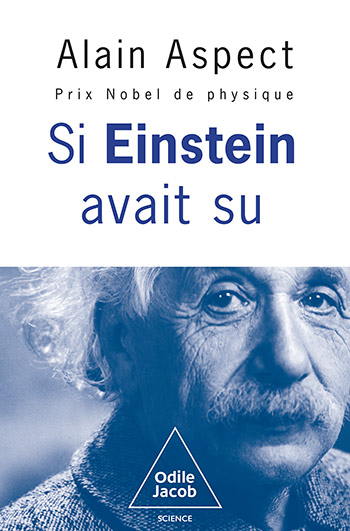
Si Einstein avait su
Paperback Edition
368 pages
Published in 2025
by Odile Jacob
Alain Aspect a voulu écrire ce livre pour nous faire partager sa fascination pour le débat entre deux géants de la physique, Niels Bohr et Albert Einstein, portant sur l’interprétation de la mécanique quantique. Presque un demi-siècle après ses propres expériences, Alain Aspect a reçu le prix Nobel de physique pour avoir montré que l’on doit renoncer à la vision du monde quantique défendue par Einstein. Alain Aspect replace le débat dans l’incroyable histoire de la physique quantique. Ne cachant pas son admiration pour Einstein, il nous montre comment la controverse quasi philosophique que celui-ci a engagée avec Niels Bohr a conduit à des expériences bien réelles et à l’invention de nouvelles technologies quantiques. Tout en faisant le récit de son parcours, Alain Aspect nous explique avec passion et clarté comment il a mis en évidence l’une des propriétés les plus extraordinaires de l’intrication quantique, et il tente d’imaginer la réaction d’Einstein à ses résultats expérimentaux.
Un livre majeur.
Alain Aspect a reçu le prix Nobel de physique 2022 « pour les expériences avec des photons intriqués établissant les violations des inégalités de Bell et ouvrant une voie pionnière vers l’informatique quantique ». Il est professeur à l’Institut d’Optique-université Paris-Saclay, professeur à l’École polytechnique et directeur de recherche émérite au CNRS.
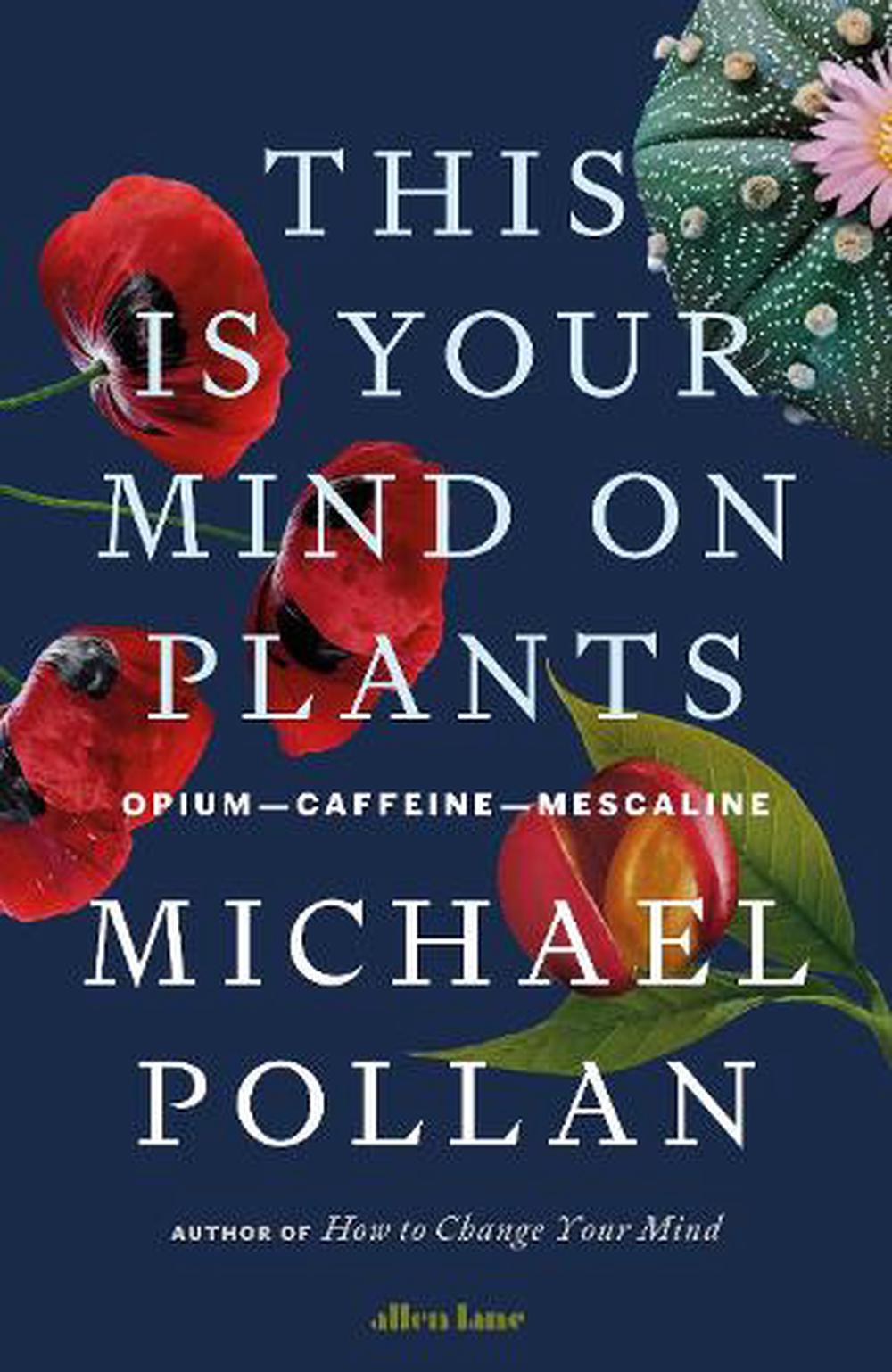
This Is Your Mind on Plants
Hardcover Edition
274 pages
Published in 2020
by Allen Lane
Of all the things humans rely on plants for—sustenance, beauty, medicine, fragrance, flavor, fiber—surely the most curious is our use of them to change consciousness: to stimulate or calm, fiddle with or completely alter, the qualities of our mental experience. Take coffee and tea: People around the world rely on caffeine to sharpen their minds. But we do not usually think of caffeine as a drug, or our daily use as an addiction, because it is legal and socially acceptable. So, then, what is a “drug”? And why, for example, is making tea from the leaves of a tea plant acceptable, but making tea from a seed head of an opium poppy a federal crime?
In This Is Your Mind on Plants, Michael Pollan dives deep into three plant drugs—opium, caffeine, and mescaline—and throws the fundamental strangeness, and arbitrariness, of our thinking about them into sharp relief. Exploring and participating in the cultures that have grown up around these drugs while consuming (or, in the case of caffeine, trying not to consume) them, Pollan reckons with the powerful human attraction to psychoactive plants. Why do we go to such great lengths to seek these shifts in consciousness, and then why do we fence that universal desire with laws and customs and fraught feelings?
In this unique blend of history, science, and memoir, as well as participatory journalism, Pollan examines and experiences these plants from several very different angles and contexts, and shines a fresh light on a subject that is all too often treated reductively—as a drug, whether licit or illicit. But that is one of the least interesting things you can say about these plants, Pollan shows, for when we take them into our bodies and let them change our minds, we are engaging with nature in one of the most profound ways we can. Based in part on an essay published almost twenty-five years ago, this groundbreaking and singular consideration of psychoactive plants, and our attraction to them through time, holds up a mirror to our fundamental human needs and aspirations, the operations of our minds, and our entanglement with the natural world.

Doing Harm
The Truth about How Bad Medicine and Lazy Science Leave Women Dismissed, Misdiagnosed, and Sick
Edition
Published in 2018
by HarperCollins Publishers