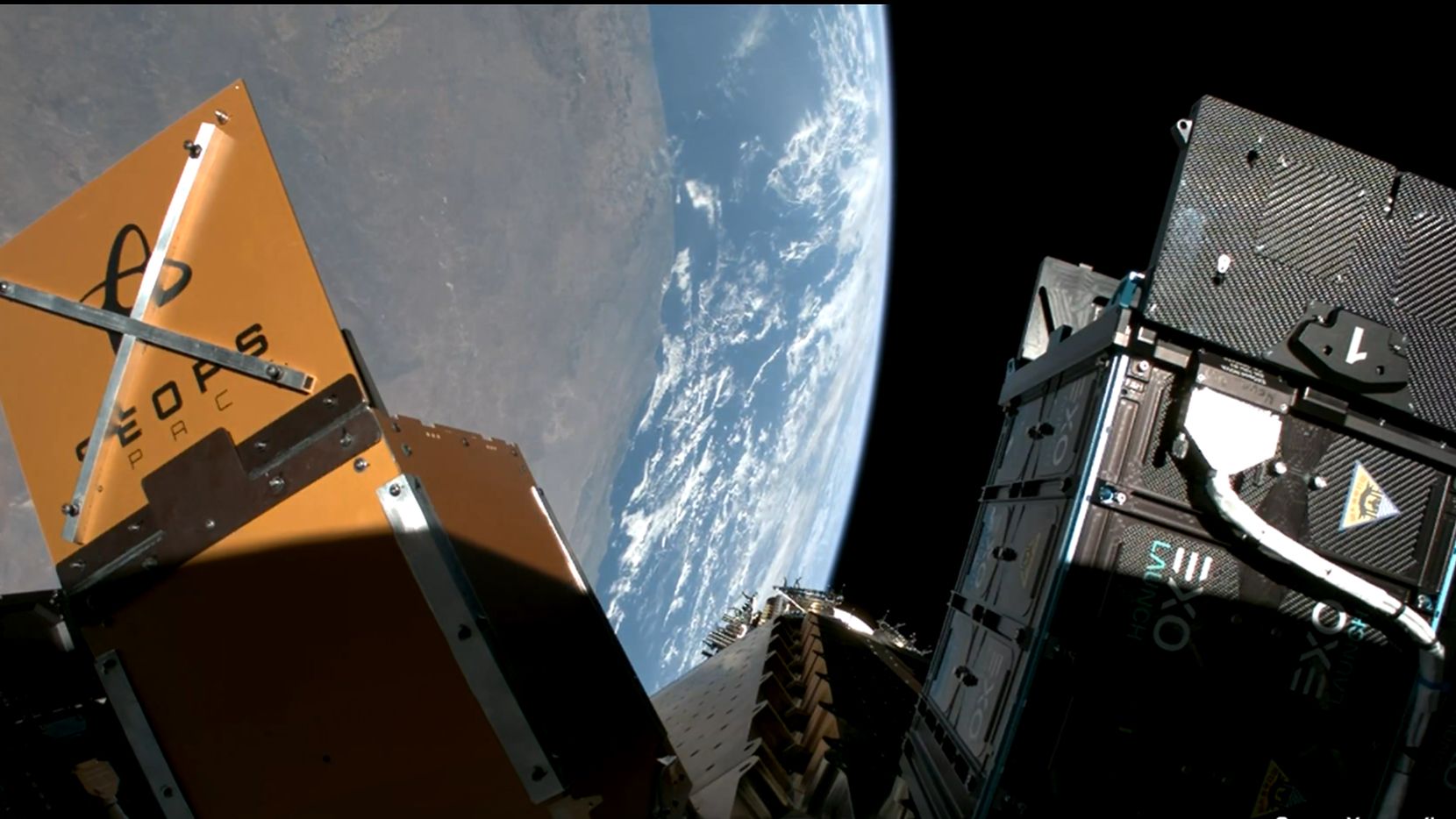

HAHAHA FUCK SpaceX just launched a nuclear powered satellite.
Sounds like this particular satellite is tiny and doesn't have a lot of tritium on board but HOLY SHIT this is a bad precedent.
Discussion
HAHAHA FUCK SpaceX just launched a nuclear powered satellite.
Sounds like this particular satellite is tiny and doesn't have a lot of tritium on board but HOLY SHIT this is a bad precedent.
@sundogplanets What fun imagining one of the rockets that take up those satellites blowing up over a populated area, or any other area for that matter.
@sundogplanets Thanks for sharing. The risk from possible launch failure alone is concerning and that's just the tip of the iceberg. 😩
@sundogplanets I always wonder how they will handle the cooling when running nuclear power in space, espescially in sci-fi but now in reality.
What could possibly go wrong…
@sundogplanets I love how the right hand part of the nuclear satellite seems to be made up of an IKEA drawer section attached to one of those stovetop power connectors.
@sundogplanets OH WONDERFUL let's have radionuclides constantly dispersed into the upper atmosphere by disintegrating SpaceX satellites instead of just Al2O3 and TiO2 and whatever else
@sundogplanets How safe is this thing going to be if it burns up in the atmosphere? Will it spread radioactive material?
@sundogplanets
Dammit can't read the page with an adblocker on.
@sundogplanets I think I heard about this before and thought it was neat...
...until I realised there's only so much you can do about a reactor meltdown from LEO. And that's before you consider the notoriety of SpaceX satellites falling from the sky...
His super-power is inching forward into everything until he can't be extracted from the whole.
He is trying to kill as many of us, as many ways as possible and he just keeps getting bonuses to do it by people convinced they'll get to spend their share of the take and live it out before he gets to them.
@sundogplanets 1st ever? Like, nobody made specifically a commercial one that works with nuclear or is it just the first spacex one or wtf?
@sundogplanets
Also, NASA has active programs for -
- Space Nuclear Propulsion
- Lunar Surface Fission Reactor (100 kW)
https://www.nasa.gov/space-technology-mission-directorate/tdm/space-nuclear-propulsion/
https://www.nasa.gov/mission/space-reactor-1-freedom/
https://www.nasa.gov/news-release/nasa-department-of-energy-to-develop-lunar-surface-reactor-by-2030/
@sundogplanets
Tritium has a half-life of 12ish years and, more importantly, the beta particles (electrons) can only travel a fraction of an inch in air and cannot penetrate the dead layers of your skin.
Let me guess he’s going to power his data center with nuke.
Now they need to figure out how to radiate the energy.
@sundogplanets
Of course, Canada knows a thing or 2 about the risks nuclear powered satellites pose.
https://en.wikipedia.org/wiki/Kosmos_954
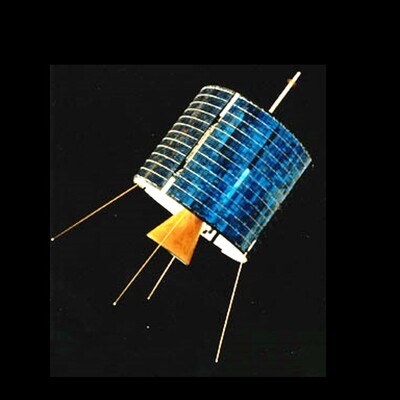
BOHR (Betavoltaic Orbital High-Reliability) satellite, built by Florida-based City Labs.
Uses tritium, whose beta decay is directly converted to electricity.
Funded by DoD.
Has various applications on Earth as well with very low amounts of tritium.
https://citylabs.net/technology-overview/#tritium
https://en.wikipedia.org/wiki/NanoTritium_batteries
@AkaSci Thanks! I'm not worried about this particular satellite, but with the way things are going in orbit, how long before SpaceX asks for one million nuclear powered AI data centers??? This just seems like a terrible precedent....
@sundogplanets
Note sure how big a tritium battery is needed to produce 100 kW to 1 MW, needed for orbital data centers.
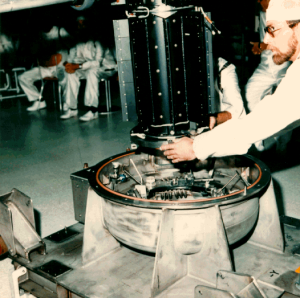
Voyager carried 3 of these RTGs to produce 0.47 kW of power. Different, inefficient (6.5%) technology, used Pu-238.
Perhaps, tritium batteries will be useful for lunar bases and maybe for aux power on satellites.
https://en.wikipedia.org/wiki/MHW-RTG
https://en.wikipedia.org/wiki/NanoTritium_batteries
Blame City Labs, not SpaceX. The headline is clickbait, too. It's a testbed tritium power supply; it doesn't power the satellite.
And I wonder what the rest of the 80+ objects in the payload were for?
@sundogplanets I guess I'm being naive when I ask whether there's any regulation on this kind of thing...?
@sundogplanets did they have to get approval for this before launching?
This is exactly the kind of news I want to see after spending a whole day reading and writing about Kessler Syndrome (specifically about SpaceX and Kessler Syndrome) right before I go to bed. Fuuuuuuck.
@sundogplanets I read "plutonium" in the article. Please tell me they don't plan to let those satellite disintegrate in the atmosphere??
@benjamin @sundogplanets It's confusingly worded but the plutonium bit is talking about the voyager craft. This one uses tritium.
@chris108 @sundogplanets ok gotit. Thanks.
Reassuring on the danger (not on the pollution or Kessler risk...)
@sundogplanets I read "plutonium" in the article. Please tell me they don't plan to let those satellite disintegrate in the atmosphere??
@sundogplanets I'm sure Sam knows, but for those who don't, various groups are developing "batteries" that use semiconductors to generate electricity, but using beta decay (which generates electrons or positrons) instead of photons as a power source. Electrons have a low mass and are electrically charged, so shielding is trivial - it takes very little material to stop them. You get a small amount of power but with a very long lifetime.

Install bonfire.cafe
Get the full app experience