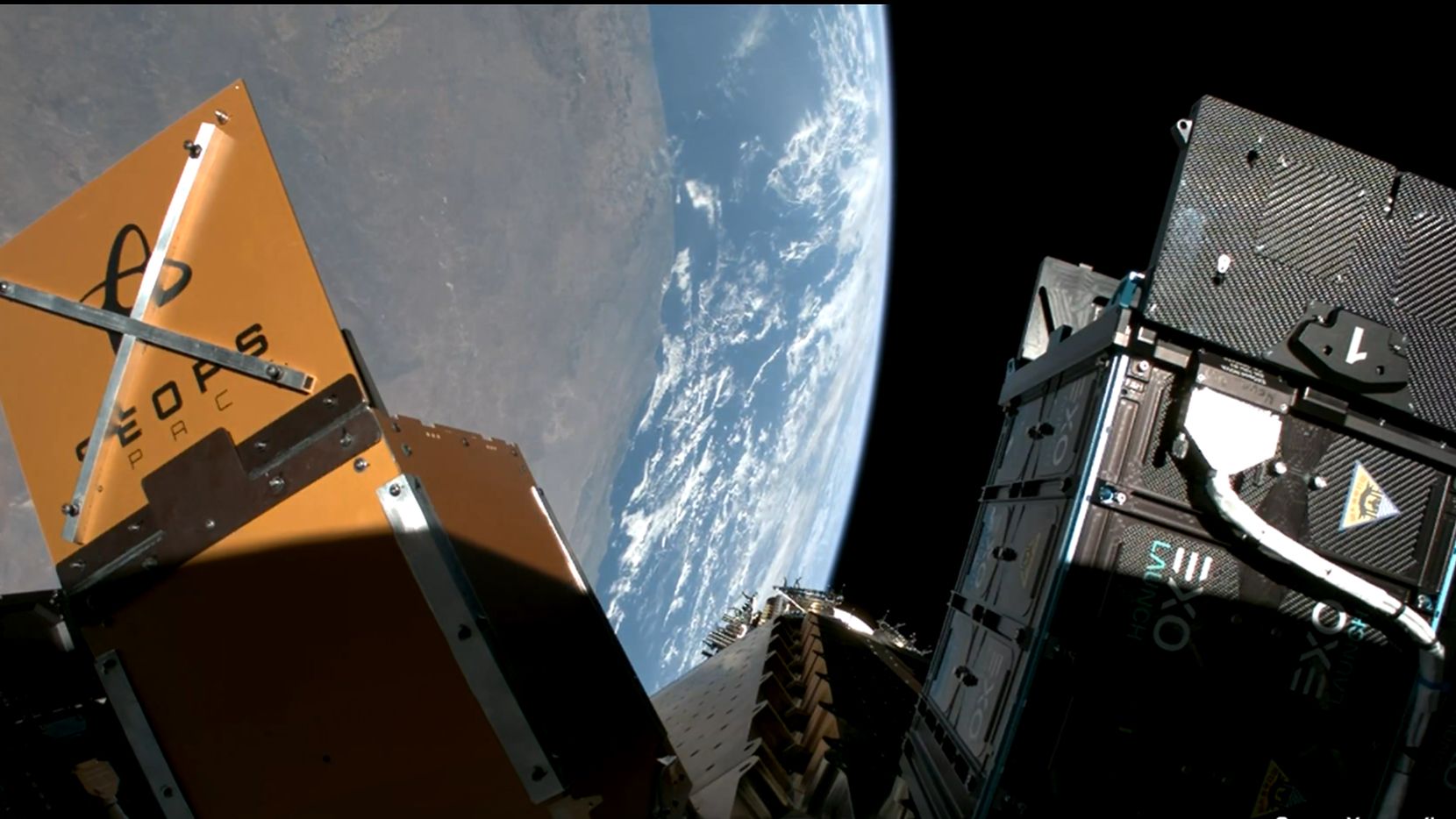

HAHAHA FUCK SpaceX just launched a nuclear powered satellite.
Sounds like this particular satellite is tiny and doesn't have a lot of tritium on board but HOLY SHIT this is a bad precedent.
Discussion
HAHAHA FUCK SpaceX just launched a nuclear powered satellite.
Sounds like this particular satellite is tiny and doesn't have a lot of tritium on board but HOLY SHIT this is a bad precedent.
@sundogplanets Also, tritium is probably fairly ok if it gets released high in the atmosphere (far away from most organisms and its decay product is stable). If it was released close to where living things might inhale it, that could be a problem, however I suspect an exploding rocket wouldn't be very good for their health either. I also completely agree with you about it setting a bad precedent.
@sundogplanets it’s curious that I had to do my own research into the half life of tritium, how it permates through our atmosphere and oceans and what the various different regulatory limits are. The editors at Space.com clearly don’t think that the full lifecycle of spacecraft is anything their typical reader might be interested in.
@sundogplanets #SpaceTwitter needs to become SpaceEx
Wait... How is this thing supposed to end its life? Burn in the atmosphere?!?!

@ParadeGrotesque @sundogplanets
As I recall, tritium's half life is about 12 years, but it's actually not that bad if it escapes into the atmosphere. It's commonly used in betavoltaics (which are really clever), where they can provide low power for many years.
Tritium is a 'heavy' isotope of hydrogen, but that really means that it's heavy in relation to normal hydrogen, it's still lighter than helium. Molecular hydrogen and helium tends to float to the top of the atmosphere and get blown away in the solar wind (which is why you extract helium by mining: any that made it to the atmosphere is gone now). The risk is that it will bind to water molecules and then stick around, but even then it's going to be in a very low concentration. It's a beta emitter (which is why you use it in betavoltaics) and beta particles are not really dangerous unless you inhale something that emits them.
Just venting it into space before reentry would eliminate all of the problems and even without that it will quickly be diluted to a level where other stuff in the atmosphere is way more dangerous.
It's like bad movie sequels; they don't get better, just more ridiculous.
Acid rain is so last century. Coming soon to a neighborhood near you: radioactive rain.
@sundogplanets I guess that’s one way to circumvent NZs no-nukes policy …
@sundogplanets Great, between the data centers stealing our water and jacking up our utilities bills, now we can think about getting nuked by a falling satellite from Elon. You can never hate capitalism enough.
Next step: putting an heavier nuclear powered satellite in a heavy version of the launcher, and follow the news for America's innovation: Having a nuclear disaster on their land by themselves.
@sundogplanets Bad precedent is kind of their entire business model. :(
@sundogplanets this is gonna fall to earth some day, isn't it?
@sundogplanets Seems like a test for commercial deep-space exploration to me.
They probably had permits to work on it, too. 🤔
@sundogplanets of course they have a plan to recover it safely once its useful life ends
@sundogplanets Let me say, on behalf of all sane people, NOOOOOOOOOPE.
@sundogplanets I was going to exclaim about how was this allowed to go forward without the requisite discussion and debate prior to its approval, but then I remembered that the US is dead and has no functioning government.

Install bonfire.cafe
Get the full app experience