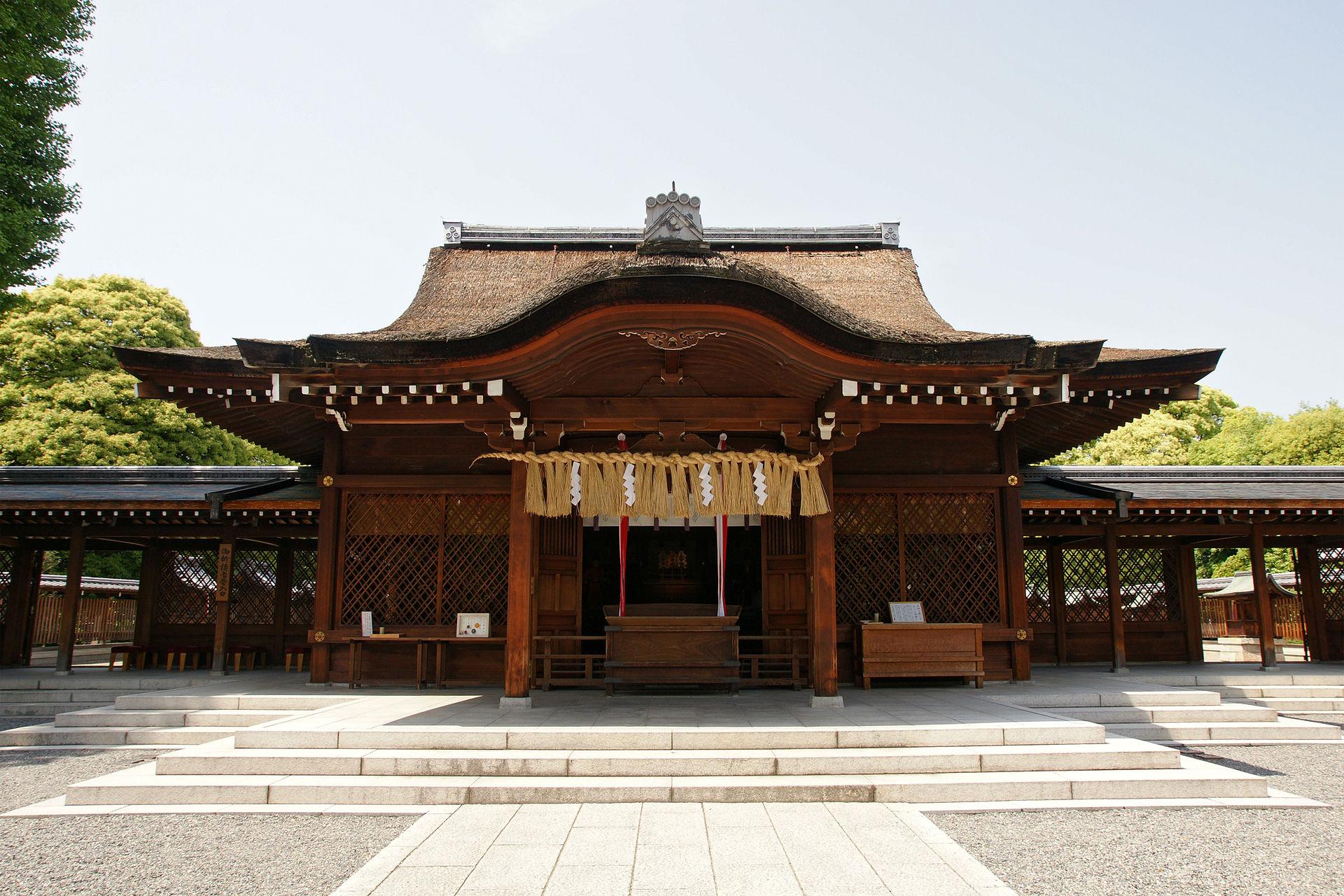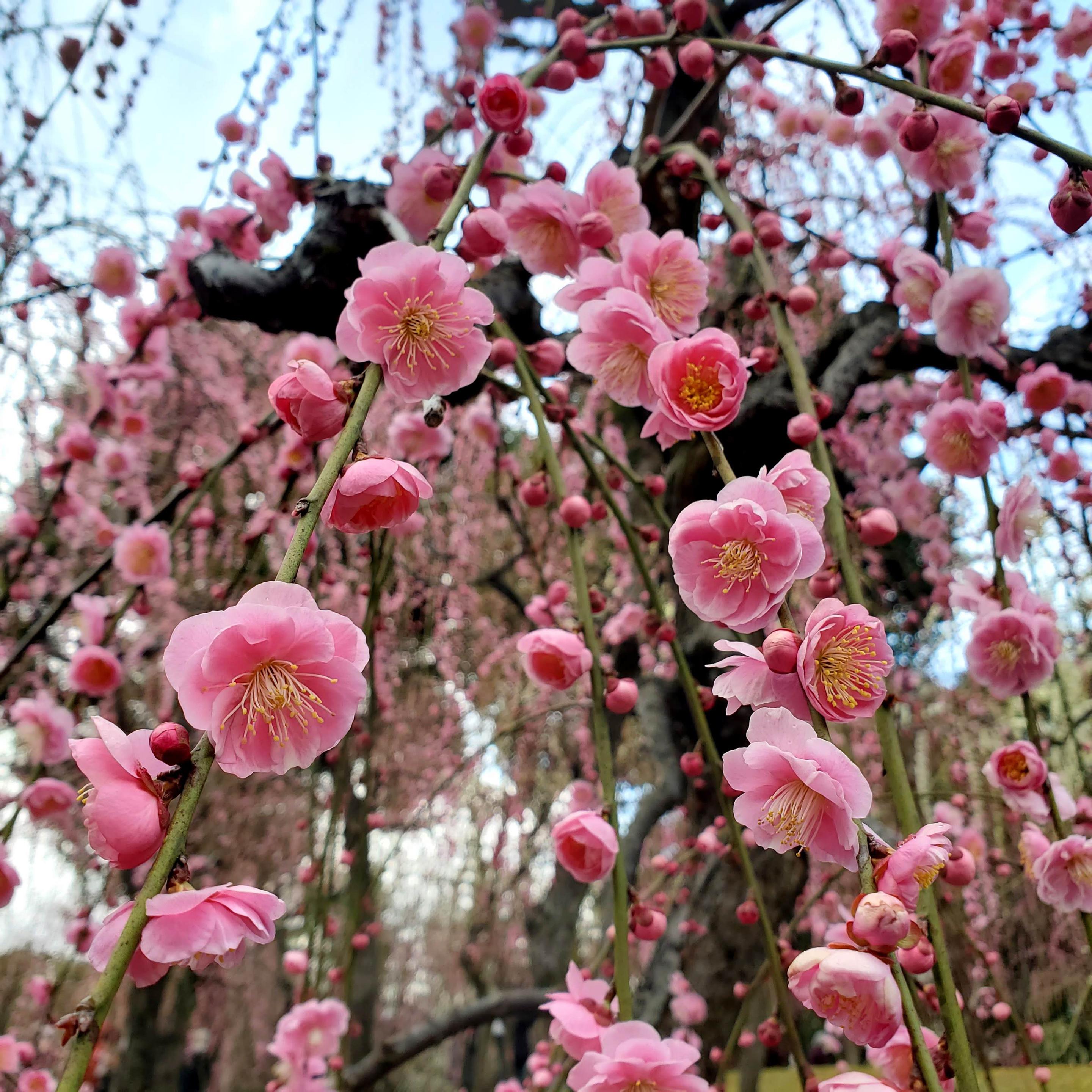
6) Famed for its ume, from late February Jōnan-gū (城南宮) hosts the 'Plum Blossom Festival' (梅まつり).
The shrine boasts five distinctive gardens. 4 were designed by master landscaper Nakane Kinsaku (中根金作 1917-95), who was inspired by different periods of Japanese history.
Post
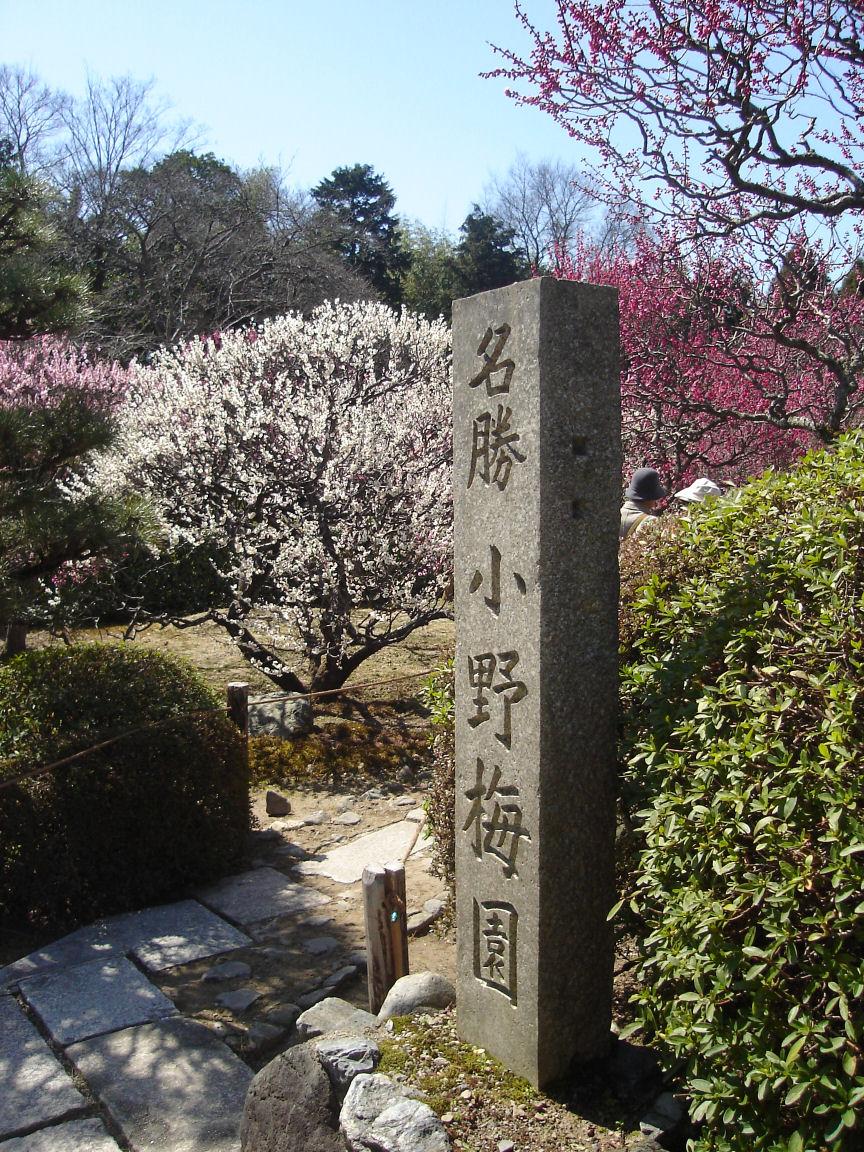
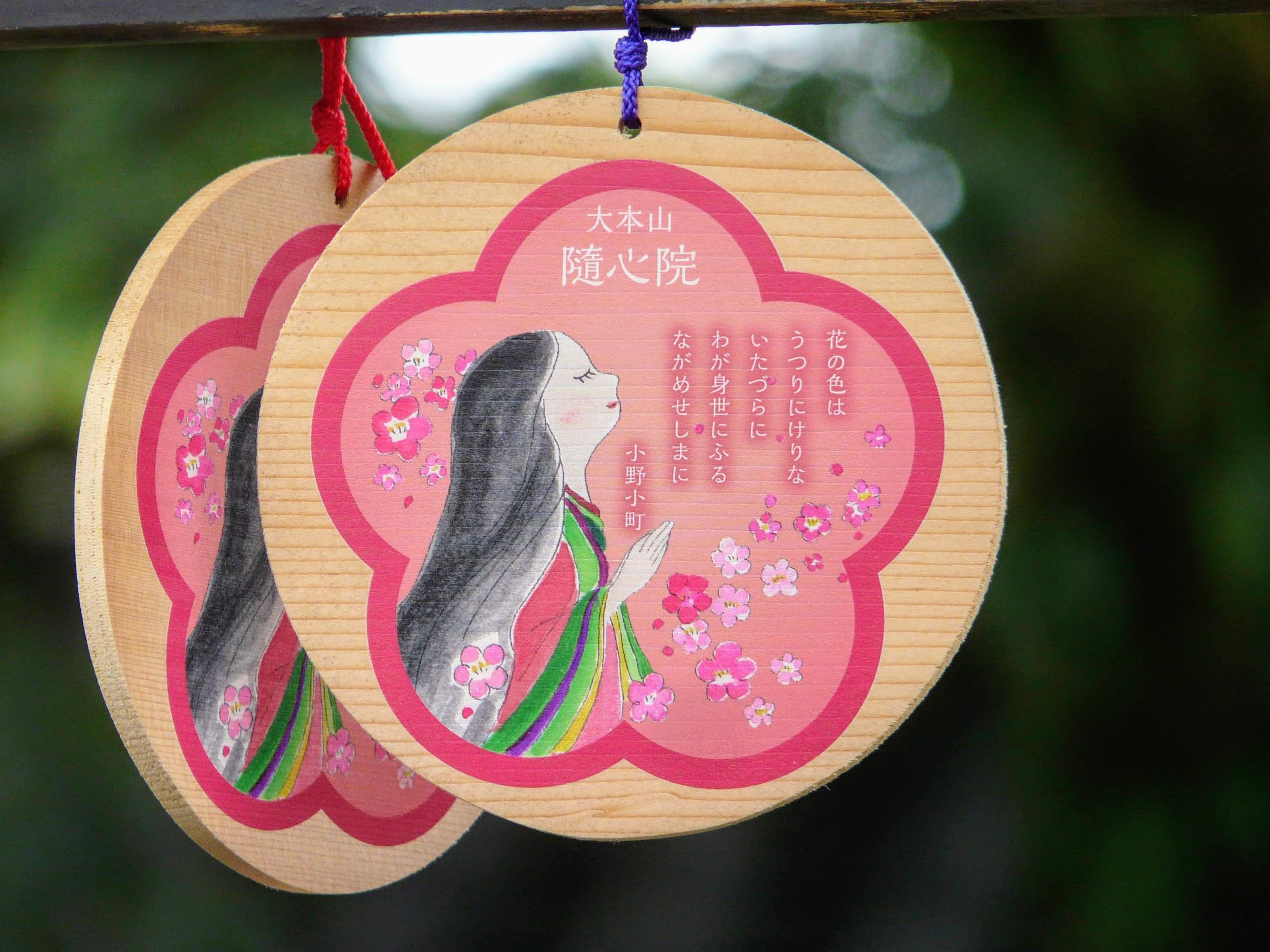
7) Zuishin-in (随心院) has a deep connection to the poet Ono-no-Komachi (小野小町 825-900), who allegedly had a retreat nearby.
Known for her beauty, Ono lends her name to the temple's orchard of 230 trees ('Ono Baien' 小野梅園).
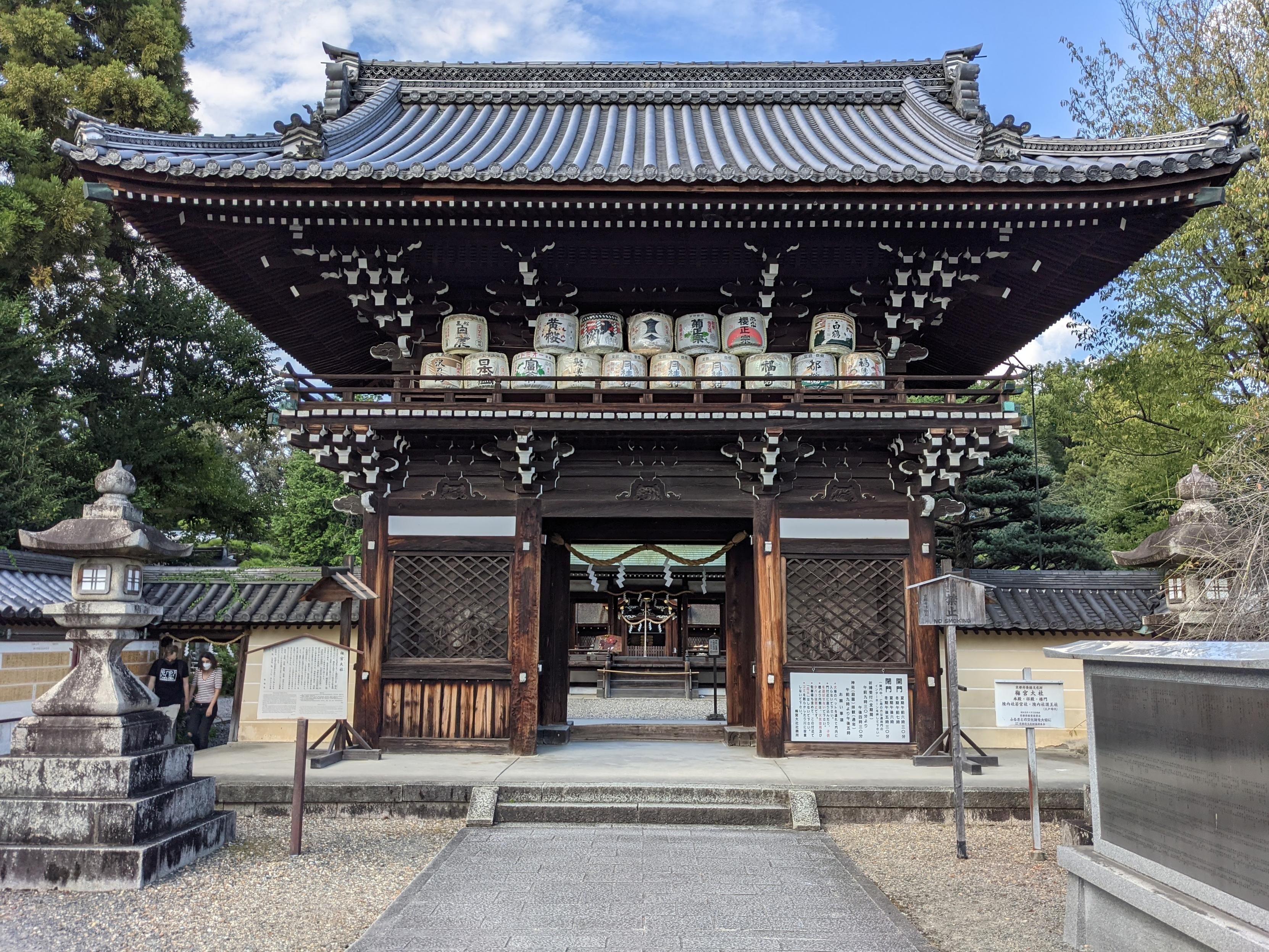
8) In recent years Umenomiya Taisha's (梅宮大社) fortunes have revived thanks to the work of photographer Iwagō Mitsuaki (岩合光昭), who shot images of the many cats that live in the grounds.
The shrine is known for its hydrangea, irises, spider lilies and 400 ume trees.
#Kyoto
One of the gods enshrined at Umenomiya guards women during childbirth. It's thought the connection between ume & the shrine evolved because umu (生む 'childbirth') sounds similar to ume (梅 'plum blossoms').
sleeping in a row-
little butterfly, cat
high priest
-Issa (小林一茶).
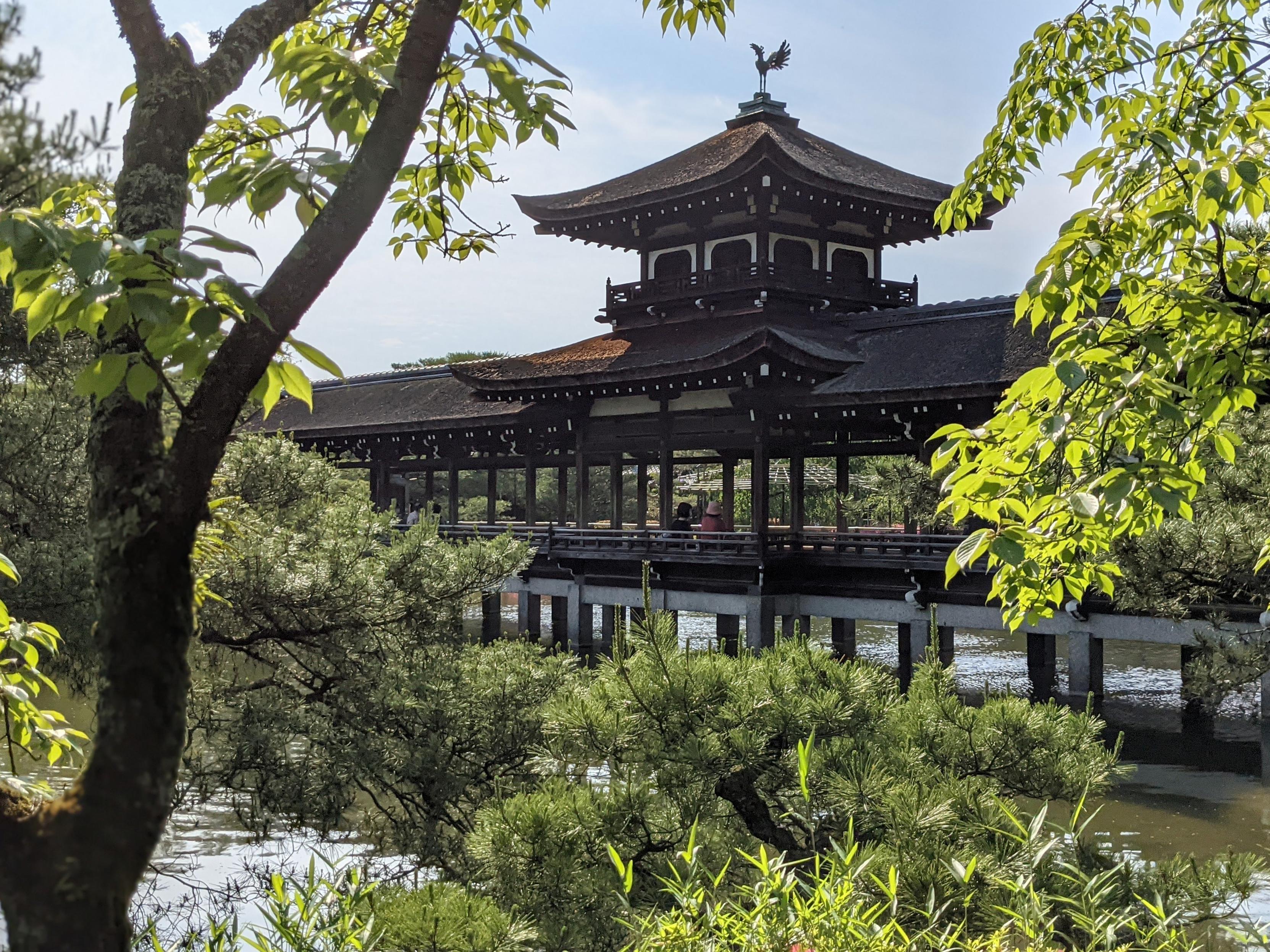
9) Heian Jingū (平安神宮) enshrines Kyōto's first and last emperors, and replicates part of the original Heian Palace.
Famed landscaper Ogawa Jihei (小川治兵衛) created 3 of the shrine's 4 sprawling gardens (which cover 33,000m2), blending Heian and Meiji period aesthetics.
#Japan