Discussion
Loading...

#Tag

Log in
  • About
  • Code of conduct
  • Privacy
  • Users
  • Instances
  • About Bonfire
Em :official_verified: boosted
Health Self Defense ❤️‍🔥😷
@healthselfdefense@kolektiva.social  ·  activity timestamp 2 weeks ago

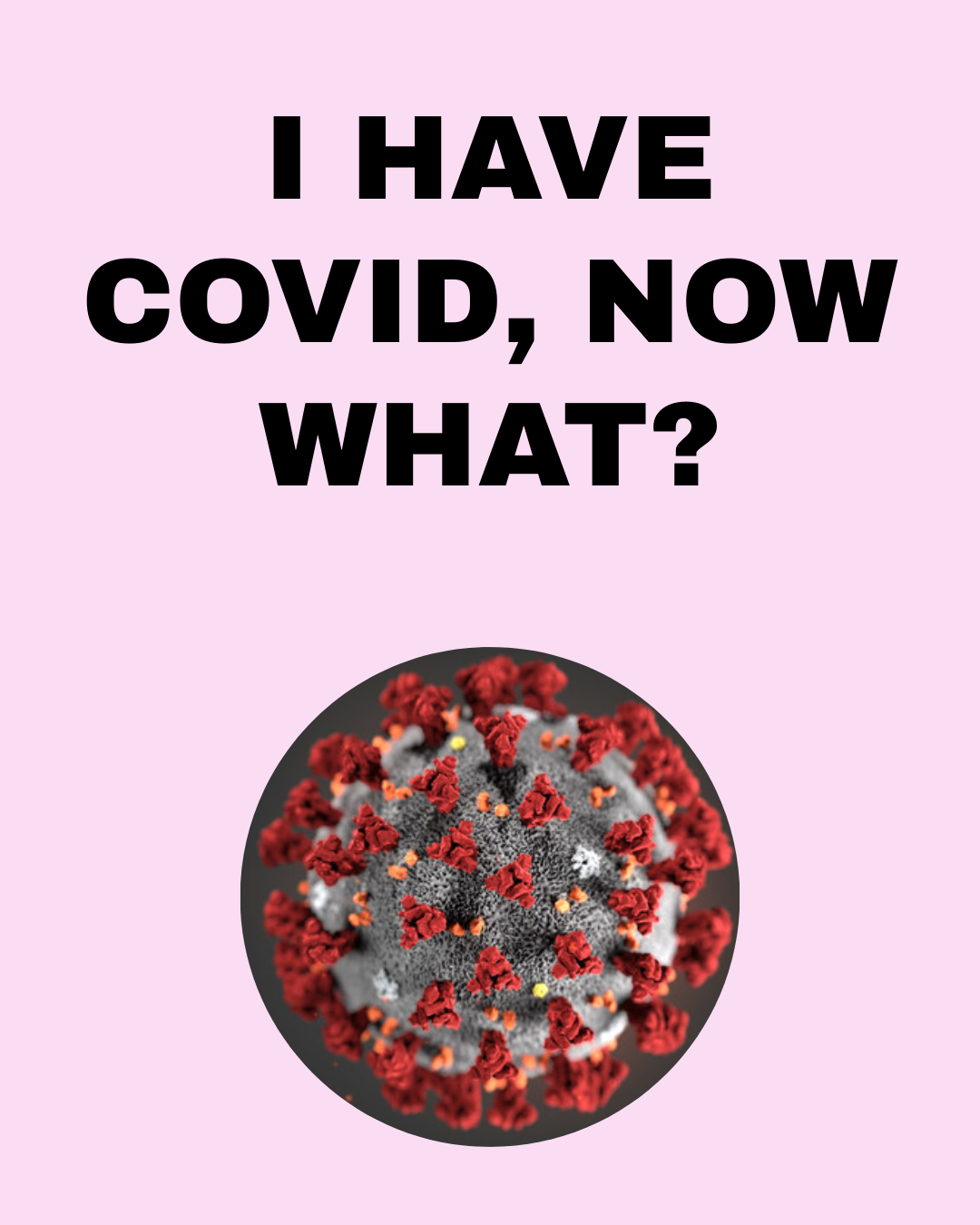
I have COVID, now what?

You can still stop the spread of the virus

Reduce the likelihood of infecting others in your household by isolating yourself as soon as possible, improving air circulation, and encouraging everyone to wear masks. People who test positive for COVID are contagious for at least 10 days . After this period, another COVID test is recommended.

Avoid leaving home as much as possible. If you have an emergency or something that you cannot postpone, wear an N95/RN95/FPP2 mask.
(A PCR test may be required to obtain disability benefits or due to long-term persistent COVID )

Hydration
Dehydration is linked to developing long COVID so stay hydrated!

Rest
The risk of developing long COVID is higher in people who do not get adequate rest . Avoid exercise or physical activity during infection and in the weeks afterward. Rest and pacing yourself are essential to treating chronic fatigue syndrome, a common symptom of long COVID

Learn about Long COVID.
At least 50% of COVID infections are asymptomatic.
At least 10% of infections end in long COVID.

https://longcovidjustice.org/long-covid-essentials/

Long COVID is a set of health issues after someone has COVID-19. These could be: new health issues, ongoing issues, or worsening of previous symptoms or conditions. Long COVID is a biological disease that affects hundreds of millions of people around the world. It can cause significant disability and can be fatal. It is a continuing health crisis.

Learn about Long COVID.
Long COVID is an umbrella term that generally refers to symptoms which persist more than three months after a COVID infection.

It’s critical to note that Long COVID can affect any and all organ systems in the body. It can impact the heart, lungs, digestive system, pancreas, brain, kidneys, liver, and more. It can harm the immune system. For this reason, the damage SARS-COV-2 can leave behind in a body may seem random, strange, or hard to believe.

https://www.thegauntlet.news/p/what-is-long-covid

Learn about Long COVID.
• Fatigue and post-exertional malaise
• What is Myalgic Encephalomyeliitis (ME/CFS)?
• Dizziness, lightheadedness, racing heart after COVID-19? It could be dysautonomia
• “Brain fog,” memory problems, and other neurological issues after COVID-19
• Why you should be careful about activity & exercise after COVID
• Racing heart or chest pain? Heart problems after COVID-19
• New Allergies or Food Intolerance After COVID-19? Mast Cell and Histamine Issues
• What to do when your senses of taste and smell are changed by COVID-19
• Having Trouble Sleeping After COVID-19?
• How Does COVID-19 Affect Reproductive Health?

“Every chain of transmission that is broken COUNTS. Every person who doesn’t get sick, who doesn’t lose THAT WEEK OF WORK, who doesn’t DIE or become DISABLED, from the smallest of inconveniences to the BIGGEST of losses – every single one of these things COUNTS.” - Becca on the Death Panel podcast

What to do if you have COVID by People's CDC
https://peoplescdc.org/what-to-do-if-you-have-covid/

What to do when I have COVID by Clean Air Club.
https://t.co/y3dppCwBQc

Masks are community care❤️‍🔥😷 free masks: maskbloc.org

• Remember: covid is not over, 50% of infections are asymptomatic, minimum 10% of infections end up in long COVID, re-infections wreck us, COVID spreads and moves like cigarette smoke, think of the people around you and you as people who are all day smoking, it becomes more visual to understand how COVID moves.
• There is no way to “train” the immune system because it is not a muscle. there is a common misconception that exposure to harmful germs strengthens the immune system. viral diseases like COVID, flu, measles weaken the immune system, leaving the possibility of lasting damage. The reality is that you don't build your immunity with repeated infections, vaccines strengthen the immune system by teaching it to recognize pathogens without all the risks. Focusing on infection prevention is key.
• Rapid antigen tests give many false negatives.
• Solving the pandemic was never in the cards for the capitalist world.
• Instead, the explicit goal of the ruling class has been to make the pandemic simply disappear from public perception. Any reminder of the existence of a highly-transmissible, highly-dangerous, mass-disabling disease could trigger panic, or worse: organized, militant labor action. Averting this crisis required a careful campaign of culture-crafting; the people themselves needed to become convinced that there was no reason to fight. Consent for protracted mass infection needed to be manufactured.

“The cold truth of the matter is that the motive behind COVID minimization is greed and social control. (…) Solving the pandemic was never in the cards for the capitalist world. Instead, the explicit goal of the ruling class has been to make the pandemic simply disappear from public perception.” Let Them Eat Plague! http://clarion.unity-struggle-unity.org/

#MaskUp #WearAMask #CovidRealist #CovidIsAirbone #LongCovid #YallMasking #DisabledLiberation #DisabilityJustice

.
I have COVID, now what?
  • Copy link
  • Flag this post
  • Block
Health Self Defense ❤️‍🔥😷
@healthselfdefense@kolektiva.social  ·  activity timestamp 2 weeks ago

I have COVID, now what?

You can still stop the spread of the virus

Reduce the likelihood of infecting others in your household by isolating yourself as soon as possible, improving air circulation, and encouraging everyone to wear masks. People who test positive for COVID are contagious for at least 10 days . After this period, another COVID test is recommended.

Avoid leaving home as much as possible. If you have an emergency or something that you cannot postpone, wear an N95/RN95/FPP2 mask.
(A PCR test may be required to obtain disability benefits or due to long-term persistent COVID )

Hydration
Dehydration is linked to developing long COVID so stay hydrated!

Rest
The risk of developing long COVID is higher in people who do not get adequate rest . Avoid exercise or physical activity during infection and in the weeks afterward. Rest and pacing yourself are essential to treating chronic fatigue syndrome, a common symptom of long COVID

Learn about Long COVID.
At least 50% of COVID infections are asymptomatic.
At least 10% of infections end in long COVID.

https://longcovidjustice.org/long-covid-essentials/

Long COVID is a set of health issues after someone has COVID-19. These could be: new health issues, ongoing issues, or worsening of previous symptoms or conditions. Long COVID is a biological disease that affects hundreds of millions of people around the world. It can cause significant disability and can be fatal. It is a continuing health crisis.

Learn about Long COVID.
Long COVID is an umbrella term that generally refers to symptoms which persist more than three months after a COVID infection.

It’s critical to note that Long COVID can affect any and all organ systems in the body. It can impact the heart, lungs, digestive system, pancreas, brain, kidneys, liver, and more. It can harm the immune system. For this reason, the damage SARS-COV-2 can leave behind in a body may seem random, strange, or hard to believe.

https://www.thegauntlet.news/p/what-is-long-covid

Learn about Long COVID.
• Fatigue and post-exertional malaise
• What is Myalgic Encephalomyeliitis (ME/CFS)?
• Dizziness, lightheadedness, racing heart after COVID-19? It could be dysautonomia
• “Brain fog,” memory problems, and other neurological issues after COVID-19
• Why you should be careful about activity & exercise after COVID
• Racing heart or chest pain? Heart problems after COVID-19
• New Allergies or Food Intolerance After COVID-19? Mast Cell and Histamine Issues
• What to do when your senses of taste and smell are changed by COVID-19
• Having Trouble Sleeping After COVID-19?
• How Does COVID-19 Affect Reproductive Health?

“Every chain of transmission that is broken COUNTS. Every person who doesn’t get sick, who doesn’t lose THAT WEEK OF WORK, who doesn’t DIE or become DISABLED, from the smallest of inconveniences to the BIGGEST of losses – every single one of these things COUNTS.” - Becca on the Death Panel podcast

What to do if you have COVID by People's CDC
https://peoplescdc.org/what-to-do-if-you-have-covid/

What to do when I have COVID by Clean Air Club.
https://t.co/y3dppCwBQc

Masks are community care❤️‍🔥😷 free masks: maskbloc.org

• Remember: covid is not over, 50% of infections are asymptomatic, minimum 10% of infections end up in long COVID, re-infections wreck us, COVID spreads and moves like cigarette smoke, think of the people around you and you as people who are all day smoking, it becomes more visual to understand how COVID moves.
• There is no way to “train” the immune system because it is not a muscle. there is a common misconception that exposure to harmful germs strengthens the immune system. viral diseases like COVID, flu, measles weaken the immune system, leaving the possibility of lasting damage. The reality is that you don't build your immunity with repeated infections, vaccines strengthen the immune system by teaching it to recognize pathogens without all the risks. Focusing on infection prevention is key.
• Rapid antigen tests give many false negatives.
• Solving the pandemic was never in the cards for the capitalist world.
• Instead, the explicit goal of the ruling class has been to make the pandemic simply disappear from public perception. Any reminder of the existence of a highly-transmissible, highly-dangerous, mass-disabling disease could trigger panic, or worse: organized, militant labor action. Averting this crisis required a careful campaign of culture-crafting; the people themselves needed to become convinced that there was no reason to fight. Consent for protracted mass infection needed to be manufactured.

“The cold truth of the matter is that the motive behind COVID minimization is greed and social control. (…) Solving the pandemic was never in the cards for the capitalist world. Instead, the explicit goal of the ruling class has been to make the pandemic simply disappear from public perception.” Let Them Eat Plague! http://clarion.unity-struggle-unity.org/

#MaskUp #WearAMask #CovidRealist #CovidIsAirbone #LongCovid #YallMasking #DisabledLiberation #DisabilityJustice

.

I have COVID, now what?
  • Copy link
  • Flag this post
  • Block
Esther Payne :bisexual_flag: boosted
Health Self Defense ❤️‍🔥😷
@healthselfdefense@kolektiva.social  ·  activity timestamp 4 weeks ago

Weight Loss Is Not a Substitute for Healthcare: Part 1- The Basics

https://weightandhealthcare.substack.com/p/weight-loss-is-not-a-substitute-for

"The idea that higher-weight people can reach whatever weight healthcare wants them to in order to access care is questionable at best (and we’ll discuss that later,) but even if they could, the idea that people do or do not deserve care based on their body size is still horrifying and is still at the root of suffering and even death for higher-weight people.

This has been going on for a long-time - from holding healthcare hostage for a weight loss ransom, to recommending weight loss surgeries for type 2 diabetes in higher-weight patients (when thin patients with the same diagnosis and labs are not asked to take the major risks and life changes of those surgeries), to tools and equipment that aren’t properly rated for higher-weight patients, and more.

That said, with the advent of the new generation of GLP-1 weight loss drugs (and their relentless marketing as “miracle” weight loss drugs), I’ve been seeing and hearing about this even more, with providers, facilities, and insurance companies treating these drugs as a substitute for providing proper care to higher-weight people.

I want to be clear that I take a firm view of bodily autonomy in general as well as specific to this situation, I would never shame or blame a patient who attempted to lose weight in order to access healthcare or for whatever their reasons or sincerely held beliefs about weight loss might be. I also take a firm view of what constitutes the ethical, evidence-based practice of healthcare, including informed consent, and that’s where we run into an issue with this substitution of weight loss for healthcare.

One clear and obvious example is BMI-based denials of care. This happens when a patient is told that they cannot have a procedure they need or want (for example joint surgeries, spinal surgeries, or gender affirming care) unless or until they reach a certain BMI or percentage of weight loss.

Rather than creating healthcare for the patients who exist, the suggestion is that higher-weight patients don’t deserve care unless and until they become thinner patients. This also quickly becomes a matter of privilege and resources - a patient’s access to care can determine their fate - some patients can get a procedure and/or accommodation at a BMI at which another patient will be denied. Those with better insurance, the resources and ability to travel etc. have a better chance of accessing care.

The other issue is with accommodation. This occurs when higher-weight patients don’t have access to the same things that thinner patients have. This includes everything from a chair they can sit in, imaging equipment, a bed in the emergency room or hospital, a table in the cath lab, an overbed and/or hoyer lift and/or appropriate staffing ratio to help providers move patients in ways that keep both safe, and more.

Higher-weight patients can face a healthcare system that was not built for them. This can also be life or death. I was advocating for a patient meeting with a cardiologist at a very highly-regarded cardiology center. The cardiologist told that patient that if she did have a heart attack, the table in the cath lab was not appropriately weight-rated for the patient and there would be “nothing to do” but medically manage and “watch.” (The facility has since acquired tables rated for higher weight.)

For those who can’t access appropriate, accommodating care, the recommendation is often to lose weight. And I’m using the term “recommendation” loosely here because at this point the patient's healthcare is being held hostage for a weight loss ransom. We have to start and keep asking questions about the ethics of this, the potential coercion (and the ramifications for patients and providers when, for example, a surgeons is being begged by a patient to give them a weight loss surgery that the surgeon knows the patient doesn’t want to have.

We have to ask questions about an attitude that the provider/facility/insurance will not treat the patient who exists and needs treatment, and will only treat a hypothetical patient that they believe/hope this patient might possibly become (after enduring difficult and sometimes risky interventions). And if the patient will not subject themselves to the risks of (trying) to become that (thinner) patient, healthcare will allow the patient to suffer and even die and blame the patient.

Certainly the paternalistic and coercive nature of this is a huge issue here, but even if someone believes that weight loss is an appropriate substitute for care or accommodation, there would be some questions they would need to answer around both the denial and delay of care."

#MaskUp #WearAMask #CovidRealist #CovidIsAirbone #LongCovid #YallMasking #DisabledLiberation #DisabilityJustice

Weight Loss Is Not a Substitute for Healthcare: Part 1- The Basics
  • Copy link
  • Flag this post
  • Block
Health Self Defense ❤️‍🔥😷
@healthselfdefense@kolektiva.social  ·  activity timestamp 4 weeks ago

Weight Loss Is Not a Substitute for Healthcare: Part 1- The Basics

https://weightandhealthcare.substack.com/p/weight-loss-is-not-a-substitute-for

"The idea that higher-weight people can reach whatever weight healthcare wants them to in order to access care is questionable at best (and we’ll discuss that later,) but even if they could, the idea that people do or do not deserve care based on their body size is still horrifying and is still at the root of suffering and even death for higher-weight people.

This has been going on for a long-time - from holding healthcare hostage for a weight loss ransom, to recommending weight loss surgeries for type 2 diabetes in higher-weight patients (when thin patients with the same diagnosis and labs are not asked to take the major risks and life changes of those surgeries), to tools and equipment that aren’t properly rated for higher-weight patients, and more.

That said, with the advent of the new generation of GLP-1 weight loss drugs (and their relentless marketing as “miracle” weight loss drugs), I’ve been seeing and hearing about this even more, with providers, facilities, and insurance companies treating these drugs as a substitute for providing proper care to higher-weight people.

I want to be clear that I take a firm view of bodily autonomy in general as well as specific to this situation, I would never shame or blame a patient who attempted to lose weight in order to access healthcare or for whatever their reasons or sincerely held beliefs about weight loss might be. I also take a firm view of what constitutes the ethical, evidence-based practice of healthcare, including informed consent, and that’s where we run into an issue with this substitution of weight loss for healthcare.

One clear and obvious example is BMI-based denials of care. This happens when a patient is told that they cannot have a procedure they need or want (for example joint surgeries, spinal surgeries, or gender affirming care) unless or until they reach a certain BMI or percentage of weight loss.

Rather than creating healthcare for the patients who exist, the suggestion is that higher-weight patients don’t deserve care unless and until they become thinner patients. This also quickly becomes a matter of privilege and resources - a patient’s access to care can determine their fate - some patients can get a procedure and/or accommodation at a BMI at which another patient will be denied. Those with better insurance, the resources and ability to travel etc. have a better chance of accessing care.

The other issue is with accommodation. This occurs when higher-weight patients don’t have access to the same things that thinner patients have. This includes everything from a chair they can sit in, imaging equipment, a bed in the emergency room or hospital, a table in the cath lab, an overbed and/or hoyer lift and/or appropriate staffing ratio to help providers move patients in ways that keep both safe, and more.

Higher-weight patients can face a healthcare system that was not built for them. This can also be life or death. I was advocating for a patient meeting with a cardiologist at a very highly-regarded cardiology center. The cardiologist told that patient that if she did have a heart attack, the table in the cath lab was not appropriately weight-rated for the patient and there would be “nothing to do” but medically manage and “watch.” (The facility has since acquired tables rated for higher weight.)

For those who can’t access appropriate, accommodating care, the recommendation is often to lose weight. And I’m using the term “recommendation” loosely here because at this point the patient's healthcare is being held hostage for a weight loss ransom. We have to start and keep asking questions about the ethics of this, the potential coercion (and the ramifications for patients and providers when, for example, a surgeons is being begged by a patient to give them a weight loss surgery that the surgeon knows the patient doesn’t want to have.

We have to ask questions about an attitude that the provider/facility/insurance will not treat the patient who exists and needs treatment, and will only treat a hypothetical patient that they believe/hope this patient might possibly become (after enduring difficult and sometimes risky interventions). And if the patient will not subject themselves to the risks of (trying) to become that (thinner) patient, healthcare will allow the patient to suffer and even die and blame the patient.

Certainly the paternalistic and coercive nature of this is a huge issue here, but even if someone believes that weight loss is an appropriate substitute for care or accommodation, there would be some questions they would need to answer around both the denial and delay of care."

#MaskUp #WearAMask #CovidRealist #CovidIsAirbone #LongCovid #YallMasking #DisabledLiberation #DisabilityJustice

Weight Loss Is Not a Substitute for Healthcare: Part 1- The Basics
  • Copy link
  • Flag this post
  • Block

bonfire.cafe

A space for Bonfire maintainers and contributors to communicate

bonfire.cafe: About · Code of conduct · Privacy · Users · Instances
Bonfire social · 1.0.1-alpha.40 no JS en
Automatic federation enabled
Log in
  • Explore
  • About
  • Members
  • Code of Conduct