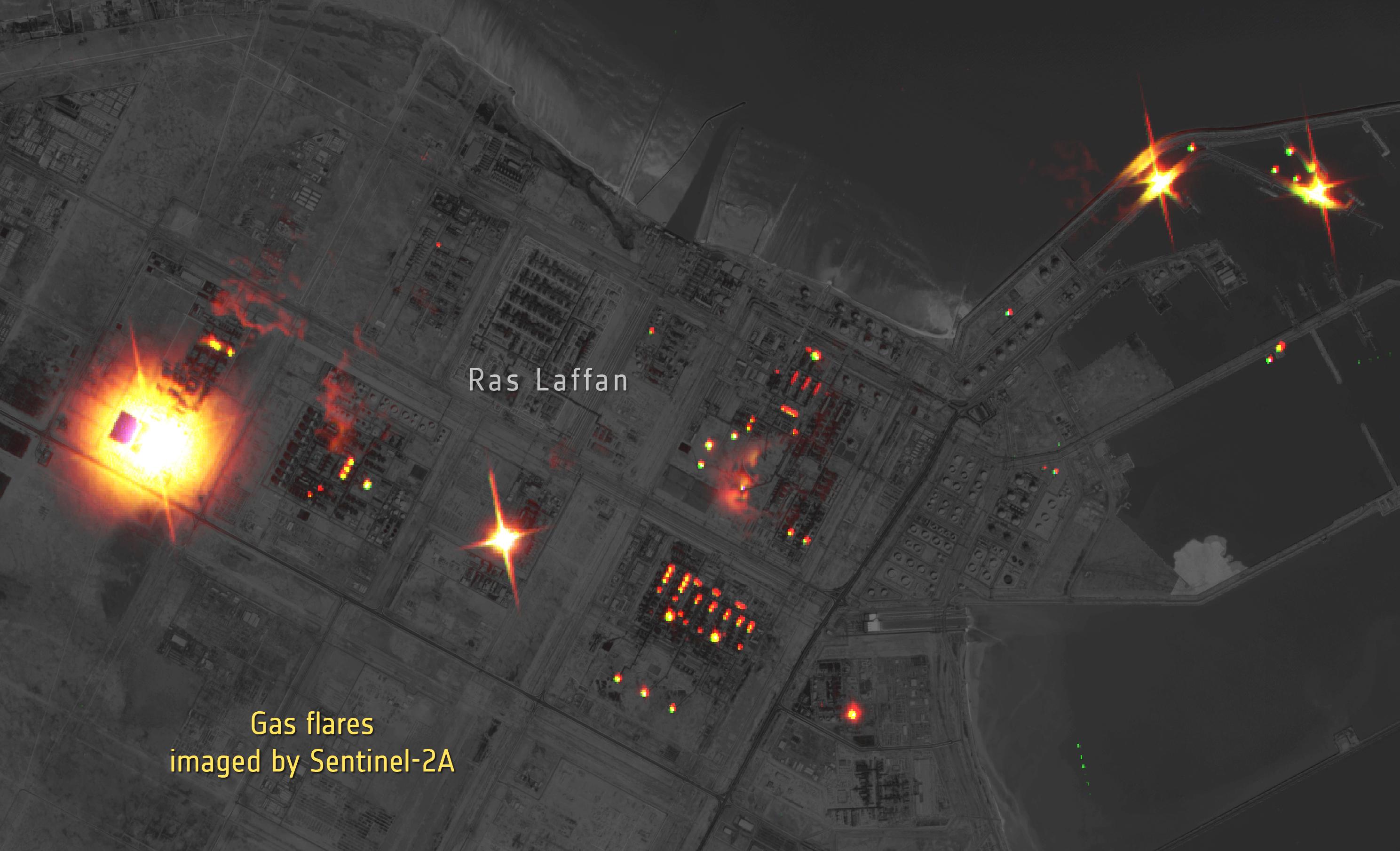
In recent trials, the elderly satellite #Sentinel-2A was switched on at night to see how it would perform in the dark – and the results have been strikingly positive, offering encouraging news for the follow-on Copernicus Sentinel-2 Next Generation mission, currently in development: https://www.esa.int/Applications/Observing_the_Earth/Copernicus/Sentinel-2/Sentinel-2_explores_night_vision #ALAN #LightPollution
If this result holds up, it’s potentially big: https://www.nature.com/articles/s41558-025-02481-0
In short, it implies that #LightPollution is decreasing the efficiency with which #plants remove carbon from the atmosphere. It concludes that artificial light at night increases “ #ecosystem respiration” (plants, microbes, and animals releasing carbon dioxide through their activity and growth), but there is no corresponding increase in #photosynthesis.
The result is that plants exposed to ALAN emit more #carbon than they absorb from the #atmosphere. The authors write: “Our findings show that ALAN disrupts the fundamental energetic constraints on ecosystem metabolism, warranting the inclusion of light pollution in global change and carbon–climate feedback assessments.”