holh, n.n: a hollow, cavity, hole. (HOL’H / ˈhɔlx)
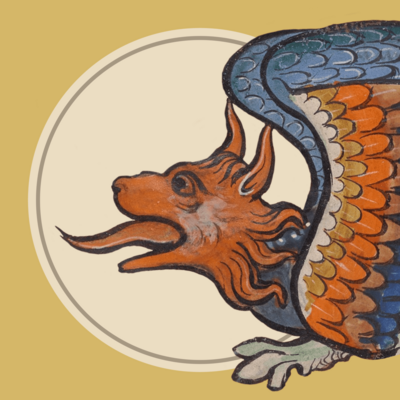
Image: A drawing of Pacificus of Verona’s star clock; Switzerland (St Gallen), c. 1000; St Gallen, Stiftsbibliothek, Cod. Sang. 18, p. 43.
#OldEnglish #WOTD
holh, n.n: a hollow, cavity, hole. (HOL’H / ˈhɔlx)
Image: A drawing of Pacificus of Verona’s star clock; Switzerland (St Gallen), c. 1000; St Gallen, Stiftsbibliothek, Cod. Sang. 18, p. 43.
#OldEnglish #WOTD
Typed "I'm delighted" in a text to a friend -- and stopped short, looking at the word "delighted."
I used "delighted" to mean that I am pleased, joyful, content, happy.
But delighted. De-lighted.
Wouldn't that mean "darkened"? Illumination removed?
If "de-" indicates that "light" is removed, how does that jive with the emotions of pleased, happy, or content?
Looked up the #etymology.
And voilà.
"light" <-- leoht ( #MiddleEnglish) <-- lēoht ( #OldEnglish) <-- *leuhtą ( #ProtoGermanic)
1/
This week in etymology I learned that the original Old English meaning of our word 'with' meant...against or opposed to! We still have this in words like withstand, withdraw, and withhold.
The word meaning together was 'mid' which we still see in words like midwife and middle.
The Viking invaders were the ones who changed that - their usage of 'with' suggested proximity (as in 'fighting with') and that eventually replaced the Old English 'mid.'
This week in etymology I learned that the original Old English meaning of our word 'with' meant...against or opposed to! We still have this in words like withstand, withdraw, and withhold.
The word meaning together was 'mid' which we still see in words like midwife and middle.
The Viking invaders were the ones who changed that - their usage of 'with' suggested proximity (as in 'fighting with') and that eventually replaced the Old English 'mid.'
Typed "I'm delighted" in a text to a friend -- and stopped short, looking at the word "delighted."
I used "delighted" to mean that I am pleased, joyful, content, happy.
But delighted. De-lighted.
Wouldn't that mean "darkened"? Illumination removed?
If "de-" indicates that "light" is removed, how does that jive with the emotions of pleased, happy, or content?
Looked up the #etymology.
And voilà.
"light" <-- leoht ( #MiddleEnglish) <-- lēoht ( #OldEnglish) <-- *leuhtą ( #ProtoGermanic)
1/
Typed "I'm delighted" in a text to a friend -- and stopped short, looking at the word "delighted."
I used "delighted" to mean that I am pleased, joyful, content, happy.
But delighted. De-lighted.
Wouldn't that mean "darkened"? Illumination removed?
If "de-" indicates that "light" is removed, how does that jive with the emotions of pleased, happy, or content?
Looked up the #etymology.
And voilà.
"light" <-- leoht ( #MiddleEnglish) <-- lēoht ( #OldEnglish) <-- *leuhtą ( #ProtoGermanic)
1/
a-sēon, str.v: to look at or upon, set eyes on (something). (ah-SAY-on / a-ˈseːɔn)
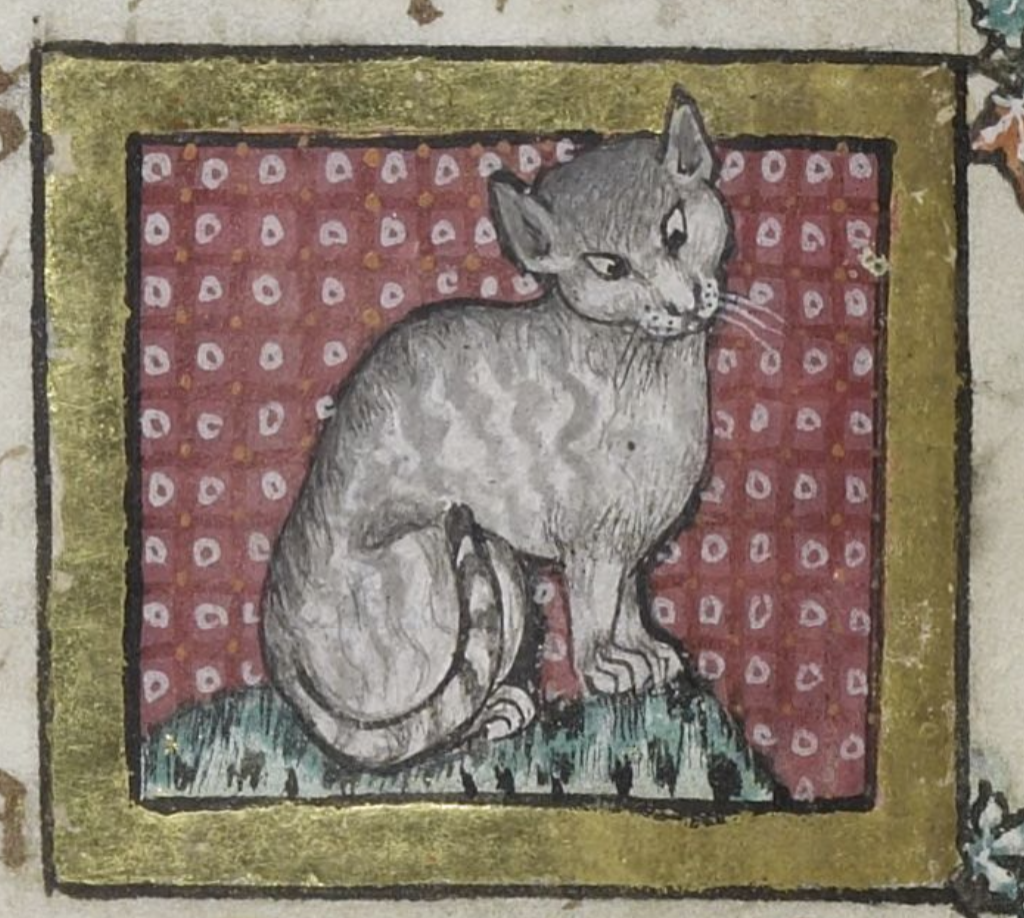
Image: Peterborough Bestiary; England (Peterborough), c. 1300-1310; Cambridge, Corpus Christi College, MS 53, f. 197v.
#OldEnglish #WOTD
a-sēon, str.v: to look at or upon, set eyes on (something). (ah-SAY-on / a-ˈseːɔn)
Image: Peterborough Bestiary; England (Peterborough), c. 1300-1310; Cambridge, Corpus Christi College, MS 53, f. 197v.
#OldEnglish #WOTD
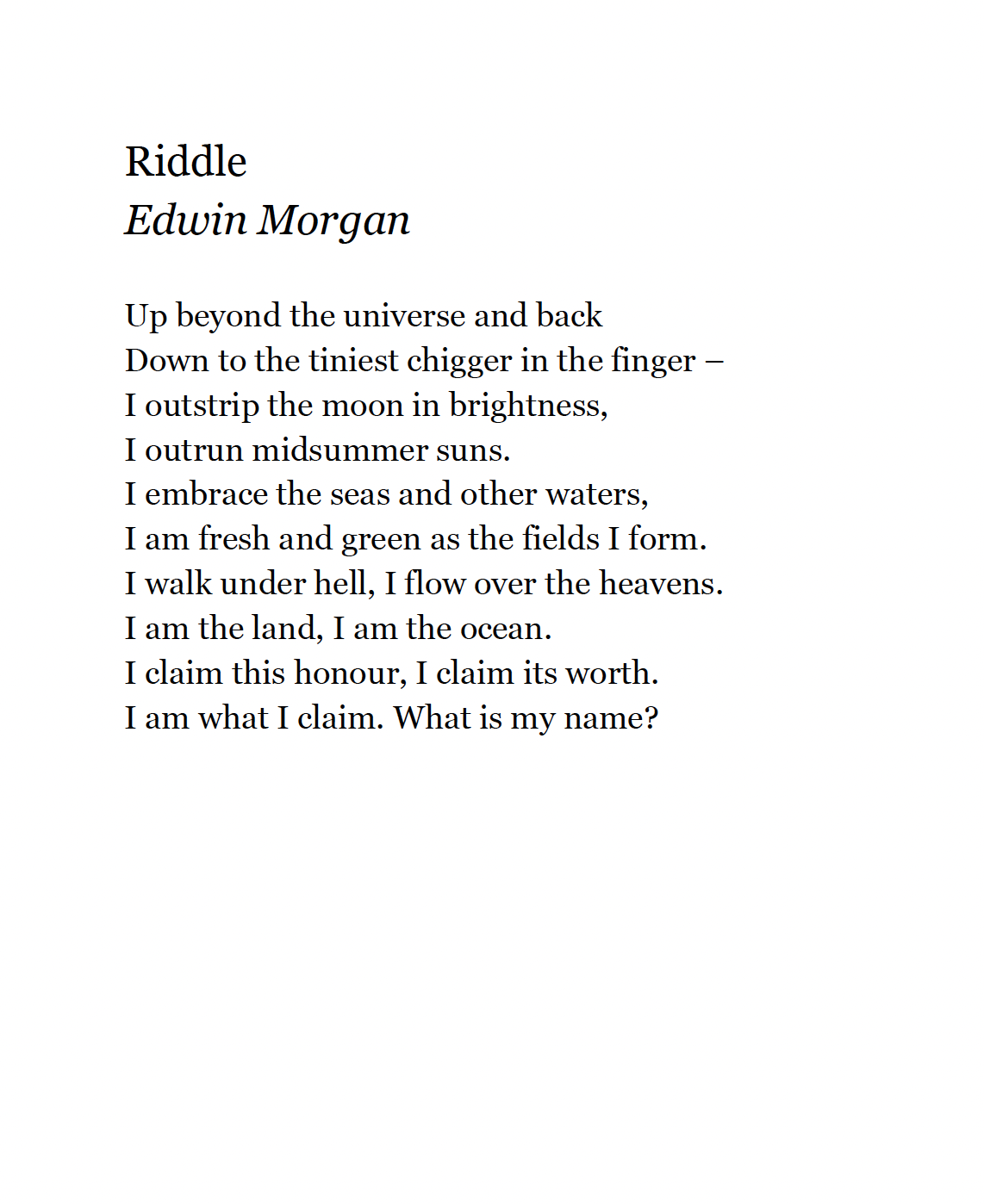
I outstrip the moon in brightness,
I outrun midsummer suns…
Edwin Morgan died #OTD, 19 August, 2010. “Riddle”, the final poem of Morgan’s final collection, Dreams and Other Nightmares (Mariscat, 2010), is a translation of one of the 10th-century Anglo-Saxon Exeter Book riddles, itself a translation of a Latin original by the poet Aldhelm (c.639–709 CE).
1/2
#Scottish #literature #poem #poetry #riddle #translation#EdwinMorgan#OldEnglish#AngloSaxon#Medieval
I outstrip the moon in brightness,
I outrun midsummer suns…
Edwin Morgan died #OTD, 19 August, 2010. “Riddle”, the final poem of Morgan’s final collection, Dreams and Other Nightmares (Mariscat, 2010), is a translation of one of the 10th-century Anglo-Saxon Exeter Book riddles, itself a translation of a Latin original by the poet Aldhelm (c.639–709 CE).
1/2
#Scottish #literature #poem #poetry #riddle #translation#EdwinMorgan#OldEnglish#AngloSaxon#Medieval