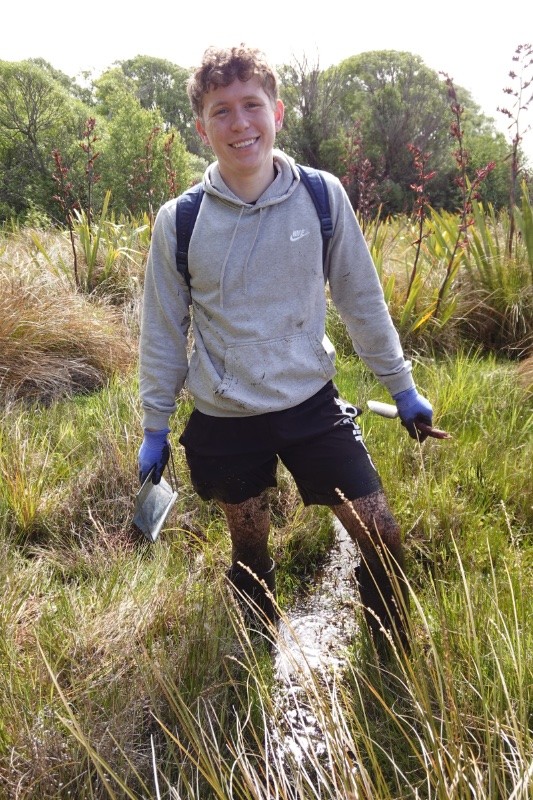
A photo of Lincoln University summer scholar Max going the extra muddy mile helping set up an invertebrate monitoring project at Travis Wetland. The mud is up to his waste, and he's smiling.

My full-res photo is on Flickr at https://www.flickr.com/photos/mollivan_jon/54945126155/
A photo of Lincoln University summer scholar Max going the extra muddy mile helping set up an invertebrate monitoring project at Travis Wetland. The mud is up to his waste, and he's smiling. My full-res photo is on Flickr at https://www.flickr.com/photos/mollivan_jon/54945126155/
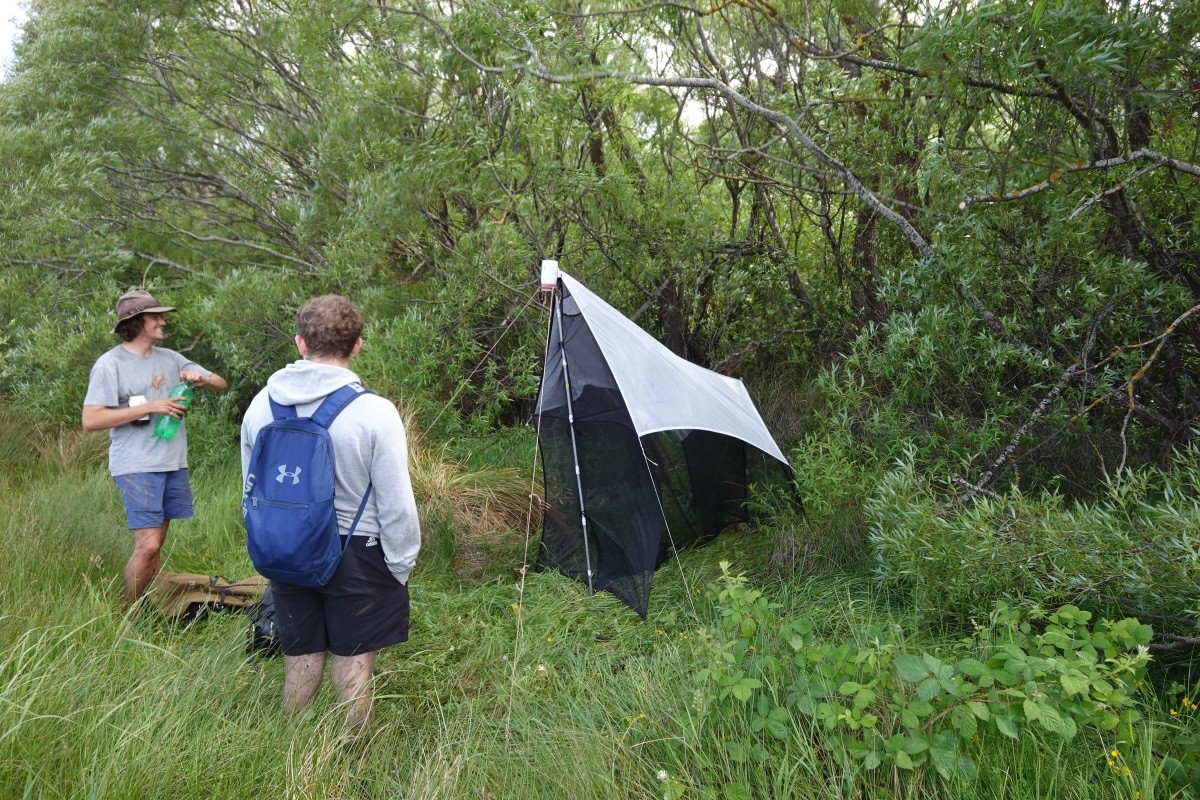
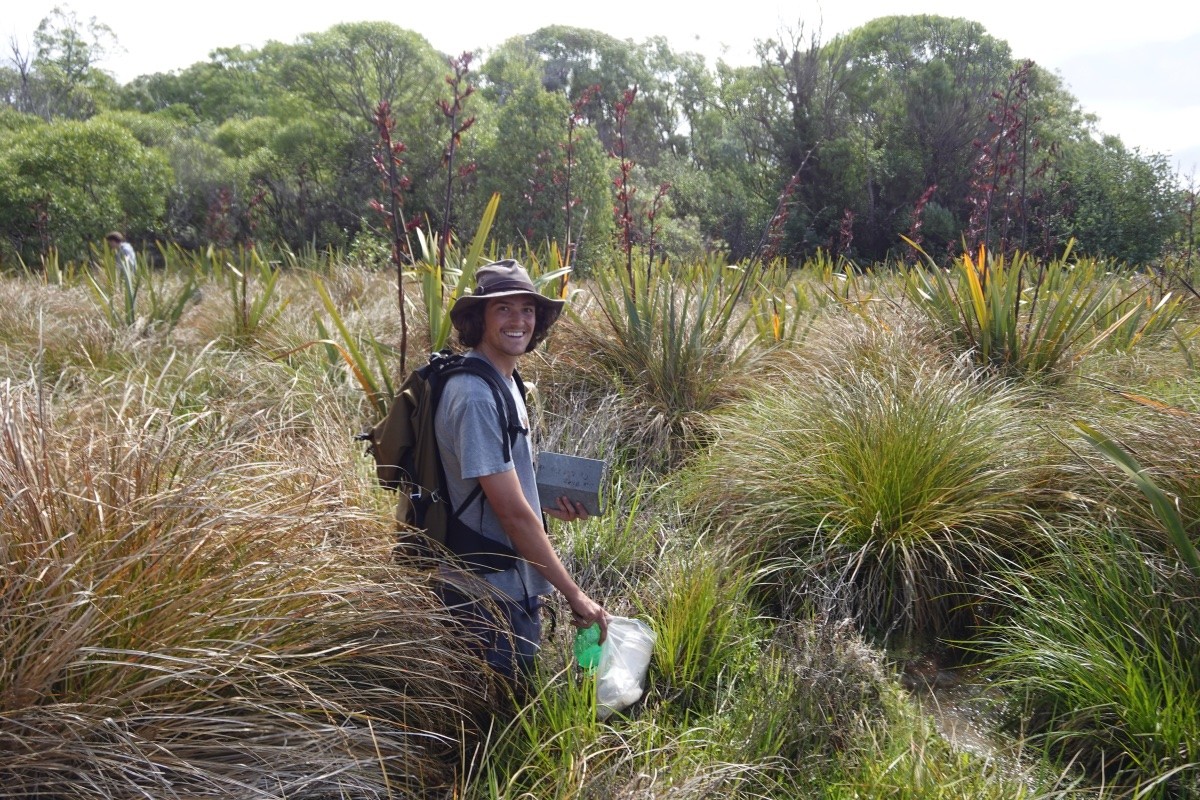
Tommy (left) is doing his Lincoln University Masters research this summer repeating a 1995–1996 invertebrate survey of Travis Wetland, to see how the invertebrate community has changed. Here Tommy and Max are putting in one of a series of Malaise traps to sample flying invertebrates. Malaise traps look like open sided tents. Insects fly in, hit the middle barrier mesh, then fly up to get caught in a cup at the top.

My full-res photo is on Flickr at https://www.flickr.com/photos/mollivan_jon/54945126160
Tommy (left) is doing his Lincoln University Masters research this summer repeating a 1995–1996 invertebrate survey of Travis Wetland, to see how the invertebrate community has changed. Here Tommy and Max are putting in one of a series of Malaise traps to sample flying invertebrates. Malaise traps look like open sided tents. Insects fly in, hit the middle barrier mesh, then fly up to get caught in a cup at the top. My full-res photo is on Flickr at https://www.flickr.com/photos/mollivan_jon/54945126160
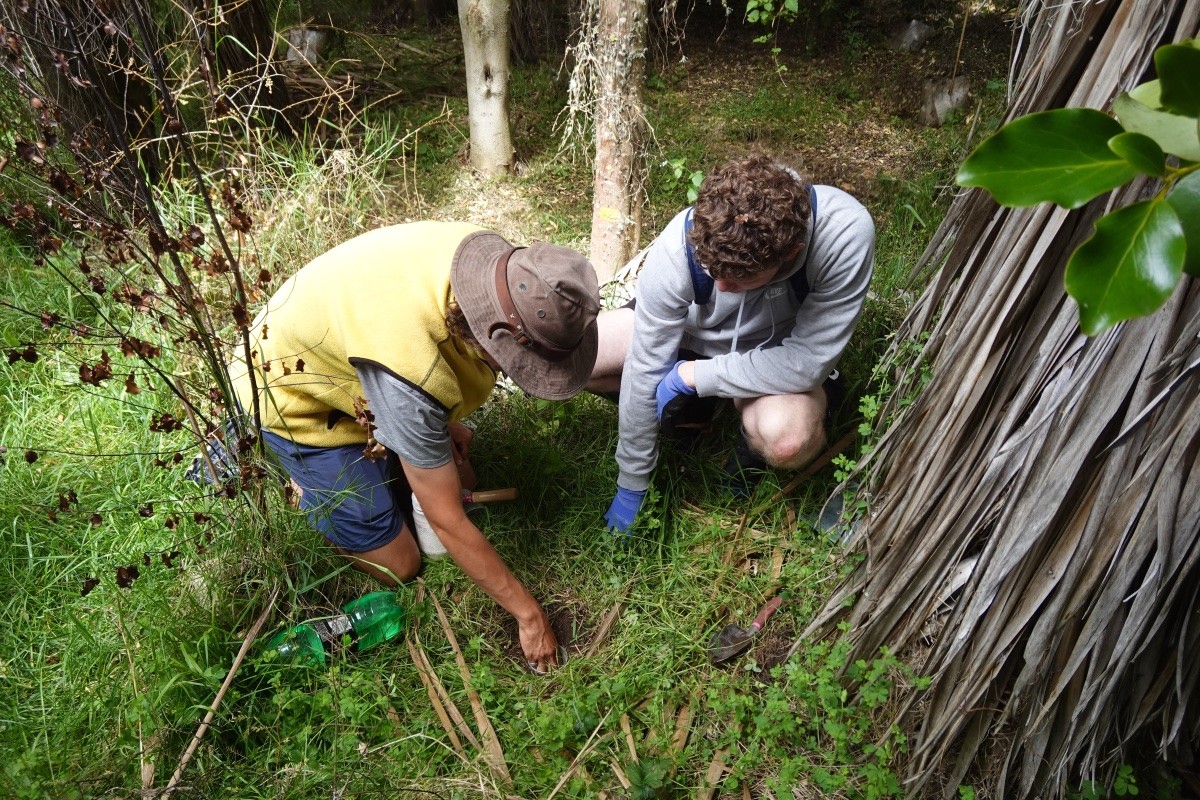
A photo of Tommy (left) and Max (right) digging in one of a series of pitfall traps to sample ground dwelling invertebrates. Tommy is doing his Lincoln University Masters research this summer repeating a 1995–1996 invertebrate survey of Travis Wetland, to see how the invertebrate community has changed.

My full-res photo is on Flickr at https://www.flickr.com/photos/mollivan_jon/54943934477/
A photo of Tommy (left) and Max (right) digging in one of a series of pitfall traps to sample ground dwelling invertebrates. Tommy is doing his Lincoln University Masters research this summer repeating a 1995–1996 invertebrate survey of Travis Wetland, to see how the invertebrate community has changed. My full-res photo is on Flickr at https://www.flickr.com/photos/mollivan_jon/54943934477/
A photo of Lincoln University summer scholar Max going the extra muddy mile helping set up an invertebrate monitoring project at Travis Wetland. The mud is up to his waste, and he's smiling.

My full-res photo is on Flickr at https://www.flickr.com/photos/mollivan_jon/54945126155/
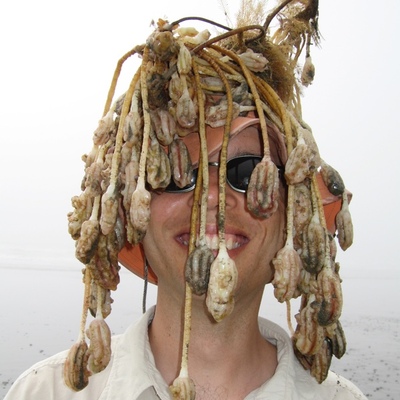
A photo of Lincoln University summer scholar Max going the extra muddy mile helping set up an invertebrate monitoring project at Travis Wetland. The mud is up to his waste, and he's smiling. My full-res photo is on Flickr at https://www.flickr.com/photos/mollivan_jon/54945126155/
Tommy (left) is doing his Lincoln University Masters research this summer repeating a 1995–1996 invertebrate survey of Travis Wetland, to see how the invertebrate community has changed. Here Tommy and Max are putting in one of a series of Malaise traps to sample flying invertebrates. Malaise traps look like open sided tents. Insects fly in, hit the middle barrier mesh, then fly up to get caught in a cup at the top.

My full-res photo is on Flickr at https://www.flickr.com/photos/mollivan_jon/54945126160
Tommy (left) is doing his Lincoln University Masters research this summer repeating a 1995–1996 invertebrate survey of Travis Wetland, to see how the invertebrate community has changed. Here Tommy and Max are putting in one of a series of Malaise traps to sample flying invertebrates. Malaise traps look like open sided tents. Insects fly in, hit the middle barrier mesh, then fly up to get caught in a cup at the top. My full-res photo is on Flickr at https://www.flickr.com/photos/mollivan_jon/54945126160
A photo of Tommy (left) and Max (right) digging in one of a series of pitfall traps to sample ground dwelling invertebrates. Tommy is doing his Lincoln University Masters research this summer repeating a 1995–1996 invertebrate survey of Travis Wetland, to see how the invertebrate community has changed.

My full-res photo is on Flickr at https://www.flickr.com/photos/mollivan_jon/54943934477/
A photo of Tommy (left) and Max (right) digging in one of a series of pitfall traps to sample ground dwelling invertebrates. Tommy is doing his Lincoln University Masters research this summer repeating a 1995–1996 invertebrate survey of Travis Wetland, to see how the invertebrate community has changed. My full-res photo is on Flickr at https://www.flickr.com/photos/mollivan_jon/54943934477/
Anke boosted
A photo of a printed aerial photo of what the Christchurch botanic gardens looked like around 1935. It's amazing how many tall trees there are here, when the city was only founded in 1850 and the gardens in 1863. On the left there's a small lake with two islands in it the shape of New Zealand (that was too hard to maintain and no longer exists).
A photo of a thin-leaved daisy plant in a small pot on a glasshouse bench. This is the swamp Celmisia from Travis Wetland in Christchurch city. It is similar to Celmisia gracilenta but likely a new undescribed species, which will likely make it an endangered species.
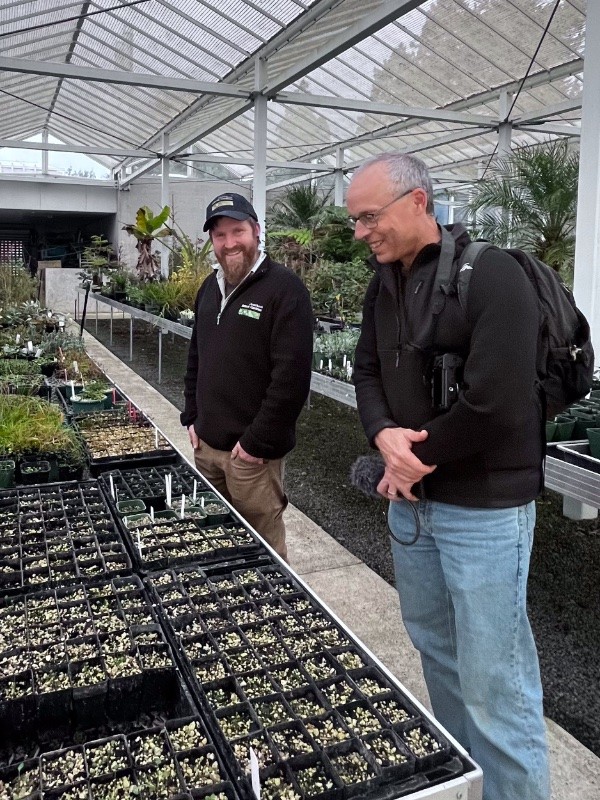
A photo of me (foreground, older white guy with glasses) and Luke Martin (bearded younger man) standing next to a glasshouse bench covered in pots. Each pot contains a threatened NZ plant. This work is a collaboration with the Department of Conservation to prevent NZ's rarest plants from going extinct (some species are right on the edge at the moment).
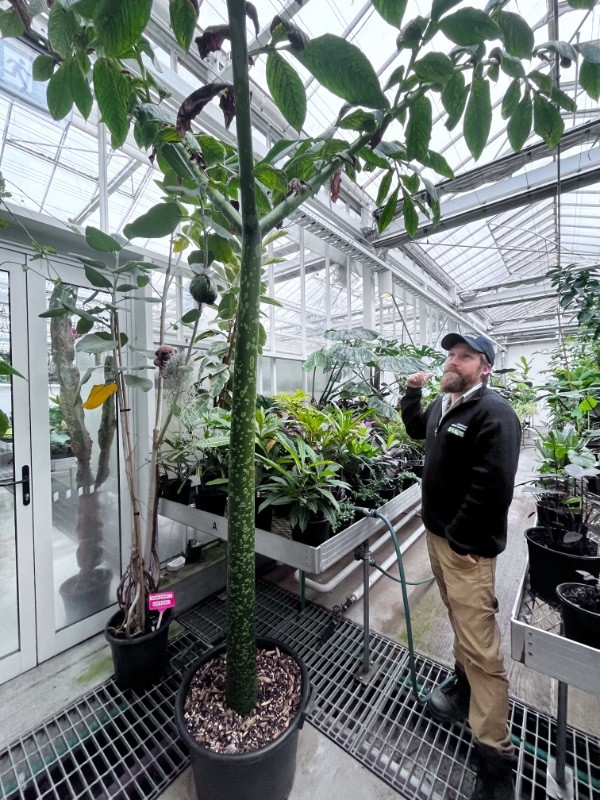
The native plant curator at the Christchurch Botanic Gardens, Luke Martin, standing next to an enormous single leaf of the (definitely not NZ native) titan arum. The leaf is twice as tall as Luke. The photo is in the tropical section of the glasshouses.
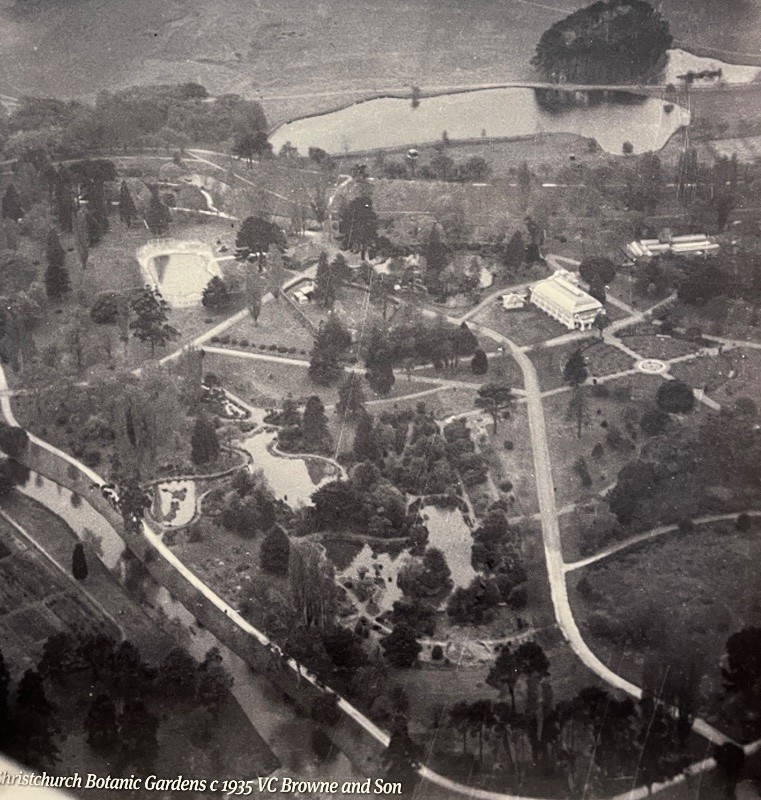
A photo of a printed aerial photo of what the Christchurch botanic gardens looked like around 1935. It's amazing how many tall trees there are here, when the city was only founded in 1850 and the gardens in 1863. On the left there's a small lake with two islands in it the shape of New Zealand (that was too hard to maintain and no longer exists).
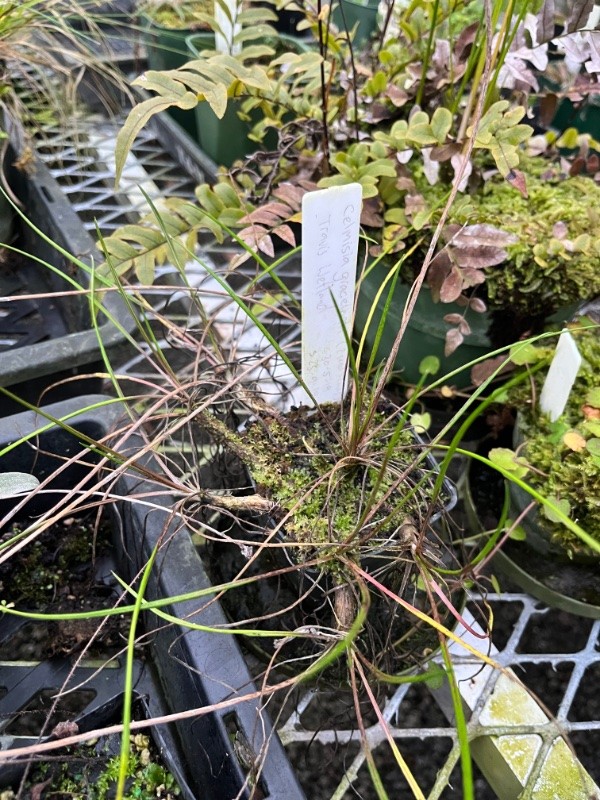
A photo of a thin-leaved daisy plant in a small pot on a glasshouse bench. This is the swamp Celmisia from Travis Wetland in Christchurch city. It is similar to Celmisia gracilenta but likely a new undescribed species, which will likely make it an endangered species.
A photo of me (foreground, older white guy with glasses) and Luke Martin (bearded younger man) standing next to a glasshouse bench covered in pots. Each pot contains a threatened NZ plant. This work is a collaboration with the Department of Conservation to prevent NZ's rarest plants from going extinct (some species are right on the edge at the moment).
The native plant curator at the Christchurch Botanic Gardens, Luke Martin, standing next to an enormous single leaf of the (definitely not NZ native) titan arum. The leaf is twice as tall as Luke. The photo is in the tropical section of the glasshouses.