


@TechConnectify I’m here for all the do work to move heat energy around the house and outside videos


It's been a tough few years for MacStories.
An explanation of why we resumed posting on X, and what comes next:


@viticci Shameful. Too late. Too little. In a Craft doc. Sad.
Charles U. Farley
boosted


Yes I missed this line:
> Quick and dirty count suggests we (Paolo and I) merged a very similar number of net (632) and net-next (648) patches. This is not telling the full story either because 1/3 to 1/2 of the net-next patches also *seem* like AI-driven low priority fixes, cleanups and clarifications.
Now would be a STELLAR time if you wanted to introduce vibe-obscured malware into the Linux kernel. (I forget where I read the research on it, but LLMs have been shown to be pretty good at this, inserting intentional vulnerabilities in ways that are hard to detect, embedded in other patches.)
d@nny disc@
boosted


@wolf480pl @SRAZKVT BLAKE3 does not have widespread implementations and its C implementation is very poorly done and they unbelievably have decided to use an intel-only threading library which is absolutely the wrong parallelism model. i've proposed implementing it to AMD https://github.com/amd/aocl-crypto/issues/7
the drop-in replacement scenario is part of the problem. the interface supported is purely digesting a byte stream of indefinite length, which is (along with indifferentiability) a huge reason why it can be used to obscure changes. a filesystem can view a file object as a series of fixed-size chunks, and a directory tree as a series of buckets (there may be a way to avoid lexicographic sorting of names within buckets with some sort of commutative modular exponentation).
the construction that we can take advantage of is in the preservation of the hash tree at all these levels. byte stream digests used for the standard "merkle tree" are incapable of retaining a tree of per-file chunks or bucketed directory entries. minimizing recomputation of the hash tree allows it to be shared across versions more stably. a "merkle tree" hash of a directory cannot be recomputed without access to the entire plaintext directory entries, whereas this allows for diffs across versions to be represented by a branch of the hash tree that can be patched against the prior version
Thomas Fuchs
boosted


That feeling when you see a company piss someone off so much that they change their license to APGL 😂

Christine Lemmer-Webber
boosted


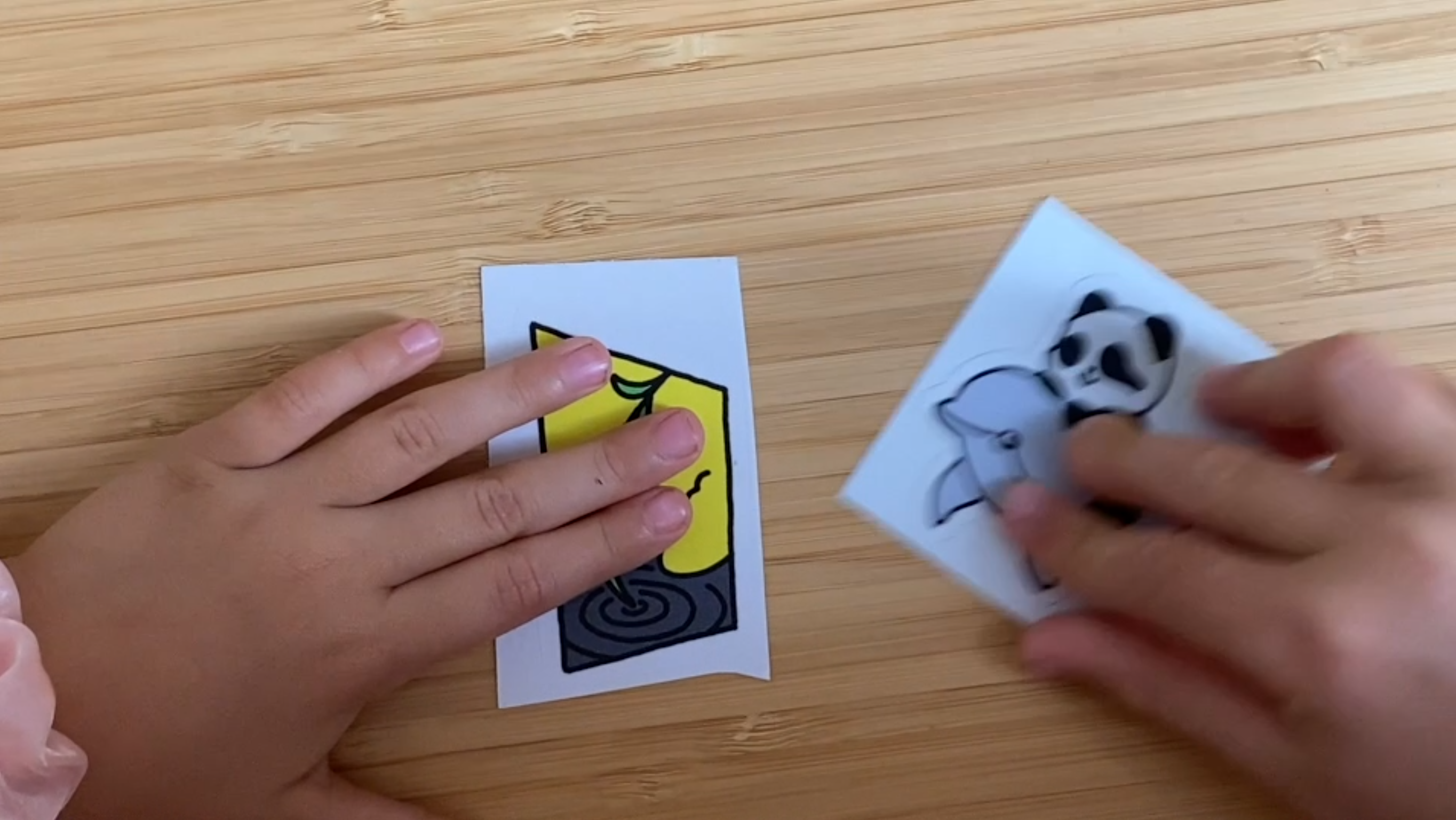
Willow + p2panda = ..?
Can this work? .. 🙀 They said it couldn't be done? Find out in this video:
https://spectra.video/w/3Dncy2G13XyfEEFVteipcY
Very excited to annouce this wonderful collaboration with our friends of Worm Blossom as part of the @nlnet NGI Zero Commons Fund! 😻
More in their blog with a little guest feature of what the pandas have been listening to lately:
Pillow announcement trailer

Charles U. Farley
boosted
From the Linux Kernel Mailing List: https://lore.kernel.org/lkml/20260818212923.2725202-1-kuba@kernel.org/
> We are completely overwhelmed, of course. The glimmer of hope is that we secured sufficient LLM budget and access (thank you Meta!) to run reviews with multiple frontier models on each patch. This eliminates some hallucinations. That said, in terms of review, the LLMs can only do so much. The sad truth is that our APIs (especially for rare events like PCIe errors, timeouts etc.) have always been racy, and now LLMs don't let us ignore that. I expect our direction for the next release will be to tweak the reviews a little bit more, but start shifting focus to letting the LLMs take care of the busy work - managing patchwork, automating common process complaints, editing commit messages, and maybe applying patches which already got "reviewed-by" tags from people we trust...
I look at the above and can't help but wonder if this is the "vibe bobsled" in action https://dustycloud.org/blog/faulty-towers-vibe-sickness-and-the-vibe-bobsled/


Non ho capito bene se questo libro di scienze motorie stia velatamente insinuando che i calciatori facciano uso di cocaina.



@Yaku Ma questo è un libro di testo per la scuola? Ai miei tempi quando si chiamava "Educazione fisica" era già tanto avere una palestra nella scuola, almeno dalle mie parti. Comunque l'immagine mi fa venire in mente una recente pubblicità dove le persone diffondono polvere bianca (il prodotto da vendere) nell'aria.

Up front, I really don't know either.
I have done a good bit more music than animation, and there's certainly nothing in that that couldn't have been done with a garden variety synth/electric piano setup. The only thing really tricky is that the drum and the bass are really tight, which really propels the song. (The lyrics are clever and hilarious and well timed as well but it's the rhythm section that makes it so re-listenable.)
I guess the thing that's so annoying in this instance is that all of it *could* have been done by a dude who was pretty good with basic animation skills, a synth setup, and a friend who had been a bass player in a local scene for a couple decades. But maybe it could have been done by AI?
At this point, I don't want AI watermarks so much as I want composable digital signatures for real work. Like, a signature from the mixer that this feed came in off an analog feed.
Just as you say. I Don't Know.


@MichaelTBacon @futurebird @becomethewaifu@tech.lgbt I’ve done a fair bit of animation and this reads as human-made imo. There are a few spots where the underlying geometry peeks from behind the curtain rather than being a mere sequence of stills.
Cumulonimbus
boosted


What could be more cruel than striking a shopping center with a drone on a Friday evening, when it is full of people?
Striking it again as people are trying to escape.
That is what russia did in Kryvyi Rih today.
As of now, two people are reported killed and 15 injured.


Two weeks left in our call for abstracts.
The Crossref annual meeting and board election bring together a community from 160+ countries. Community talks are a core part of the program. Yours could be one of them.
Talks are 5-7 minutes, online, 22 October. We confirm selections in early October.
Submit by 4 September: https://www.crossref.org/crossref-annual-meeting/ #Crossref2026


Cat 🐈🥗 (D.Burch)
boosted





From the Linux Kernel Mailing List: https://lore.kernel.org/lkml/20260818212923.2725202-1-kuba@kernel.org/
> We are completely overwhelmed, of course. The glimmer of hope is that we secured sufficient LLM budget and access (thank you Meta!) to run reviews with multiple frontier models on each patch. This eliminates some hallucinations. That said, in terms of review, the LLMs can only do so much. The sad truth is that our APIs (especially for rare events like PCIe errors, timeouts etc.) have always been racy, and now LLMs don't let us ignore that. I expect our direction for the next release will be to tweak the reviews a little bit more, but start shifting focus to letting the LLMs take care of the busy work - managing patchwork, automating common process complaints, editing commit messages, and maybe applying patches which already got "reviewed-by" tags from people we trust...
I look at the above and can't help but wonder if this is the "vibe bobsled" in action https://dustycloud.org/blog/faulty-towers-vibe-sickness-and-the-vibe-bobsled/
1 more link(s)