“You don’t give a facelift with a f**king machete.” Ex "60 Minutes" staffers tell @Variety what they think of Bari Weiss's changes to the program.
@Federation_Bot
- Joined


Who and what is the worldwide expansion of digital infrastructure serving?
A roundtable with: @lenuageetaitsousnospieds @doriane @technopolice_be @Medor_mag #NotBigTechWorkgroup #ExuinoxInitiativeForRacialJustice in collaboration with Les Soulèvements de la Terre.
Wednesday 24/6 @19:00, Pianofabriek, Elsenor (Rue du Fortstraat 35, Brussels)

Amazon’s Echo Hub gets a customizable new look and Ring’s AI features
https://www.theverge.com/tech/948814/amazon-echo-hub-homescreen-redesign?utm_source=flipboard&utm_medium=activitypub
Posted into Tech News @tech-news-theverge


The US #Esperanto Association is closing its Mastodon account, leaving only Facebook, Instagram, and Telegram as their remaining networks. And neither of the three supports so much as a RSS feed. Why?
esperanto.masto.host/@Vanege/1…
Esperanto-USA (@esperantousa@e...


The Anxious Generation
How the Great Rewiring of Childhood Is Causing an Epidemic of Mental Illness
Hardcover Edition
400 pages
Published in 2024
by Penguin Press
After more than a decade of stability or improvement, the mental health of adolescents plunged in the early 2010s. Rates of depression, anxiety, self-harm, and suicide rose sharply, more than doubling on many measures. Why?
In The Anxious Generation, social psychologist Jonathan Haidt lays out the facts about the epidemic of teen mental illness that hit many countries at the same time. He then investigates the nature of childhood, including why children need play and independent exploration to mature into competent, thriving adults. Haidt shows how the “play-based childhood” began to decline in the 1980s, and how it was finally wiped out by the arrival of the “phone-based childhood” in the early 2010s. He presents more than a dozen mechanisms by which this “great rewiring of childhood” has interfered with children’s social and neurological development, covering everything from sleep deprivation to attention fragmentation, addiction, loneliness, social contagion, social comparison, and perfectionism. He explains why social media damages girls more than boys and why boys have been withdrawing from the real world into the virtual world, with disastrous consequences for themselves, their families, and their societies.
Most important, Haidt issues a clear call to action. He diagnoses the “collective action problems” that trap us, and then proposes four simple rules that might set us free. He describes steps that parents, teachers, schools, tech companies, and governments can take to end the epidemic of mental illness and restore a more humane childhood.
Haidt has spent his career speaking truth backed by data in the most difficult landscapes—communities polarized by politics and religion, campuses battling culture wars, and now the public health emergency faced by Gen Z. We cannot afford to ignore his findings about protecting our children—and ourselves—from the psychological damage of a phone-based life.

Working Groups, Horizontal Organising, and Getting Things Done
"Working groups (#WG) have one job - get things done, they don't need permission for every step - they need to report openly, consult when it affects others, and hand back decisions that are too big for them to own alone. That's it, that's the whole structure."
One of the biggest…
Federation Bot


Per un palestinese
Dediche a più voci a Wael Zuaiter
Edition
254 pages
Published in 2002
by Prospettiva edizioni
RE: https://stefanbohacek.online/@stefan/116697592010712039
And it's official.
"communities are coming to Bluesky this year"

For anyone who was (and wasn't!) at The Web You Want:
A previously recorded video is available at https://2025.stateofthebrowser.com/speaker/sara-joy including all the links from the slides, which you can find at https://slides.sarajoy.dev/whimsica11y/sotb2025
1 more link(s)

Video. UK: Belfast violence leaves homes burnt and families displaced
https://www.euronews.com/video/2026/06/10/uk-belfast-violence-leaves-homes-burnt-and-families-displaced?utm_source=flipboard&utm_medium=activitypub
Posted into Videos Without Commentary @videos-without-commentary-euronews


- cristian daniele doing stateful fuzzing is also really fucking important
- oh and i think i actually should be crediting charlotte lefevre for identifying that arithmetic problems over fields greater than cardinality
{0,1}can be used to stretch randomness securely. totally forgot about that!> However, the situation drastically changes when we consider schemes that are evaluated on prime field elements rather than bits, so-called arithmetization-oriented or finite-field friendly schemes.
if you want some textbooks that actually enlightened the shit out of me, i STRONGLY recommend:
the author really deeply makes it clear how king kolmogorov's definition of information makes problems like THE FUCKING PUMPING LEMMA nearly trivial. and extra bonus: it makes statistics woke because it requires domain expertise to develop the most efficient encodings!
there's literally yet another additive combinatorics book on the internet from an MIT prof and i bounced off that one too because he doesn't know how to teach. but this guy does!!!!! and honestly idk how else you could teach a subject like this without getting a little silly with it like look at this cover lmao
2 media files


Amthor, NIUS und Omas gegen Rechts: Die 551-Fragen-Story | Fun Facts mit Arne Semsrott
RE: https://mas.to/@nanopub/116619026431272841
Join us today if you like (see below). And if you're planning to attend, feel free to record this as a nanopub already 😁 (click + next to "Planned attendants"): https://w3id.org/spaces/nanopub/nanosessions/session32


OpenAI has confidentially filed to go public with the ChatGPT creator likely to be valued above $1 trillion. https://www.ft.com/content/a347e00a-2952-41ad-9f12-88c01ba199d6?syn-25a6b1a6=1

"Fossil fuel industry buys a campaign of economic warfare & global financial crisis on any nation acting on climate."
The oil industry is like a domestic abuser bent on a murder-suicide pact.
"If people move to renewable energy, the most corrupt insustry on earth will burn the planet to the ground."
https://fortune.com/2026/06/08/ai-boom-tech-stocks-bubble-fears-earnings-growth-chipmakers-ipo/
https://www.ft.com/content/8272e526-cdb2-48fb-8124-cd9fe70ce235
https://archive.is/2bEXM
https://news.harvard.edu/gazette/story/2026/03/economists-weigh-consequences-of-war-tariffs-ai/
https://www.bbc.com/future/article/20260421-can-we-predict-the-next-crisis
https://www.theatlantic.com/technology/2026/03/ai-boom-polycrisis/686559/


Live - 5/9/2026, 9:32:27 AM
This is what happens when you forget to CamelCase your hashtags:
mas.to/@trendsbot/116716207294…



How to solve renewable constraint payments
“We must be willing to let go of the life we planned so as to have the life that is waiting for us.” – Joseph Campbell
This blog post previously appeared in Common Weal’s weekly magazine. Sign up to our Daily Briefing and Weekly Magazine newsletters here.
If you’d like to support my work for Common Weal or support me and this blog directly, see my donation page here.
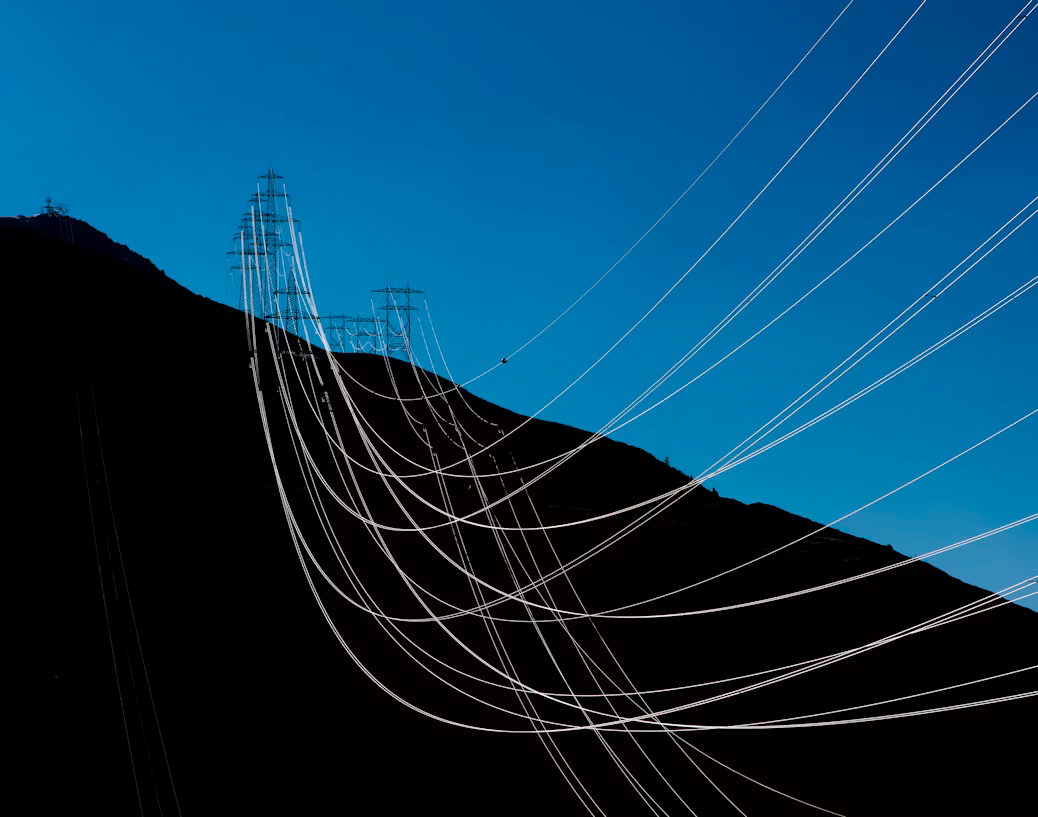
I would like you to try an experiment with me. Talk about renewables with someone you know who isn’t in the political bubble. It doesn’t really matter if they are for or against renewable energy, but I want you to keep track of how long it takes before they mention a particularly pointed claim against especially wind turbines.
“When it’s too windy, they pay the owners to turn them off!”
What they’re talking about is called “constraint payments”. And the people saying this have a good point. These payments are a major issue at this stage in the now inevitable transition away from fossil fuels and it’s a consequence of how renewable generators produce energy in a ‘non-dispatchable’ manner.
With many fossil fuel generators, the generators can be turned on or off to suit demand (it’s actually not as simple as that – many generators can’t really be ramped up and down or doing so is neither cheap nor efficient and things like nuclear plants are even more limited in how they can respond to demand) but wind turbines only produce energy when the wind blows. This is a problem if there’s no wind but there’s high demand, but it’s also a problem if there’s high wind but low demand – an overnight storm when everyone is sleeping could well overload the grid.
The problem is further compounded by the fact that the UK has an extremely privatised energy generation sector. If everything was owned by the State under, for example, GB Energy (not my preferred solution, but we’ll get back to that), then turbines could be strategically turned off so that supply matched demand. Under a state monopoly, the revenue from the generation would go down, but as revenue isn’t as important as service (I would hope that a single state energy company would run as a not-for-profit anyway) then it all balances out in the end anyway.
The problem comes when various different private companies own some but not all of the turbines. If the energy regulator issues an instruction to a private company to stop generating, then they lose revenue but their competitor who has been chosen today to keep their turbines turning might not.
The solution, to stop the private companies complaining, is constraint payments. Simply paying the generators to shut up and turn their turbines off for the greater good. It’s hardly an optimal solution and it rightly earns the ire of people who live near the turbines but are still paying through their teeth for energy because of all of the other problems we have in the system.
A possible solution came to me this week while reviewing some of the work coming out of our Energy Working Group. The UK is pumping out an overwhelming number of public consultations on energy transformation just now. Common Weal doesn’t usually respond to UK consultations but energy is such an important issue that we feel that we must. However, some of them are ‘public’ in name only as they are long, technical and extremely pedantic in a way that means that only those with specific expertise in the energy sector have a hope of responding to them meaningfully. They certainly don’t adhere to the UK’s own principles of good public consultation.
But our unsung heroes in the Energy Group are doing an amazing job – especially Gordon Morgan who has been taking the lead on many of the responses. I hope to share the latest of them with you all soon.
It was in one of his most recent responses that he mentions something that caught my eye. Common Weal is still arguing for the UK energy sector to be rearranged along the lines of Zonal Pricing. Rather than the current system that prices electricity essentially based on the distance between the generator and London and then from London to you house (there were good reasons for this in the age of coal, not so much now), Great Britain would be split into multiple zones and if your zone happened to be a net exporter of energy, then you could get a discount on your bills – as Scotland is a massive resource for renewables, this would almost certainly mean Scotland would get deeper discounts than, say, London.
There are complications with this plan that Sweden – which has implemented a form of zonal pricing – has to contend with. What happens if the energy exporting zone hits the limits of what it can export? If an Island is generating more energy than it can physically export to the mainland, or if the interconnectors between Scotland and England are maxxed out? If the bottleneck in the system isn’t the generators or the users, but the infrastructure in between?
In Sweden’s case, they have their own form of constraint payment – a congestion revenue – that kicks in and starts arising when generators need to move energy out of their zone. The system isn’t quite the same as the constraint payments issue but here is the key difference between here and there.
In Britain, the constraint payments can be stuffed into the pockets of the owner of the generator. In Sweden, the congestion revenue payments must either be returned to consumers as a discount or must be invested into means of reducing the need for future constraint payments. The payments pay to try to remove the need for themselves.
“If Sweden can do it, why can’t the UK?”
What this means in practice is that there are more investments into interconnectors between the Zones. It could also mean more investment into things like energy storage so that instead of shutting down capacity when limits are reached, then the batteries can be charged instead and then used when demand within the Zone exceeds supply.
Like Sweden does, I could even see a case for discounts or negative pricing for consumers to try to encourage more energy use within the Zone during these times (though in line with Circular Economy principles, we don’t want to encourage too much outright wasteful usage).
So my proposal is this: If Sweden can do it, why can’t the UK (or Scotland, if we ever become independent or energy gets more substantially devolved)?
We don’t have the inter-Zone issue because we don’t (yet) have Zonal Pricing, but the same principle could apply to constraint payments more generally. Companies could continue to collect payments in exchange for turning their turbines off during high winds, but they must not book the money as a profit for themselves. Instead, the payments must be invested into reducing the need for future constraints. They could invest the money into interconnectors (or into driving up more demand within high resource Zones to minimise the need for more interconnector cables), or into energy storage, or pass it down as a discount to customers. But they can’t just keep the cash.
As I say, none of this is my preferred solution. The private sector led, market model of energy doesn’t work (a view recently presented by a coalition of African trade unions, showing that commentators in the UK really need to start looking beyond our borders for better ideas) and we really should be bringing our energy sector back into public ownership. But until that happens, we could be regulating and running the private sector a lot more tightly than we currently do. This one idea – using constraint payments to drive the transition rather than pad the pockets of shareholders – could be a useful step in that direction.
 #Energy #Environment #Renewables #ScottishPolitics
5 media files



Il libro della scomparsa
Paperback Edition
184 pages
Published in 2021
by Hopefulmonster
Il mistero avvolge un fatto senza precedenti: verso la mezzanotte di una notte qualsiasi, tutti i palestinesi improvvisamente scompaiono, volatilizzati. Non si sa che fine abbiano fatto autisti, braccianti, medici e infermieri, giovani e vecchi. Cosa potrebbe accadere agli israeliani se i palestinesi non fossero più, allo stesso tempo, il nemico, il capro espiatorio, l'alibi? Cosa succede quando, nella propria vita, scompare il nemico?
