This is what happens when you forget to CamelCase your hashtags:
mas.to/@trendsbot/116716207294…
@Federation_Bot


How to solve renewable constraint payments
“We must be willing to let go of the life we planned so as to have the life that is waiting for us.” – Joseph Campbell
This blog post previously appeared in Common Weal’s weekly magazine. Sign up to our Daily Briefing and Weekly Magazine newsletters here.
If you’d like to support my work for Common Weal or support me and this blog directly, see my donation page here.
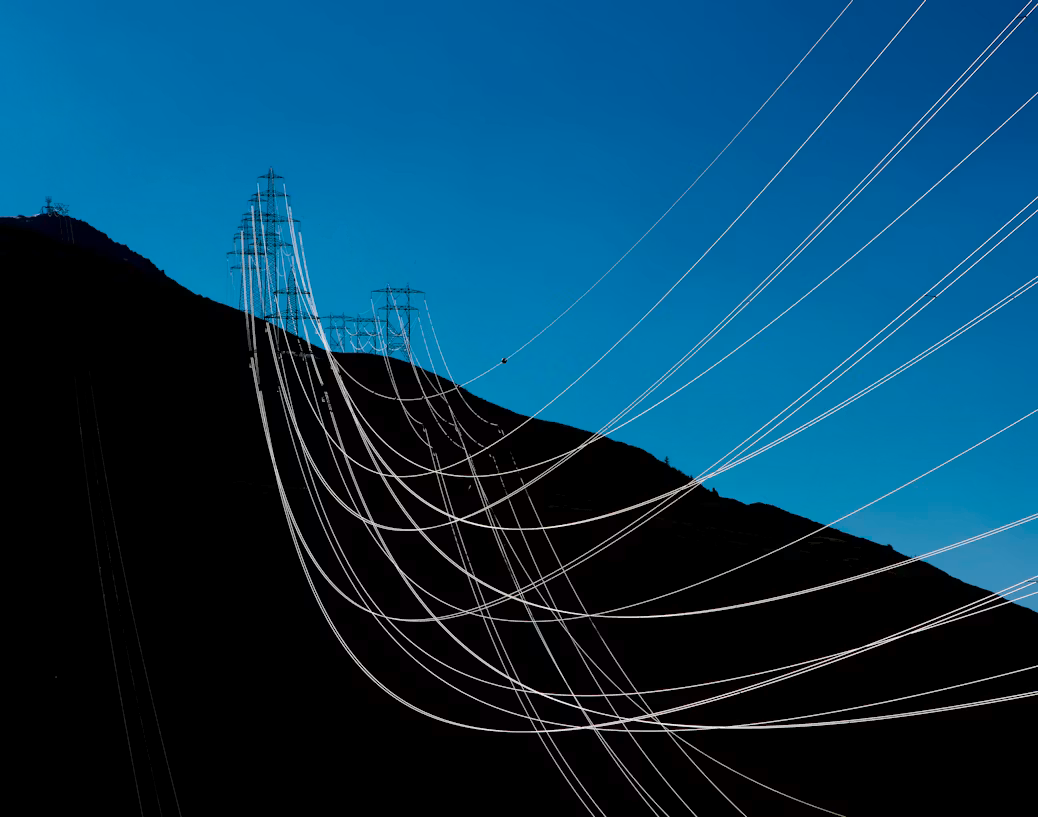
I would like you to try an experiment with me. Talk about renewables with someone you know who isn’t in the political bubble. It doesn’t really matter if they are for or against renewable energy, but I want you to keep track of how long it takes before they mention a particularly pointed claim against especially wind turbines.
“When it’s too windy, they pay the owners to turn them off!”
What they’re talking about is called “constraint payments”. And the people saying this have a good point. These payments are a major issue at this stage in the now inevitable transition away from fossil fuels and it’s a consequence of how renewable generators produce energy in a ‘non-dispatchable’ manner.
With many fossil fuel generators, the generators can be turned on or off to suit demand (it’s actually not as simple as that – many generators can’t really be ramped up and down or doing so is neither cheap nor efficient and things like nuclear plants are even more limited in how they can respond to demand) but wind turbines only produce energy when the wind blows. This is a problem if there’s no wind but there’s high demand, but it’s also a problem if there’s high wind but low demand – an overnight storm when everyone is sleeping could well overload the grid.
The problem is further compounded by the fact that the UK has an extremely privatised energy generation sector. If everything was owned by the State under, for example, GB Energy (not my preferred solution, but we’ll get back to that), then turbines could be strategically turned off so that supply matched demand. Under a state monopoly, the revenue from the generation would go down, but as revenue isn’t as important as service (I would hope that a single state energy company would run as a not-for-profit anyway) then it all balances out in the end anyway.
The problem comes when various different private companies own some but not all of the turbines. If the energy regulator issues an instruction to a private company to stop generating, then they lose revenue but their competitor who has been chosen today to keep their turbines turning might not.
The solution, to stop the private companies complaining, is constraint payments. Simply paying the generators to shut up and turn their turbines off for the greater good. It’s hardly an optimal solution and it rightly earns the ire of people who live near the turbines but are still paying through their teeth for energy because of all of the other problems we have in the system.
A possible solution came to me this week while reviewing some of the work coming out of our Energy Working Group. The UK is pumping out an overwhelming number of public consultations on energy transformation just now. Common Weal doesn’t usually respond to UK consultations but energy is such an important issue that we feel that we must. However, some of them are ‘public’ in name only as they are long, technical and extremely pedantic in a way that means that only those with specific expertise in the energy sector have a hope of responding to them meaningfully. They certainly don’t adhere to the UK’s own principles of good public consultation.
But our unsung heroes in the Energy Group are doing an amazing job – especially Gordon Morgan who has been taking the lead on many of the responses. I hope to share the latest of them with you all soon.
It was in one of his most recent responses that he mentions something that caught my eye. Common Weal is still arguing for the UK energy sector to be rearranged along the lines of Zonal Pricing. Rather than the current system that prices electricity essentially based on the distance between the generator and London and then from London to you house (there were good reasons for this in the age of coal, not so much now), Great Britain would be split into multiple zones and if your zone happened to be a net exporter of energy, then you could get a discount on your bills – as Scotland is a massive resource for renewables, this would almost certainly mean Scotland would get deeper discounts than, say, London.
There are complications with this plan that Sweden – which has implemented a form of zonal pricing – has to contend with. What happens if the energy exporting zone hits the limits of what it can export? If an Island is generating more energy than it can physically export to the mainland, or if the interconnectors between Scotland and England are maxxed out? If the bottleneck in the system isn’t the generators or the users, but the infrastructure in between?
In Sweden’s case, they have their own form of constraint payment – a congestion revenue – that kicks in and starts arising when generators need to move energy out of their zone. The system isn’t quite the same as the constraint payments issue but here is the key difference between here and there.
In Britain, the constraint payments can be stuffed into the pockets of the owner of the generator. In Sweden, the congestion revenue payments must either be returned to consumers as a discount or must be invested into means of reducing the need for future constraint payments. The payments pay to try to remove the need for themselves.
“If Sweden can do it, why can’t the UK?”
What this means in practice is that there are more investments into interconnectors between the Zones. It could also mean more investment into things like energy storage so that instead of shutting down capacity when limits are reached, then the batteries can be charged instead and then used when demand within the Zone exceeds supply.
Like Sweden does, I could even see a case for discounts or negative pricing for consumers to try to encourage more energy use within the Zone during these times (though in line with Circular Economy principles, we don’t want to encourage too much outright wasteful usage).
So my proposal is this: If Sweden can do it, why can’t the UK (or Scotland, if we ever become independent or energy gets more substantially devolved)?
We don’t have the inter-Zone issue because we don’t (yet) have Zonal Pricing, but the same principle could apply to constraint payments more generally. Companies could continue to collect payments in exchange for turning their turbines off during high winds, but they must not book the money as a profit for themselves. Instead, the payments must be invested into reducing the need for future constraints. They could invest the money into interconnectors (or into driving up more demand within high resource Zones to minimise the need for more interconnector cables), or into energy storage, or pass it down as a discount to customers. But they can’t just keep the cash.
As I say, none of this is my preferred solution. The private sector led, market model of energy doesn’t work (a view recently presented by a coalition of African trade unions, showing that commentators in the UK really need to start looking beyond our borders for better ideas) and we really should be bringing our energy sector back into public ownership. But until that happens, we could be regulating and running the private sector a lot more tightly than we currently do. This one idea – using constraint payments to drive the transition rather than pad the pockets of shareholders – could be a useful step in that direction.
 #Energy #Environment #Renewables #ScottishPolitics
5 media files




Il libro della scomparsa
Paperback Edition
184 pages
Published in 2021
by Hopefulmonster
Il mistero avvolge un fatto senza precedenti: verso la mezzanotte di una notte qualsiasi, tutti i palestinesi improvvisamente scompaiono, volatilizzati. Non si sa che fine abbiano fatto autisti, braccianti, medici e infermieri, giovani e vecchi. Cosa potrebbe accadere agli israeliani se i palestinesi non fossero più, allo stesso tempo, il nemico, il capro espiatorio, l'alibi? Cosa succede quando, nella propria vita, scompare il nemico?
Niente aumenti in Teradata: hanno speso tutto per l'intelligenza artificiale! 🤡
Per anni, i CEO del settore tecnologico hanno utilizzato l'intelligenza artificiale come scusa per giustificare i licenziamenti. In realtà, però, molti esperti affermano che ciò che sta realmente accadendo è che i dirigenti stanno dirottando risorse finanziarie verso l’intelligenza artificiale a scapito di tutto il resto —compresa la fidelizzazione dei dipendenti.
https://finance.yahoo.com/sectors/technology/articles/ceo-says-no-raises-because-175237309.html

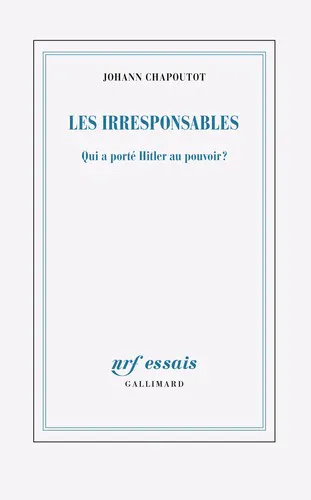
Les irresponsables
Qui a porté Hitler au pouvoir ?
Edition
304 pages
Published in 2025
by Éditions Gallimard
Un consortium libéral-autoritaire, tissé de solidarités d'affaires, de partis conservateurs, nationalistes et libéraux, de médias réactionnaires et d'élites traditionnelles, perd tout soutien populaire : au fil des élections, il passe de presque 50% à moins de 10% des voix et se demande comment garder le pouvoir sans majorité, sans parlement, voire sans démocratie. Cet extrême centre se pense destiné à gouverner par nature : sa politique est la meilleure et portera bientôt ses fruits. Quand les forces de répression avertissent qu'elles ne pourront faire face à un soulèvement généralisé, le pouvoir, qui ne repose sur aucune base électorale, décide de faire alliance avec l'extrême droite, avec laquelle il partage, au fond, à peu près tout, et de l'installer au sommet. Cette histoire se déroule en Allemagne, entre mars 1930 et janvier 1933. Elle repose sur une lecture des archives politiques, des journaux intimes, correspondances, discours, articles de presse et Mémoires des acteurs et témoins majeurs. Elle révèle non pas la progression irrésistible de la marée brune, mais une stratégie pour capter son énergie au profit d'un libéralisme autoritaire imbu de lui-même, dilettante et, in fine, parfaitement irresponsable.

Military women fear career caps as Hegseth blocks Navy promotions without providing reason | The Independent


Gender Neutral implies Gender Park, Gender Drive, and Gender Reverse.
Tag yourself.
Ho creato un gruppo di discussione focalizzato sulla federazione di Wordpress. Che ne pensate?
Mi farebbe piacere se chi ha un blog federato o, più in generale, chiunque si interessi a questo argomento, partecipasse alle discussioni di questo gruppo.
Che ne pensate?
Mi farebbe piacere se chi ha un blog federato o, più in generale, chiunque si interessi a questo argomento, partecipasse alle discussioni di questo gruppo.
Che ne pensate?

LA’s Queer Underground Is Throwing a Massive Pride Festival With Zero Corporate Sponsors
https://gayety.com/ostbahnhof-xl-la-pride-festival-2026?utm_source=flipboard&utm_medium=activitypub
Posted into Gayety @gayety-Gayety


Week in Fediverse 2026-05-29
Servers
- Mastodon v4.5.11
- Hollo v0.9.3
- Wafrn v2026.06.01
- Ktistec v3.4.1
- tootik v0.23.1
- NeoDB v0.15.2
- wanderer v0.19.2
- Lemmy Development Update May 2026
- FitPub: A self-hosted fitness tracking platform for the Fediverse
- Harmony: Discord-style servers and chat with ActivityPub
- Menuverse: A federated menu system for canteens and institutions
- LAUTI: A calendar software where one can publish events, groups and places
Clients
- Pachli v3.7.0
- Elk v1.0.0
- Fedilab v3.41.0
- tooi v0.26.0
- Pixelix v4.4.0
- Aria v1.5.3
- Tesseract v1.5.0
- Interstellar v0.11.4
- Holos v1.8.0
- P2Play v0.10.1
For developers
Protocol
Articles
- Prikbord: Federated calendar for events in Rotterdam
- small details in my mastodon client that i wanted more people to notice
- From simple afterthought to over-engineered software
- FR#165 – Fediverse News May 2026
-----
#WeekInFediverse #Fediverse #ActivityPub
Previous edition: https://mitra.social/objects/019e7560-82be-7521-bbb4-2ca61a0d5ad8
22 more link(s)


but then i learned something extraordinary
so there's this 2013 text released by cambridge (who very clearly has skin in this game) about "the creation of game theory": https://www.cambridge.org/core/books/abs/von-neumann-morgenstern-and-the-creation-of-game-theory/wrestling-with-complexity/EB3F15910B58D9FD7522D5DFD9D57727 @davidgerard did you know this shit????
i'm just going to quote the chapter intro verbatim:
Rockefeller Years
When Morgenstern entered the University of Vienna, the Laura Spelman Rockefeller Memorial had been in existence for several years. Named after John D. Rockefeller's widow, its endowment ran more than $70 million and it had become the main source of Rockefeller support for the social sciences before being absorbed into the Rockefeller Foundation in 1929. The Memorial's favourable disposition towards social science research during the 1920s was attributable largely to its director, Beardsley Ruml. He arrived at Rockefeller with a doctorate in experimental psychology from the University of Chicago and was interested in the construction of a less “abstract and remote” social science that would be of immediate use to the “social engineer”.
Ruml established a system of grants, placing emphasis on empirical research and preferring universities that also emphasised teaching. In the United States, the universities of Chicago, Harvard, Columbia, and Iowa State, and the National Bureau of Economic Research were amongst the main beneficiaries. In England, money was given initially to the London School of Economics and later to Oxford. The Cambridge of Keynes and Robinson, on the other hand, showed little interest in shifting focus in response to Rockefeller, and was passed over. In Continental Europe, Rockefeller tended not to support universities directly, in the belief that European social science was still highly speculative, the universities were often torn by internecine strife, and the risks of wasting money through bureaucracy were high. Consequently, the Foundation devoted its efforts to a programme of fellowships intended to free future teachers “from the traditional conceptual thinking and a priori generalizations of the present generation of teachers” and to the funding of institutions that were independent of universities.


watch the stars
the lazy fruit hangs low
the purple shadows


@spraoi Some people don't like the boost notifications. Other people don't like that their server shares with tags.pub through the relay interface. I'm sure there are lots of other reasons!
Everyone should have control over how their content is used and distributed, to the extent possible.
We'd rather that people participate in the global conversation and support users on servers of all sizes, but if they don't want to, it's important to give them an easy exit.

@Evan Prodromou
@Mark Andrew
Surely woolly mammoth allows users to disable such notifications?
@Mark Andrew
Some people don't like the boost notifications.
Surely woolly mammoth allows users to disable such notifications?

Vanmiddag was ik te gast bij een presentatie van Luigia Tricase, een promovenda aan de universiteit van Bologna en de Radboud Universiteit. Ze vertelde er over haar onderzoek naar hoe minderheidsgroepen, voor wie 'traditionele sociale media' niet meer volstaan, en die zichzelf organiseren via alternatieve sociale media, in het bijzonder Mastodon.
Het was een erg interessante presentatie. Door gebruik te maken van Mastodon kunnen deze groepen zich organiseren op hun eigen servers. Vanaf deze servers communiceren met elkaar en met gebruikers van andere Mastodon servers, maar ze behouden ook de mogelijkheid om de deur dicht te zetten naar servers waar niet wordt opgetreden tegen racisme, transfobie en andere vormen van digitale bedreigingen.
Haar presentatie gaf ook aanleiding om met haar te spreken over hoe het transparant online uitwisselen van kennis en inzichten kunnen redden.
Want op dit moment worden we gemanipuleerd door netwerken van Meta, X, TikTok en zelfs waar ik dit bericht schrijf: wie bepaalt welke berichten extra aandacht krijgen? Haat en schockering verkoopt meer reclames dan nuance. Het is *de* drijvende kracht die de maatschappij in de armen van de manosphere drijft. Wie bepaalt over welke onderwerpen we niet mogen schrijven? En in sommige gevallen zelfs welke politieke stromingen extra aandacht verdienen? Het is toch te gek voor woorden dat we berichten moeten afsluiten met "klik op de link in de comments" omdat je bericht het anders te slecht doet in de algoritmen? Daarbij zijn de traditionele platforms ook niet toegankelijk. Ze verstoppen berichten achter loginwalls en paywalls, en dringen gebruikers apps op die vol spyware zitten.
We kwamen tot de conclusie dat het belangrijk is dat belangrijke actoren nodig zijn. Die een brede migratie naar transparante, onafhankelijke sociale media, waar wél normale omgangsnormen gelden, kunnen bevorderen.
Dit soort actoren zijn wetenschappers, politici, journalisten en als het even kan beroemdheden met een moreel compas. Ze zijn allemaal te vinden op Mastodon, maar nog niet genoeg om op te kunnen boksen tegen het netwerkeffect en de verslavende algoritmen die mensen richting Instagram, TikTok en X trekken.
Volgens Luigia Tricase zou het helpen als grote organisaties, zoals de Europese Unie, maar ook overheden en universiteiten, open netwerken openlijk steunen in woord en daad. Een advies dat ik van harte onderschrijf.
Dank aan de organisatie van politicologie voor het organiseren, en in het bijzonder Gaard Kets voor het persoonlijk attenderen op deze presentatie vol waardevolle inzichten.


Første test: Euro-Office
Virksomhederne bag Euro-Office - fra tuta.com
Euro-Office er et nyt alternativ til Microsoft Office, som vi har omtalt i vores 🔗nyhedsbrev nummer 9 og 🔗nyhedsbrev nummer 10.
Den første version af Euro-Office bliver lanceret næste uge - nærmere betegnet d. 9. juni. Vi har…
Federation Bot
5 media files


Middle East crisis live: Israel to continue ground operation in southern Lebanon despite agreed ceasefire
> The country’s defence minister said the IDF will not withdraw from southern Lebanon and will not allow the ‘return of the population’



i've been having so much more fun with Advanced Micro Devices
july 2025 scheduler vuln, specifically on my 2020 CPU: https://www.amd.com/content/dam/amd/en/documents/resources/bulletin/technical-guidance-for-mitigating-transient-scheduler-attacks.pdf
we'll see why i highlight years in particular, but first:
The conditions required to exploit TSA are typically transitory as both the microtag and store queue will be updated after the CPU detects the false completion. Consequently, to reliably exfiltrate data, an attacker must typically be able to invoke the victim many times to repeatedly create the conditions for the false completion. This is most likely possible when the attacker and victim have an existing communication path, such as between an application and the OS kernel.
this is exactly why not to do a monolithic kernel!!!!
if every syscall jumps into the most secret memory region, this is exactly what happens!
L’artiste franco-iranienne Marjane Satrapi, autrice de la bande dessinée « Persepolis », est morte à l’âge de 56 ans https://www.lemonde.fr/disparitions/article/2026/06/04/l-artiste-franco-iranienne-marjane-satrapi-autrice-de-la-bande-dessinee-persepolis-est-morte-a-l-age-de-56-ans_6697291_3382.html?utm_source=dlvr.it&utm_medium=mastodon

