
frieze on politics and the biennale
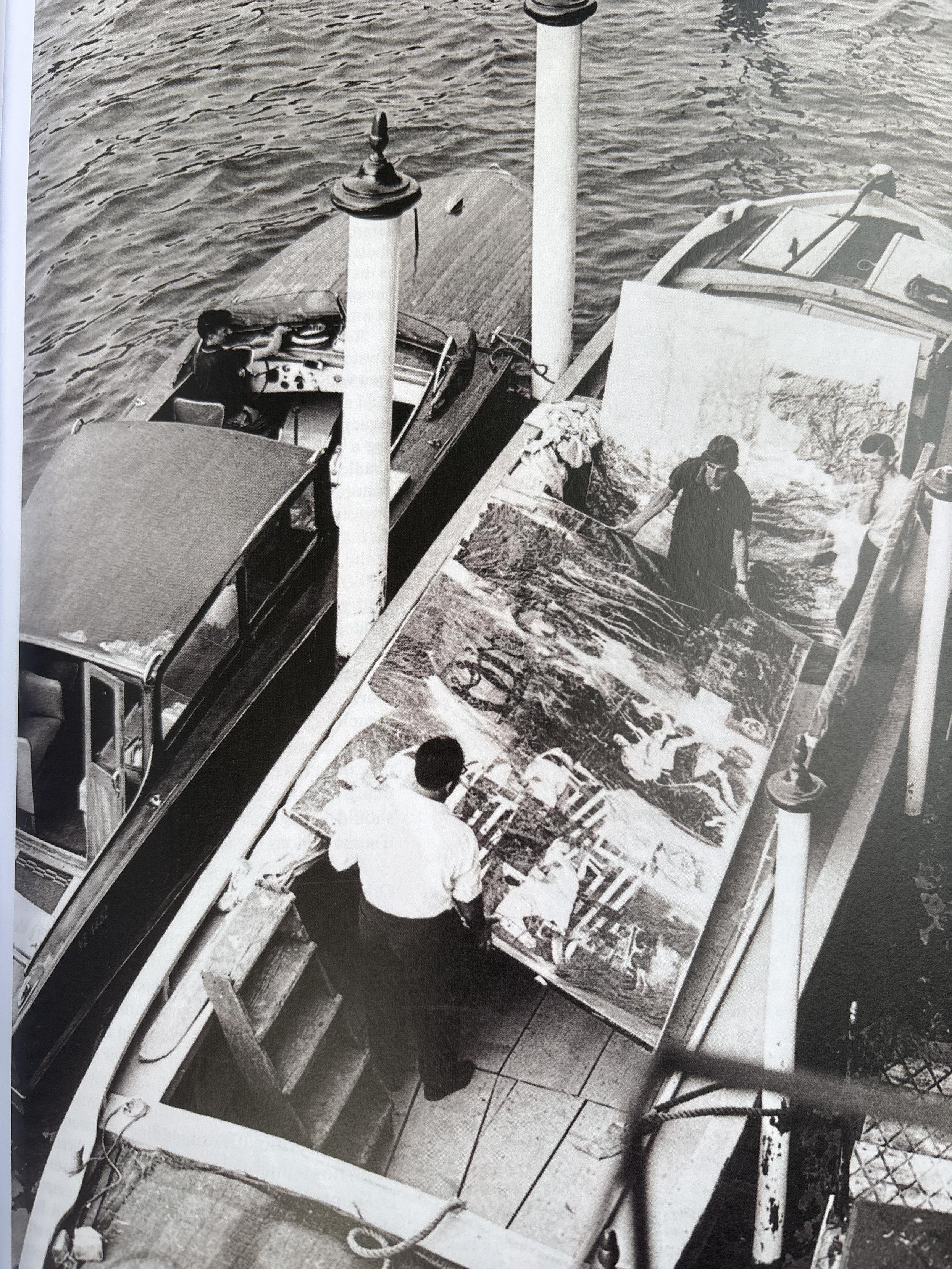
“Before aesthetic arguments began, the circumstances of Rauschenberg's 1964 victory were already entangled with diplomacy and logistics. To qualify for the Grand Prize, his large canvases had to be hastily moved from the former US consulate on the Grand Canal into the cramped American Pavilion, stretching eligibility rules in the process. The pavilion - a neoclassical building likened by critic Lawrence Alloway in his 1968 book on the Biennale to something between Monticello, Thomas Jefferson's plantation residence in Virginia and a Howard Johnson's chain hotel - was for the first time officially sponsored by the US Information Agency (USIA), Washington's propaganda outfit for fighting the cultural Cold War.
Following his win, the critic Annette Michelson, writing in Art International, charged Rauschenberg with the 'colonization of the "gap between art and life".
Others went further, accusing the artist of an even more conventional kind of imperialism. The French cultural weekly Arts published the front-page headline
'Venice Colonized by America' and insinuated that Rauschenberg only won because the jury was strong-armed by USIA's financial muscle. In Venice, artworks were rarely judged alone; they arrived bearing the weight of the nation that delivered them.”

“If Rauschenberg really wanted to 'stay out of the politics, as he claimed in 1964, he should have stayed at home”
👊