
The term "single use software" currently lives rent free in my head.
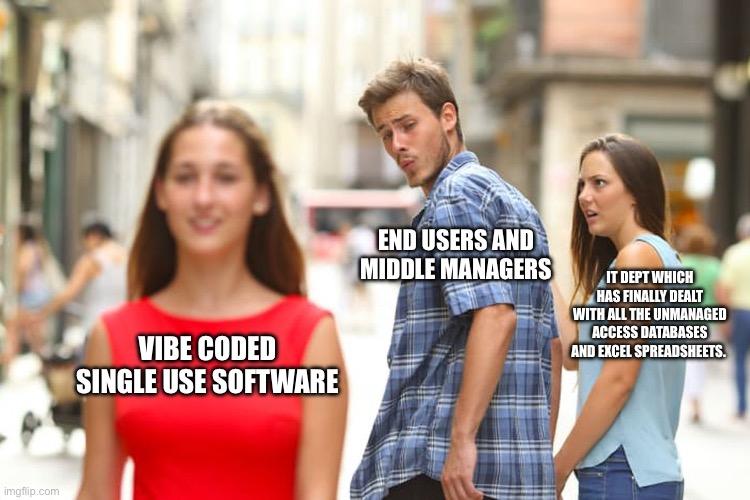
People use LLMs to create software specific for their needs. But neither can other people use it (hardcoded variables, no rights management, too specific), nor do they use it again (too specific, easier to produce a new one).
Single use software is not maintained. Nobody understands it or has an interest in keeping it working.
The creation of single use software feels cheap, but isn't. It takes time to create the software, it needs infrastructure and power. The time is experienced as short compared to how long it takes to create maintainable and reusable software. But once you take into account how many people benefit from reusable software, the single use software takes way more time to create than what it saves. The infrastructure and power costs are hidden because the data center isn't visible. The costs are subsidized by venture capital.
Like other single use items, single use software brings risks of unforeseen consequences. From data loss or leaks to issues for maintainers of reusable software (eg. verbal abuse, less motivation and lost income).
As an example of single use software is a German LinkedIn post of a person who slopcoded a HEMS (home energy management system). It took them more than a week. While open source projects like https://evcc.io/ already provide the same functionality. They could have used it for free or paid 100€ and got support for some additional devices. But they decided that they know better how it should work and now have a single use software. If it breaks there is nobody they can ask. There won't be updates and no community to discuss and develop new features. No organization will ever be interested in officially supporting it. And even if it works, it only benefits that one person.
(This doesn't mean people shouldn't build things that only they use. But they should enjoy doing so.)




















@luca let's build a skill that forks FOSS and sends meaningful upstream PRs