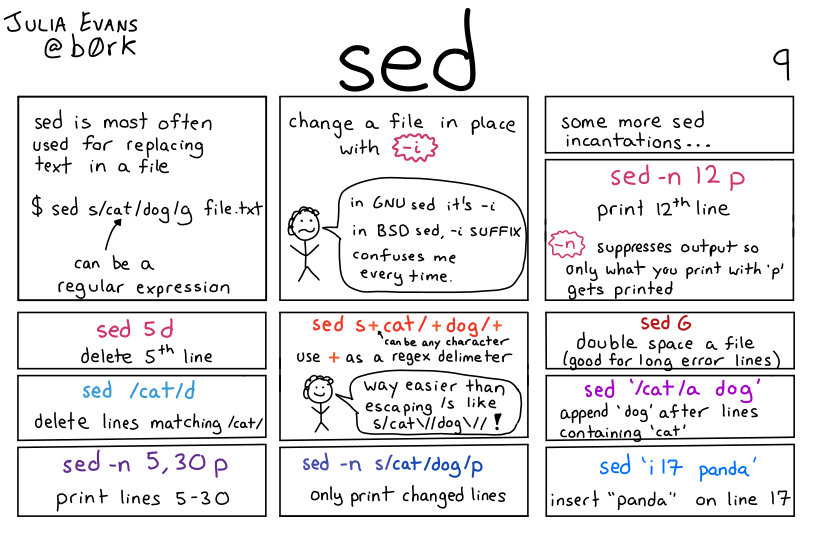
sed
Permalink: https://wizardzines.com/comics/sed
Discussion
sed
Permalink: https://wizardzines.com/comics/sed

GNU!s -i behaviour is even more confusing than you imply because it optionally takes a suffix. This leads to some ambiguity, where an argument that is not intended to be the suffix is treated as a suffix. I generally provide one to avoid hitting those corner cases.

Install bonfire.cafe
Get the full app experience