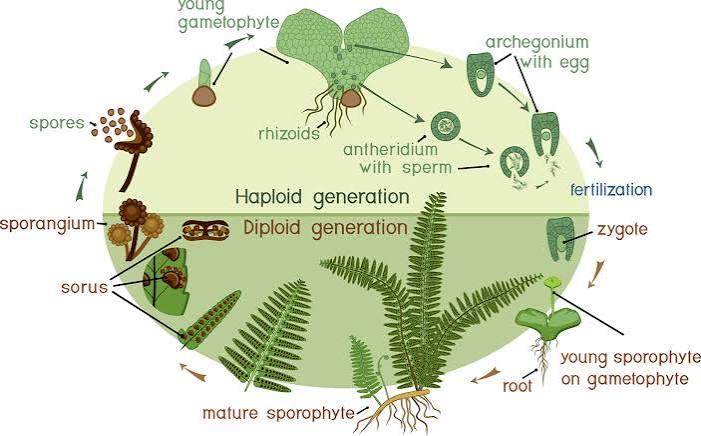

While you have 46 chromosomes, certain ferns carry huge numbers - the record is 1,400! Their genomes can be gigantic too: a little fern called Tmesipteris oblanceolata packs about 160 billion base pairs of DNA into each cell, the largest genome ever found in any living thing on Earth.
People call these ferns 'chromosome hoarders'. But why all the hoarding? One classic idea from 1966 blames the ferns' sex lives.
Many ferns can fertilize themselves. A single spore grows into a plant called a gametophyte that makes both egg and sperm. The egg from one plant can be fertilized by the sperm of another plant... or a sperm from the same plant! But when *that* happens, the offspring end up with two identical copies of every gene, losing the genetic variety that keeps a population healthy. The fix? Keep extra whole sets of chromosomes! This restores some redundancy and diversity.
It's a nice theory - but newer genetic data have complicated it, and scientists are still arguing about whether it really explain chromosome hoarding among ferns.
(1/2)