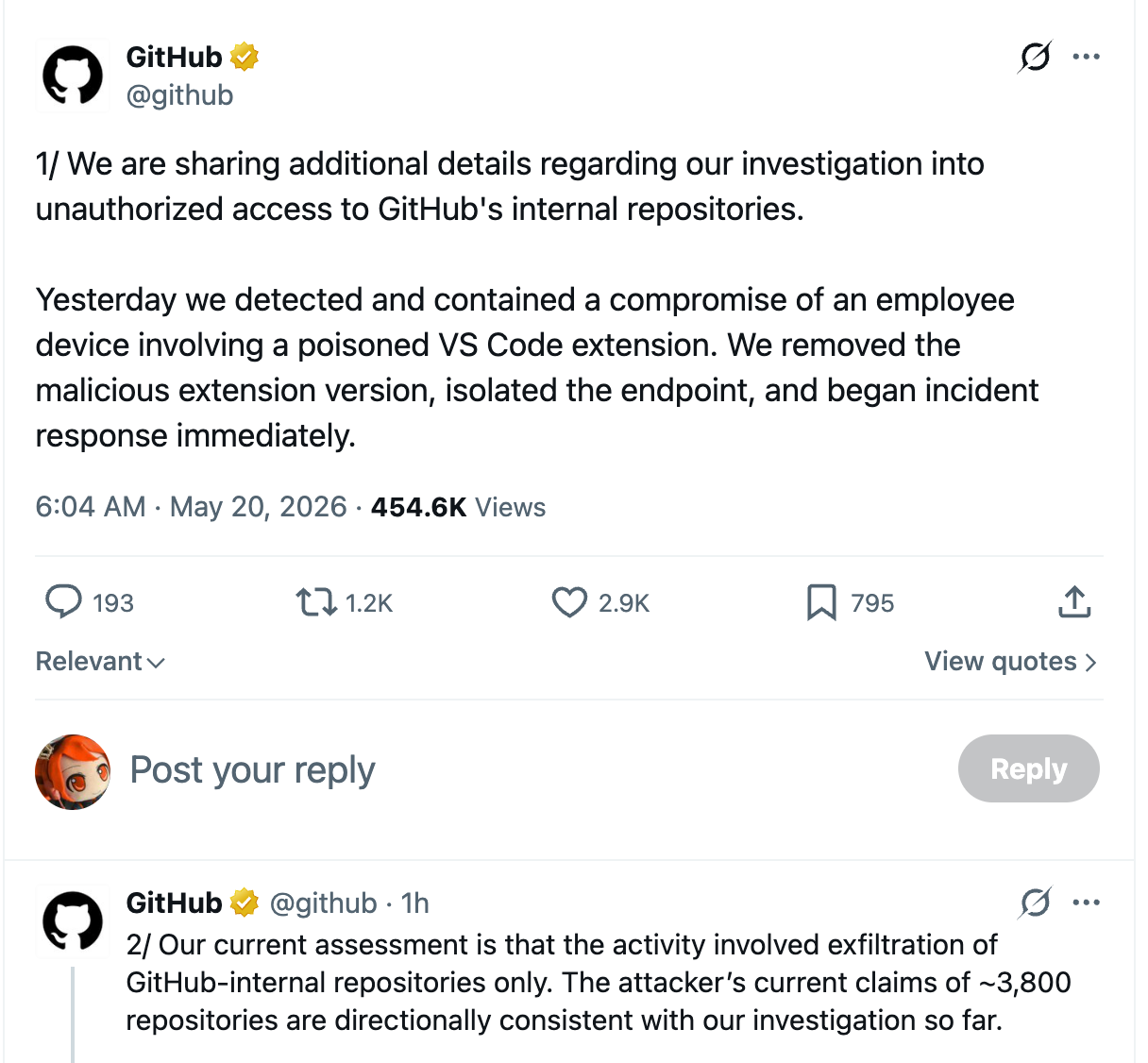
info on the github breach appears to only be available on xitter 🙄 , I fished it out for you.
Post
Replies:
6
Boosts:
6
gonna gently push back that there's no reason (according to github's version of the story) to associate this with AI or with spectacular incompetence on the part of the employee; the issue is that industry standard, extremely widely used text editor Visual Studio Code has a big button that says "click here to add useful functionality to do your job" that has a 1% chance of installing ransomware


@0xabad1dea I'm honestly not sure if you're joking or if this is literally true.


@Nephrite@gamedev.lgbt This is literally true, and has been giving many of us nightmares for a long time. See also the package managers for most popular programming languages.

@0xabad1dea Huh. It’s almost as if an editor with a marketplace for extensions and zero thought to the security model (beyond ‘extensions have complete access to your computer’) might not have been the best idea after all.

@david_chisnall@infosec.exchange @0xabad1dea@infosec.exchange
While yes, I think it's more about the perception of extensions being secure. Emacs has the same security model, but you don't see Big News™ about it.
Granted part of this is that Emacs itself requires a certain level of understanding to use so it filters out users who Just Install Things© but still.
I’ve thought about this for a while and I think the difference is the marketplace. I use a bunch of vim extensions but vim and emacs don’t have a built-in thing that advertises extensions to me. There’s no ‘click here to install…’ button with flashy marketing. There’s no built-in concept of ‘recommended extensions’.
When I install an extension in vim, it’s almost always because someone looks over my shoulder and says ‘wow, I forgot how bad vim was without [my favourite extension]’ and I try it and decide it actually does make life nicer. When people install extensions in VS Code it’s because they’ve been trained that there’s always an extension in the store and it’s the top result for their search. And that gives people a big incentive to put malicious extensions in the store.