
Sophists – From Ancient Greece to the current #mainstreaming
“Being in #Oxford today, I popped into the #OxfordUnion to use a room. Glancing through the term card, it’s absolutely vile – and has been consistently so for the two years I’ve been back in the city. It’s a useful, if deeply dispiriting, exercise in reading the people and place. This is where parts of the next ruling class form their opinions and sharpen their instincts. Judging by what they’re platforming, we are not heading for a good time…”
One useful term about this mess on the #OMN path is “Sophist”. Historically, the Sophists were traveling teachers in Ancient Greece during the 5th and 4th centuries BC. They taught rhetoric, politics, philosophy, and persuasion to the sons of the ruling elite. In many ways, they were the media consultants, communication strategists, and public intellectuals of their time. Their ideas were, and still are, deeply useful to elitist power. Truth was treated not as something to strive for, but as something relative to perspective and circumstance. Protagoras summed this up with the phrase “Man is the measure of all things.”
From this flowed a power-based philosophy – if truth is flexible, then gaining and holding power is less about discovering what is true, and more about learning how to persuade people effectively. Sophists became famous for teaching students how to win arguments regardless of the facts, make “the weaker argument appear stronger,” and manipulate rhetoric and perception for advantage.
This is why philosophers like Socrates and Plato attacked them so fiercely. Classical philosophy, much like the modern scientific ideal, was supposed to be a search for truth, ethics, wisdom, and understanding. The Sophists instead treated philosophy as a competitive social tool for gaining status, influence, and power.
That conflict has never gone away, when we look at the last 40 years, it becomes obvious that we now live inside a revived Sophist culture. Under neoliberal #mainstreaming, politics, media, academia, branding, and online culture have steadily shifted away from questions of shared reality and toward competitive narrative management.
The central questions are no longer what is true? what is just? and what works for the commons? Instead, the “common sense” questions become what performs well? What wins attention? What controls the narrative? What protects the brand? What keeps the funding flowing? And finally, the #stupidindividualism of, what keeps the career safe?
This is the culture the #dotcons perfected, were algorithms reward emotional reaction over understanding, public relations replaces public reasoning, identity replaces grounded collective politics so that communication becomes performance instead of dialogue. Truth becomes aesthetic.
That is in part why so many people now experience a constant feeling of unreality, we are swimming in rhetorical systems optimized not for understanding, but for engagement, manipulation, and market positioning. The modern “post-truth” condition is not accidental, it is the logical outcome of self-interested #postmodern Sophist culture merged with #dotcons platform capitalism feedback loops.
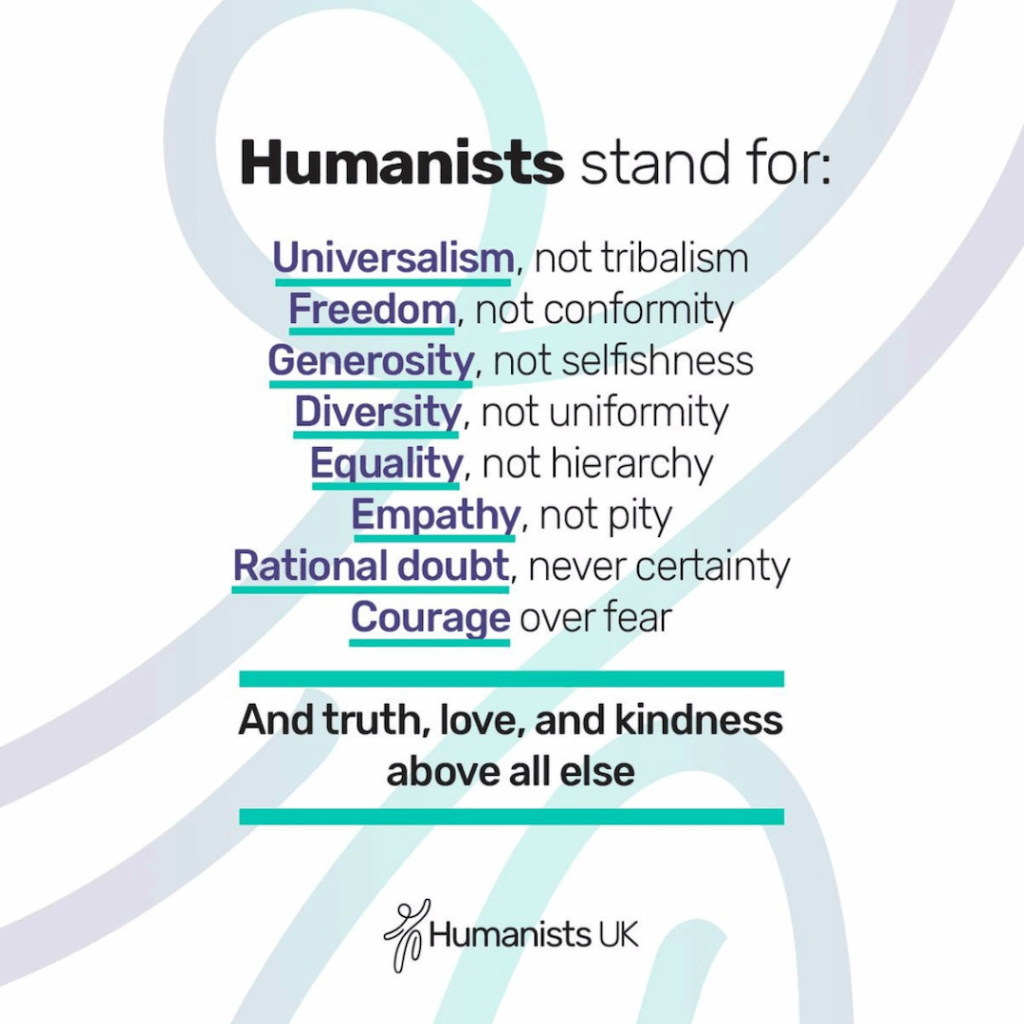
What do we have to balance this, the #OMN path matters because it tries to push against this drift. The goal is not some fantasy of perfect objectivity, humans are always partial, messy, emotional, and socially situated. But there is still a huge difference between collectively searching for grounded truth together, and treating all communication as strategic manipulation. The first builds commons – the second destroys trust. This is why the #4opens matter:
Open process,
Open data,
Open standards,
Open licences.
These are not only technical principles, they are social tools designed to reduce hidden manipulation and rebuild shared trust. Visible process matters because invisible power breeds Sophistry. Open discussion matters because branding culture hides contradictions behind managed messaging. Shared media matters because without public memory, every conversation resets into manipulation and spin.
The danger of endless rhetoric is that a society trapped in Sophist culture loses the ability to act collectively. Everything becomes performance, positioning, optics, career management, and endless dead-end symbolic conflict. Meanwhile the real flowing crises deepen, #climatechaos, enclosure, collapsing infrastructure, rising authoritarianism and the destruction of public life. People are trained to argue endlessly while losing the ability to build together.
This is one of the many reasons the #openweb matters, yes, native #openweb culture is imperfect, messy, and chaotic, but it is also rooted in a stronger relationship between communication and shared reality. People built infrastructure together, they argued, but they also created commons, this spirit still survives in fragments across the #Fediverse path.
We need to use these tools to compost the Sophist mess – not through purity politics or ideological certainty, because that simply creates another closed rhetorical system. The path is to reboot cultures where truth matters again, evidence matters, lived experience matters, dialogue matters, and collective accountability matters. This needs focus because the current system trains exactly the opposite habits.
The #OMN path tries to compost this mess instead of reproducing it – with less rhetorical theater and more grounded process, less manipulation, more trust, less “winning the argument,” more building shared understanding strong enough to support collective action. That is the underlying conflict beneath much of today’s social and political confusion – the struggle between communication as manipulation and communication as commons.
And right now, the commons desperately need rebuilding, and this matters for both the #openweb reboot and the #OxfordBoaters struggle. Both are fundamentally fights over who controls reality, narrative, legitimacy, and public memory. The landowners’ push in Oxford is a small-scale example of modern Sophistry in action. The issue is not simply “facts” about moorings, river access, safety, or management. The battle is over framing of who gets presented as “reasonable,” who gets framed as “problematic,” whose voices count, whose history becomes visible and who’s gets erased. This is how eliteist power works – not only through visible force, but through narrative management, institutional framing, bureaucratic process, selective legitimacy, and most importently control of communication channels.
The boaters to often fail to engage with this power because of the atomized #stupidindividualism that dominates our lives. Yet they are precisely the people with lived experience, practical knowledge, and deep historical connection to the river, metaphor and real.
Instead, the conflict becomes nastier than it needs to be because it shifts away from solving shared problems and toward managing perception. That is modern Sophistry in practice, the same thing happens across the wider internet. The early #openweb was messy, but it was rooted in participation, shared infrastructure, transparency, and collective building. People made websites, forums, federated systems, community media, and open tools together. There were arguments, conflicts, and failures, but there was also visible process and public memory.
The rise of the #dotcons replaced much of this with managed perception systems optimised for engagement, advertising, behavioural manipulation, and social control. Communication shifted from dialogue to performance, from publishing to branding, from communities to audiences,
from commons to platforms and from participation to passive consumption. Again, this is Sophistry – communication not for understanding, but for influence and control.
This is why the #OMN path matters. The project is not simply about “better media” or “better activism.” It is about rebuilding the social conditions where grounded collective understanding becomes possible again. For the #openweb reboot this means rebuilding commons infrastructure, restoring public conversation, protecting shared memory, creating transparent governance to resist platform manipulation.
For the #OxfordBoaters struggle this means creating our own media stories to document lived reality, preserving collective memory, make hidden processes visible. This is why the #4opens are practical anti-Sophist tools – Open process counters hidden manipulation – Open data counters selective framing – Open standards counter enclosure – Open licences protect shared social knowledge from privatisation. Without these, power disappears into invisible structures while presenting itself as neutral management.
One of the deepest problems today is that many people now trust polished institutional narratives and #dotcons tools more than messy lived experience. Boaters should already understand this because they directly experience the gap between official language and material reality. The boat struggle and the #openweb struggle are connected because both are about defending commons against enclosure: river commons, communication commons, social commons and democratic commons. And both are being undermined by the same Sophist culture of managed perception, institutional branding, bureaucratic abstraction, and invisible power.
So the task is not simply to “win arguments.” That is the Sophistry trap. The native path we need is rebuild is gthe environments where truth emerge collectively, trust grows, so conflict can become productive instead of performative, and people can act together in the real world.
In short, the fight is not just against bad policies or bad platforms. It is between communication as manipulation and communication as commons. And if we do not consciously rebuild the commons side of that divide, both the rivers and the web will continue disappearing into managed enclosure #KISS