

@fazalmajid No, because the density of particles in orbit falls off as the inverse cube of their altitude—the volume of space around Earth is vast, and the probability of an impact is a function of the particle density at any given altitude and how long your payload spends there on the way up. Starship could plausibly deliver comsat constellations to altitudes much higher than the overcrowded 200km orbits Starlink is crammed into, where impact probability is far lower.
Discussion
Loading...


@cstross
Elon apparently loves breaking laws.


Elon has always excelled at selling impossible future stuff to the rubes. When his businesses are evaluated based on performance like Tesla is now, it's disastrous. That's also why he is pivoting to robot cars.


@cstross Tesla is tanking. Starlink is becoming the DSL of the wireless internet (greedily oversubscribed bandwidth slowing it ... ....d o w n ...). Musk needs another source of suckers...er...investors... to fuel his rightwing apartheid ego.


@cstross bla bla bla bla bla


@cstross Data centers in orbit are the new "Solor roadways" scam.
@cstross When Kessler syndrome happens, do I get fractional shares?


@cstross Markets eat all his sf shit without hesitation. No checking of facts or realism. They are driven by one thought, and one thought only: what if he knows more than we and he actually pull it off - and we have not invested!!


@cstross The most compelling argument I've heard for putting datacenters in space (in the "didn't immediately discount it as a stupid idea but took some time to engage with it" sense) was from Scott Manley, notorious fan of everything space-related, and even he concluded that it only makes sense as an end-run around terrestrial regulation (i.e. it's a stupid and expensive idea but in the grand scheme of markets it may be cheaper than "buying enough politicians to steal a community's water rights out from under them so you can get the permits to build on land").


@cstross this applies to every company that mentions data centres in space.
Most tech "journalists" seem hesitant to ask basic questions about this shit because what if they start having to ask basic questions about everything. Sounds like a lot of work!


Elon Musk very rarely actually builds what he promotes.
He is a traitorous money laundering conduit for petrostate despots.
https://www.theguardian.com/technology/2024/oct/25/elon-musk-has-been-in-regular-contact-with-putin-for-two-years-say-reports
https://www.businessinsider.com/elon-musk-jared-kushner-world-cup-2022-12
https://www.washingtonpost.com/technology/2025/05/13/trump-tech-execs-riyadh/
https://www.cnn.com/2025/11/19/tech/saudi-arabia-us-chips-ai-race
Even his investors like Larry Ellison, Putin, & Alwaleed bin Talal recognize his utility in corrupting elections for the richest fascists on the planet.
Musk facilitates mass financial frauds.
That's it, that's all he does, defraud.
1/


@cstross that is what he does. He promises things, puts people he employs in a positon of trying to make it work, doesn't deliver, and the cycle starts again.
And some people chose to believe that *this time* it will be true.


there is nothing more guaranteed for pygmy ponies on springs to be sold as anti-gravity unicorns with lasers than an IPO road show for tech....


@cstross the "invisible hand of the market"



@cstross Yes. But selling this *idea* is still likely to be very bad for any rational and responsible use of our orbital space. 😭
@FaithfullJohn Well yes, but we need to criticize it because it's bullshit: "rational and responsible use" have nothing to do with the stock market.

@cstross Yup. Nail on head. It's all meme hype now.


@cstross Musk's whole hustle is to make increasingly grandiose claims to inflate his stocks. None of his big ideas ever materialize though. If Musk were credible, we'd have a colony on Mars by now (among much else that is simply never going to happen). It's so frustrating that the media continue to neutrally report his bombastic nonsense as if he wasn't just the world's most successful confidence trickster.
@ApostateEnglishman "None of the big ideas ever materialize" except the launcher with the payload of the space shuttle at $12M/flight that is *more reusable* than the shuttle ( 8 day turnaround between flights! 50 reuses per booster and climbing!) or disrupting the car industry by making EVs sexy. Or the low orbit comsat cluster.
Most of his bullshit evaporates on close inspection or goes wrong—but enough of it works to keep everything afloat.
(Shun anything he says about software, though.)
@cstross @ApostateEnglishman@mastodon.world
The innovation wasn't the cars.
It was implementing a transport _system_
Now once there is a system of a supply network for recharging, and vehicles to recharge, other people will do it, and eventually as commodities and better.
The thing with Spacex wasn't launches and missions, it was a transport _system_.
Now, what is the complete system being floated?
@cstross I mean, yeah. I stand partially corrected. Enough of it works to keep the hustle alive. On the other hand, how many failed launches has SpaceX had? How many potentially fatal design flaws do Teslas have? The list goes on and on.
Next we'll have humanoid robots that occasionally decide to go on killing sprees, or explode. Or are so easy to hack remotely that owning one is essentially inviting every cybercriminal and spy agency into your home to follow you around and take notes. 🤷🏻♂️
@ApostateEnglishman You ask about failed SpaceX launches: turns out Falcon 9 has launched 606 times with 603 mission successes. 3 launch failures total, none in the past 11 years. It's *ridiculously* reliable compared to any of its rivals.
(Falcon 1—discontinued—was a buggy prototype; Starship is trying to get past that.)
(Tesla is not going to give us humanoid robots, not beyond showroom rigged demos targeting the investors' wallets. And I'm NOT having one of those brain implants, no way!)


My rules for brain implants:
1. I will not alpha or beta test; in fact I think waiting for v3.25 is probably for the best
2. Must run Open Source software *not using any dependencies requiring a Package Manager*
3. Must not require *any* kind of 'cloud' to operate and must work fine without a network connection and must be locally configurable
4. You know what? Even if it meets rules 1 to 3 I'm still not too hot on the idea…


@cstross @ApostateEnglishman sort of like how Tesla is down 46% in sales this year and no longer the #1 electric car but that's alright, were going to male robots instead.
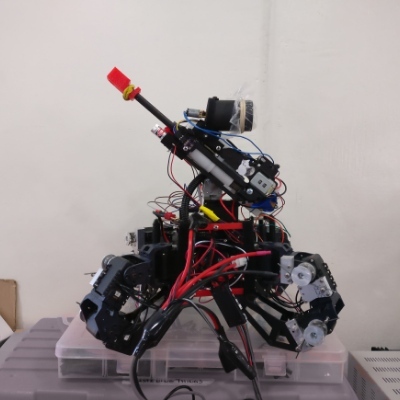
@Nimbius666 @ApostateEnglishman Musk is trying to ride the AI bubble. Seems he hasn't realized he's riding it like Slim Pickens:

@cstross
His real goal is getting price of payload to previous down another 100x.
He's already massively reduced the price with space x (for starlink) but it may be that doing it again will be harder


@cstross
I still keep trying to think of any reason, at all, to put a data center in orbit. Obviously musk is going for stock but Nvidia also said something about this a year ago ( or was it someone else?).
It's literally the dumbest possible idea to the point where I tried to figure out if relativity helps at all since time would move faster (short answer - not nearly enough).
Heat, power, size, latency, repairability - there's genuinely no upside
It's a weird one

@cstross Elon keeps talking the dumbest shit every time he opens his mouth and everyone just starts throwing money at him without any thinking. Like, anyone remembers stupid Hyperloop? I kept saying that shit cannot ever work from day one and every time I was told he's the genius and I'm the idiot. Well, where's the fucking Hyperloop in every city?

@cstross anyone still falling for elon musk just really wants to fall for elon musk, or just wants *you* to fall for elon musk while they secretly sell, while they can get their money back, plus yours.

@cstross isn't Starship becoming less and less useful as they keep 'iterating' it's development?
That giant cargo capacity keeps on dropping.
@dgold Starship's first stage works fine (and has even re-flown), engines work fine (ditto). The problem is the upper stage design and the push for full reusability. If they throw away the stupid heat shield and make it a one-shot they could settle for a cheap disposable upper stage with monstrous payload capacity, and they could build it *right now*.
Once they had a 200 tonne payload HLV flying reliably, resuming incremental progress towards reusability would be uncontroversial.

@cstross when his other shit starts to break up it's going to be a pretty busy game of billiards

@cstross
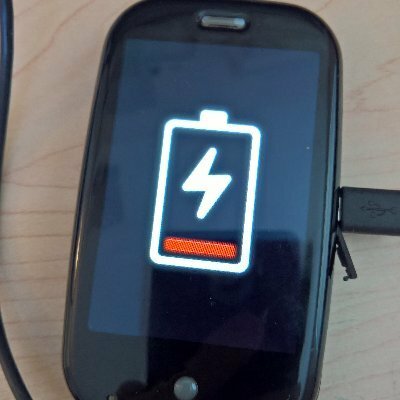
I've been thinking about that. I ran across this today, and thought Musk might be able to work it in to his pitch:
@cstross Elon Musk wants datacenters in space because he read Neuromancer once in high school and didn't understand any of it.


@cstross I'd be interested in finding out if Scott Manley got anything wrong here.
His take, as I understand it, is basically (1) the physics makes it complicated but not non-doable, and (2) can't be profitable now but may well be so within the foreseeable future -- making it likely that whoever gets there first, even before it's profitable, stands to make the usual absurd amounts of money (especially if orbital access is never properly regulated) once it does become cheap enough for it to be profitable.



@jb I don't approve of capitalism occupying Earth orbit; my point was that (at least according to Manley, and what I do understand of physics and orbital mechanics) it's not implausible that what the Muskrat is doing here is actually sensible from a capitalist standpoint.
His whole existence is a grift, and he needs to be stopped, but this particular part of it seems far less of a con than (e.g.) the "cybertruck".
Space is a little more hostile than the deepest parts of the ocean. Except in one way: there's no atmosphere to block the nastiest bits of radiation out there.
Computers really do not like radiation. They like it less than DNA does, and are more sensitive to it. And the smaller the fab size of the chip is, the more sensitive it'll be to ionizing radiation.
So, if you put a bunch of computers in orbit, ignoring the hard problems like heat, cooling, moving heat away from sensitive components, per KG fuel costs to get it in orbit, fitting the shit in to geostationary, or other high orbit.
You still have "how do you deal with equipment failures and loss of components" and "get enough up there to ensure redundancy".
I don't know if you've built a datacenter, but that's a bunch of mass to move.
@cstross
1+ more replies (not shown)
@woozle @jb Tough luck: all we've got in orbit today is capitalism, plus a couple of government-funded puppet shows showcasing "space science" while paying huge back-handers to corporations.
This is the reason we can't have nice things. (I prefer the term "crapitalism" to "enshittification", but you get the picture either way.)
1 more replies (not shown)

"laws of physics say "nope""
But there is a way, figured it out. If "elon" wants the secret then it will cost him the trillion the "board of directors" (doge) .. paid him. 300,000,000 would get a tax refund of $3,333.33


@cstross yup. Tesla is dead, X is basically dead. He needs to create more hype, so here comes the physics breaking con to take more investors money.

@bellegraylane @cstross
Musk merged Xitter with xAI to justify its high valuation to investors as an AI company now.
The same crap with Tesla being rebranded an AI robotaxi and humanoid robot company.
So makes sense to pull the same trick with SpaceX to gullible investors. That it's really an AI company so that SpaceX can afford to bail out Tesla when it buys all those unsold Cybertrucks.
Won't be surprised when Neuralink is touted as an AI company next

@cstross I remember when he claimed his rocket would be on Mars by 2025 and everyone who doesn't know about Space believed him because he's nothing more than a huckster, selling Science Fiction as fact and Journalism not bothering to look beyond the hype.
This man, who was SO keen to visit the Paedo Island....
#ElonMusk #Space #SpaceX #Hustlers #Grifters #ClanOfPaedophiles

@cstross the thing is, the big money knows it's BS or, at least, doesn't care if it's BS. They'll get in early, ride the hype wave and then try to cash out before it all falls apart.
"The stock markets are a way for everyone to participate in owning a company and promote growth." Is nonsense. The markets have become casinos and disconnected from the economy.

@cstross Not to mention it probably arrived as a ketamine induced hallucination.
Or maybe grok predicted it.
He possibly even believes it himself, he's so full of it, it's hard to tell.

@cstross But it's great hype for AI bros and TESCREAL cretins.


@cstross Did he read Singularity Sky and feel he could make that future happen with more computers everywhere?
@cstross Totally agree, also just imagine the many scenarios that will eventually hit constellations like this - e.g. the company goes out of business or they lose device control, organisation gets a viral or c&c trojan, systems operational issues (like bad patch rollout) for example

Consider for a moment, though that the real money available to the stock market is with the very largest institutions and the wealthiest people basically Elon Musk‘s class.
People with too much money and nothing else to do with it
You can bet they will also manipulate the federal government into just handing them cash supposedly to do all this crazy stuff kinda like all the money that’s flooding into starship that completely ignores contracted objectives


@cstross Data centers on orbit is the stupidest idea ever.
Perhaps even more stupid than letting a remote LLM control your personal computer 🤦♂️


@cstross Starlink might be the only thing one of his companies got right. I've been using one for a while now and it's a game changer when living somewhere remote. I wish we had a suitable EU competitor and not have to contribute to this man's lunacy...



@raymaccarthy @oldgeek @lucien The point of starlink is low latency, which means low orbit. Which in turn requires lots of them to ensure there are no gaps in coverage. (And now they're working on satellite-to-satellite high bandwidth laser mesh networking to increase capacity.)
I think you underestimate the scale of aviation and shipping, not to mention railway transport.
@cstross @oldgeek @lucien
No, I don't because I was RF R&D in an ISP with fibre, mobile, Fixed Wireless and Satellite. They also had datacentres.
Railway is better served by Cellular.
Obviously in LEO you need a load to have continuous coverage, but to do the equivalent of rural fibre or cellular for trains you need orders of magnitude more.
Even cellular is being done badly due to too big cells and regulatory capture. I've dealt with the Irish regulator, Comreg.
@cstross
Elon is a nazi want a be his ties with trump and epstien is why these ppl are not to be supported


@cstross won't Kessler Syndrome make space launch dead as a business long before that?
@fazalmajid No, because the density of particles in orbit falls off as the inverse cube of their altitude—the volume of space around Earth is vast, and the probability of an impact is a function of the particle density at any given altitude and how long your payload spends there on the way up. Starship could plausibly deliver comsat constellations to altitudes much higher than the overcrowded 200km orbits Starlink is crammed into, where impact probability is far lower.

@cstross Wild ideas ≠ prospectus

@cstross it's the 'put it in a box and sell it' paradigm, where neither the box nor what goes in it can exist.
He, like the 🍊, depend on the masses who lack learning. Not education: learning.
In the most Twainish of ways.
Lying worked for Tesla, so he wants to pull the same thing again.

@cstross scam, like always... Just to keep his stock from collapsing.

@cstross Elon, bullshit? Sir! I request you consider retracting that statement!

@cstross see also: paypal’s original mission and what it became. overpromise, underdeliver, criticise governments, live off government funding. Musk is a charlatan

@cstross I'm pretty sure he also wants his name in the news with stories newer than his email begging Epstein to let him come rape some kids, as if he thinks everyone will forget he's a nonce.


@cstross
After all he Made his statement from Mars
Oh
Did he ?

@cstross It was obvious bollocks (just like hyperloop, the boring company etc…), just I didn’t know why he was boosting it as I didn’t realise he was planning an IPO this year. Tosser.

@cstross Just another reckless person collecting stupid money by selling them snake oil.


@cstross And the announcement timed after he appeared in the epstein files.
Now we're talking about this BS instead..




@gbargoud
The hell, I toolk this as a plot element in @bitterkarella 's latest gag?
Argh. I'm gonna hide under a rock...
@cstross @tony
@bitterkarella @cstross @tony @polypunk
This email exchange particularly but there are at least 2 others I've seen (one of which looked like he actually made it to the island)


@gbargoud @cstross @bitterkarella @tony @polypunk Wow. “Hey guys I wanna come party on pedo island!” “Nah man, you missed it, so sad”
As a nerd who’s gotten quite accustomed to living on the outer fringe of the Cool Kids Klub, this dialog feels hauntingly familiar.
Still gross, but also pathetic


@fazalmajid Well, that, probably, but also "power broker".
The Epstein files function to identify the de facto real power structure. (As he saw it, but considering how long he kept what running, he can't have been too far off.)
(It also identifies the help and the wannabes.)

@cstross and there is the Kessler syndrome to look forward to.


@cstross Bullshit has always been what he excels at.