Discussion
Loading...

Post

Log in
  • About
  • Code of conduct
  • Privacy
  • Users
  • Instances
  • About Bonfire
Yogi Jaeger
Yogi Jaeger
@yoginho@spore.social  ·  activity timestamp 3 days ago

We have a new preprint out! And one that is especially dear to my heart:

"Re-Engineering Wimsatt for Limited Beings"

https://zenodo.org/records/18293424

Bill Wimsatt is possibly the most underrated philosopher of science of our times. In this paper, I attempt to translate his key ideas into a format that every scientist can understand.

Artwork by Marcus Neustetter.

Reading this paper will change the way you do science, and how you see the world, forever. I promise.

#philosophy #science #perspectivism

3 media
A drawing of our multi-leveled world. By Marcus Neustetter.
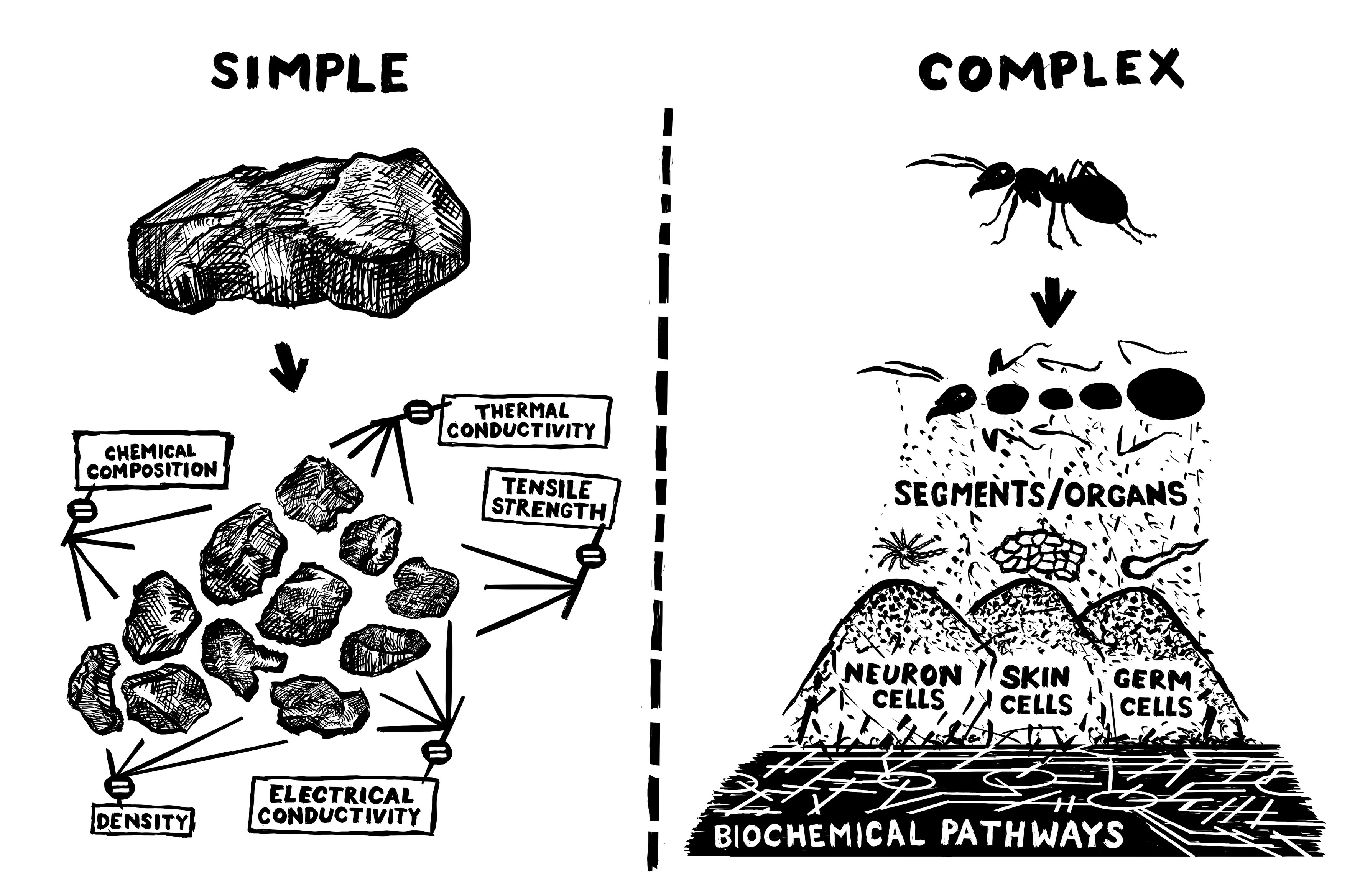
A drawing comparing simple and complex systems and how their decompositions relate to each other. Artwork by Marcus Neusttetter.
A drawing of the three causal regimes of the world: levels, perspectives, and thickets. Artwork by Marcus Neustetter.
Zenodo

Re-Engineering Wimsatt for Limited Beings

Science is the best way to produce facts about reality. The best, at least, that limited human beings have devised so far. Yet, not even scientists quite seem to understand how scientific knowledge is generated. This is not only a philosophical but also a practical problem, as our misunderstandings affect the quality of our research and limit the directions it can take. In light of this, it may be good if we reflected a bit more on how we do science — to become better researchers through philosophy. Here, I provide an accessible introduction to a philosophical approach that achieves precisely this: William Wimsatt’s multi-perspectival realism. It disabuses us of widespread but misleading myths and idealizations about science, such as the idea that everything in the world can be reduced to a fundamental level, or that we can approach a “view from nowhere” — complete and objectively detached knowledge of the world. Wismatt proposes an alternative view based on his thorough studies of actual research practice. It cuts deeply into the layered yet messy structure of reality, and the improvised but potent tools we have available, as limited and evolved beings, to explore it. Wimsatt reframes science as an irregular yet adaptive process rather than a cumulative repository of unalterable facts. His philosophy provides a workable and grounded middle way between radical skepticism and naïve belief in the objective truth of science. It explains how knowledge is conceptually constructed by humans, but still connects us to reality in a trustworthy way. We need such a new view of science, not only to improve our research practices and outcomes but, more generally, to gain a more realistic understanding of ourselves, the world, and our place and role within it.
  • Copy link
  • Flag this post
  • Block

bonfire.cafe

A space for Bonfire maintainers and contributors to communicate

bonfire.cafe: About · Code of conduct · Privacy · Users · Instances
Bonfire social · 1.0.1 no JS en
Automatic federation enabled
Log in
  • Explore
  • About
  • Members
  • Code of Conduct