
Discussion
Loading...

Post

Log in
  • About
  • Code of conduct
  • Privacy
  • Users
  • Instances
  • About Bonfire
Global Museum
Global Museum
@globalmuseum@mastodon.online  ·  activity timestamp 2 weeks ago

Archaeologists in the Netherlands have discovered a Roman settler’s stash of poisonous seeds, sealed in a hollowed-out animal bone 2,000 years ago....

The discovery is the first evidence that Romans in the Netherlands collected and stored seeds from the black henbane plant, a highly toxic member of the nightshade family. While the plant has long been notorious for its poisonous effects, it also has a reputation as a medicinal aid and hallucinogenic drug. #globalmuseum #Romans
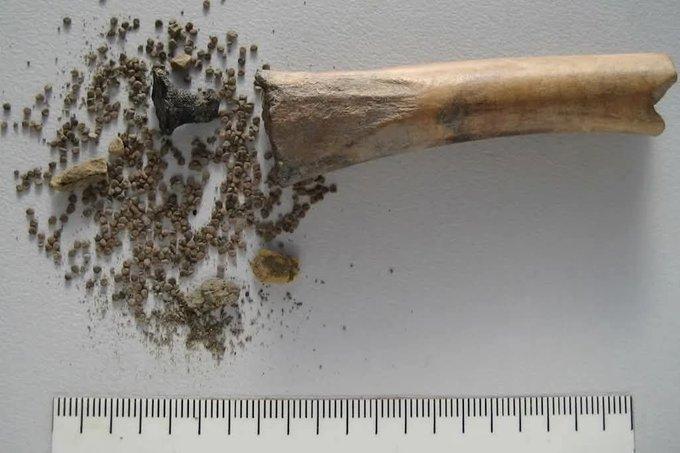
a Roman settler’s stash of poisonous seeds, sealed in a hollowed-out animal bone 2,000 years ago
  • Copy link
  • Flag this post
  • Block
Global Museum
Global Museum
@globalmuseum@mastodon.online replied  ·  activity timestamp 2 weeks ago

Ancient scholars like Pliny the Elder wrote about black henbane’s use as a treatment for fever, cough and pain. But Pliny also warned that henbane “deranges the brain”.

The plant grows like a weed—it grows naturally in and around settlements--and despite its presence in historical records, proving that Romans purposefully collected it, is difficult. This bunch of seeds, however, appears to be purposefully preserved.

  • Copy link
  • Flag this comment
  • Block

bonfire.cafe

A space for Bonfire maintainers and contributors to communicate

bonfire.cafe: About · Code of conduct · Privacy · Users · Instances
Bonfire social · 1.0.1-beta.35 no JS en
Automatic federation enabled
Log in
  • Explore
  • About
  • Members
  • Code of Conduct