
Back when folks at MIT acknowledged reality rather than market fictions.
"There is a belief, current in many countries, which has been elevated to the rank of an official article of faith in the United States, that free competition is itself a homeostatic process: that in a free market the individual selfishness of the bargainers, each seeking to sell as high and buy as low as possible, will result in the end in a stable dynamics of prices, and with redound to the greatest common good. This is associated with the very comforting view that the individual entrepreneur, in seeking to forward his own interest, is in some manner a public benefactor and has thus earned the great rewards with which society has showered him.
Unfortunately, the evidence, such as it is, is against this simple-minded theory. [...] Even in the case of two players, the theory is complicated, although it often leads to the choice of a definite line of play. In many cases, however, where there are three players, and in the overwhelming majority of cases, when the number of players is large, the result is one of extreme indeterminacy and instability."
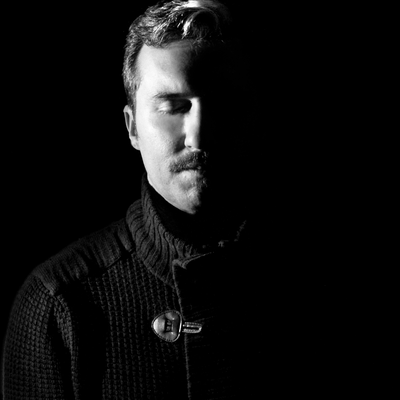
~ #cybernetics by Norbert Wiener (1948)