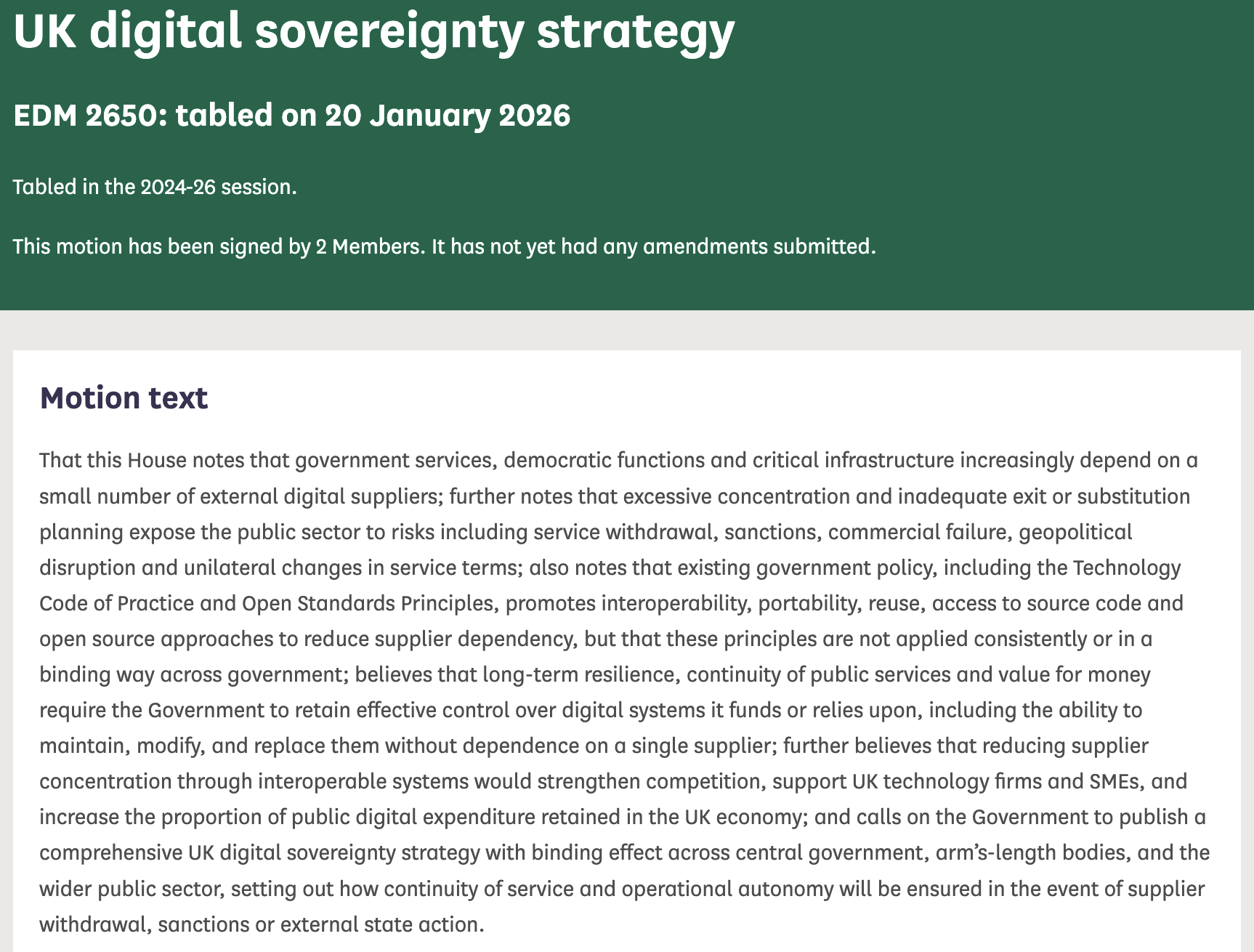
Gov services, democratic functions and critical infrastructure increasingly depend on a small number of external digital suppliers; that excessive concentration and inadequate exit or substitution planning expose the public sector to risks incl service withdrawal, sanctions, commercial failure, geopolitical disruption and unilateral changes in service terms; also notes that existing gov policy, incl the Tech Code of Practice and Open Standards Principles, promotes interoperability, portability, reuse, access to source code and open source approaches to reduce supplier dependency, but that these principles are not applied consistently or in a binding way across gov; believes that long-term resilience, continuity of public services and value for money require the Gov to retain effective control over digital systems it funds or relies upon, incl the ability to maintain, modify, and replace them without dependence on a single supplier; further believes that reducing supplier concentration through interoperable systems would strengthen competition, support UK tech firms and SMEs, and increase the proportion of public digital expenditure retained in the UK economy; and calls on the Gov to publish a comprehensive digital sovereignty strategy with binding effect across central gov, arm’s-length bodies, and the wider public sector, setting out how continuity of service and operational autonomy will be ensured in the event of supplier withdrawal, sanctions or external state action.