

The Fermi Paradox (and the associated background material) makes up my favourite set of lectures. Everything else is terrible, but DANG I'm going to enjoy my teaching this week.
3 Boosts
0 Likes

@sundogplanets with the overwhelming number of planets being confirmed by TESS, JWST and more, I’m firmly convinced that life has evolved elsewhere, but with the even more overwhelming distances and timescales of the observable universe, I’m not sure why anyone would think it a paradox that we haven’t overlapped with other civilizations in time and space such that light speed communication would be possible. If @czds and I ever attended a campfire, we would hope that you would be there
I've done a thread on this before, but I'm going to do it again because it's so wild.
The Fermi Paradox is just the simple question: if there are billions of stars that are billions of years older than our Sun, and life is common, and "intelligent" life happens once in a while, WHERE IS EVERYBODY?
One possible solution: We are alone.
We can't rule this out, Earth is the only place in the Universe that we know for sure has life. It is possible that we are the very first "intelligent civilization" that has ever arisen in the Universe.
Of course, in astronomy, the distances and numbers are so vast that any explanation that involves being "just happening to be lucky enough to observe something" is immediately suspect.
(Of course, we're here, so this is the mother of all observation biases)
Maybe interstellar travel is just too hard. Nothing alive can do it. (But then why don't we see any probes?)
Maybe the "drive to explore" is a uniquely human quality, and other aliens wouldn't have this.
(I see multiple problems with this suggestion, including requiring us to be unique and special again.)
And then there's the most depressing possibility: self-destruction. Maybe every "intelligent civilization" runs into the environmental destruction/energy usage problems and purposeful destruction (war) that we are facing today. Do civilizations ever survive long enough to travel to other stars?
Then it gets weird: what if there IS a galactic civilization, but they just won't talk to us, or haven't noticed us. This is the premise of a large fraction of all science fiction, perhaps because this is the most hopeful option presented by most textbooks.
But I have more!
What if successful civilizations realize their planetary boundaries, don't overshoot them, and thus become undetectable. That's the idea proposed by Wong & Bartlett, one of the papers I make my students read because it's REALLY interesting (shorter version available here): https://studio.m-anage.com/agu/abscicon21/meetingapp.cgi/Paper/1028592
The basic idea is that "a sufficiently advanced civilization is indistinguishable from Nature"
I like this a lot.

Even wilder: I've been fortunate enough to get to listen to lectures and stories from Cree astronomer Wilfred Buck several times now. His solution? Advanced aliens don't need spaceship to travel. They travel with their minds.
I'll leave you to stare into the campfire and think about that one.


@sundogplanets one thing I like think about is that we have not a technological problem but a conceptual problem. I think the Fermi paradox is being badly resolved:
What if the problem is that we don't know what we are looking for. I mean, we are looking for radio signals, or the existence of mega structures around stars, and all of that. But... That are things that a human civ would build. A civ that have ears, mouth,a laringe, eyes and so on. But! What if instead of a voice we use chem com? Like ants, for example... Would we have invented or found any use for radio comunication? Would or tech be any similar to what we have now? Would we use iron, for example if we had a body capable to produce chems that can be used to build? What kind of pressure would make us develop an intelligence and what kind of solution would we come up with?
The other thing is that we don't know what intelligence looks like. We know how human intelligence looks like and even that is full of eugenesis. We have a lot of non human civilizations in our planet, if we take the definition and play a little with it. Ants builds, have a hierarchy, wage war, have slaves, show compassion, and so on, but they don't have a human society with capitalism. Even this description I'm giving is human centric itself.
If ants where the principal specie on earth, would they develop space travel? Would they need it? Are they an intelligent creature to begin with? We don't really know because we only know how our intelligence looks like and it started happening that only a few hundred years ago. C'mon, we thought that american people didn't have a soul, and we still debate regarding the civilized status of a lot of groups.
So yeah, probably what we have is a starwars/startrek bias: intelligent ALF are just humans in a furry custom or with a weird tattoo, so is obvious they should mark in our human-searching sensors.
I think we are not specials, but we are unique in the same way as every other specie is, so we should start looking in this planet for signs of non human civs and with that extrapolate. If in this rock the diversity of life is outstanding, I can't imagine how diverse is in the universe given how weird the possibilities for biomas are.... But yeah, I don't think we will be finding any Vulcan out there

@sundogplanets When you consider how many species on this planet alone, demonstrably more intelligent than us because a few have bigger brains and they don't pollute the planet.
That's pretty intelligent for a species.
Maybe we're not the most qualified to be looking in the first place. :)

@sundogplanets Have you seen https://arxiv.org/pdf/1806.02404 ? If correct, we are almost certainly alone.

@sundogplanets Or the other intelligences disappeared long ago, or haven't arisen yet. I saw an article mentioning that Homo Erectus (IIRC) occupied the earth for 2 million years, while H. Sapiens has only been here for about 200-300 thousand years.
We might simply not have been here long enough to found.
If a star traveling species visited the planet 1 million years ago, they could well have found no one here.


@sundogplanets I think there are many intelligent species out there, but every single one of them is effectively alone, they're too far away from each other to ever catch a signal. I don't think high-tech civilisations last very long because they cause too much environmental damage.
@sundogplanets Another possibility: Intelligent life is all around us, but we can't recognize it. Maybe intelligent beings dwell in the sun's photosphere or inside the sun, atmospheres of gas giants, the ocean inside Enceladus, in frigid superconducting ices far out in the Kuiper belt. Lots of possibilities!

@sundogplanets Just want to point out that if we are actually alone there is no Fermi Paradox.
There are three viable conditions for things. None, the thing doesn't exist. One, the thing is unique. Many, if there is more than one, there really have to be many. So, the Fermi Paradox is predicated on many, but one is a perfectly reasonable answer and it eliminates any paradox.
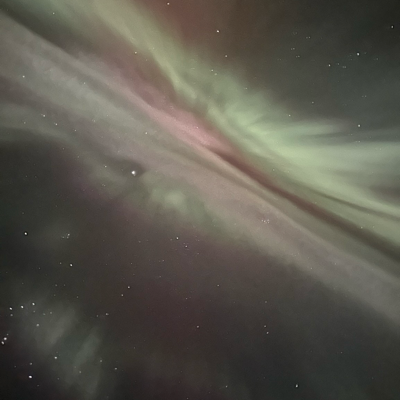
@sundogplanets I prefer the Dark Forest explanation.


@sundogplanets Thank you for this thread! This is my favorite open question of all. I am forever grateful to Carl Sagan and Ann Druyan's "COSMOS" series for informing me about it.

@sundogplanets they are probably wondering the same thing as they float through space on their own celestial body

@sundogplanets I suspect that "everyone" is fairly simple life forms. Isn't it possible that while there is life out there, it rarely develops to our point.
Like the critters living in those metallic nodules on the bottom of the ocean.

@sundogplanets the question is also WHEN is everybody? Or at least, WHEN was there anybody else?

@sundogplanets Another idea is: Intelligence is just an evolution mistake amd not needed for life.
Most stars may have survivesd intelligence.


@sundogplanets I love this.
Do you have an opinion about Sagan's "Drake Equation"?
I have no other idea regarding the Fermi.


@sundogplanets
At this point, that question is like trying go find a needle in a hay stack while only being able to detect the hay stack by how it gets dark a few seconds earlier the day the sun sets directly behind it.
Also, the only life we are looking for is Earth-based life, because it's the only life we know what to look for. For example, say "demon possessions" were really aliens that we can only detect when they possess someone, but they know that we have the skills to build technology to detect them if we knew what to look for, so they stopped doing possessions, and let us believe that it was all just myth. They could still be among us, watching our thoughts while being unable to see our bodies.
Just because we are "made out of meat", doesn't mean they necessarily are.


@sundogplanets we are probably not alone, we may just not recognise or be able to communicate to inteligent life - terrestrial or extra terrestrial - if it would bite us in the nose for a whole week.


@sundogplanets My answer is that the lifetime of technological civilizations is short. 12th-century Europe, say, is not going to produce starships (or for that matter star-spanning communications devices) even if it lasts for a million years in that state.


@sundogplanets
your voice transcription app botched "fermented pair of ducks"
* the Italian campfire recipe is out-of-this-world

I have a Fermi Paradox short story. I need to get it published.

@sundogplanets
Yup, peak campfire convo.


@sundogplanets
If you're ever out west in the Okanagan BC, I will light a campfire for you and invite everyone I can... There's campfire bans most summers, so you have to visit in the winter or spring... If you're coming for the skiing, you might want to wait for a non-El Niño year... 😔

@sundogplanets Come on in and grab a seat..

@sundogplanets I will make a campfire right now if you will come over to Eastern PA and talk about that because I have thoughts and questions I want to talk to someone smarter than me about.

@sundogplanets Do you cover my favourite explanation? We hear nothing because are all silent knowing THEY are out there. And we will regret blasting signals into the universe soon.
(Not quite scientific, I know. But a good story to scare the kids at school.)

@sundogplanets There is an "Encyclopedia Galactica" with Earth as an entry, and a "prime directive" type agreement to only observe us using covert means.


@sundogplanets
A clearest proof for alien intelligence in almost all galaxies is that they all move away from us.




@sundogplanets I'm of the belief that machine civilizations are not uncommon out of the available galactic samples.
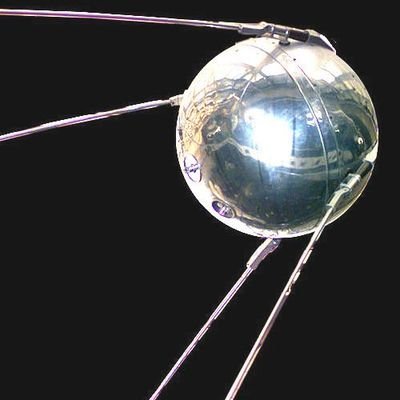


@sundogplanets The one-liner for the Fermi paradox question "Where is everyone" is "they are all doomscrolling". How we've used the electromagnetic spectrum has changed significantly over the past century. Now we have lots of low-powered devices transmitting at the same time, and merging many of those together - what you would see at a large distance from earth - would look like some form of noise. Would others behave similarly?

@sundogplanets if you want to give your students more material, this recently started podcast by @coreyspowell & @gmusser is very on point and has good interviews (Jill Tarter in ep 2.)
@sundogplanets Another factor: for a technically advanced civilization, you need a planet large enough to maintain a magnetic field, a stable climate, not too much gravity so you can build multistory buildings and maybe actually get something into space, plus easy enough living conditions and access to metals, etc., so there are time and resources to figure out how electromagnetism works. Maybe it is hard to get all of that in one place.


@sundogplanets all this speculation stems from the fear of being judged as a species and, as such, is deeply religious bc we're ultimately unable to put ourselves in perspective

@sundogplanets yes, good topic. My favorite was also at end of semester, after cosmology: that distance is time, and that the actual “edge” of the universe is the Big Bang (the beginning of time), and the other edge is “now”, which exists in only one place: “you, the observer”. Love to blow their minds


@sundogplanets I'm fascinated with this paradox as well. My dad was a devoted Catholic, and one of the clearest memories I have as a kid w/ my relatives came one summer evening on the lawn chairs out under the stars, listening to my dad and his brothers argue about whether the existence of life on other planets somehow threatened the foundations of the Christian faith. My father, an Air Force engineer who worked on several aerospace design projects, was convinced it was diametrically opposed, and I remember thinking that was bonkers then and I still do.
The Catholic Church recently celebrated the feast of Christ the King, in which Jesus is often cast as the Kind of the Universe. To me, it's always seemed downright blasphemous and highly uncharitable to suggest that a Divine Creator would be so stingy with such an unknowably vast canvas. It's also always struck me as incredible that so many people are so certain about so much, even though we still actually know so very little.
@briankrebs There's that quote from the book/movie Contact that's something like "Seems like an awful waste of space." I just cannot look up at the trillions of galaxies each with billions of stars and believe that we are alone.
Because I teach at a Catholic school (as a non-Catholic), I really hope someday I get to co-teach a class about aliens/astrobiology/astronomy with one of the priests. Seems like that would be a super interesting learning experience!

@sundogplanets @briankrebs You would think the Great Flood would at least have caused one to think, "Maybe we should try this again somewhere else."

@sundogplanets @briankrebs Seems improbable but scientists accept that there's probability beyond natural probability

@sundogplanets @briankrebs My (layman's) understanding is that contemporary Catholicism has no particular doctrinal position for/against the idea of extraterrestrial life. Do you know if I'm correct on that and, if so, do you know what their position on potential extraterrestrial concupiscence is?
Would xenos essentially just be animals, albeit quite possibly on the very, very, smart side; or is there some potential for them to break into human-style salvation mechanics?

@sundogplanets one of my main gripes with most religious texts is that they all seem to sell the creator of this universe incredibly short. I also feel that science and religion have no good reason to be at odds with one another as science is merely the process of observing and understanding of God’s creation.

Also I think explaining the Fermi Paradox and possible solutions makes the very best campfire story possible. Fight me. (Or better yet, invite me to your campfire!)