

My issue with the way Apple grandstands about protecting the user is that, so many years into this, it’s still only Apple’s own apps get protected. Why is my Safari data so sacred it can only be accessed by granting Full Disk Access, but Chrome and Firefox data can be accessed by any unsandboxed process on my system with no warning?
Is it really fair to claim this protects users, when stats point to Chrome being far more popular than Safari on macOS? Discord token, Thunderbird emails, past Claude conversations, just to name some more examples.
Why did it take until Muse’s antics showed up on social media for Apple to admit and make clear that Full Disk Access and Accessibility (now renamed to “System & App Protection Override”) are incredibly powerful overrides? Even if the protection misses a lot in the first place.
They mean well, I’m sure, but this is rushed, and overwhelms users with a poor explanation of the risks. Hardcoding a list of trusted backup app bundle IDs is a hack fix. Handing out entitlements is also not a full solution for fundamental design flaws.
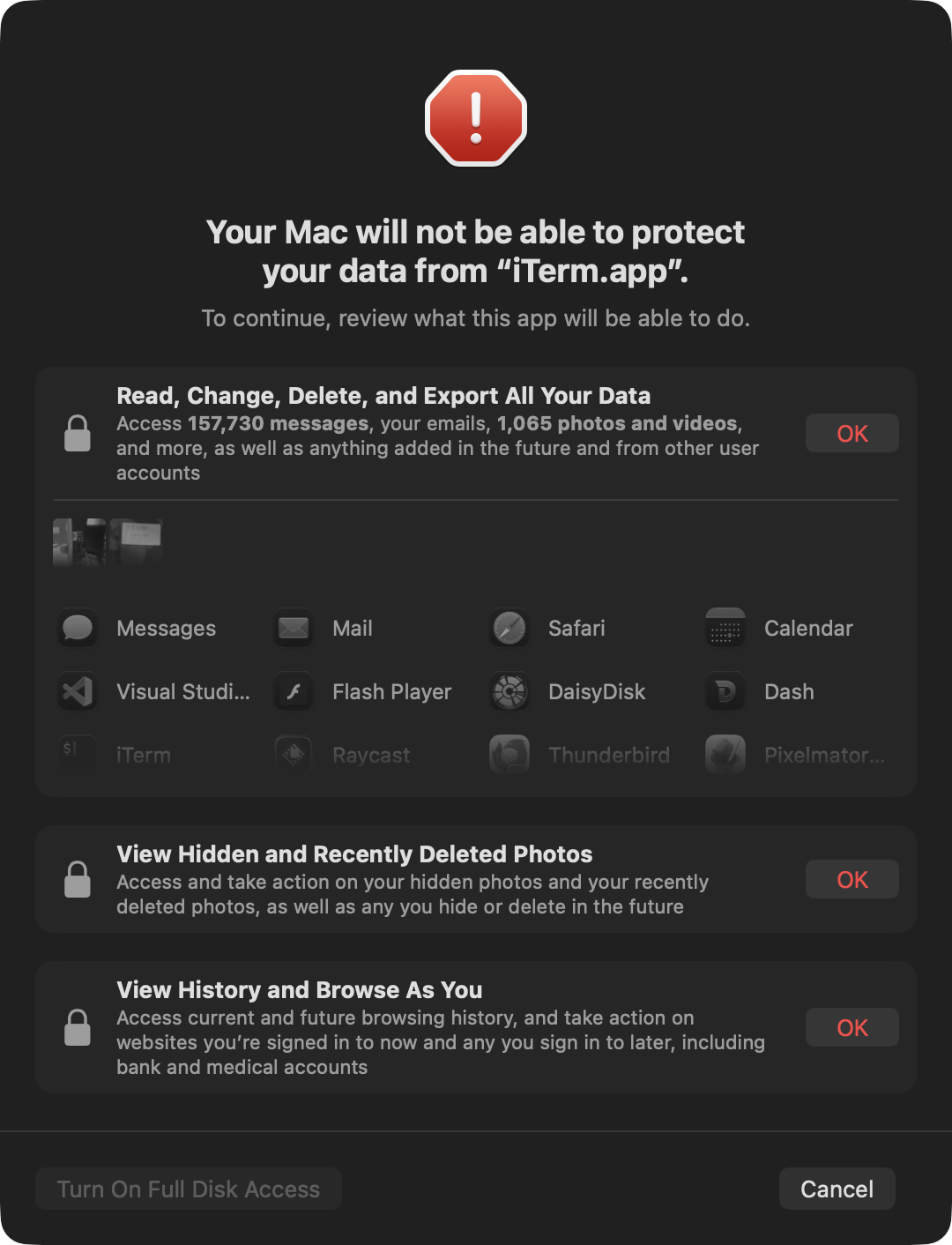

Correction (thanks @lapcatsoftware): macOS 27 has a hardcoded list of browser data paths that get protected like Safari’s data. It plays right into my point that the current TCC system is having protections hacked on top of it as new problems come up.
The correct time to have solved this was years ago. Infostealers are far more common now than they used to be (see: ClickFix), but macOS could have gotten ahead of it. Being proactive, not reactive, is the whole point of TCC. Instead, they only shipped a workaround to the problem a few months ago. Apple can do a lot better than the free-for-all mess that is Windows.