

In which I shine a 365 nm UV flashlight at a bunch of Thanksgiving foods to see if any of them glow. And yeah they glow! Some of them (eggs, brussels sprouts) were surprisingly cool.

3 Boosts
0 Likes
This federated comment is not yet available here.
Here's cranberries. Famed superfood, they're packed full of vitamins and antioxidants. They also glow green, red, and orange under 365 nanometer UV light.
The mushy berries glow much brighter red. Apparently change in fluorescence is a known way to detect rotting in produce.

Green vegetables are particularly fun-looking under UV.
Here's Brussels sprouts.

Broccoli also glows bright red under 365 nm light.
As does green lettuce!
The red glow in these greens is from chlorophyll, the chemical that gives plants their green color and allows them to use sunlight to make sugar. People who study plant metabolism use red chlorophyll fluorescence as a measure of how rapidly the chlorophyll is doing its thing.
2 media files


Green beans surprised me, though.
They glow in chlorophyll red, but they also appear speckled with bright blue. Upon closer inspection, the bright spots correspond to brown spots on the beans themselves, and are particularly visible on older beans. I ate them anyways.

Want to know what else surprised me? Eggs.
This is not a dyed Easter egg, but an ordinary brown egg viewed under UV. The brown eggs glow much brighter than the white eggs. (Apparently the chemical that's glowing is protoporphyrin IX, related to the hemoglobin that gives our blood its red color.)

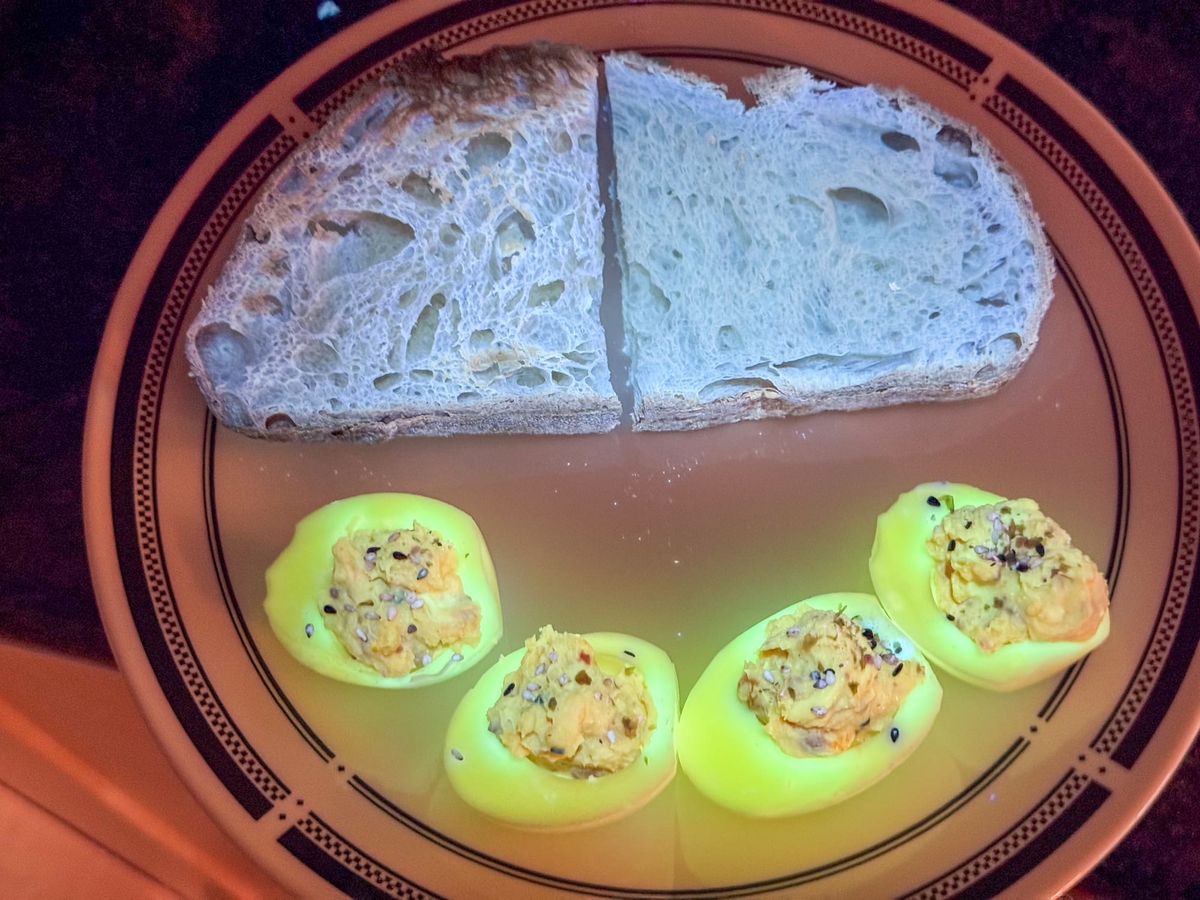
The insides of eggs also glow, but in yellow, both the yolks and the whites.
Please admire the perfect jammy texture I managed to achieve, through extensive trial and error refining the timing for Boulder altitude.

