

I've never encountered an actually revolutionary technology that people had to be forced to use.
12 Boosts
0 Likes
@houba I don't know that I'd consider currency as a technology, and I don't know that I agree with the whole of Graeber's work (I've read some compelling counterarguments from people with a lot more experience in the field than myself, and haven't done a deep enough study to know (or care) either way)
But I'll concede that Currency does fall into a similar camp to the telephone, restructuring the whole of the social order.
(The thread is getting longer, I apparently had a lot more to say.)
Wow, I got so many smug "well actually" responses to this thread.
I guess it's time for me to address them.
I got lots of responses pointing out technologies that had to be forced on people. I've thought about them. The ones I agree with are:
- Internal Combustion Cars
- Telephones
- LLMs and GenAI
The internal combustion engine in general didn't have to be forced on to people (farmers, for example, loved it both for their tractors and also for other makeshift machines they'd construct around their farms)
Cars as a class didn't have to be forced on people, high society types in big cities loved having electric carriages. They were clean, easy to maintain, and quiet. They were also reliable enough that they didn't get replaced often enough to become an industry.
But, while the rich were driving around in their electric carriages and the poor were walking, taking horse-carriages, taking trains, and riding cable cars (and people were experimenting with electric and steam cars) Henry Ford decided that, if he could get the US government to heavily invest in a roadway system and trick a bunch of municipalities into giving up a bunch of green space and pedestrian space to cars, he could make a lot of money while also leaving people responsible for both driving (which is dangerous and should be left to those who are interested in learning how to do it effectively, not a requirement for participation in society) and maintenance (which is expensive, and prior to Ford was largely a public expense for a public good.)
Cars introduced a lot of new freedoms for people, but were perhaps the worst of the several available alternatives to do that in dozens of ways, and we're still trying to overcome that fallout. There were significantly more (and significantly safer!) transit options in my region before cars.
Cars, as I've said before and taken blowback from, are usually bad. They are, at best, a necessary evil. There was a time when they were not necessary.
Telephones are a really interesting case that end up in a similar situation to Cars, but for different reasons.
Many people loved the concept of the telephone and were eager to use it. Public phones and communal phones and the phone as a replacement for the telegraph were all pretty popular.
But private ownership of telephones resulted in a major upset of etiquette and an erosion of the separation between home and public, an encroachment.
Many people of the day resented that.
I've never know a world without a telephone, but I knew one without a cellphone.
I miss being unreachable. The telephone was, ultimately, more good than harm. The cellphone (though perhaps not the smartphone) probably the same.
But I can absolutely understand how and why some people would have been resistant to it. I still know people without cellphones, I knew people without a phone of any kind not that long ago ("Write me a letter or come over. If it's not important enough to tell me in person, it can wait on the post")


@ajroach42 @catsalad hmm.. seatbelts? Sorry.
@technicaladept @catsalad Yes.
About three dozen people at this point have suggested seatbelts.
The thing there, though, is that seatbelts existed as a technology with proven lifesaving potential for many years before we forced them on car drivers.
They weren't new or revolutionary, they were just safety.
People hate safety. I dunno why, but there's probably a great sociology paper in there.
I've also never met anyone who has survived a major auto accident who is at all hesitant about seatbelts (and, until the modern propaganda campaign against them, I'd never met anyone who had someone survive a serious illness who was at all hesitant about vaccines, which fall largely in to the same bucket.)
In both cases, these are not technologies that we are asking people to use on an ongoing basis, but preventative measures that we're putting in the hands of people who have not been effectively educated about the mechanisms at play or the efficacy of the preventative measures (and, in the case of both vaccines and seatbelts, there was a concerted propaganda campaign against them, so any education that was being done had to fight against anti-education propaganda first.)
I didn't have the energy yesterday to type this out over and over again to the people who said seatbelts, and I still don't, so now everyone else who said (or will continue to say) seatbelts gets a link to this thread.
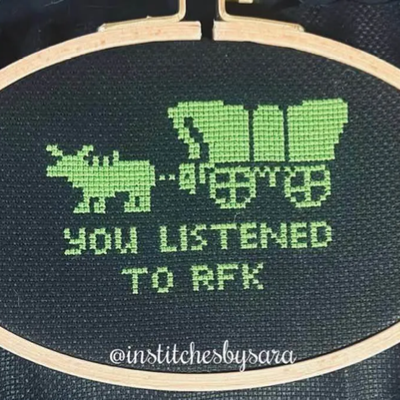

@ajroach42 There was actually huge resistance to the telephone. But for some of the same reasons as today—people were pretty savvy about what they were giving up for what they were getting.


@NewsHund I still avoid phone calls whenever I can! @ajroach42
@eest9 @ajroach42 same…I like people, but in person.

@eest9 @NewsHund @ajroach42 i used to get very pissy about forms (both online and physical) that mandated my phone number. Now i've realized i don't particularly care because there is literally zero chance of me ever answering it anyway


@ajroach42 you have. it's cars. there was tons of opposition to cars when they were first introduced, similar to the opposition to AI and data centers today. cars were shoved down peoples throats by the industry lobbying governments to pass laws making streets exclusive to cars, and by the invention of modern marketing as we know it. cars were so unpopular they literally had to reinvent marketing to get people to use them!
@scott This is the first good reply I've gotten to this post.
The car replacing cablecars and trains made our society measurably worse.

@carapace Yeah, a couple of people have mentioned safety stuff and vaccines as things people hesitated on without mandates.
I have some thoughts about why, but the short version is that we are very bad at estimating risk and exposure as a culture.


@ajroach42 the textile industrialisation is exactly such a thing. Workers rebelled against the trend as it was shifting jobs to less qualified employees, reducing wages. They smashed the machinery for a while and ultimately, trade unions emerged out of this. It was a revolutionary change and our lives today would be very different without it.
Don't get me wrong, I'd rather we went back on the whole AI thing, but I think revolutionary changes can and have come against the will of workers.
@PierricD Sure, but the technology itself produced results that were measurably worse than the things that were done by hand and in environments that were significantly more dangerous.
That revolt wasn't about the machines, it was about who owned them and how they were used.

@ajroach42 I agree. There may be some something redundant there tho... Like saying I've never seen a circle that wasn't round
@apphands This is, in fact, the criticism that I was implying.
Perhaps the fact that we are being forced to interact with so called AI systems is evidence enough that they are a failure.


@ajroach42 Passkeys.
(BTW: An example for Apple users):
https://wiseowl.club/@gtsadmin/statuses/01M2NMTRTS00A9HVP7Z2S28NWE

Passkeys as currently implemented make my life harder in measurable ways.
@ajroach42 I agree they aren't the greatest, but one might argue that the lesser evil - when one considers the large demographic of all internet users - is passkeys (rather than the insecure passwords which most people can't help themselves but to choose).
@d1 Sure
But for most people today a passkey is going to be tied to their phone, and then when they lose their phone or get a new one, they're locked out of whatever services used that passkey.
@ajroach42 toilets - toddlers get potty trained wether they like it or not. Also tooth brushing.
@d1 That's a good one.


@ajroach42
Maybe seatbelts in cars and Helmets on motorbikes were once revolutionary?
But the only thing that held back domestic radios (1921), TVs (1935 & post WWII), Colour TV, PC, fax, mobile phone, game consoles, smart phones, tablet computers, internet was cost.
@EI9FEB Yeah, a couple of people have mentioned safety stuff and vaccines as things people hesitated on without mandates.
I have some thoughts about why, but the short version is that we are very bad at estimating risk and exposure as a culture.


@ajroach42 @Unlikelylass People were wierd about seat belts. I wish they could be wierd about freedom and autonomy for something that doesn’t in the general case stop fatalities.
@hardingar @Unlikelylass Much of the people being weird about seatbelts was, AFAICT, a similar propaganda campaign to the anti-vax movement.
I suppose many safety features fall into this camp.

@ajroach42 @hardingar @Unlikelylass My middle school library had a bunch of books about cars from the 1950s and 60s, and I read most of them. There was a very strong interest among the car companies in having people not think at all about safety, no different from the cigarette companies. We largely have Ralph Nader to thank for countering that.
@ajroach42 @hardingar @Unlikelylass And when it came to seatbelts in particular there was this widespread belief, again encouraged by the car companies, that you were actually better off getting thrown from the vehicle or whatever. And especially before shoulder belts there were certainly situations where you might be better off not wearing a seatbelt.
The same was true of early airbags, because they came out of a requirement for "passive restraints" that had to protect people even if they weren't wearing their seatbelt. The result was that they had to deploy way too fast, which could cause grave injury if you were too close. Once they stopped caring about people who aren't wearing a seatbelt, airbags got way safer.

@ajroach42
'*actually* Revolutionary' does a lot of work here, you may be tired of examples, or counterpoints.
'money currency'?
If you follow Hudson/Graeber's work, the requirement of tax collection in state issued currency deposed credit systems and gift economies, this would be revolutionary but also resulted a centralization of control and power.
I'd accept that this is not revolutionary as an emancipatory technology.