

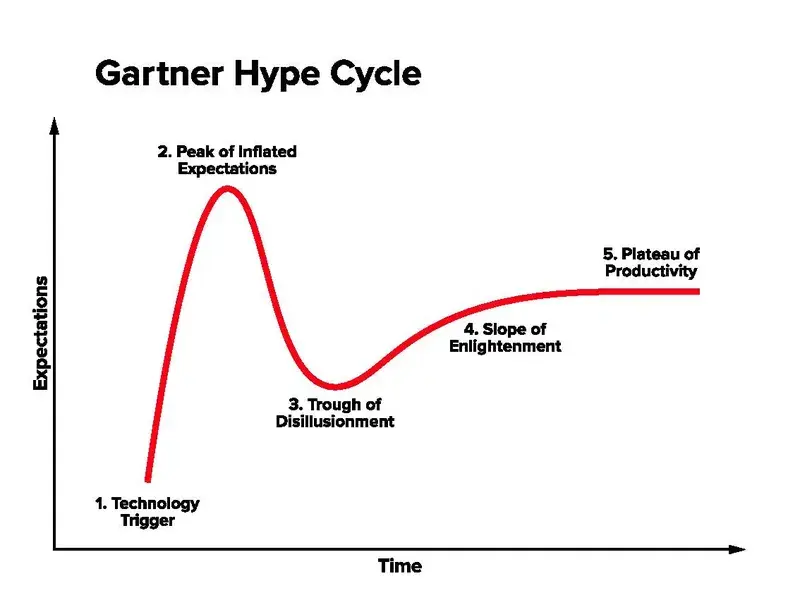
A hype cycle is just Dunning-Kruger effect on a societal scale, over time.
2 media files
Discussion
A hype cycle is just Dunning-Kruger effect on a societal scale, over time.
@comparegravel first of all, it's called "Dunning-Kruger effect", not "Dinning Kruger effect". When you venture to correct someone, at least get the name right.
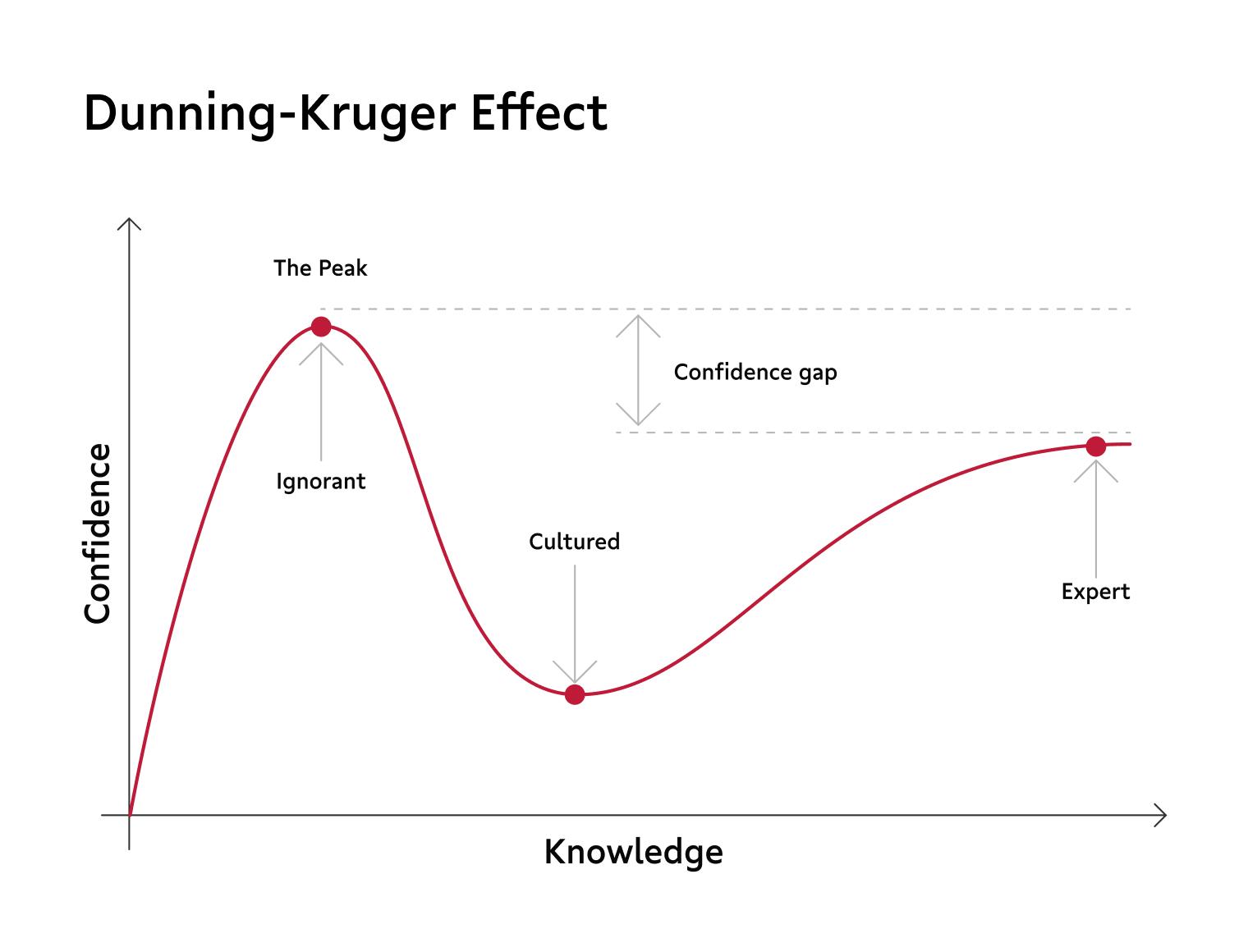
Secondly, the chart in your post is the chart of "relation between average self-perceived performance and average actual performance on a college exam", taken from Wikipedia.
The chart I used is a chart of confidence expressed in a given subject versus actual knowledge in that subject. These are different charts about the same effect.
@rysiek I don't put much stock into proper name (and the phone did some auto correct I didn't notice). The chart and basically everybody when talking about DKE are saying that people with less knowledge are more confident, and that later their confidence "drops to zero", and lastly experts have almost the same confidence as people with no expertise.
You can point that graph I included shows different function than what's commonly stated. But that's **my point: **it's not DKE 😉.
@rysiek @comparegravel but that reply was a very nice example of what DKE is about… 😁
@rysiek The Peak of Inflated Expectations is precisely when everyone screams at the top of their lungs, "PEAK!"
It bears remarkable similarity to the stages of a project...
1. Enthusiasm
2. Disillusionment
3. Panic and hysteria
4. Search for the guilty
5. Punishment of the innocent
6. Praise and honor for the nonparticipants
@rysiek where do you think Gartner stole the idea from? Like, stealing concepts from psychology to apply to business is kinda their unofficial mission statement innit? 

Install bonfire.cafe
Get the full app experience







@rysiek This is no Dinning Kruger effect. This is: