

Friends, you may have seen this but if not, sharing:
"The LLM-generated proof hinges on a particular mathematical argument that it presented as its own but that actually first appeared in a 2016 paper by Miller and a collaborator."
Friends, you may have seen this but if not, sharing:
"The LLM-generated proof hinges on a particular mathematical argument that it presented as its own but that actually first appeared in a 2016 paper by Miller and a collaborator."
“They are running roughshod over the work of others who came before them in a deliberate way,” says Stephen Miller, a mathematician at Yeshiva University, who argues that OpenAI has effectively plagiarized his own research. “It seems completely systematic to me, and it points to research misconduct.”
"The LLM-generated proof hinges on a particular mathematical argument that it presented as its own but that actually first appeared in a 2016 paper by Miller and a collaborator..."
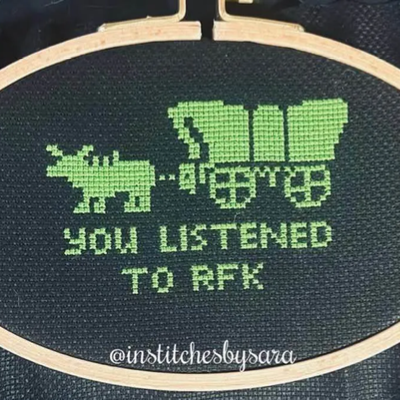
"Like a number of recent AI breakthroughs, it pasted together ideas from the mathematical literature to build a new theorem. Once again, the LLM’s trick is its superhuman patience for assembling puzzle pieces, not the ability to make some profound intellectual leap."
"“there is the big PR machine that wants to sound as impressive as possible and does not care about being 100 percent accurate,” he says."
@timnitGebru
Cards on the table: I'm somewhat AI sceptical but am also UX design lead on an AI team at a multinational..
I've spent some time thinking about the emergent nature of 'intelligence' and the difference between natural and artificial intelligence. I had thought that one major difference is that natural (human) intelligence is capable of self motivated creativity and I characterised creativity as the ability to reach out of one domain into unrelated domains to find useful patterns, part patterns or seemingly unrelated agglomorations of part patterns that can be applied in a novel way in the original domain. I tested this theory with an LLM. I asked for it to explain how it would be possible to make an animal physical simulacrum - all alternatives, and it came back with various predictable models; hydraulic, pneumatic, electric, etc. I then asked it to give me a novel solution NOT based on learned examples and it came back with a sonic solution. Sketchy but definitely 'thinking' outside the box. A body of material that resonates to certain frequencies and adapts shape accordingly. When I asked, it assured me this was a partial pattern match way out of its learned domain. This, to me is part of the creative process. The only remaining difference, as it recognized, when I asked, is the self-motivation element. An LLM has to be driven by a person, but a person is driven by need.
I'm sure others will have more nuance to bring to the creativity discussion but I was somewhat impressed by the extent of its current capability.
@timnitGebru define “properly”, is it mentioning the 10 zwar old paper or not?
@timnitGebru
Two out of ten *so far*. I bet we'll be hearing more about this soon enough.
@timnitGebru The one thing you can't claim about an LLM is that it hadn't seen the prior art.
@timnitGebru OpenAI is a bunch of no-talent ass clowns.
@timnitGebru Who could possibly have predicted this? 🤦
@timnitGebru that site blocks my vpn wtf
Love the graphic.
Can't read the article as I am burnt out on any hype on AI.
@timnitGebru yet again, the operators of these things lack the means to evaluate their outputs.















"Two of the most exciting results, the experts say, incorporate preexisting ideas from the recent mathematical literature without properly citing them. This contradicts OpenAI’s initial press release, which said that the problems Astra addressed “have been open and seen no progress on the main result for at least a decade.” (OpenAI has since updated the language to be more accurate).