

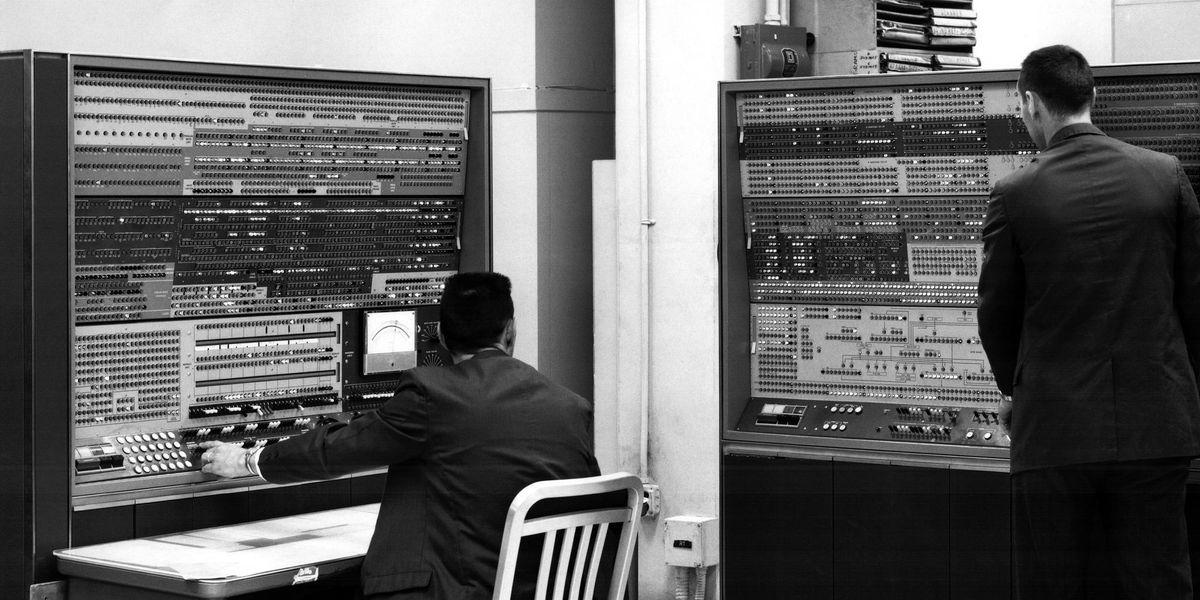
In 1962, the NSA had a computer so secret the world didn't even know it existed. It was called Harvest, and for 14 years it processed America's most sensitive intercepts—faster, in its time, than any machine on Earth. 🧵 (1/8) https://spectrum.ieee.org/cold-war-codebreaker-nsa-ibm
4
Replies
5
Boosts
Harvest wasn't one computer—it was two, bolted together. An IBM Stretch mainframe handled ordinary computing; a custom coprocessor did nothing but stream and search data at extreme speed. Which is basically the ancestor of the GPU that today is in everyone’s laptop and AI processor that runs alongside the main CPU in your phone. (2/8)
Feeding Harvest required Tractor: the world's first automated tape library, with a robot arm that fetched cassettes the size of a boombox from a wall of storage—no human hands required. All in, about 44 gigabytes online. In 1962. How quickly does the tech world forget that it wasn’t so long ago that "online storage" meant a warehouse, not a chip? (3/8)
Harvest was so complex that even NSA staff were skeptical at first. Tour guides reportedly pointed at the huge, boxy machine and joked, "It's beautiful, but it doesn't work." It worked for 14 years. How many technologies get written off early simply because no one yet understands what they're for? (4/8)
One declassified example: Harvest searched 3.5 billion characters of intercepted text for any of 7,000 target terms—in under 4 hours. A separate 1972 NSA briefing describes a job (codenamed "Moretown") scanning 11 million messages spanning 16 years, against 8,000 terms, in about 10 hours. (5/8)
