
Successful launch of the NASA Nancy Grace Roman Space Telescope.
🚀 🔭 👍
https://www.youtube.com/watch?v=9wq3VHsL_bE
Note that it will take a few weeks to reach the Sun-Earth L2 Lagrange point, 1.5 million km away.
8/n
Discussion
Successful launch of the NASA Nancy Grace Roman Space Telescope.
🚀 🔭 👍
https://www.youtube.com/watch?v=9wq3VHsL_bE
Note that it will take a few weeks to reach the Sun-Earth L2 Lagrange point, 1.5 million km away.
8/n
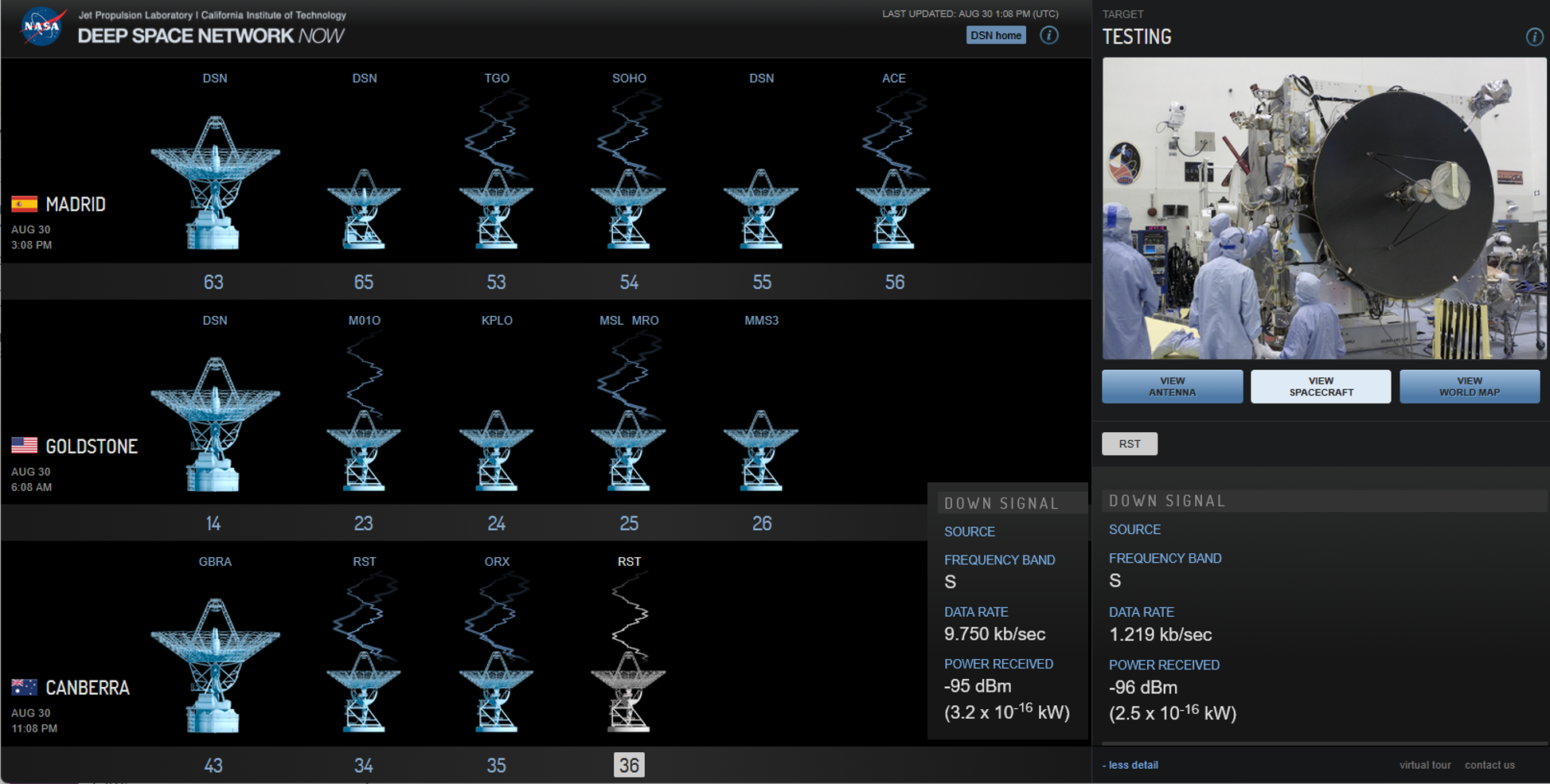
The NASA Nancy Grace Roman Space Telescope is communicating with DSN Canberra, over S-band at low data rate. (shown as RST on the DSN website).
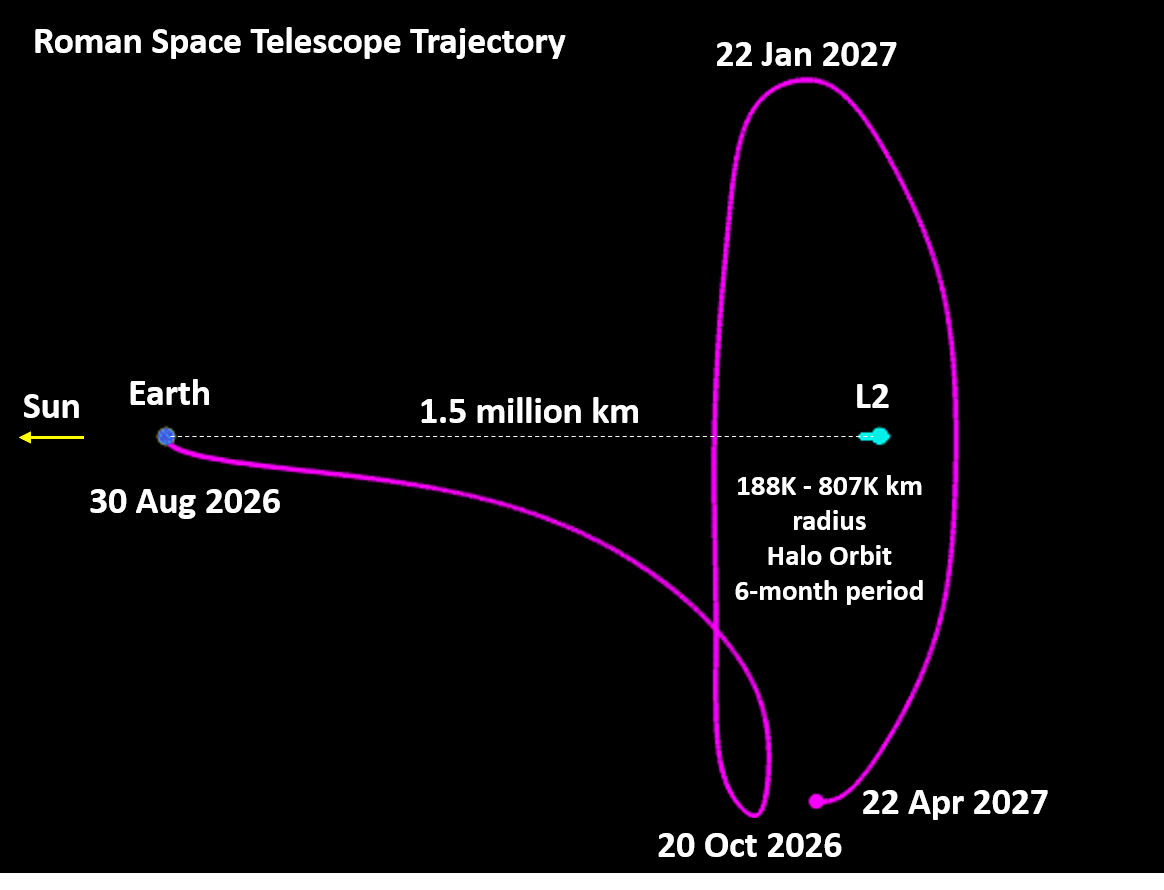
Here is the planned trajectory of the Roman Space Telescope (RST) over the next 7 months, as RST travels to the Sun-Earth L2 Lagrange point 1.5 million km away and enters a 6-month Halo orbit around L2.
https://en.wikipedia.org/wiki/Nancy_Grace_Roman_Space_Telescope
10/n
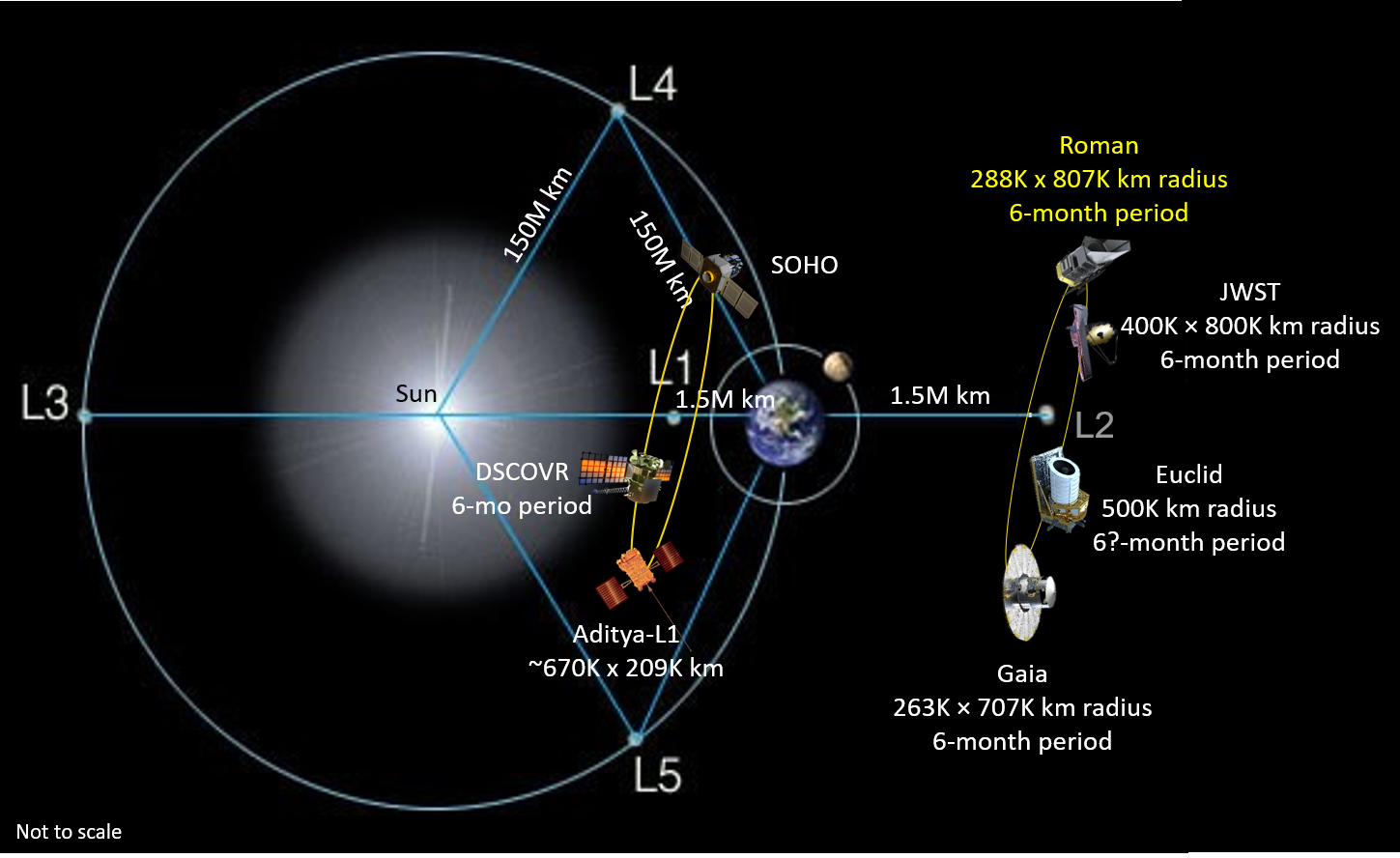
The NASA Roman Space Telescope (RST) will join other space telescopes in halo orbits around the Sun-Earth L2 Lagrange point, 1.5 million km away.
At the Sun-Earth Lagrange points, an object can orbit around the Sun at the same period as Earth, as the centrifugal force balances out the gravitational forces of the Sun and Earth.
This enables space telescopes to stay on the same side of Earth and stay pointed at celestial objects for extended periods of time.
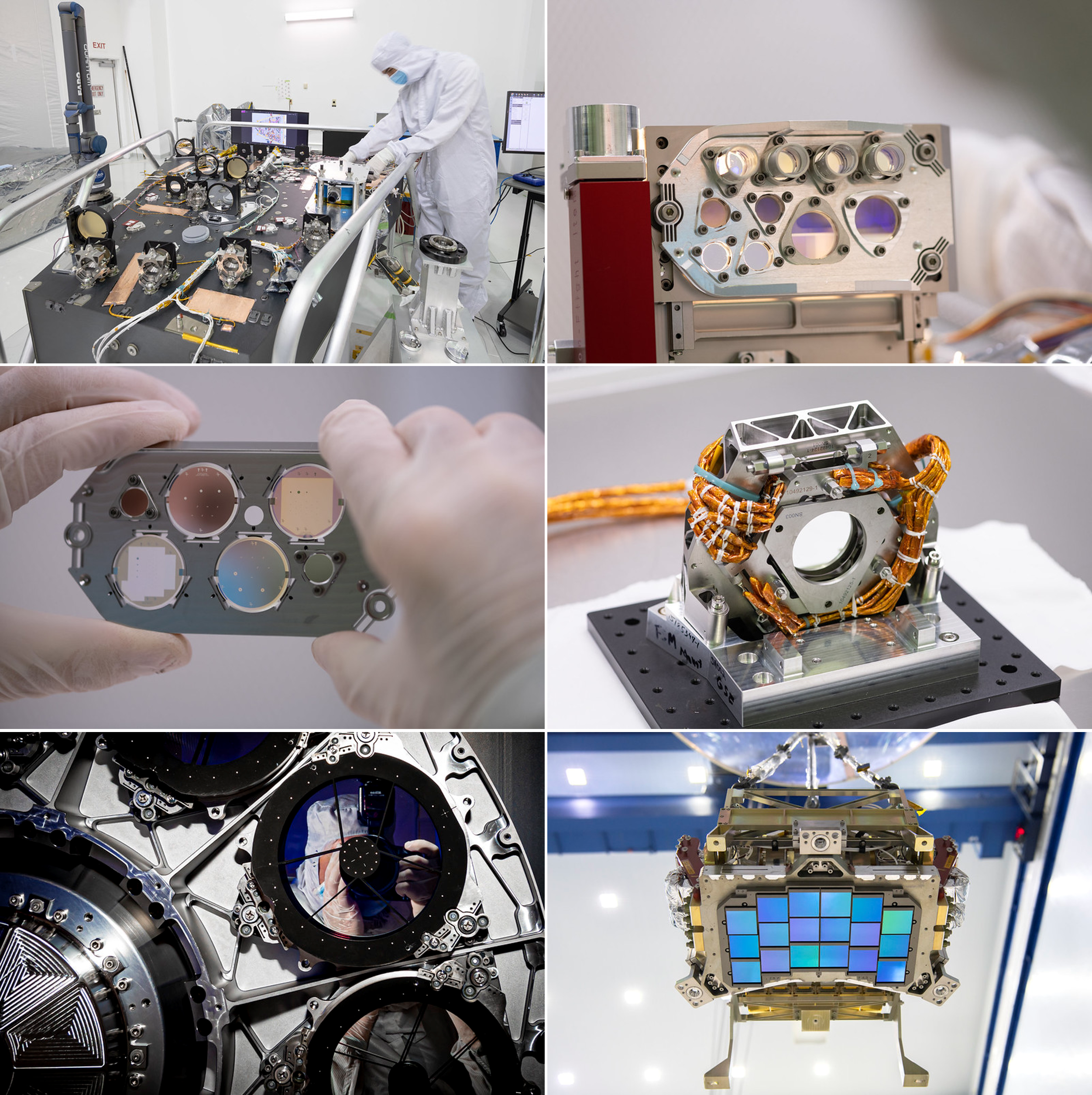
Some fascinating images of the various parts and subsystems of the instruments aboard the NASA Roman Space Telescope.
Nancy Grace Roman (May 16, 1925 – December 25, 2018) - American astronomer, first female executive at NASA, one of the “visionary founders of the US civilian space program”, aka as the “Mother of Hubble”, active public speaker and educator, and an advocate for women in the sciences.
https://en.wikipedia.org/wiki/Nancy_Grace_Roman
https://www.flickr.com/photos/hubble_esa/44477663304/
13/n
From https://mag.uchicago.edu/science-medicine/wider-scope -
“I have no soft spot for the University of Chicago,” says Nancy Grace Roman, PhD’49.
Roman estimates she was making no more than 60% of what her male colleagues earned.
When she brought her concerns to the dept chair, Subrahmanyan Chandrasekhar, the Indian-born astrophysicist who went on to win a Nobel Prize, he told her, “We don’t discriminate against women. We can just get them for less.”
“I would have thought he’d understand discrimination,” says Roman.
14/n
"To women already in STEM (science, technology, engineering, and math) who are still experiencing sexism, Roman says: “Persevere. Things are better than they used to be. Women now can and do get professorships; women are heads of observatories and departments.”
But the number of women in senior academic positions is not commensurate with the number of women in the field, she says, and advises they prepare for inevitable problems."
A short documentary on Nancy Grace Roman and her journey from the stifling male-dominated halls of the U of Chicago to becoming a trailblazing astronomer and top leader at NASA.

Install bonfire.cafe
Get the full app experience