

UGH FINE! I'll do the maths homework!
10
Replies
0
Boosts
or... fuck that? I don't need anything special here I don't think. Power goes in, power comes out.
"The EN pin has an internal pullup current source, which allows the user to float the EN pin to enable the device”
Huh, I don't think I've ever seen this recommendation called out in a switching power supply IC datasheet before?
"Ideally, the saturation current rating of the inductor is at least as large as the high-side switch current limit,
IHS_LIMIT (see Section 8.5). This ensures that the inductor does not saturate even during a short circuit on the output. When the inductor core material saturates, the inductance falls to a very low value, causing the inductor current to rise very rapidly. Although the valley current limit, ILS_LIMIT, is designed to reduce the risk of current runaway, a saturated inductor can cause the current to rise to high values very rapidly, this can lead to component damage, so do not allow the inductor to saturate”


@jpm I’ve seen this explained in some datasheets (usually in the part where you’re calculating properties of the inductor), but rarely do they explain it so clearly. Usually it’s just “to prevent inductor saturation causing damaging currents through the MOSFET.”


@jpm Normally this is assumed to be common knowledge.
@hennichodernich sure, but still nice for it to be explicitly called out in a datasheet as a reminder that oh yeah you actually have to check that too while you're doing all the calculations to find the inductor and capacitor part numbers for your design.

@jpm perfect example of theoretical vs practical vs time-optimised
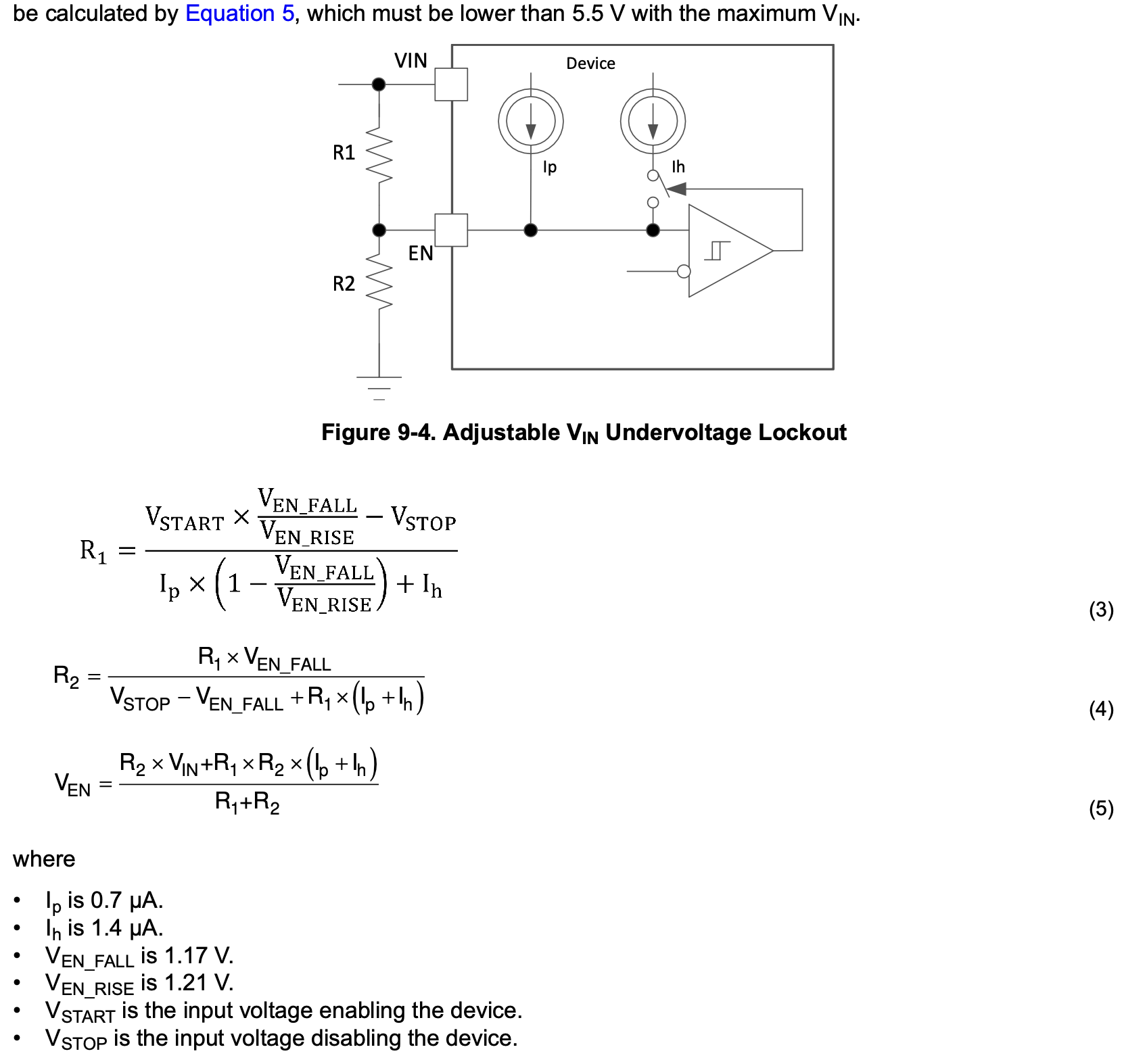
Theoretical: that fucken equation
Practical: 1.2V threshold, simple voltage divider calc using ~10k resistors so pin current is irrelevant
Time-optimised: slap down 2 x DNP resistors, float the pin and leave the option to do better later. Welp, it’s beer o’clock!
@ozeng There's a sting in the tail of the "practical" solution for this part - V(in) is rated for 30V, but EN is only rated for 5. Sorry, but yeah you need to do the maths, float it, or control it externally using a GPIO.
@ozeng Of course, if you want to use BOTH the GPIO solution AND UVLO setting via resistors, it's even trickier…


@jpm An electron leaves the capacitor towards the inductor travelling at 0.98c. Simultaneously the same electron leaves the inductor travelling towards the capacitor at 0.76c just to fuck with you. How over this shit are you in gigafarads?
@abstractcode L-C tank circuit go boioioioioioioioinnnnngggggggggggggg