

Is Scopus really a curated bibliographic database?
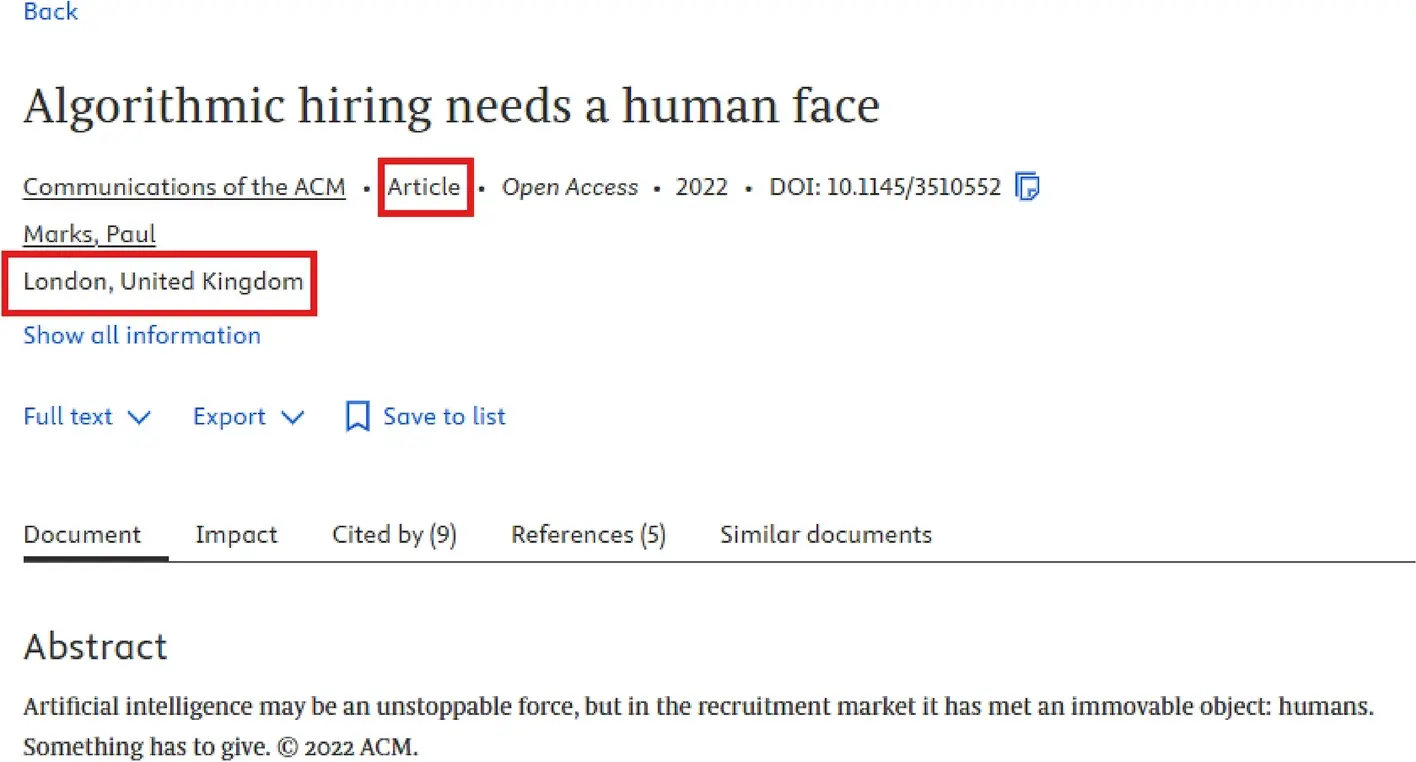
A new Scientometrics study finds 2.7M records without author information, 500K+ records with unknown source titles, inconsistent document types, and even London recorded as an affiliation.
 https://doi.org/10.1007/s11192-026-05778-9
A useful reminder: better research assessment starts with understanding and checking the data - not just pressing a button.
#Scopus #Bibliometrics #ResearchAssessment #Scientometrics #ResearchEvaluation
SpringerLink
Is Scopus a curated bibliographic database? An exploratory analysis of data integrity
Scopus is one of the world’s largest bibliographic databases and plays a crucial role in citation indexing, research evaluation, and university rankings. Despite its widespread use, questions remain regarding the integrity of its bibliographic data. This exploratory study examines Scopus by assessing the internal consistency and logical coherence of interdependent bibliographic metadata and their alignment with the documented Scopus Content Coverage Guide. Targeted searches identified several inconsistencies, including the assignment of affiliations and countries to anonymous-authored documents, the assignment of source types and subject areas to documents from unknown source titles, undocumented source and document types, and mismatches between source and document type classifications. The findings show that nearly half of anonymous-authored documents are classified as articles, conference papers, or reviews, over 1% of documents from conference proceedings are classified as articles, and 55% of documents from unknown source titles are assigned the journal source type. Additional cases include journals misclassified as trade journals and records in which affiliation information is assigned despite the absence of author names. Collectively, these results indicate that evaluating curated bibliographic databases requires attention not only to individual metadata elements but also to the logical coherence of relationships among them. To support more consistent curation, the study proposes a Source-Document Type Alignment Framework that defines the expected relationships between source types and document types, thereby strengthening the integrity and transparency of bibliographic data handling.