@quixoticgeek ...yes, but not a *direct* consequence. When people say "X causes Y", the implication is that the causal chain is short between X and Y.
I could say "stopping free school dinners increases crime", which is true as a weak effect due to opportunity limitation, but the consequence is years after the cause, and several chain links down the road... so I wouldn't say that without being clear that I mean indirectly and in the indefinite future.
Post
Replies:
0


@quixoticgeek We had the same argument when the wearing of seat belts in cars became mandatory. Warning for heart, lung, and other stuff.
Thanks to seat belts we have less serious injuries and fatalities.
We had the same argument with masks ("can't breathe").
Thanks to masks people still can breathe and are alive.


@quixoticgeek I've yet to have a conversation with a paramedic who thinks you're better off not wearing a helmet. I commute by bike, have had my share of minor and major accidents. The only reason I'm not in hospital regularly and have a potato for a brain is because of my helmet.


@macattackmicmac as someone who has crewed an ambulance, who dated a doctor, and has looked into this. There's a difference between the individual level and the population level. There's also a difference between legal requirement and free choice.
@quixoticgeek I would rather the government focus on making everything else safer and more comfortable for bike riders, than trying to repeal laws which would inevitably be re instated once cycling has no viable alternative.
@macattackmicmac but Ireland isn't repealing anything. They are imposing more restrictions on cyclists
@quixoticgeek I didn't look into what the original impetus was for the post, but rather just what was in this post. Given that context I still think everyone should wear a helmet, but again the government should focus on structural changes rather than passing another law.


@quixoticgeek Most of the research and debate seems to show australia (which has had mandatory helmet laws since I was about 10), and shows the increase in heart disease etc since then as proof.
I'm sure drive-through and home-delivery fast food restaurants being introduced around the same time was just a coincidence, and didn't affect things at all.


@quixoticgeek Another level of helmets and personal safety is how helmets affect drivers behaviour towards cyclist.
Series of measurements with distance sensors in Germany showed that cyclist that wore helmets or safety wests would be overtaken at a much closer range than cyclist without. It's speculated that this behaviour is caused by the perception that wearing a helmet means you take care of your own safety and require less precaution.


@quixoticgeek as a cyclist/commuter myself I'm with you on the necessity for a better biking infrastructure. However, I could never genuinely recommend anyone to go without a helmet. It's not only cars who pose risk to a cyclist, but other cyclists and pedestrians as well. The amount of times I had a mini heart attack just because someone unexpectedly and sharply brakes or a child runs out of nowhere in a bike lane 🥲 and I have seen the consequences for "only" bike-on-bike collision. Safety measures like wearing a helmet are very much a learned thing. If a portion of culture adopts a behaviour, over time it normalises and stops being viewed as inconvenience, especially for younger generations growing up with it. I'm sorry it discourages some people to take on this mode of transportation, however, head trauma can kill you much faster than higher cholesterol or diabetes. Let's be safe out there.
@hostia I would never suggest someone should or should not wear a helmet. I would recommend people make a reasoned choice. A free choice for each individual.
I even wear a bike helmet sometimes.

For both bicycle, and motorcycle, I'm not in favor of helmet laws, but I always ride with a helmet. No matter if it's a pedestrian, or a rock, or a vehicle the causes you to fall, the ground is always there. Gravity always has its way. A helmet is cheap insurance in case anything happens.

@quixoticgeek Could the correlation have anything to do with fewer people dying from significant brain injuries sustained from helmetless cycling?

In the Netherlands with probably the largest bicycle density (flat country helps) in Europa nobody wears bike helmets, never have…
With e-bikes the accidents increase though…


@xs4me2 @quixoticgeek There's also a herd effect where the more cyclists on the roads, the safer it is for them with respect to motor vehicles. When cyclists are rare, or unexpected, they are in a conceptual blind spot to motorists, no matter what they're wearing.


@wiredfool @xs4me2 @quixoticgeek Motorists regularly killing and injuring cyclists and pedestrians is necessary for the upholding of motorism. Without a credible threat, pedestrians would just use the streets and all motorists would have to adjust their speed to walking speed, and this is not acceptable to motorists.
@ahltorp @wiredfool @quixoticgeek
Besides having specific bike lanes, actually in more and more city centers (Utrecht, Amsterdam) the idea in the Netherlands to have them all in one road, and in that chaos the motorists simply have to slow down.
@xs4me2 @wiredfool @quixoticgeek We have that in Sweden too, with a special road sign. And in those cases, motorism is not completely upheld.
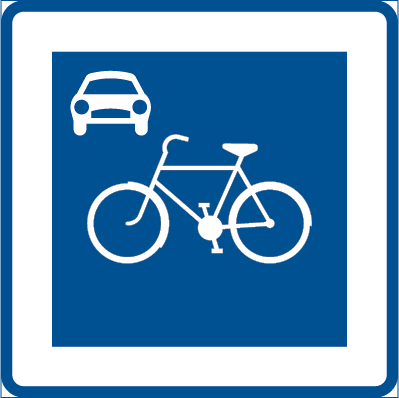
@ahltorp @xs4me2 @wiredfool "fiets straat, auto te gast"
Bike street, cars are guests.
Common in the Netherlands, but not common enough.


@xs4me2 @quixoticgeek I *always* wear a helmet when going road cycling ("wielrennen"), but not for casual rides to the shops 🤷🏼♂️
With road cycling in particular, other (casual) cyclists and car drivers are not used to your speed, and the chances of getting hit are much higher than for a casual cyclist (ask me how I know).
And yeah, grandpa and grandma on their e-bikes have no idea about the risks they take. The number of times I’ve seen them bombing down the hills around here (Veluwezoom) without helmets is mindblowing (and sometimes, it literally is 🙄).
@xs4me2 0.4% of cyclists in the Netherlands wear a helmet. Helmet wearers account for 13% of cyclists ending up in hospital...
Ergo helmets cause hospitals?!?


Not to get too morbid here, but is that because people who die at the scene in accidents don't count towards hospital visits?

@DaveMWilburn @quixoticgeek @xs4me2 I would guess it’s a population thing: the Dutch people who wear helmets have riskier behavior: sports cyclists (road, MTB, etc) and old people on heavy/fast ebikes wear helmets, the average commuter, protected by our biking infrastructure, doesn’t.
@DaveMWilburn @xs4me2 no. It's because helmets give a false sense of safety, and are largely worn by racing cyclists and mountain bikers who engage in a more risky form of cycling than a utility cyclist cycling for transport.
I've cycled over 40000km in the Netherlands. I've visited every municipality by bike. I have a pretty good understanding of Dutch cycle infrastructure.
Yeah, the reason I asked is because in the US there has been criticism from the right about motorcycle helmet laws, with some arguing that helmet use leads to higher rates of severe, life-altering injuries that otherwise wouldn't have been survivable (and further that these are the kinds of injuries you wouldn't want to survive).
That argument was perhaps plausible. But I don't think it's actually born out in the data. Studies seem to suggest that motorcycle helmets are an unqualified good thing.
And, at the risk of stating the obvious, motorcycles are different from bicycles, especially everyday cycling in places with good bike infrastructure, and the rates, kinds, and severities of the injuries you might encounter are likewise very different.
@quixoticgeek helmet laws also allow people to live longer,they don’t die from easily preventable accidents. That longer life allows heart disease to fester longer increasing the rate of death from that cause. It’s all about how you frame it.




@coolandnormal @passwordsarehard4 @quixoticgeek
Actually not, because that framing assumes that helmet laws are actually effective—which is not even remotely settled.
The studies that I know of that support helmet laws almost invariably focus on helmets preventing *head injuries*, not helmets preventing *deaths*. But that does not mean that they are an effective intervention, because a) many head injuries are not deadly, and b) head injuries are not necessarily the most common cause of death, or even typical, in traffic collisions.
In fact, there is some evidence that helmet laws increase traffic deaths (due to reduced safety in numbers, risk compensation, or dehumanization effects)
@quixoticgeek Complex systems!Society is one - where non-linear feedback loops dominate.
Another factor here is that drivers give less room to helmeted cyclists as they are seen as less vulnerable. As if.


@quixoticgeek Peter Walker's "Bike Nation" book has some very good discussion about the "trauma surgeon" vs "population health" on the topic of helmet.


@quixoticgeek A similar situation: if children were forced to be in a car seat in airplanes, then parents would have to buy an extra ticket for all children, including babies and toddlers. This would drive up the cost of travel, making them more likely to drive instead. A mile spent driving is far more dangerous than a mile spent flying, so vastly more children would die on the highways than would be saved by car seats.

@quixoticgeek one weird trick to enrage radicalized automobile fetishists


@quixoticgeek the article is quite clickbaitey and would lead a cursory glance to conclude that no helmet laws = better public health, which ignores the elephant in the room that is safe biking infrastructure. The topic is weirdly heated in Australia especially, pitting vocal cycling enthusiasts against public health experts. Without safe biking infrastructure (read: safe from cars), repealing helmet laws is not something supported by good studies. Helmets aren’t the problem, it’s cars.

@quixoticgeek@social.v.st I see your point.
In Italy we're going weird: helmets are mandatory for kids (I think the cutoff age is 12).
BUT, helmets are mandatory on electric scooters, because of a weird campaign that swept through our media a while ago and that made them sounds like dangerous traps for everyone. Similarly, a new law will require registration plates and insurance for electric scooters but not for bikes.
In Italy we're going weird: helmets are mandatory for kids (I think the cutoff age is 12).
BUT, helmets are mandatory on electric scooters, because of a weird campaign that swept through our media a while ago and that made them sounds like dangerous traps for everyone. Similarly, a new law will require registration plates and insurance for electric scooters but not for bikes.
@bovaz not requiring number plates for bikes is a good thing. The helmets for kids thing can be extra harmful, as very young children don't have the strength in their neck to cope with the extra weight of a helmet, places like Denmark require helmets for children even when they are passengers on the bike, like in a bakfiets.