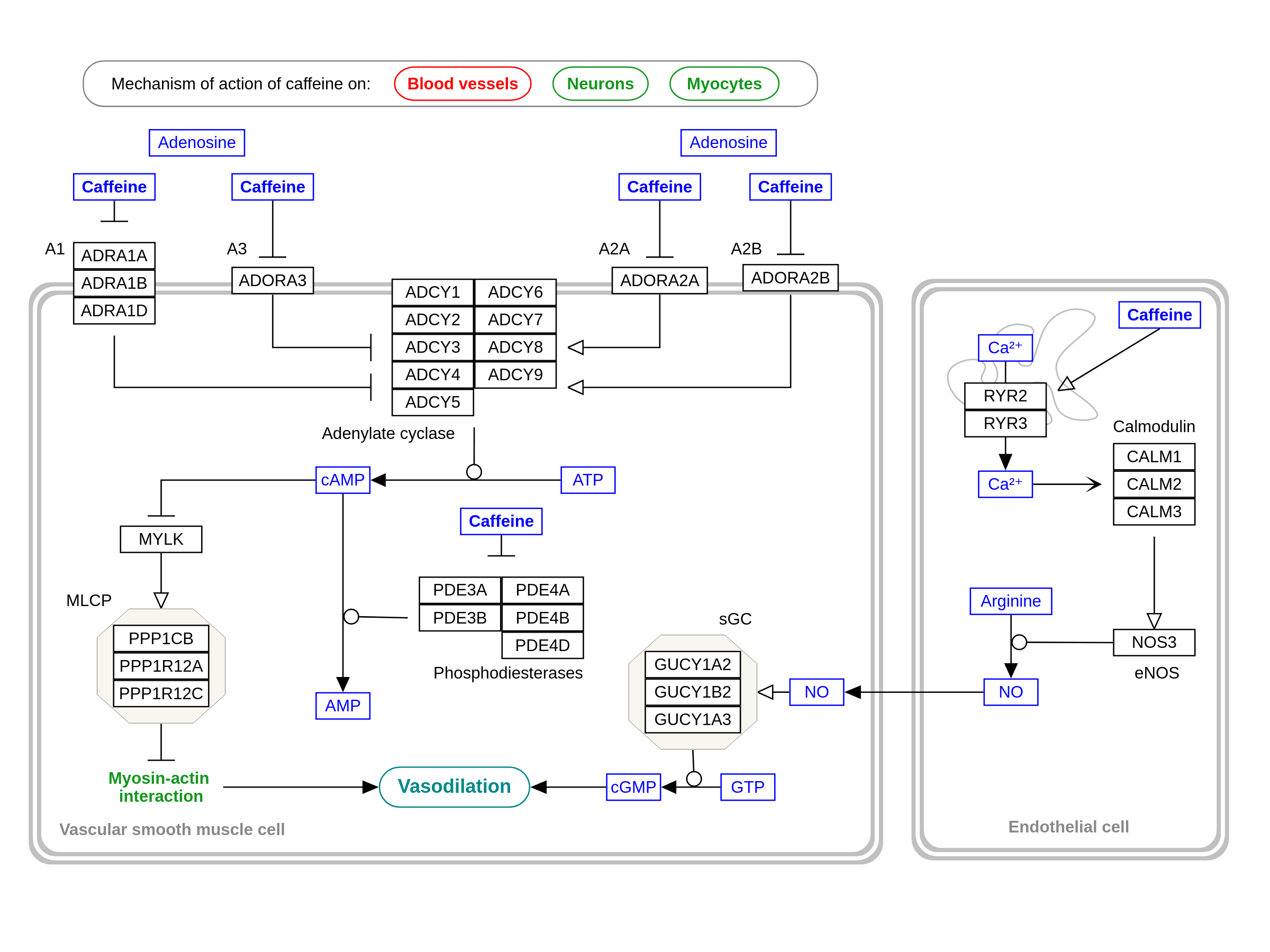
New pathway, Caffeine in blood vessels (WP5601). In vascular smooth muscle, caffeine promotes relaxation by inhibiting myosin light-chain kinase (MLCK) through cAMP elevation and activating myosin light-chain phosphatase (MLCP), reducing myosin–actin interaction. As a nonselective adenosine receptor antagonist, caffeine blocks A₁/A₃ receptors (which normally lower cAMP) and A₂A/A₂B receptors (which normally raise cAMP), thereby altering adenylate cyclase activity. In endothelial cells, caffeine increases intracellular Ca²⁺, activating eNOS to produce nitric oxide (NO), which diffuses to smooth muscle and stimulates cGMP signaling, further promoting vasodilation. Inspired by Figure 1 in Kumar and Lipshultz, 2019.