

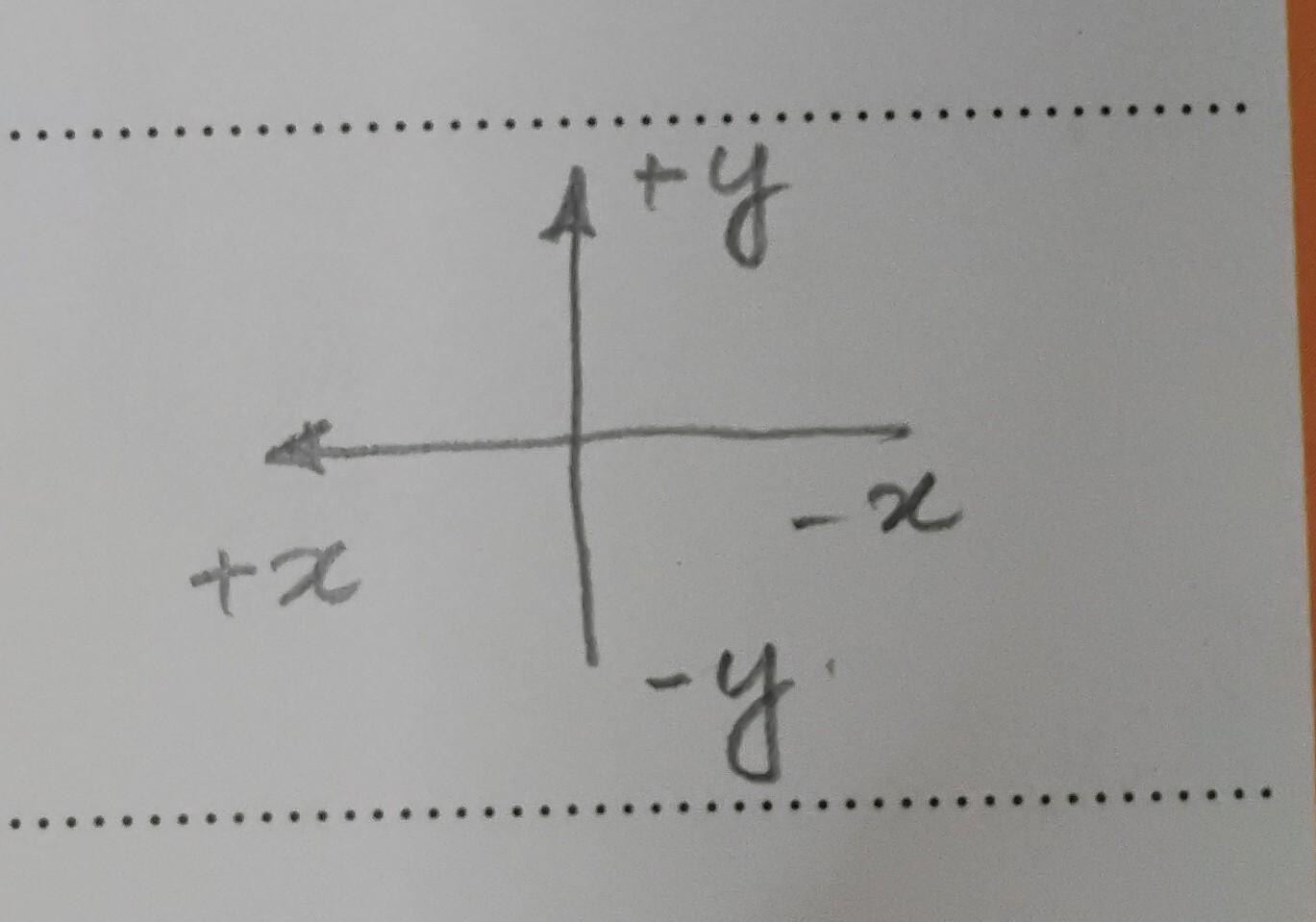
Gentle reminder that conventions that look obvious to you might feel odd and counter intuitive to someone else. Teaching a class of students who write in Urdu as their primary language (written from right to left) and their first instinct is to sketch graphs like this:
3 Boosts
0 Likes


@jpaskaruk @Theorem_Poem @MintSpies it’s amusing how often you’ll see a vehicle (often aircraft) in a movie or still image with mirrored writing on it, because going left to right is construed as progress, whereas right to left is retreat/setback in the Western cinematic visual lexicon.
If your stock image/footage has the vehicle going in the wrong direction, just flip it and hope no one notices the text! 😀


@WiteWulf @jpaskaruk @Theorem_Poem @MintSpies
That one turns out to be more universal.
When I first learned about user-interface design, I was taught that we put the proceed button on the right and the go-back button on the left in dialogs and swap them in LTR writing locales because the notion of progress is linked to the writing direction. But more recent (about 25 years ago now) research suggests that this doesn't correlate with reading order at all and that the left-is-back, right-is-forward assumption is fairly universal. The study I read that found this did not control for left vs right handed participants though and I'm curious if it's the other way around (natural direction of screw threads does correlate with handedness).
EDIT: Actually, thinking about it, I haven't seen any more recent study confirm or contradict that result. So it's possible that it was a reproducibility crisis paper. Anyone got any psychology students who want to do a study?

@Theorem_Poem I became intrigued, and then dismayed, when I learned that Lucas had the heroes facing right onscreen, and the villains left, during lightsaber fights, based on reading direction.